
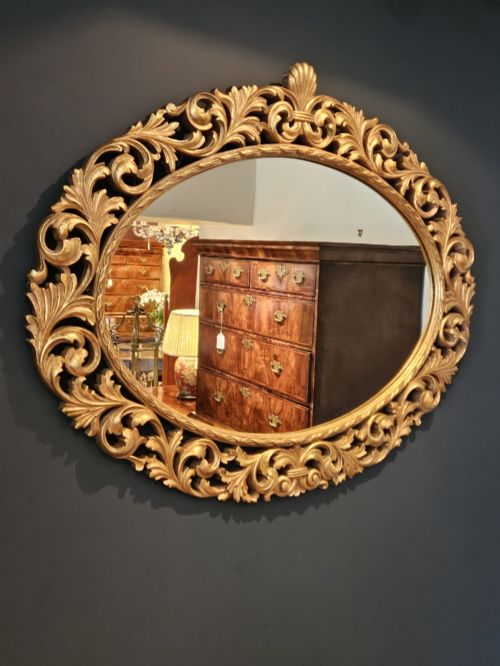
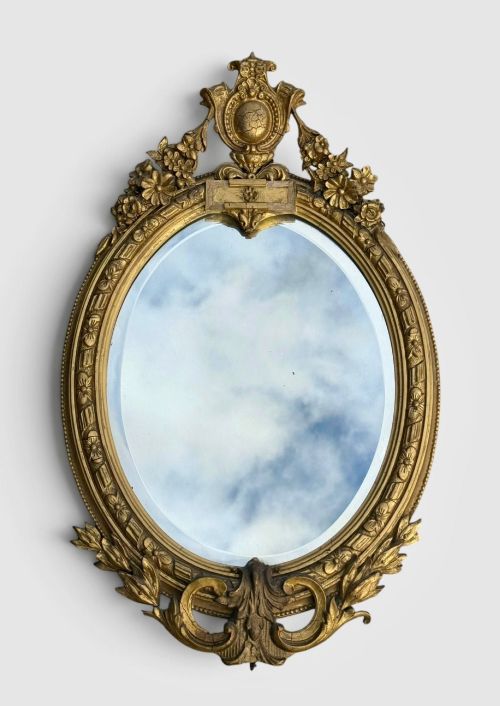
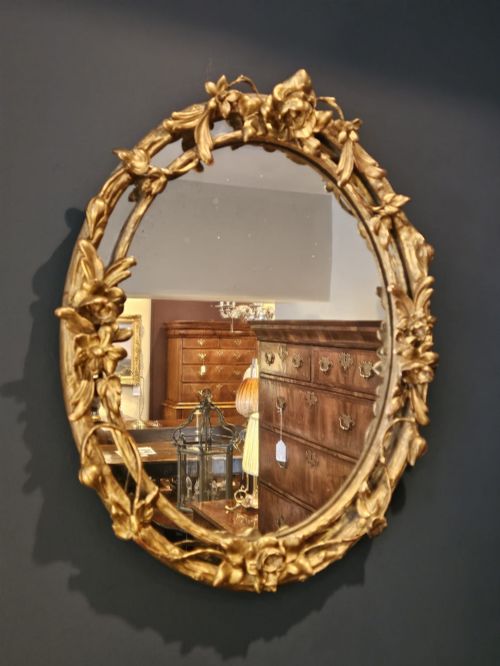
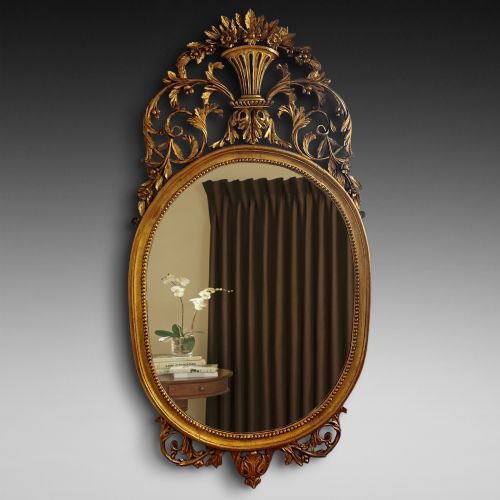
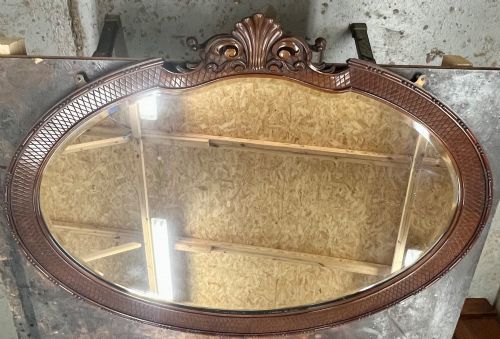
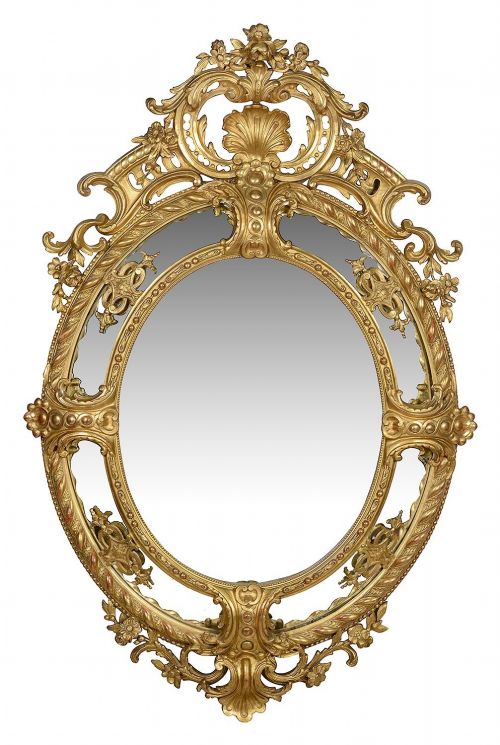


Carved Oval Hanging Mirror
A carved oval hanging mirror brings soft proportion and reflective light to a room, drawing the eye with curved wooden frames and gilded detail.
Carved Oval Hanging Mirror
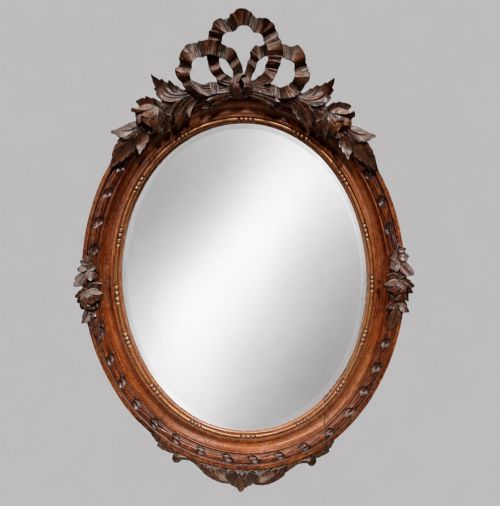
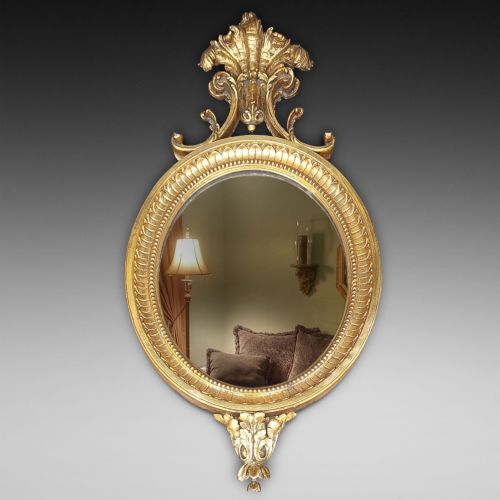
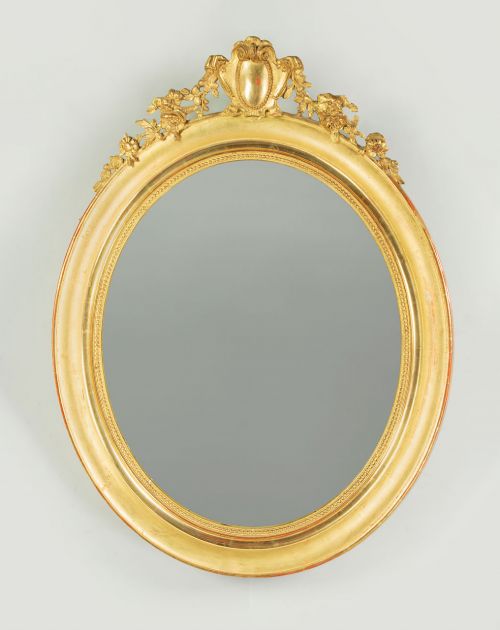
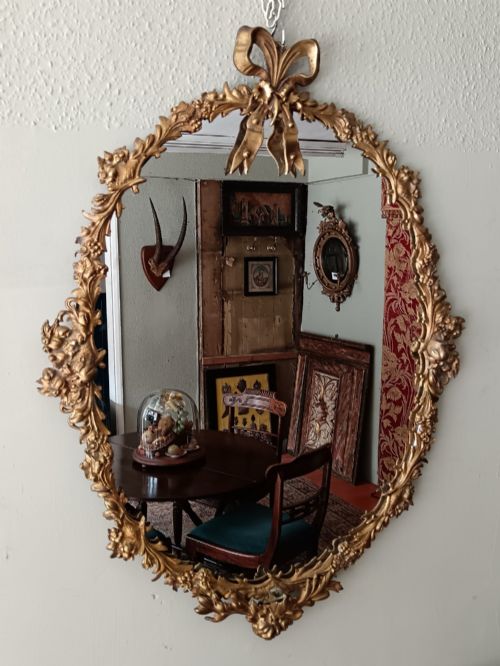
A carved oval hanging mirror is a wall-mounted glass plate set within a shaped wooden frame, designed to hang vertically or horizontally depending on the proportions of the room. When you search this phrase, you find examples spanning from the early 18th century through the Georgian, Victorian, and Edwardian periods up to 1920. The form bridges functional reflection and decorative wall art, serving as a focal point above a mantelpiece, console table, or in a hallway.
The most common versions on this page are 19th-century and Victorian giltwood and gesso pieces, alongside Edwardian revivals and sturdy oak frames. You encounter ornate Rococo and Louis XVI styles featuring carved rose vines, scrolls, and neoclassical motifs, as well as simpler mahogany and fretwork designs. These mirrors range from intimate boudoir sizes to large, imposing wall pieces created to expand the sense of space in a room.
How they were made
Frames were constructed from timbers such as mahogany, oak, or softwoods, which were then carved by hand with floral details, ribbons, or classical motifs. Many period frames received a layer of gesso, a plaster mixture applied over the wood to build up crisp relief work before gilding. Gold leaf was laid over a coloured bole base, or the surface was finished with gilt paint and bronze preparations.
Early examples often feature original mercury plates, whilst later pieces utilise standard mirror glass, sometimes with bevelled edges. The glass was secured from the back within a rebated frame, often protected by wooden backboards held in place with old brads or pine slips.
Regional influences range from English Georgian and Victorian workshops to French Louis XVI revival designs and Italian Florentine frames.
What varies in quality
The distinction between ordinary and exceptional quality rests in the crispness and depth of the hand carving. Skilled carvers produced crisp undercut foliage and sharp architectural details that hold the light, whereas lesser pieces rely on heavy, flat gesso mouldings to imitate deep relief. The integrity of the original gilding and the preservation of the antique glass plate also define the standing of a piece.
Proportion and balance dictate the aesthetic success of an oval frame, where the curve must feel organic rather than pinched or distended. Furthermore, the survival of untouched backboards, original mercury glass, and period hanging rings elevates a mirror's historical integrity.
The Carved Oval Hanging Mirror Glossary
- Gesso
- A fine plaster mixture applied to wooden frames to provide a smooth, absorbent surface for gilding. It allowed carvers to create sharp, elaborate relief ornamentation that wood alone could not sustain.
- Giltwood
- Timber that has been coated with gold leaf or metallic powder. It catches candlelight and daylight, brightening darker corners of a period interior.
- Mercury Plate
- An early type of mirror glass made by applying a tin and mercury amalgam to the back of the glass sheet. It is recognised by a characteristic dark, mottled speckling and a deep, watery reflection.
- Parcel Gilt
- A finishing technique where only specific raised portions of a wooden frame are gilded, leaving the underlying timber grain visible elsewhere. This creates a subtle contrast between the warm wood and the gold highlights.
- Fretwork
- Thin wood panels cut through with decorative openwork patterns, often seen on mahogany frames from the 18th and 19th centuries. It introduced geometric lightness to heavier furniture forms.
Carved Oval Hanging Mirror: Frequently Asked Questions
How do I hang a heavy antique mirror?
Ensure your wall fixings are secured directly into masonry or solid wooden studs rather than relying solely on plasterboard. Use sturdy picture wire or metal brackets rated well above the weight of the frame.
Check that the hanging loops or rings screwed into the wooden frame are firm and original before lifting the mirror into place.
Are antique mirror plates always replaced?
Many surviving pieces retain their original glass, which often exhibits foxing, minor scratches, and darkened spots due to age. Original mercury plates offer a softer, more atmospheric reflection than modern glass.
Replacement glass is common in pieces that suffered breakage over the centuries, so examining the back of the plate helps determine its age.
How do I clean an antique gilt frame?
Dust the carved surfaces gently with a very soft, dry brush to remove surface particles without disturbing fragile gesso or gold leaf. Avoid using water, detergents, or chemical cleaners, which strip the historic finish.
If the gilding is flaking, leave it untouched rather than attempting amateur repairs, as antique gold surfaces are exceptionally delicate.
Can I hang an oval mirror horizontally?
Most oval mirrors are designed with vertical suspension in mind, dictated by the orientation of the frame's carved ornament and top crest. Hanging them sideways can disrupt the balance of the design.
Verify the placement of the hanging rings on the reverse before attempting to mount the frame on its side.