




Carved Oak Weather Station
These carved oak weather station instruments record atmospheric pressure with traditional craftsmanship, offering both functional utility and striking nineteenth-century domestic ornament for your interior.
Carved Oak Weather Station
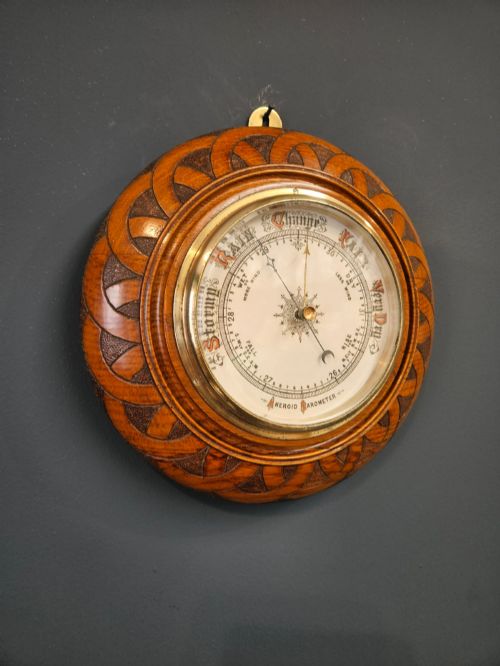
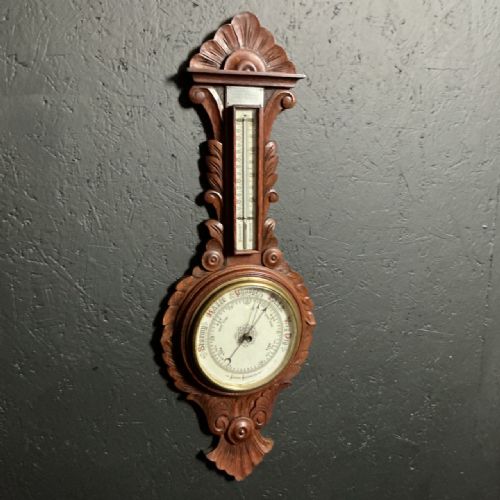
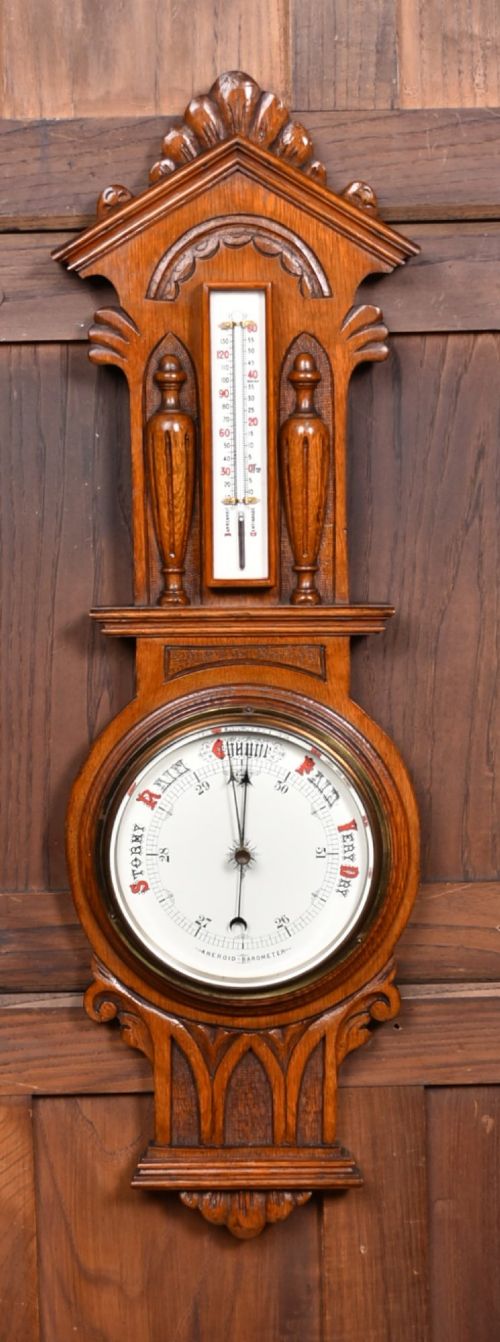
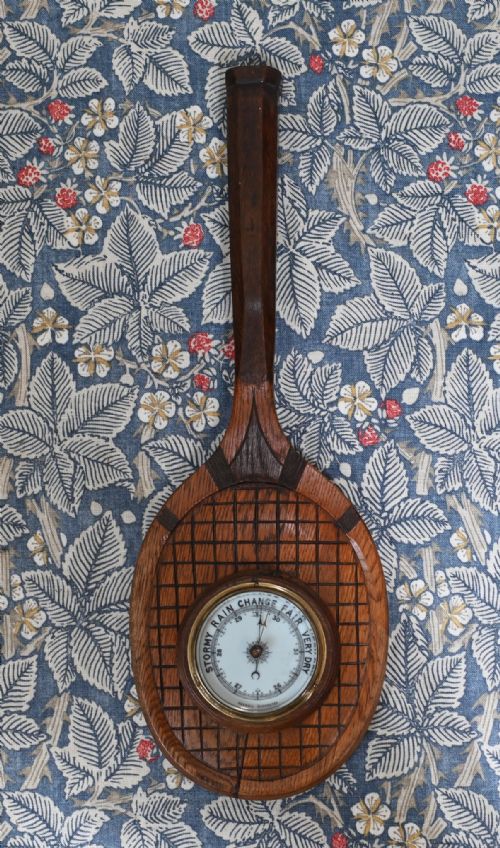
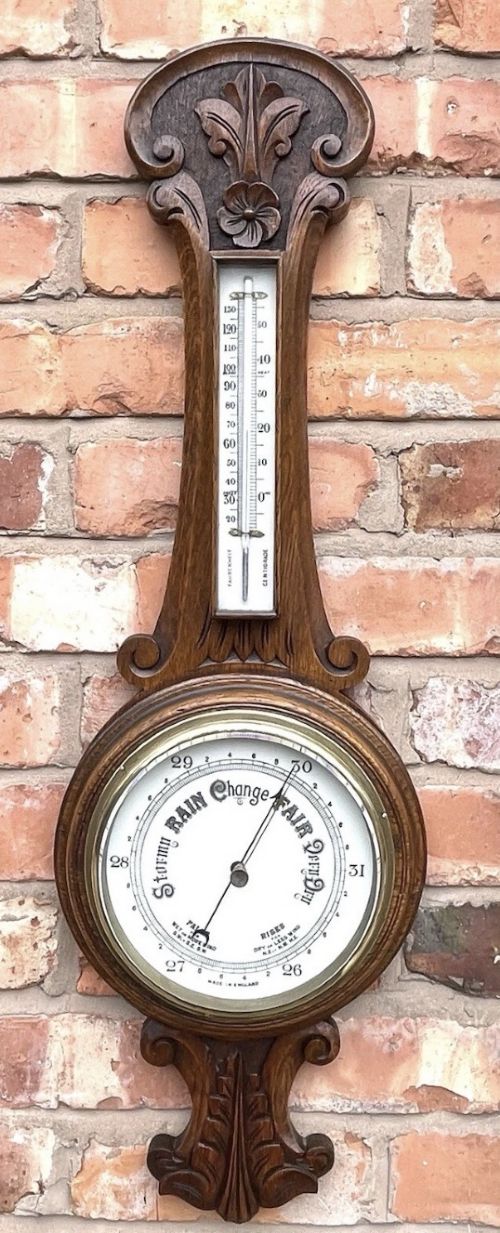
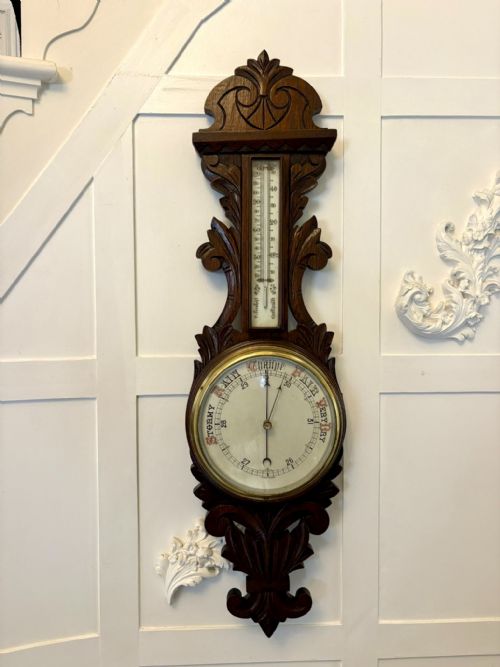
When you search for a carved oak weather station, you are looking at wall-mounted meteorological instruments housed in timber frames, most frequently encountered here in Victorian and Edwardian banjo formats. These domestic pieces combine aneroid barometers, thermometers, and occasionally clock movements within carved wooden surrounds.
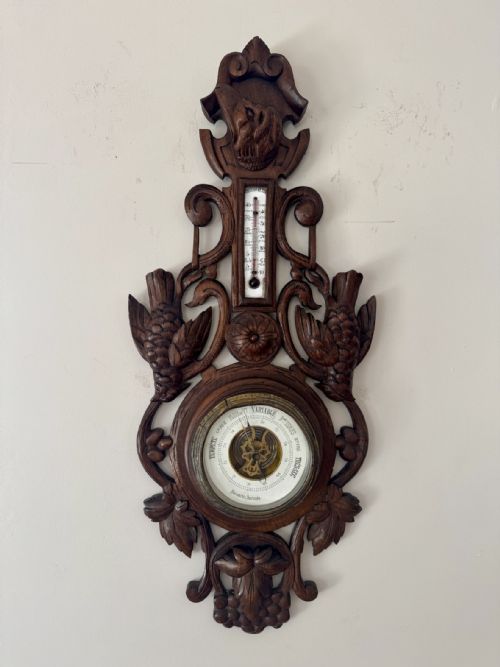
The selection ranges from compact wall panels to large architectural specimens originating from British workshops and continental European centres such as the Black Forest. Banjo barometers dominate the listings, presenting traditional dial layouts beneath carved pediments and scrollwork.
The materials span from straightforward turned oak cases to elaborate carved wood creations incorporating brass bezels and porcelain or enamel scales. Alongside standard domestic barometers, you will discover stick barometers and desk clocks sharing the same utilitarian purpose.
What varies in quality
The depth and crispness of the hand-carving separate standard production pieces from exceptional examples, with master carvers delivering fine botanical or figurative detail. Timber quality and grain selection also dictate value, particularly where figured walnut or dense oak is utilised.
The reputation of the maker and the complexity of the instrument combination influence standing, especially pieces signed by established London opticians or quality retailers. Original glass, legible porcelain scales, and well-preserved brass components elevate the overall standard of the piece.
Listings span from the Victorian and Edwardian eras into the 1930s, featuring oak, walnut, brass, and porcelain elements.
W Watson & Sons·J Hughes London·Negretti & Zambra·Maple & Co·James Pitkin London
The Carved Oak Weather Station Glossary
- Aneroid barometer
- An instrument that measures atmospheric pressure without liquids, using a flexible metal box that expands or contracts.
- Banjo barometer
- A wall-mounted weather instrument shaped like a traditional banjo, featuring a circular dial at the base and a long stem.
- Stick barometer
- A tall, vertical instrument containing a glass tube filled with mercury to measure changes in barometric pressure.
- Bezel
- The metal ring that holds the protective glass in place over the barometer dial or clock face.
Carved Oak Weather Station: Frequently Asked Questions
How do I read a barometer?
Read the main pointer to see the current atmospheric pressure indicated on the dial scale. Tap the glass lightly to settle the mechanism, then use the set hand to track whether pressure rises or falls.
Rising pressure generally indicates improving weather, while falling pressure suggests approaching rain or wind.
Where should I hang a wall barometer?
Hang your barometer on an interior wall away from direct sunlight, radiators, and draughts. Rapid temperature changes can affect the mechanical components and alter the readings.
Ensure the wall fixing is secure, as timber-cased instruments carry significant weight from their brass bezels and internal mechanisms.
How do I date an oak barometer?
Examine the style of the timber carving, the font on the dial, and the construction methods used on the case. Victorian pieces often feature heavy scrollwork, whilst Edwardian examples can display lighter, more restrained floral motifs.
Signatures on the dial or maker plaques on the reverse provide direct attribution to specific firms and active decades.
What is the difference between aneroid and mercurial?
Aneroid barometers use a sealed metal capsule to measure air pressure mechanically without any liquid. They are robust and suitable for general wall hanging in domestic interiors.
Mercurial barometers utilise a column of liquid mercury in a glass tube to indicate pressure changes directly. They require careful handling and vertical installation to function accurately.