
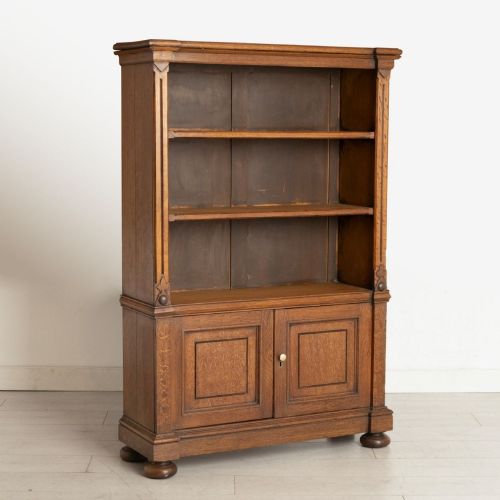
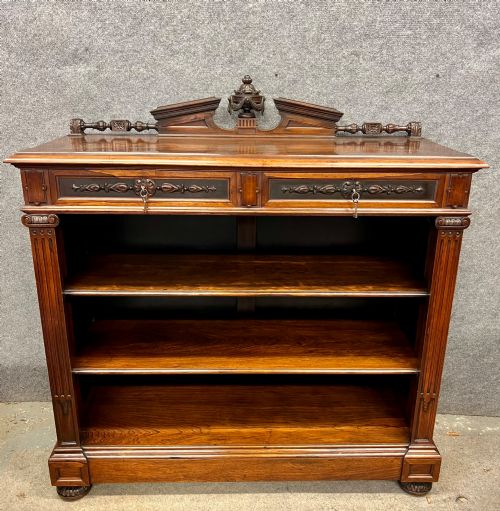


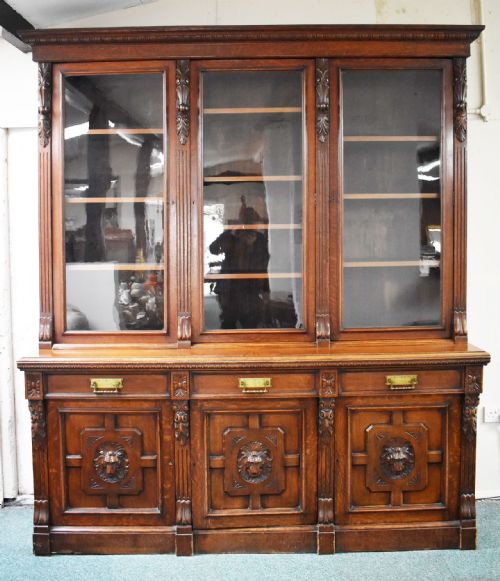


Carved Oak Library Cabinet
A carved oak library cabinet brings substantial presence and deep-grained warmth to a room, offering both display and secure storage for volumes.

Carved Oak Library Cabinet
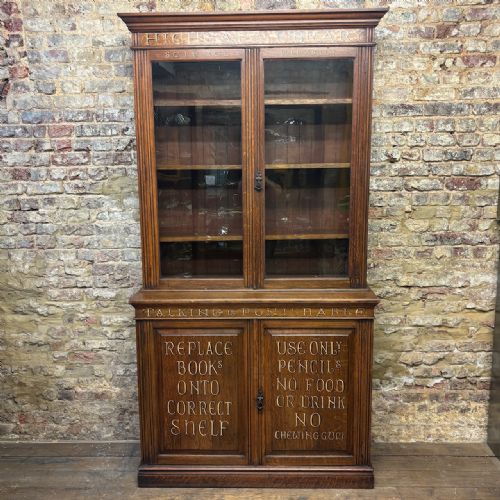
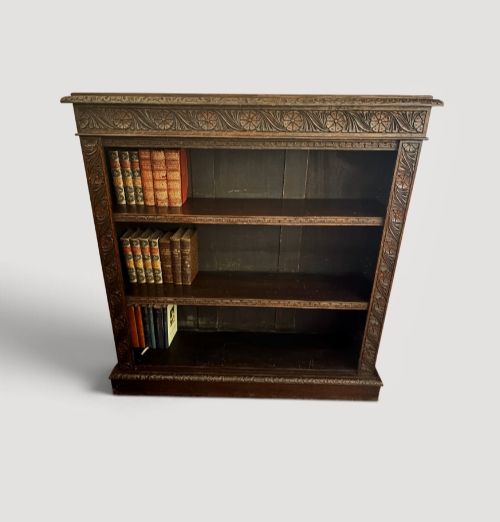
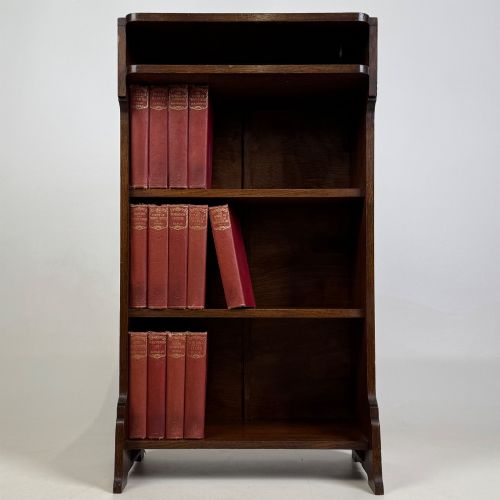
A carved oak library cabinet is a sturdy storage piece designed to house books, folios, and documents in domestic or institutional settings. These furnishings range from open-front shelving units to monumental glazed cupboards with intricate architectural details.
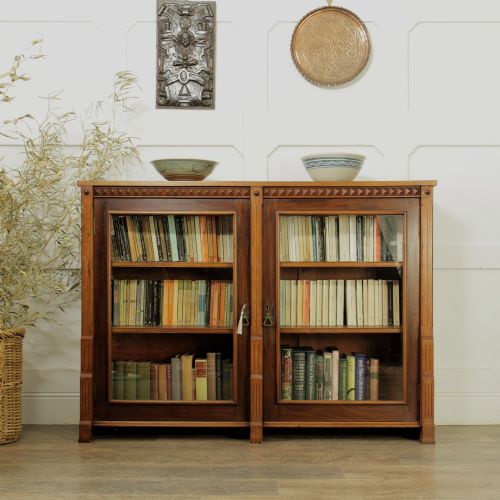
Buyers meet pieces primarily from the nineteenth century, including Victorian Gothic Revival designs, alongside Edwardian and early twentieth-century examples. Common formats include breakfront bookcases, double glazed doors, and specialised folio cabinets.
Originating in country houses and school libraries, these items rely on robust construction to support heavy collections of bound volumes. They serve as functional storage while anchoring the room with traditional woodwork.
Materials and construction methods
Makers utilised solid oak alongside decorative veneers such as pollard oak and burr oak to create depth and visual texture on panelled doors and cornices. Secondary timbers provide structural stability behind the heavy primary surfaces.
Glass panels are fitted into doors to protect valuable texts from dust while keeping collections visible, supported by brass hinges and iron hardware. Wood inlay and intricate hand-carved motifs define the stylistic character of Gothic Revival and Jacobean influences.
Listings feature oak alongside brass, iron, glass, and pollard oak across Victorian, Edwardian, and Gothic Revival styles.
Distinctions in craftsmanship and design
The sophistication of the hand-carving separates standard production items from bespoke commission pieces, with crisp relief work and balanced architectural proportions indicating superior workshop output. Deeply figured pollard or burr oak surfaces elevate the aesthetic appeal beyond plain timber.
Internal engineering, such as adjustable shelving systems and smoothly operating drop-front secretaire drawers, demonstrates the original maker's attention to practical utility. Original hardware, intact stained glass, and sound structural joinery preserve the integrity of the piece.
Benjamin Taylor & Sons·Richard Bridgens·Samuel Pepys
The Carved Oak Library Cabinet Glossary
- Breakfront
- A cabinet design where the central section projects forward from the flanking wings. This layout creates architectural rhythm and visual interest across large library walls.
- Gothic Revival
- An architectural and decorative style drawing inspiration from medieval forms, featuring pointed arches, tracery, and heavy carved details. It appears frequently on nineteenth-century oak furniture.
- Folio Cabinet
- A specialised storage unit built with wide, shallow shelves or drawers designed to hold large maps, prints, and oversized books flat. These pieces are less common than standard bookcases.
- Pollard Oak
- Timber harvested from trees that were pollarded, producing wood with a dense, clustered grain pattern. Cabinet makers used veneers of this material to create striking decorative surfaces.
- Secretaire
- A desk component incorporated into a cabinet, often featuring a drop-front writing surface concealing small pigeonholes and drawers. It combines reading utility with enclosed shelving.
Carved Oak Library Cabinet: Frequently Asked Questions
How do I care for a carved oak library cabinet?
Keep the wood away from direct heat sources and sudden humidity shifts to prevent the solid oak panels and veneers from splitting.
Apply a microcrystalline wax periodically to nourish the surface and gently dust the intricate carvings with a soft brush.
What periods are typical for these cabinets?
The majority of pieces date from the Victorian era, particularly the mid to late nineteenth century, reflecting the growth of domestic libraries.
Earlier examples from the William IV period and later Edwardian pieces also appear among the records.
Are the shelves usually adjustable?
Many Victorian and later iterations feature adjustable shelving systems to accommodate varying book heights.
Earlier open bookcases often used fixed rows, so checking the internal mechanism helps confirm the period of the piece.
What distinguishes Gothic Revival oak cabinets?
These pieces incorporate architectural motifs such as pointed arches, quatrefoils, and heavy linenfold or geometric panel carving.
They often utilise darker oak finishes to emulate medieval ecclesiastical interiors.