
Carved Oak Lamp Stand
A carved oak lamp stand brings grounding texture and architectural weight to a room, uniting utility with centuries of woodwork tradition.
Carved Oak Lamp Stand
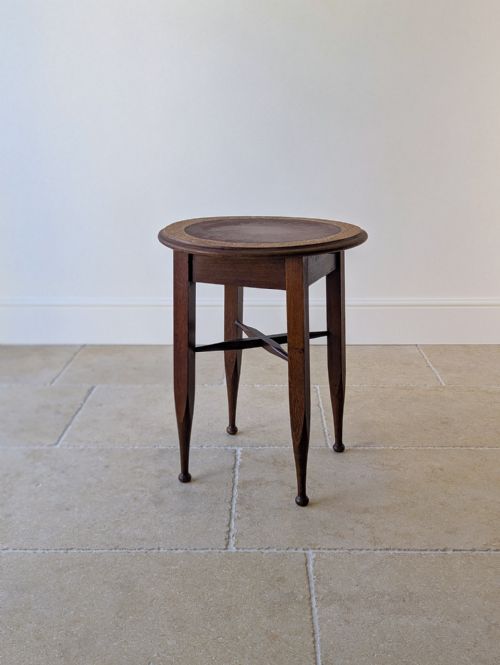
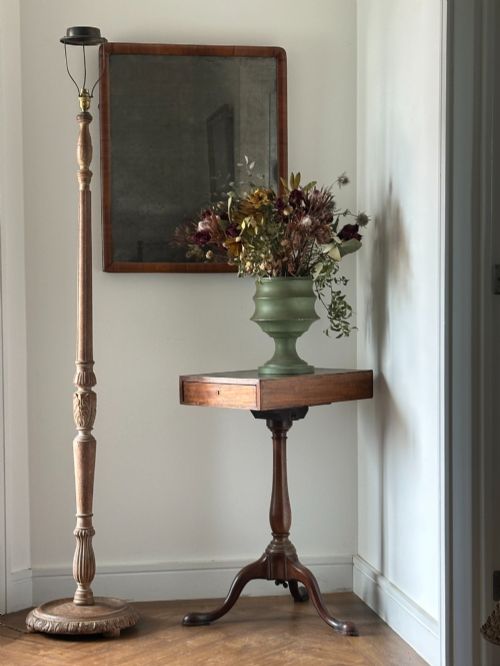
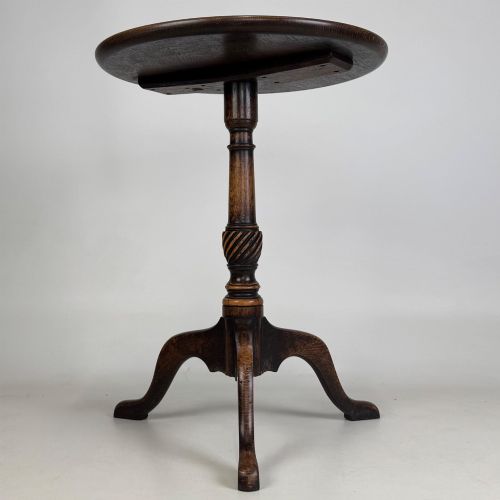
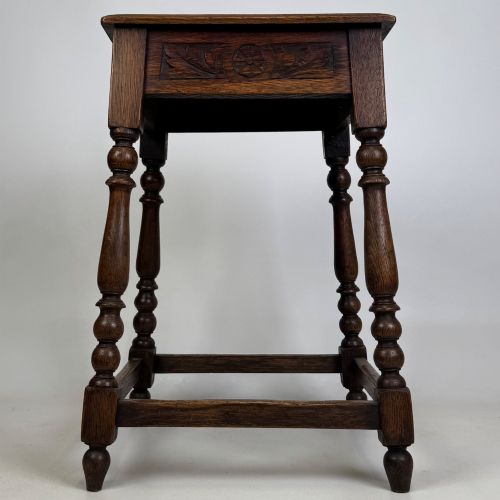
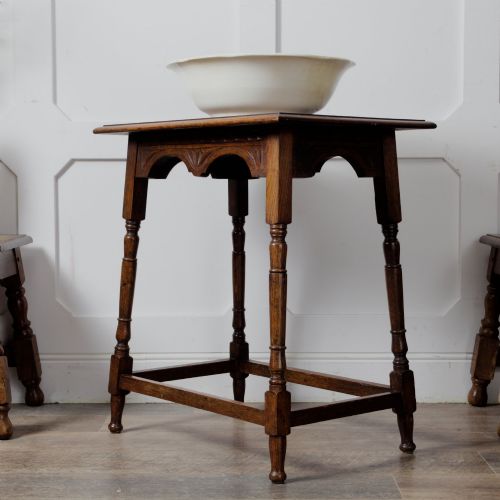
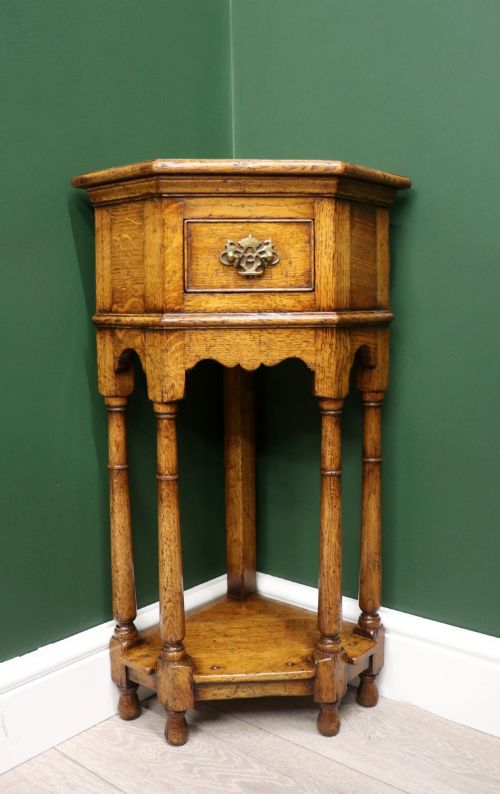
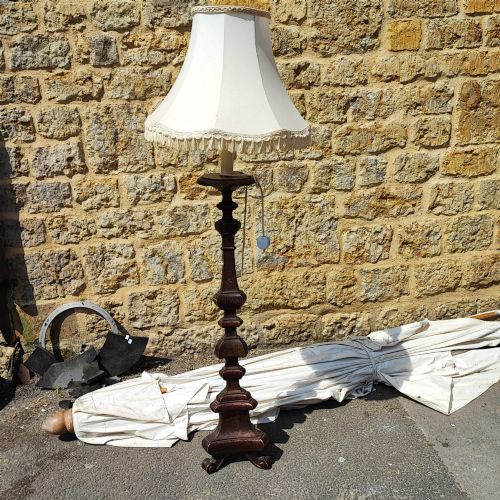
When you search for a carved oak lamp stand, you encounter a crossover of floor-standing lighting fixtures, torcheres, and occasional side tables that double as surface supports for illumination. The listings on this page span the Victorian, Edwardian, and twentieth-century periods, capturing styles from Jacobean Revival and Arts and Crafts to Gothic Revival.
Floor lamps and standard lamps appear frequently alongside occasional tables and tripod bases originally adapted or built to hold lamps. These pieces originate predominantly from British workshops and domestic traditions, favouring sturdy timber construction.
How they were made
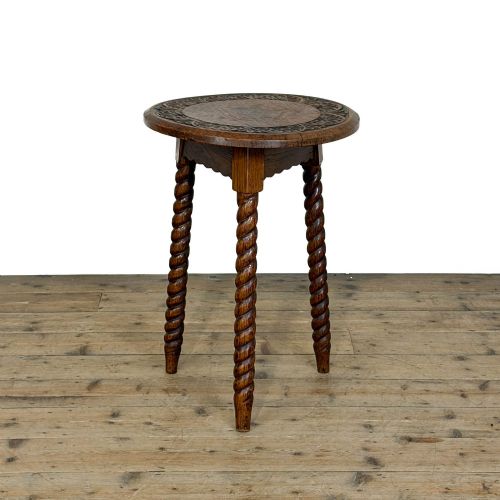
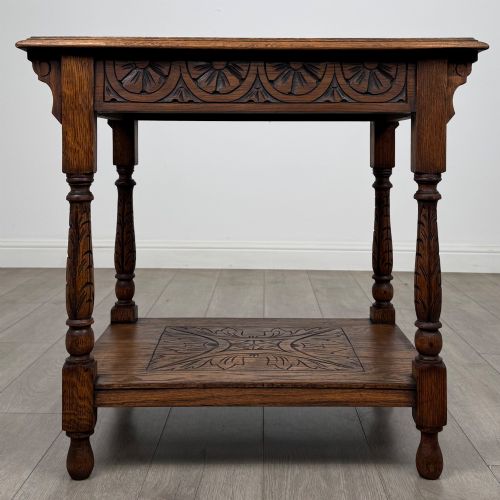
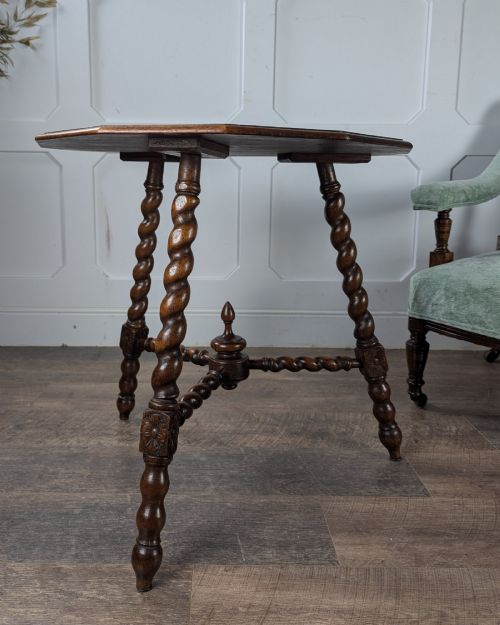
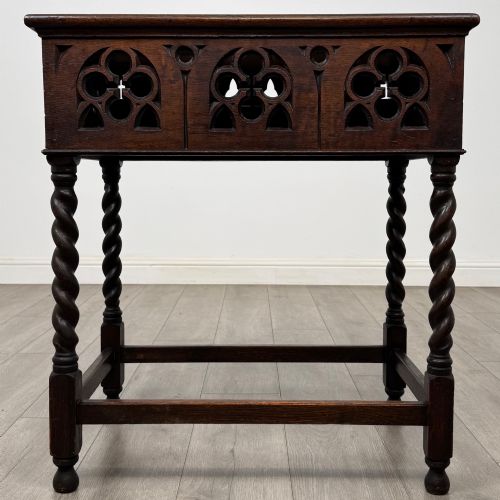
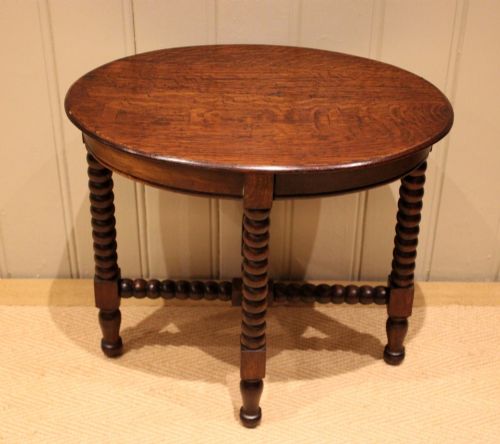
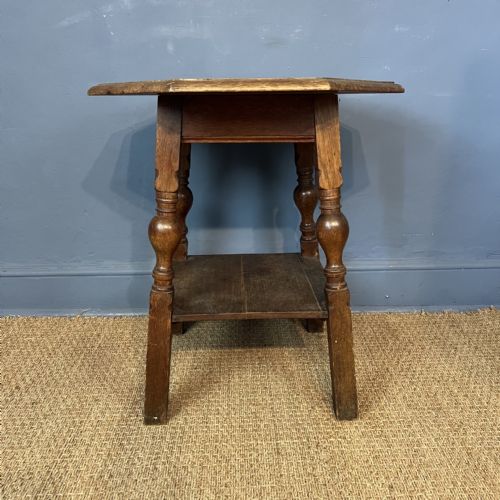
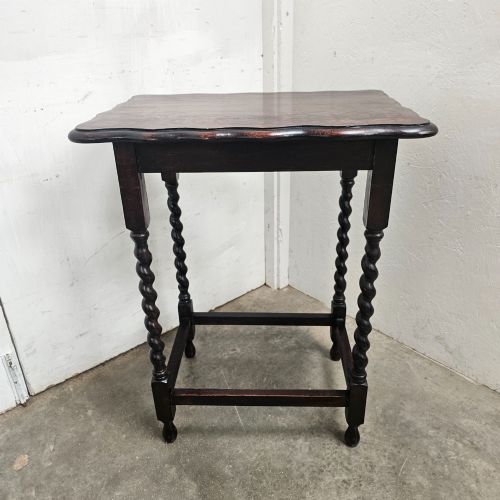
Cabinet makers and turners utilised solid oak, burr oak, and carved hardwood, frequently incorporating brass fittings and fabric shades. Structural elements rely on traditional joinery, lathe-turned barley twist legs, and hand-carved detailing.
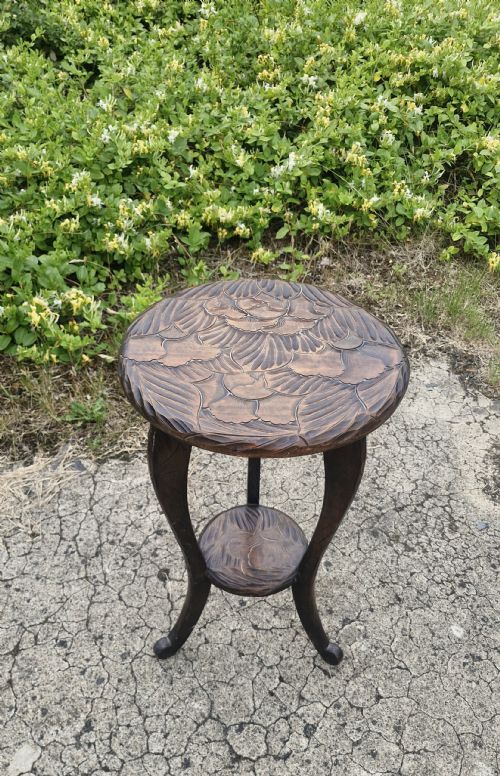
Surfaces display surface carving, liming techniques, and occasionally inserted marble tops, reflecting the prevailing aesthetic movements of the nineteenth and early twentieth centuries.
Listings include solid oak, burr oak, and carved hardwood across Victorian, Edwardian, and 1930s periods.
What varies in quality
The standard of carving differentiates the output of commercial production from dedicated artistic workshops. Crisp, deep relief work and balanced proportions indicate superior craftsmanship.
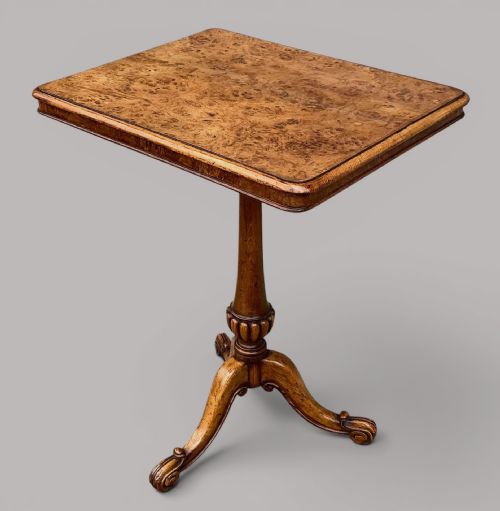
The choice of timber grain, particularly figured burr oak or dense solid oak, alongside stable three-legged or four-legged tripod constructions, determines the structural integrity and visual depth of the stand.
Liberty and Co·Liberty of London
The Carved Oak Lamp Stand Glossary
- Barley twist
- A type of woodturning resembling a spiralling rope column, popular in seventeenth-century furniture and revived during the Victorian and Edwardian eras.
- Torchere
- A tall stand or floor lamp designed to hold a single light source, often featuring slender proportions and carved decoration.
- Tripod table
- A small table or lamp stand supported by three legs, frequently utilising a central turned pillar.
- Occasional table
- A small, movable side table intended for flexible placement in a room to hold lamps, books, or decorative objects.
- Arts and Crafts
- A design movement emphasising handcraftsmanship, simple forms, and traditional materials, reacting against mass industrial production.
Carved Oak Lamp Stand: Frequently Asked Questions
What periods do these lamp stands come from?
The pieces span from the nineteenth century through the Edwardian era and into the 1930s. Styles range from Victorian and Gothic Revival to Arts and Crafts.
Most items reflect British workshop traditions of the late Victorian and early twentieth-century periods.
Are these lamp stands original?
Many items originate from the Victorian and Edwardian periods, constructed from solid oak and burr oak. Some occasional tables have been adapted over time to hold electrical lamps.
Each listing records the period and materials associated with the specific construction.
How do I style a carved oak lamp stand?
These pieces suit traditional, Arts and Crafts, or eclectic interiors where natural wood textures anchor the room. Pair them with neutral fabric shades to balance the dark, carved timber.
Position them beside seating areas or in corners to add vertical height and warm illumination.
What is the difference between a floor lamp and a table?
Floor lamps and standard lamps are tall vertical standards designed to stand directly on the floor. Occasional tables provide a surface base that can also function as a lamp table.
Both categories frequently feature carved oak timbers and similar regional design details.