



Carved Oak Hanging Cupboard
A carved oak hanging cupboard brings solid timber presence and practical wall storage to compact rooms.

Carved Oak Hanging Cupboard
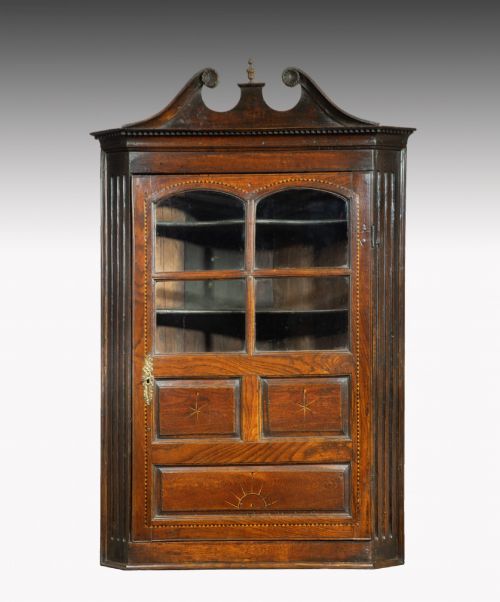
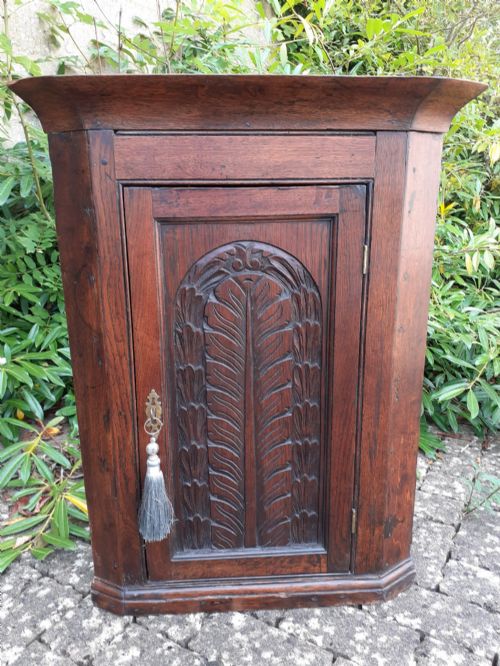
A carved oak hanging cupboard is a wall-mounted piece designed to store provisions, tableware or household goods while saving floor space. Buyers searching for a carved oak hanging cupboard frequently encounter corner variations, flat-backed wall cabinets and Georgian or Victorian interpretations.
The form spans centuries, appearing in provincial French workshops, Welsh farmhouses and English country homes alike. These cabinets range from simple food cupboards to inlaid corner units with shaped shelves and raised panel doors.
Materials and construction
Makers built these cabinets primarily in solid oak, sometimes combining it with beech, fruitwood inlay or pigment. Iron and brass hardware, including hinges and latches, secure the doors while glass occasionally appears in display formats.
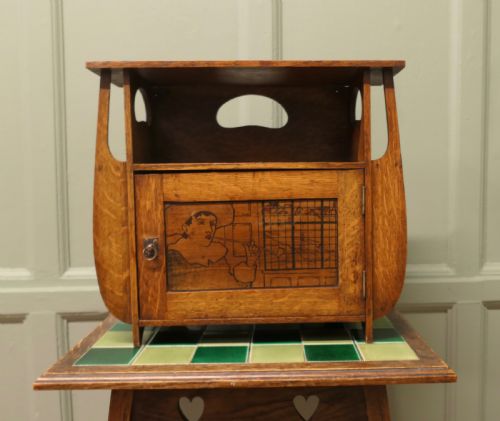
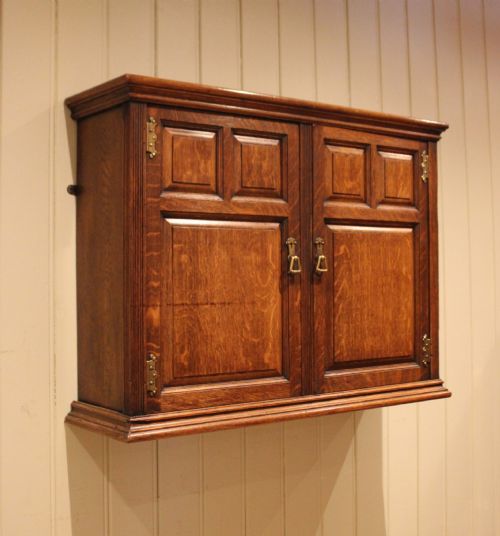
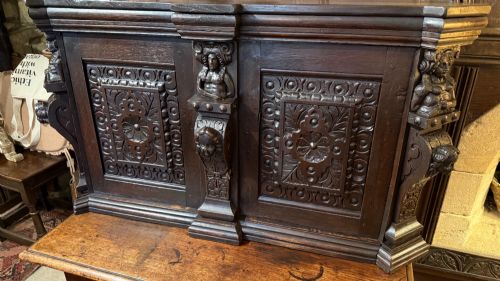
Joinery relied on traditional methods suited to hanging weight, featuring pegged frames and raised panels. Surface decoration involves hand-carving, pokerwork or applied mouldings rather than complex veneering.
Carved Oak Hanging Cupboard Retail Price Guide 2026
Typical asking prices for carved oak hanging cupboard among the pieces listed under this phrase on Sellingantiques today, from the lower quarter to the upper quarter. They describe what is for sale here now, not the wider market.
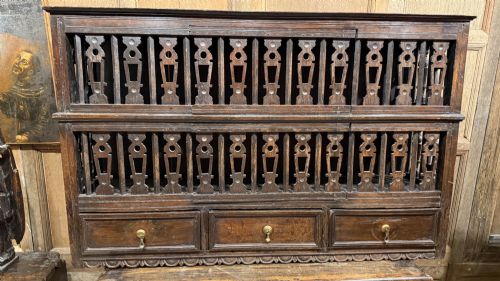
Some eighteenth-century food cupboards included integrated ventilation holes carved into the panels to keep cheese and butter breathing properly.
Assessing quality and character
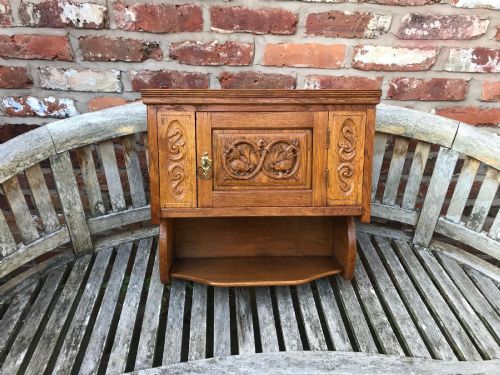
Quality rests in the crispness of the hand-carving and the thickness of the oak boards used for the panels and carcase. Superior examples show thoughtful proportion, integration of original brass or iron hardware, and well-fitted interior shelving.
Lesser pieces often suffer from later alterations, heavy-handed restoration or replacement timber. The depth of patination on the oak surface distinguishes untouched period items from overly stripped or modernised equivalents.
John Moyr Smith
The Carved Oak Hanging Cupboard Glossary
- Corner cupboard
- A cabinet specifically constructed with a triangular plan to fit neatly into the corner of a room.
- Livery cupboard
- An early form of wall-mounted or standing cupboard traditionally used for storing food and provisions.
- Raised panel
- A wooden panel with thinned edges that fits into a grooved frame, allowing the wood to expand and contract safely.
- Pokerwork
- A decorative technique using heated tools to scorch designs into the wooden surface.
Carved Oak Hanging Cupboard: Frequently Asked Questions
How do I hang a heavy oak wall cabinet safely?
Solid oak cabinets carry substantial weight, particularly when filled with items. Secure them directly into structural wall studs using heavy-duty fixings.
Professional installation ensures the bracket placement distributes the load evenly across the back frame of the cupboard.
Where were these cupboards typically placed in older homes?
Kitchens, parlours and dining rooms frequently accommodated these cabinets to keep food, spices or ceramics within easy reach. Corner spaces proved especially popular for maximising storage without obstructing floor traffic.
Bedrooms and hallways also utilised smaller wall-mounted units for personal belongings.
How do I distinguish an 18th-century piece from a Victorian revival?
Examine the construction marks, timber movement and tool traces visible on the interior boards and rear panels. Eighteenth-century examples often display hand-sawn timber characteristics and pegged joinery.
Victorian revival pieces tend to show more uniform machine sawing and occasionally softer carving profiles.
What is the best way to clean and maintain antique oak?
Dust the surfaces regularly with a dry, soft cloth to prevent particulate accumulation in the carved recesses. Avoid modern silicone polishes that build up a sticky residue over time.
Apply a traditional beeswax sparingly if the timber appears dry, buffing it gently to preserve the natural lustre.