
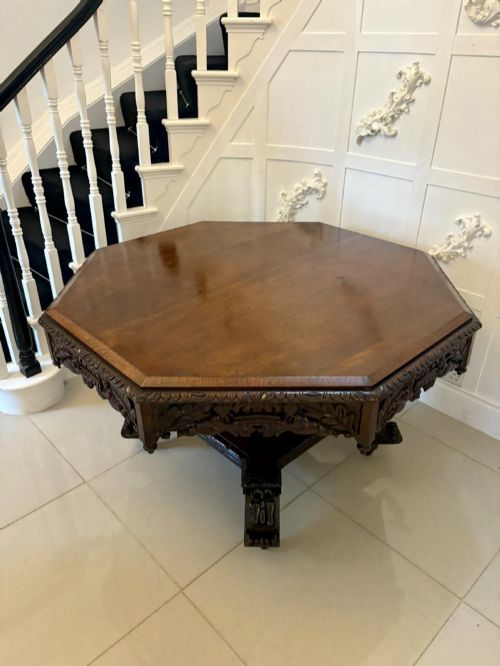
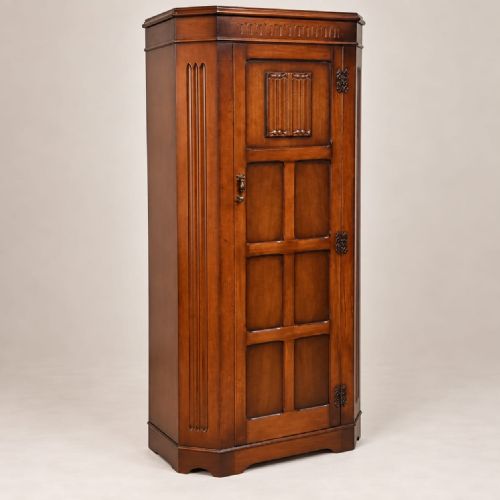


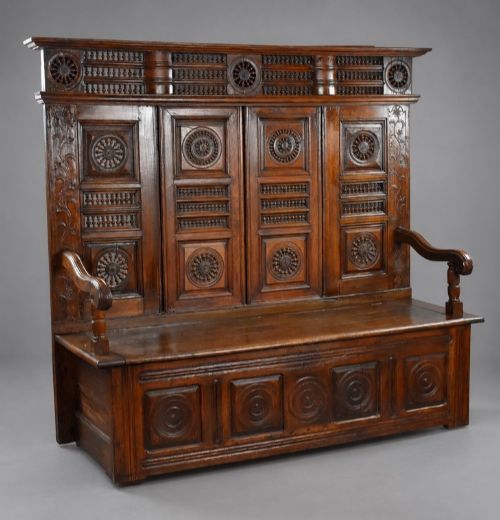
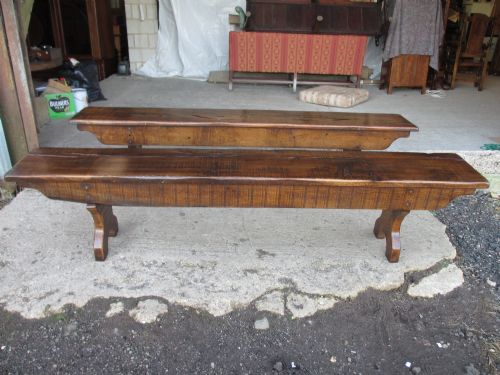
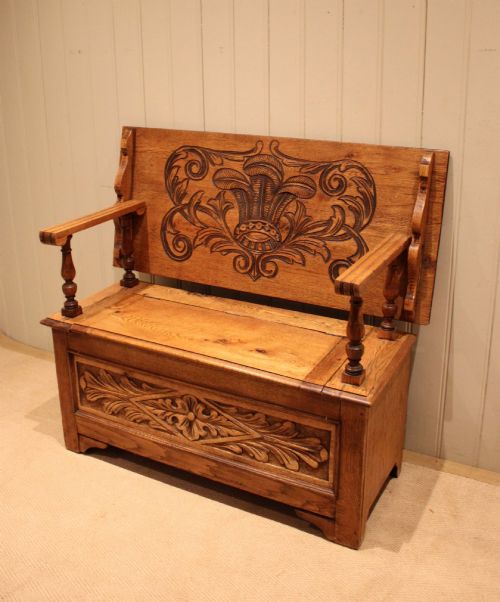
Carved Oak Hall Furniture
Carved oak hall furniture brings substantial timber, deep relief work, and functional design directly into an entryway.
Carved Oak Hall Furniture
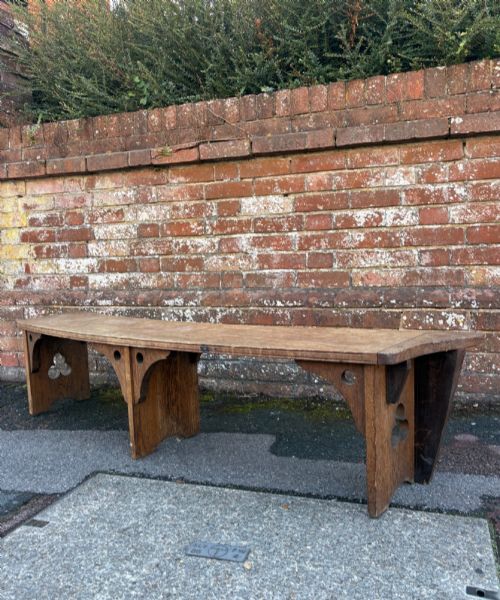
Carved oak hall furniture encompasses benches, settles, hall stands, side tables, and wardrobes designed for entrance spaces. These pieces span from the seventeenth century through the Victorian, Edwardian, and Arts and Crafts periods, reflecting changing domestic requirements over hundreds of years.
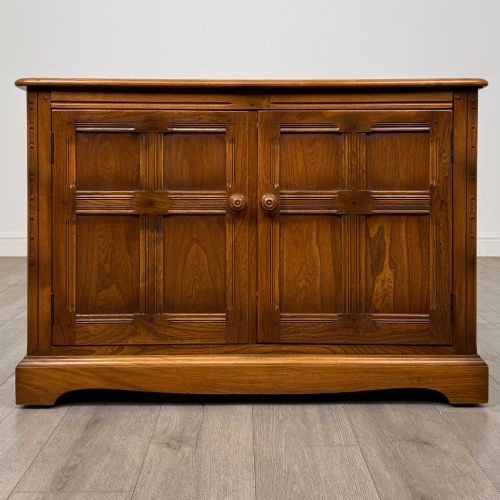
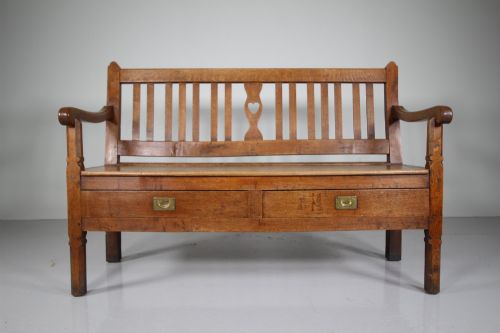
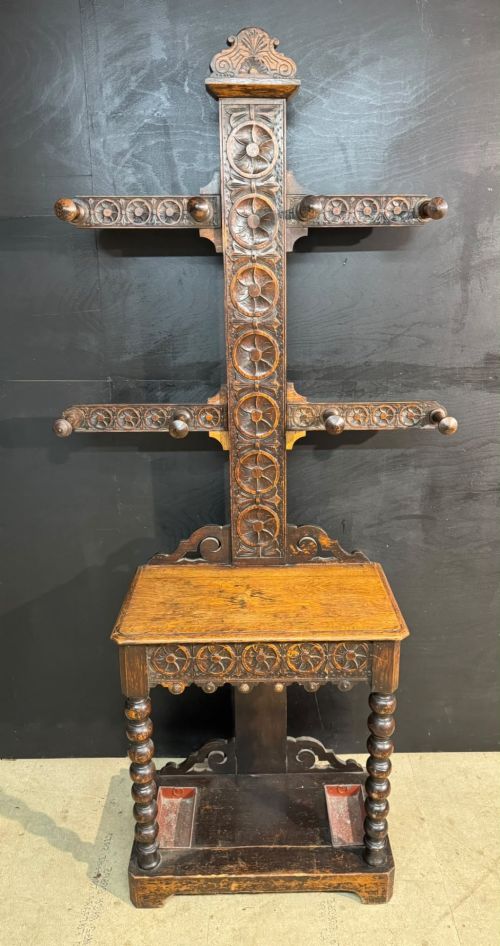
Settles with high backs and box seats appear alongside Gothic Revival umbrella stands and Jacobean Revival side tables. The nineteenth century yields heavy benches and Pugin style supports, while later Edwardian and 1920 pieces introduce golden oak cupboards and light oak occasional tables.
Solid oak construction dominates the category, accented occasionally by brass or wrought iron hardware. Buyers frequently encounter nineteenth century and Edwardian interpretations that draw heavily on earlier styles like Jacobean and Gothic revivalism.
Assessing the pieces
Depth and crispness of the carving separate standard production from superior examples, with hand-chisel work showing distinct definition. The choice of timber grain, particularly in golden oak and seventeenth century stock, dictates visual presence.
Structural integrity depends on original joinery and the retention of integral elements like lift up seats, box compartments, and matching hardware.
Materials range from solid oak and golden oak to contrasting iron, brass, and glass elements.
Gillows
The Carved Oak Hall Furniture Glossary
- Settle
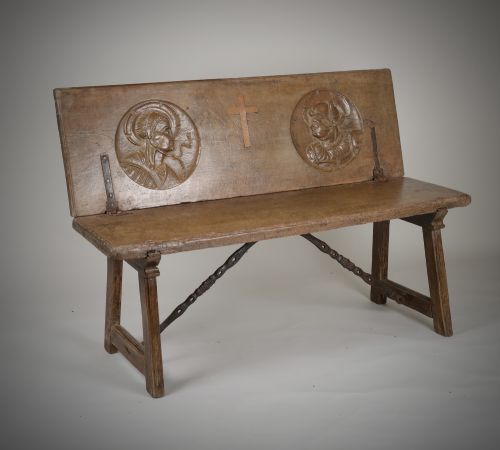
- A wooden bench with a high back, solid arms, and often a box base used for storage. This form kept drafts away from the entrance.
- Lowboy
- A small oak side table with drawers, typically dating from the eighteenth century. These pieces served functional roles in hallways and reception rooms.
- Monks bench
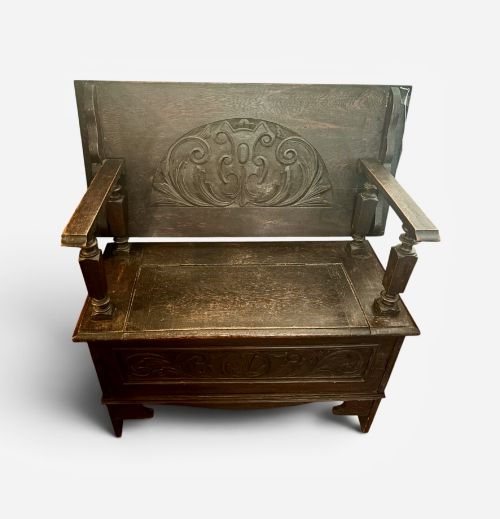
- A convertible seat featuring a hinged back that folds down to form a table top. It represents a practical dual purpose item found in smaller halls.
- Jacobean Revival
- A nineteenth and twentieth century style mimicking seventeenth century English furniture design. It incorporates geometric moulding, turned legs, and strapwork carving.
- Gothic Revival
- An architectural and decorative style drawing on medieval ecclesiastical forms. Items in this group display pointed arches, trefoils, and heavy structural proportions.
Carved Oak Hall Furniture: Frequently Asked Questions
What is a monk's bench?
A monk's bench is a dual purpose seat featuring a hinged back that folds flat to create a tabletop. It provides both seating and a surface for household tasks.
These compact items suit small hallways where multifunctional furniture is necessary.
How do I date an oak settle?
Dating relies on construction methods, joinery marks, and the style of the carved panels. Seventeenth and eighteenth century examples display hand-Hewn pegged joints and natural timber wear.
Later Victorian and Edwardian pieces often reproduce earlier motifs but utilise machine sawn timber and standardised fixings.
Where were hall stands placed?
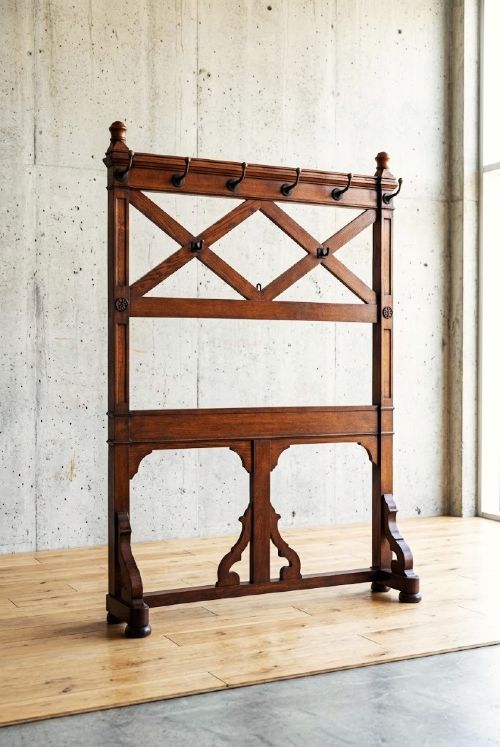
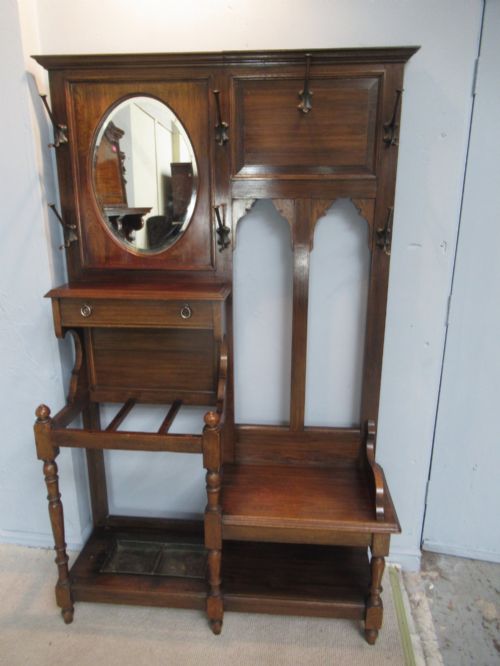
Hall stands stood directly inside the main entrance of a home to manage outdoor garments. They provided dedicated space for hats, coats, sticks, and umbrellas.
Many incorporated small trays for calling cards or mirrors to check appearance before leaving the house.
What is golden oak?
Golden oak refers to timber possessing a warm, honey coloured grain enhanced by clear waxes and polishes. It gained popularity during the Edwardian period.
This lighter finish brightened entrance spaces compared to the dark, heavily stained surfaces of earlier centuries.