





Carved Oak Cane Rack
A carved oak cane rack provides a sturdy, handsome home for daily walking sticks and wet umbrellas in a busy hallway.
Carved Oak Cane Rack
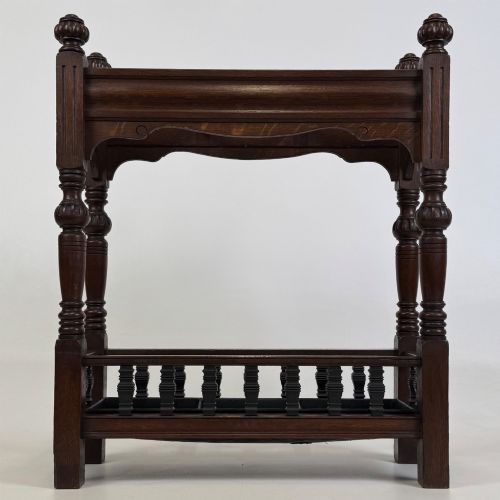
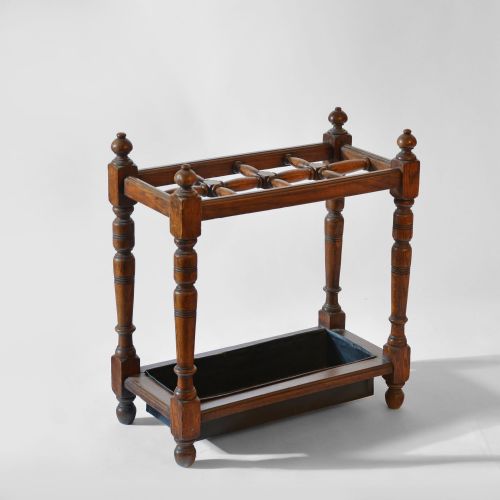
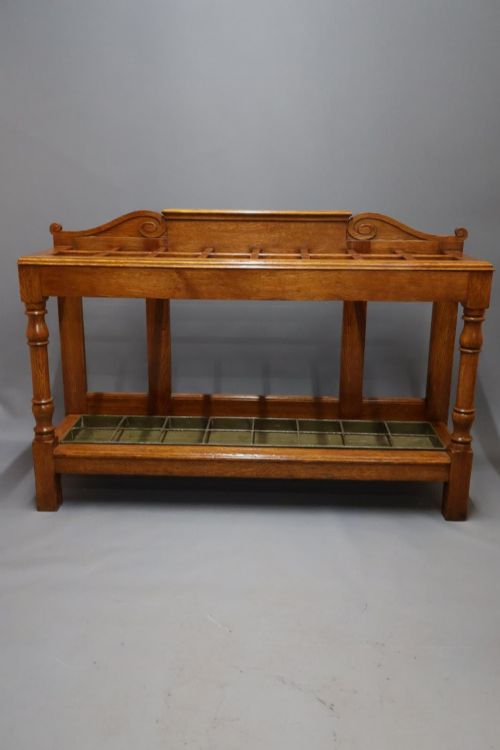
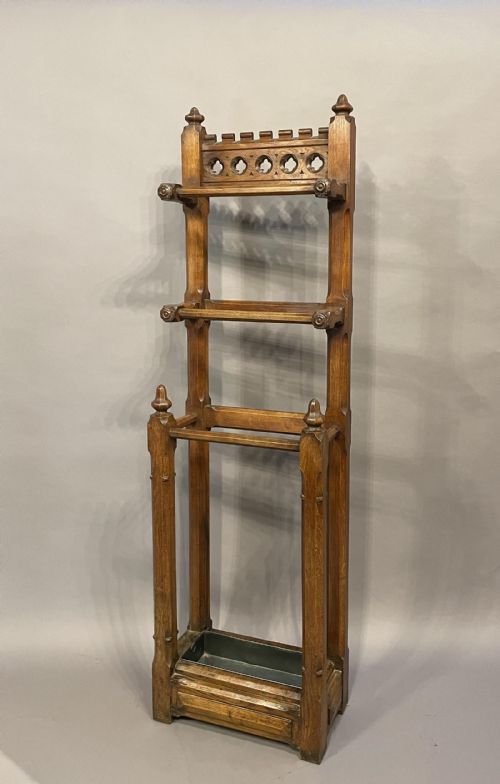
A carved oak cane rack is a practical hall furnishing designed to hold walking sticks, umbrellas and parasols upright in the entrance of a home. You are most likely to meet Victorian and Edwardian examples on this page, alongside specific regional interpretations from country houses and Scottish estates.
The styles range from plain utilitarian timber to heavily carved Gothic Revival, Jacobean Revival and Arts & Crafts designs. Many incorporate metal drip pans at the base to catch rainwater from wet umbrella tips, protecting the surrounding floorboards from moisture and rot.
Forms vary from compact demi-lune shapes designed to sit flat against a hallway wall to larger, freestanding architectural hall stands. These pieces reflect the functional demands of nineteenth and early twentieth century domestic life, where outerwear and walking aids were organised immediately upon entering the house.
How they were made
These racks rely on solid oak as the primary structural timber, chosen for its strength and resistance to heavy daily use. Cabinetmakers shaped the wood using traditional joinery methods, incorporating panels and turned elements to build a rigid frame.
Carving was executed by hand, creating the intricate geometric panels, foliate motifs and Gothic tracery seen in Victorian and Edwardian workshops. Metal elements such as brass, zinc and cast metal were introduced as internal liners and drip trays to handle moisture safely.
Secondary materials such as ceramic appear in specific liner basins, while cane webbing is sometimes woven into side panels for ventilation and visual contrast.
Listings span from the nineteenth century through the Edwardian period, uniting oak with functional brass, zinc and ceramic elements.
What varies in quality
Quality in a carved oak cane rack rests primarily on the depth and crispness of the hand carving rather than surface decoration alone. Superior examples display confident, sharp chisel work on the oak panels, whereas lesser pieces rely on shallow stamping or plain timber.
The integrity of the internal drip pan system distinguishes better pieces from utilitarian ones. Original, heavy gauge brass or zinc trays that fit the base precisely indicate a higher standard of manufacture compared to missing or later replacement liners.
Structural heft and timber selection also divide the range, with dense, well-figured oak frames holding their joints tight over decades of daily weight and dampness.
The Carved Oak Cane Rack Glossary
- Demi-lune
- Half-moon shape designed to stand flat against a hallway wall. This curved profile saved valuable floor space in narrow entrance passages.
- Drip pan
- Removable metal tray placed at the base of a stand to catch water. These were commonly fashioned from brass, zinc or cast metal.
- Gothic Revival
- Architectural and decorative style featuring pointed arches and heavy ecclesiastical motifs. It influenced hall furniture throughout the nineteenth century.
- Arts & Crafts
- Design movement favouring honest construction and visible craftsmanship over machine-made ornamentation. Pieces in this style often highlight the natural grain of the oak.
- Black Forest
- Regional carving style known for naturalistic animal and foliage motifs. Pieces from this tradition often feature deeply carved timber detailing.
Carved Oak Cane Rack: Frequently Asked Questions
Where should I place a cane rack?
These racks belong in an entrance hall, porch or boot room where coats and outdoor gear are stored. Placing them near the front door ensures walking sticks and umbrellas are ready when you leave and contained when you return.
Keep the timber away from direct heat sources such as radiators to prevent the oak from drying out and splitting over time.
How do I protect the floor from wet umbrellas?
Most traditional stands feature a metal drip tray at the bottom that catches rainwater running down the umbrella shafts. Ensure your stand retains its original liner or place a modern waterproof mat underneath if the base is unlined.
Empty and dry the metal tray periodically to prevent standing water from damaging the interior base of the wooden frame.
How do I clean and maintain oak?
Dust the carved surfaces regularly with a soft, dry cloth to prevent dirt from settling into the recesses of the woodwork. Feed the timber occasionally with a quality beeswax to nourish the grain and maintain a soft lustre.
Avoid using modern liquid silicone polishes, which can build up a sticky film over the antique finish and attract more dust.
How can I tell a Victorian stand from an Edwardian one?
Victorian examples generally feature heavier proportions, darker finishes and denser carving influenced by Gothic or Jacobean Revival tastes. They often look more architectural and imposing in a hallway.
Edwardian stands tend to be lighter in build, reflecting Arts & Crafts simplicity or cleaner Edwardian lines with less cluttered ornamentation.