



Carved Oak Entry Chairs
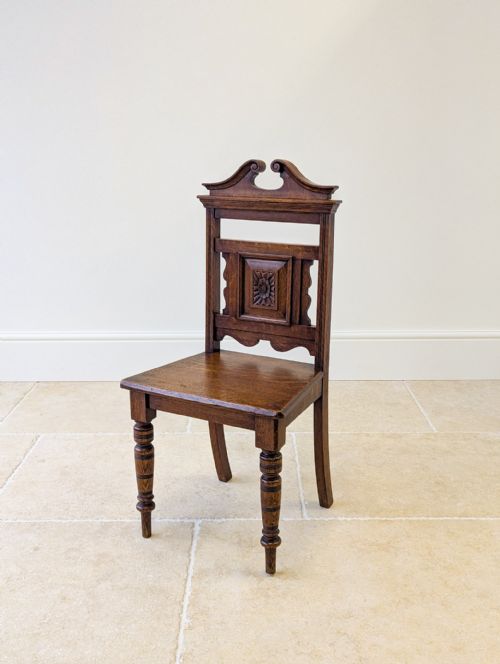
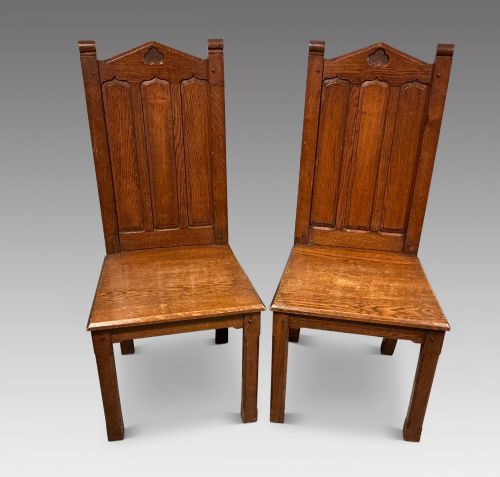
These carved oak entry chairs bring solid timber presence and architectural detail straight into a hallway, offering practical seating with historical weight.
Carved Oak Entry Chairs
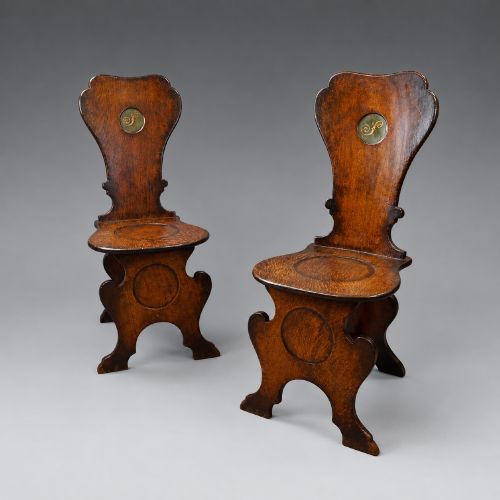
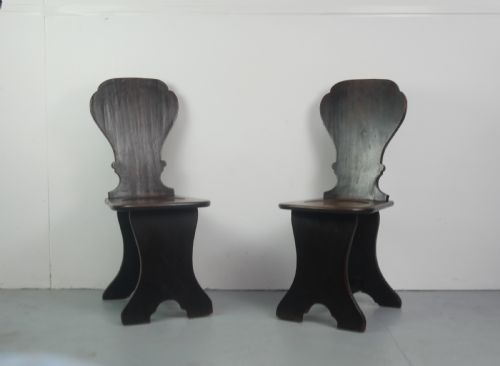
Carved oak entry chairs encompass functional hall seats, sgabello forms and monks benches designed to furnish reception spaces. The selection relies heavily on nineteenth-century interpretations, drawing from Victorian, Regency and revival aesthetics.
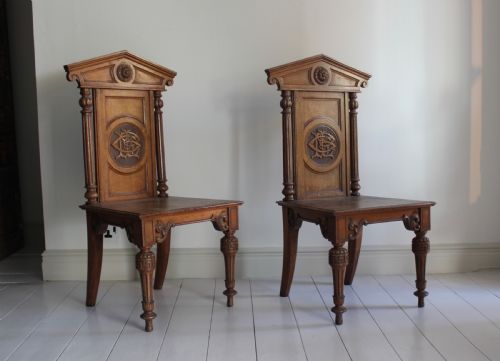
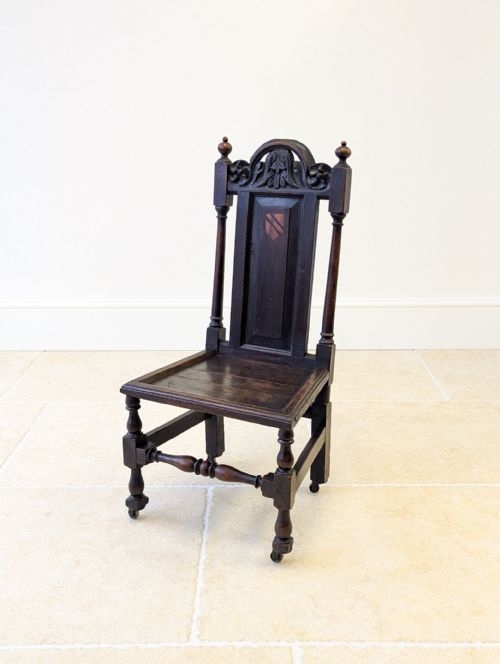
Most pieces seen here function as hall chairs or reception seats, often appearing in pairs. Variants include Jacobean revival, Gothic revival and Italian Renaissance revival influences, alongside occasional monks benches that double as tables.
Origins span English, Scottish, French and Italian workshops, reflecting diverse regional tastes in domestic furnishing from the eighteenth century through to the nineteen-thirties.
What varies in quality
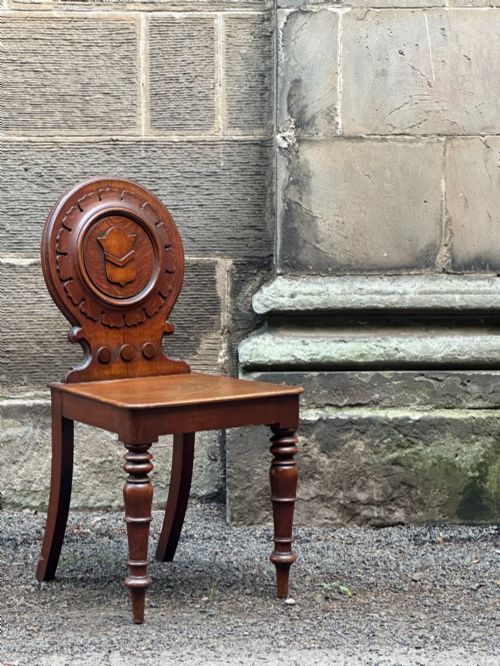
The standard of carving distinguishes superior examples, where depth, sharpness and sculptural confidence elevate the woodwork far above flat, mechanical execution. Crisp relief on shield backs and legs separates master workshop output from standard production.
Timber selection dictates overall integrity, with dense, figured golden oak providing a richer visual depth than plain utility grades. The integration of secondary materials, such as undamaged ceramic tiles or fitted leather pads, further marks out superior specifications.
Listings span periods from the mid-eighteenth century to the nineteen-thirties, dominated by nineteenth-century Victorian and Regency examples.
Gillows of Lancaster
The Carved Oak Entry Chairs Glossary
- Sgabello
- A light, portable wooden chair originating in the Italian Renaissance, featuring a supportive back and trestle-like slab legs instead of conventional vertical posts.
- Monks Bench
- A multifunctional piece of furniture featuring a hinged top that converts the seat back into a table surface when tilted forward.
- Gothic Revival
- An architectural and decorative style popular during the nineteenth century, characterised by pointed arches, tracery and medieval motifs translated into domestic seating.
- Shield Back
- A chair back shaped in the outline of a heraldic shield, frequently carved with crests, foliage or strapwork during the Victorian period.
- Jacobean Revival
- A nineteenth-century design movement resurrecting seventeenth-century English styles, notable for heavy turned legs, rectilinear framing and deep geometric carving.
Carved Oak Entry Chairs: Frequently Asked Questions
What is a monks bench?
A monks bench is a convertible seat fitted with a hinged back that folds down to form a table top.
Historically placed in hallways or smaller rooms, this dual-purpose design conserved floor space while providing both seating and a flat surface.
Where were hall chairs placed?
Hall chairs stood in entrance halls, corridors and reception rooms to offer temporary seating for visitors waiting to be announced.
Because they were meant for brief use rather than long lounging, their wooden seats and upright backs prioritized formal posture and display.
How do I identify a Victorian Gothic chair?
Victorian Gothic chairs show architectural influences through pointed arches, trefoils, heavy linenfold panels and pointed finials carved directly into the solid timber.
These details mimic medieval cathedral stonework scaled down for nineteenth-century domestic interiors.
Are these chairs meant for daily sitting?
These solid oak seats handle normal daily use well, though their rigid wooden construction and upright posture suit brief sitting rather than relaxation.
Their sturdy timber frames make them durable additions to modern entryways and hallways.