

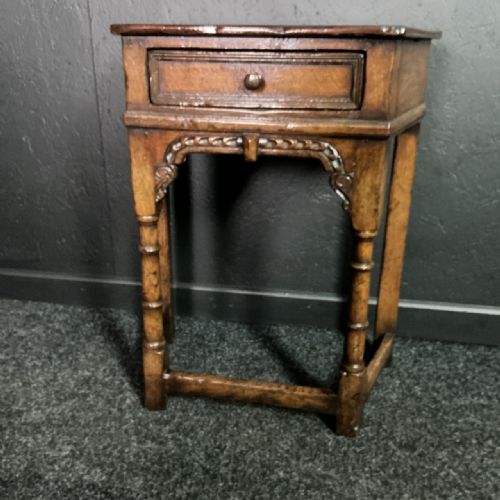
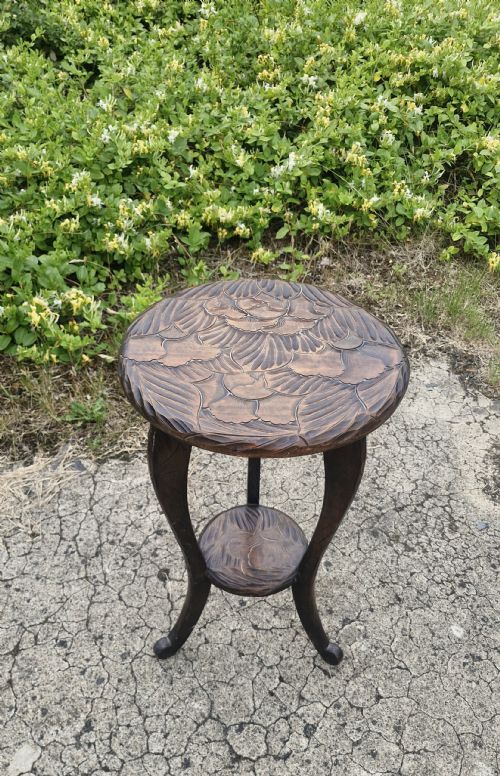
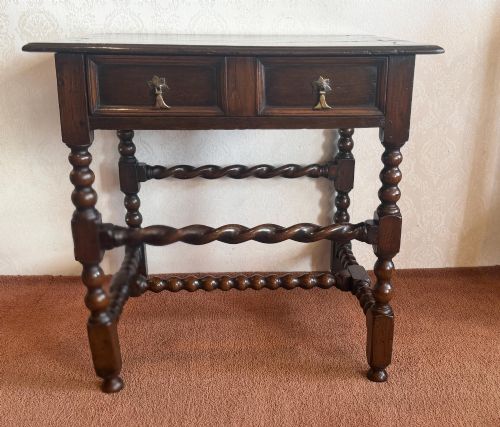


Carved Oak End Table
A carved oak end table brings solid timber grain and historic relief work into a room as a functional surface.
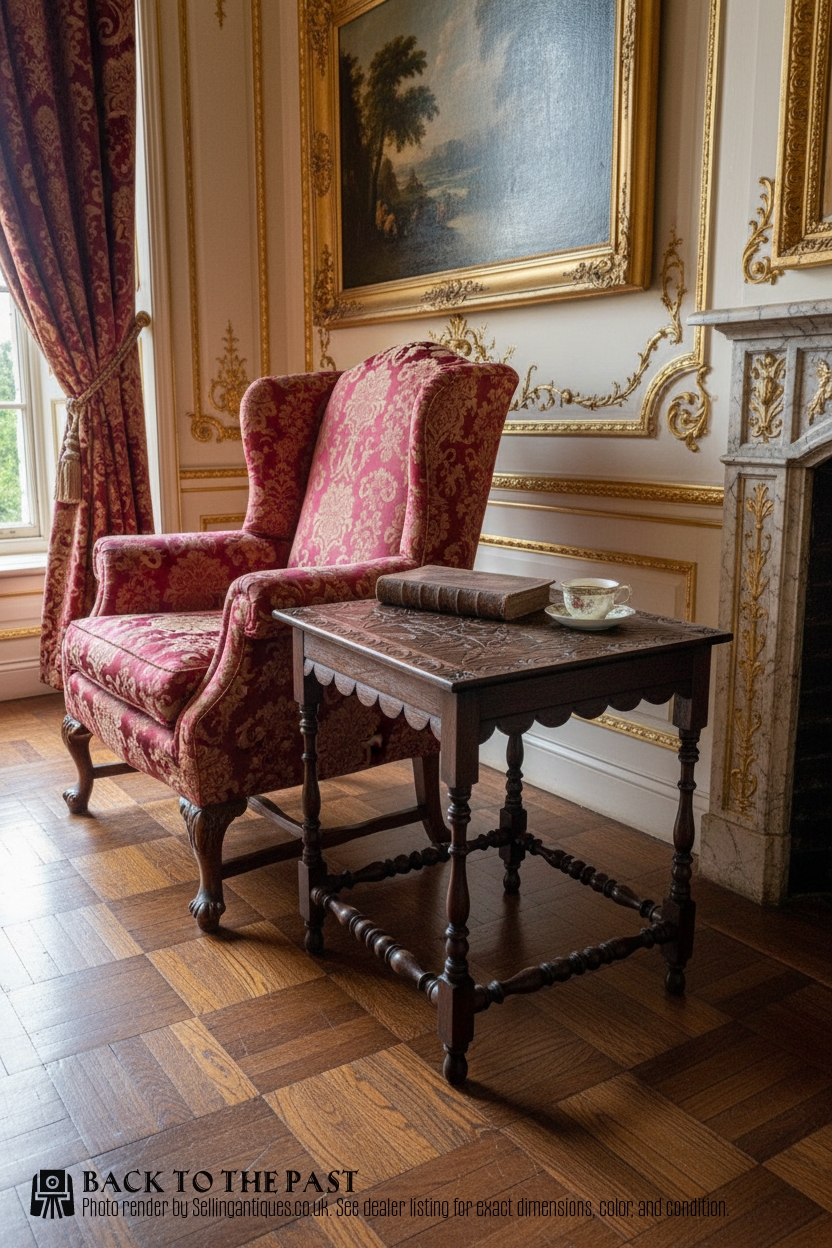
Carved Oak End Table
A carved oak end table spans centuries of domestic woodwork, appearing in forms such as side tables, occasional tables, and lamp tables across this selection. Buyers find pieces ranging from early seventeenth-century constructions to twentieth-century revivals.
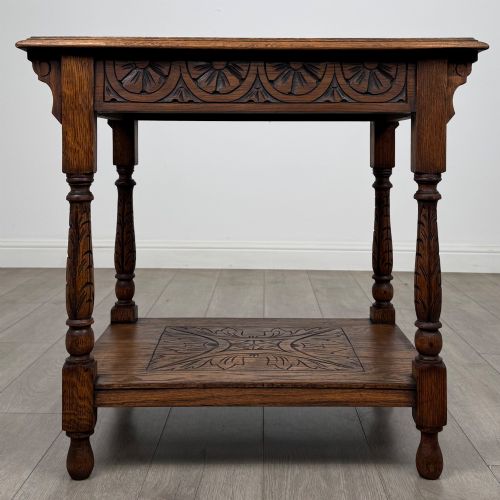
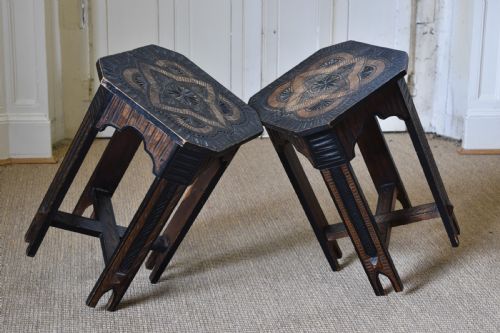
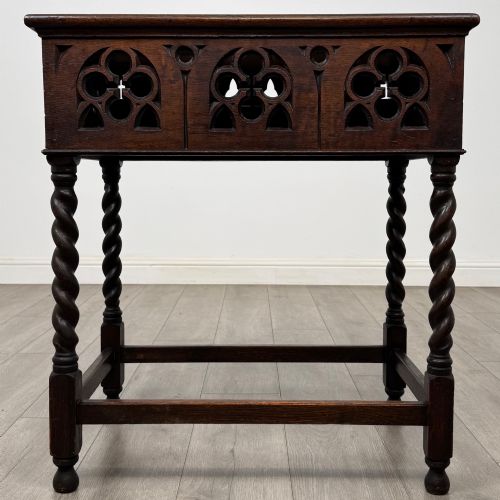
The Edwardian period and the 1920s contribute heavily to the available forms, often showing revival styles like Jacobean and Arts and Crafts alongside Gothic influences. These tables frequently feature chip carving, turned legs, or shaped trestle ends.
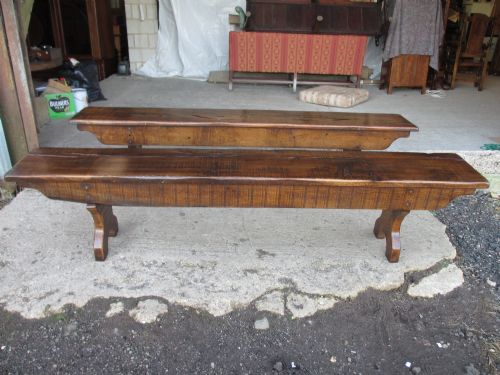
Earlier examples from the seventeenth and eighteenth centuries provide simpler board tops and robust stretchers, while Victorian pieces lean toward heavier relief carving and darker patination. Occasional tables and side tables dominate the current offerings.
Materials and construction methods
Makers utilised solid oak, burr oak, and pollard oak, sometimes combining the timber with brass or iron hardware and structural supports. The natural grain of the wood provides the primary visual texture across both plain and heavily embellished surfaces.
Surface ornament relies on hand chiselling, chip carving, and relief work rather than applied veneers. Joinery involves traditional methods suited to domestic furniture, such as mortise and tenon joints, stretcher frames, and pegged framing.
The listings combine solid oak, burr oak, and hardwood across periods ranging from the seventeenth century to the 1930s.
Distinctions in craftsmanship
Quality depends upon the crispness of the hand carving and the selection of the timber, particularly where figured burr oak or quarter-sawn boards display distinct medullary rays. Superior pieces maintain structural rigidity in their joints without relying on modern replacement screws or extensive timber patches.
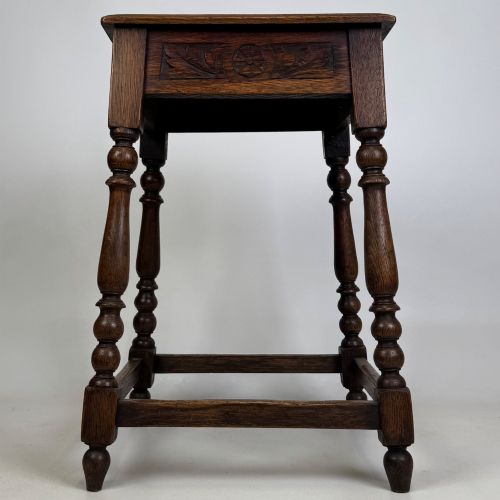
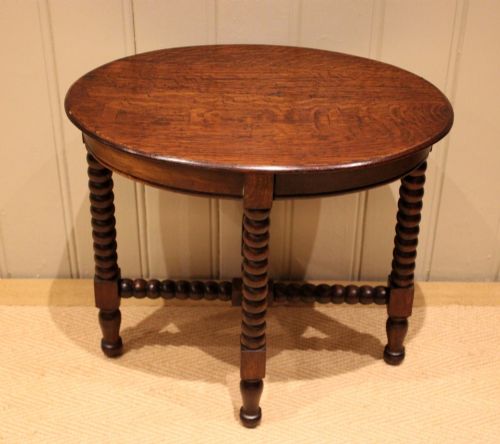
Proportion and balance separate standard utilitarian workshop items from finer decorative pieces. The integration of turned elements, such as barley twist legs or bobbin turnings, dictates the structural elegance of the table.
Liberty's·James Winter and Sons·Arthur Simpson of Kendal
The Carved Oak End Table Glossary
- Jacobean Revival
- A nineteenth and twentieth-century style imitating seventeenth-century English furniture. It employs dark finishes, geometric mouldings, and heavy turning.
- Barley Twist
- A type of turning resembling a rope wound around a cylinder. This decorative technique appears frequently on table legs from the seventeenth century onwards.
- Chip Carving
- A method of removing small chips of wood from a flat surface to form geometric patterns. This technique decorates many twentieth-century side tables.
- Stretcher
- A horizontal member connecting the legs of a table to provide structural stability. These components often feature central knots or intersecting X-forms.
- Quarter-sawn oak
- Timber cut radially from the tree growth rings, producing distinctive flake patterns known as medullary rays. This cut offers enhanced dimensional stability.
Carved Oak End Table: Frequently Asked Questions
How do I identify a 17th-century oak table?
Seventeenth-century examples display pegged mortise and tenon joinery, hand-riven timber, and deep patination accumulated through generations of use. They often feature simple board tops supported by robust stretchers.
Later revival pieces frequently copy these motifs but lack the authentic tool marks, natural timber shrinkage, and structural wear characteristic of genuine early period furniture.
What is the difference between an end table and an occasional table?
An end table sits beside seating to hold lamps and small objects, while an occasional table describes a versatile, movable piece used intermittently around a room. In practice, historical listings often interchange these terms for similar compact table formats.
Both categories encompass square, round, and octagonal tops supported by trestles, pillars, or four turned legs.
How should I care for a historic oak surface?
Maintain the timber by applying traditional beeswax sparingly and buffing with a soft cloth to protect the grain without building up a sticky residue. Avoid placing solid oak furniture near direct heat sources or strong sunlight.
Moisture should be wiped away immediately to prevent water marks from penetrating the historic polish or untreated grain.
What distinguishes Arts and Crafts oak tables?
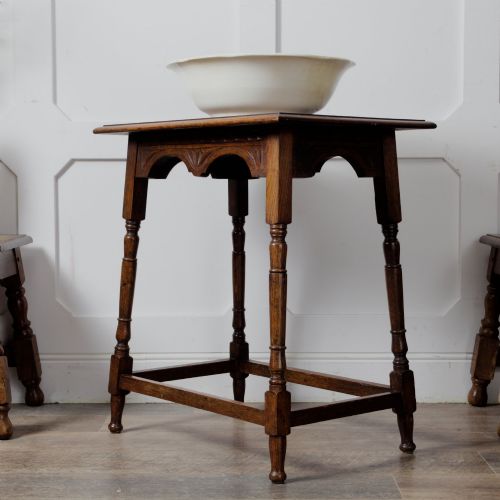
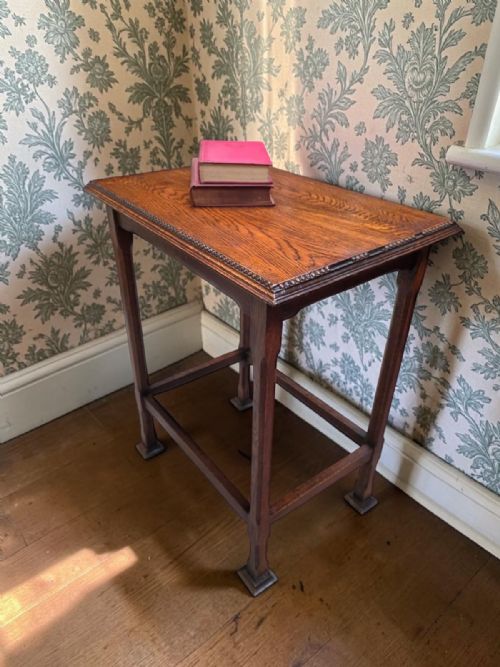
Arts and Crafts pieces emphasise plain oak construction, visible joinery, and minimal surface decoration that highlights the natural qualities of the wood. They frequently discard excessive ornamentation in favour of honest structural forms.
Designers associated with this movement preferred straightforward functionality over historical revivalism, creating sturdy tables suited to domestic utility.