

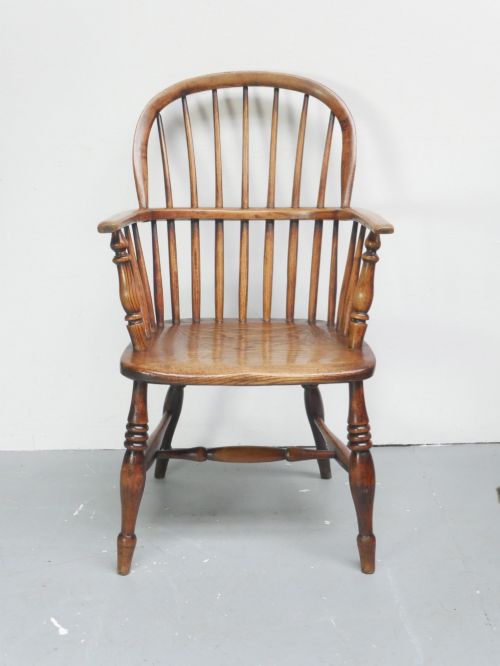
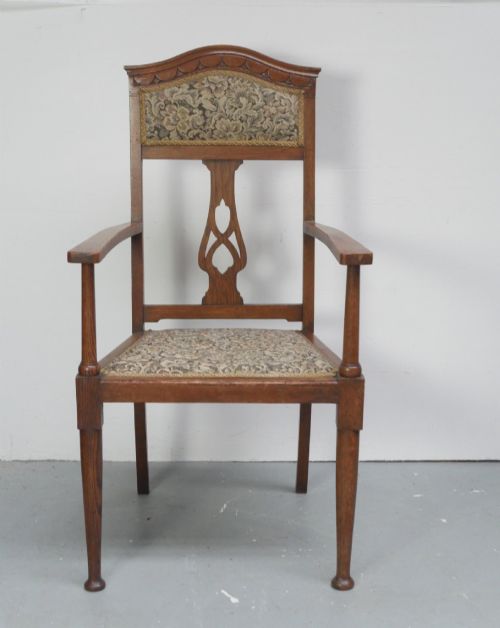
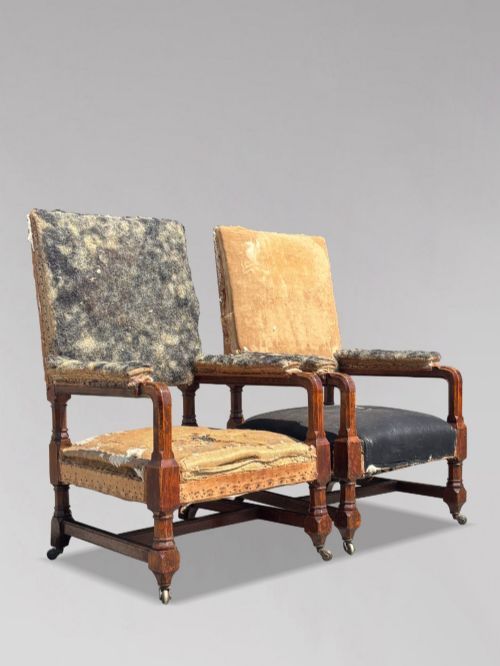
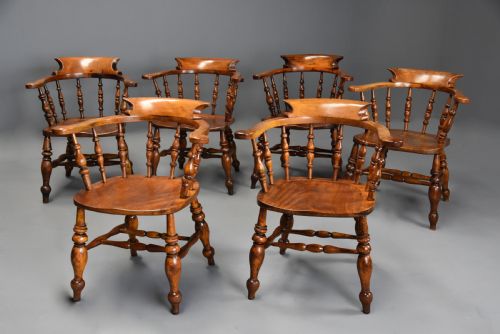

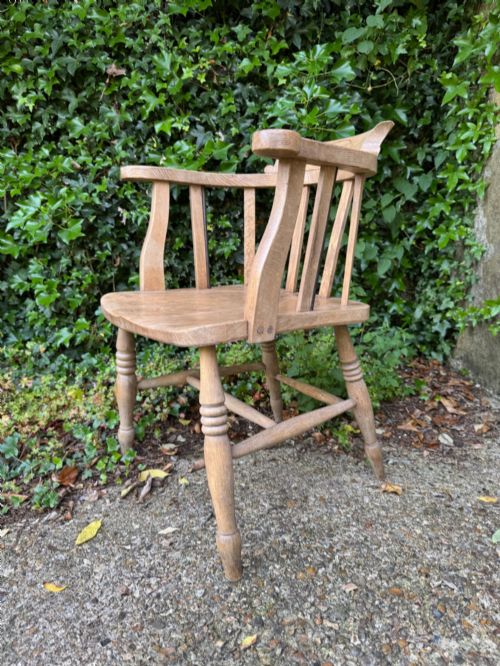
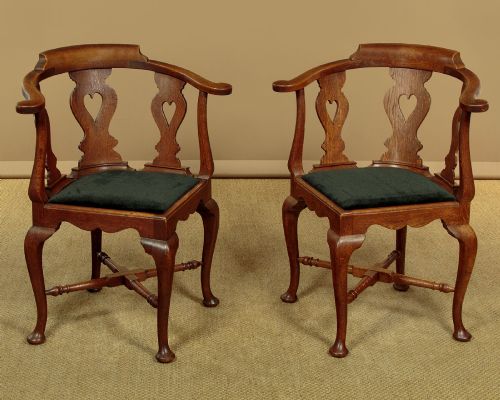


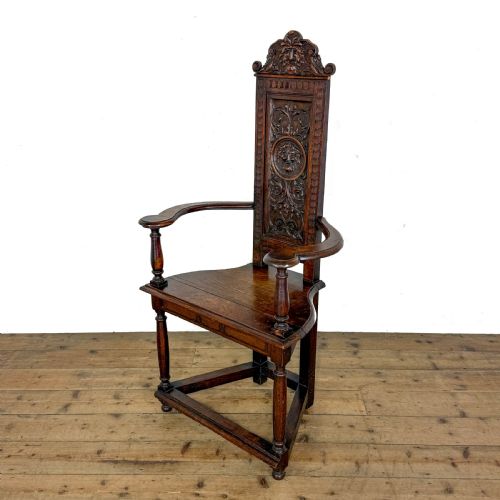

Carved Oak Elbow Chair
A carved oak elbow chair provides solid seating rooted in centuries of traditional joinery and sturdy domestic use.
How they were made
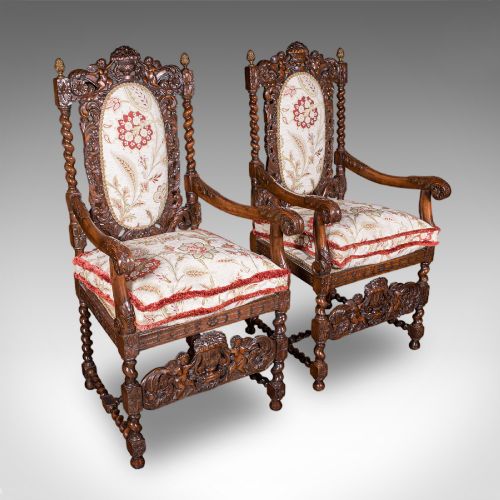
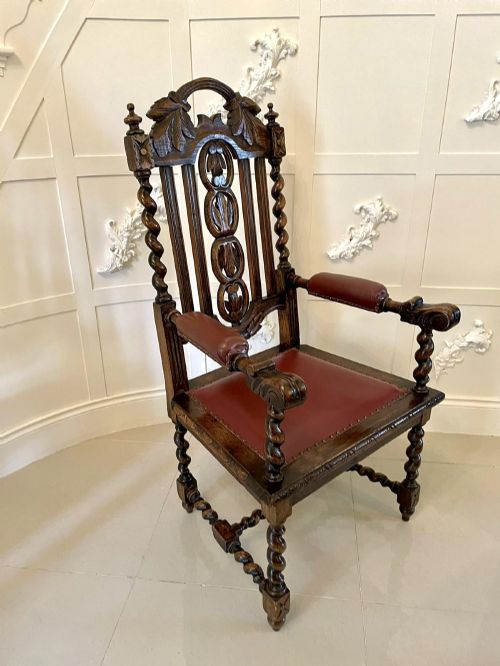
Joiners built these chairs primarily from solid oak, sometimes supplemented with elm, beech, or brass fittings and woven leather, tapestry, or fabric. Workshops relied on mortise and tenon joints to secure the heavy frames without relying on metal fasteners.
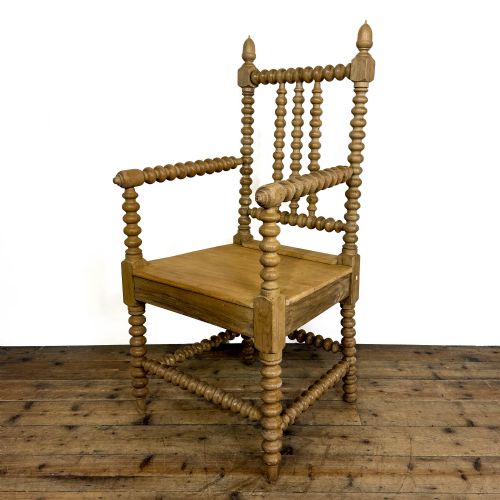
Carvers applied relief decoration directly onto the solid oak stiles, rails, and splats, using gouges and chisels to create strapwork, foliate motifs, and geometric patterns. Turners shaped spindles and legs on lathes, producing sturdy supports for the heavy elbow rests.
What varies in quality
The depth and crispness of the timber carving separate ordinary items from superior examples, as skilled hands produced sharper relief and more balanced proportions. The selection of the oak timber itself dictates longevity, with quartersawn boards displaying better figure and resistance to warping.
Originality of components and joinery integrity define the better pieces, while heavy restoration or replacement elements lower the overall standard of construction.
Carved Oak Elbow Chair Retail Price Guide 2026
Typical asking prices for carved oak elbow chair among the pieces listed under this phrase on Sellingantiques today, from the lower quarter to the upper quarter. They describe what is for sale here now, not the wider market.
Turner's chairs fold down like giant wooden puzzle boxes, proving that medieval joiners loved a clever mechanical trick.
Shapland & Petter
The Carved Oak Elbow Chair Glossary
- Elbow chair
- An armchair featuring prominent arm supports designed to accommodate the user's forearms. This term appears frequently in nineteenth-century and twentieth-century descriptions.
- Turner's chair
- A joined chair constructed entirely from turned wooden spindles and posts, often associated with sixteenth and seventeenth-century forms revived in later periods.
- Glastonbury chair
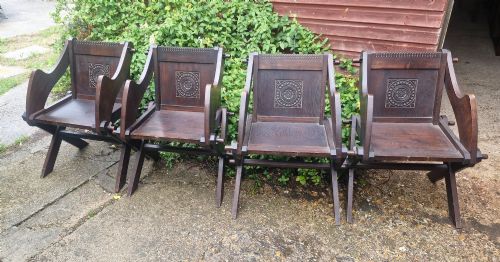
- A distinctive folding armchair style with X-frame supports and a sloping panel back, popularized during the Gothic Revival.
- Smokers bow
- A low-backed Windsor armchair with a continuous curved arm rail, common in vernacular domestic settings.
- Stiles
- The upright vertical posts forming the sides of a chair back or panel, receiving the horizontal rails in traditional joinery.
Carved Oak Elbow Chair: Frequently Asked Questions
What is a carved oak elbow chair?
A carved oak elbow chair is a substantial wooden seat featuring built-in armrests and decorative woodwork carved directly into the timber frame. These pieces range from vernacular country seating to heavily styled revival designs.
They served various domestic roles in halls, studies, and dining spaces where a sturdy chair with arm support was required for daily use.
How do I date an oak armchair?
Dating relies on examining the construction methods, tool marks, timber selection, and stylistic details such as Gothic or Jacobean revival motifs. Earlier pieces often display pegged joints and hand-split oak, while Victorian and Edwardian examples show machine assistance.
Comparing the turned elements and carved patterns to documented periods helps narrow down the decade of production.
Were these chairs used at desks?
Many elbow chairs served as desk chairs or carvers in studies and libraries, offering comfortable arm heights for writing. Their sturdy oak frames provided the necessary durability for regular seating at heavy library tables.
Designers adapted corner chairs and standard elbow seats specifically for use in nineteenth-century workspaces.
How do I care for antique oak?
Maintaining antique oak involves keeping the timber away from direct heat sources and sudden humidity changes to prevent splitting. Regular dusting with a soft cloth preserves the dry finish without building up heavy wax layers.
Leather and fabric elements require gentle cleaning appropriate to their specific material composition.