

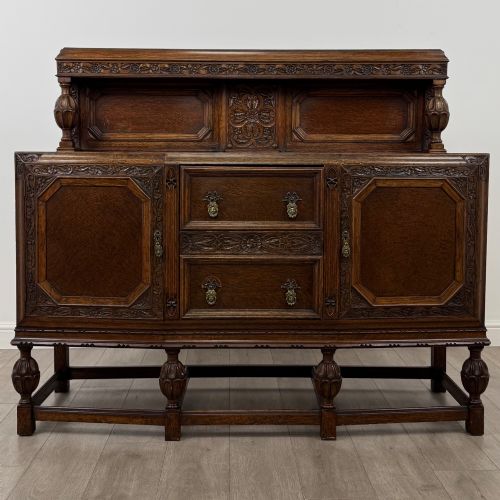


Carved Oak Dining Storage
Carved oak dining storage brings together heavy timbers and traditional craftsmanship, offering practical space for your home with enduring character.
Carved Oak Dining Storage
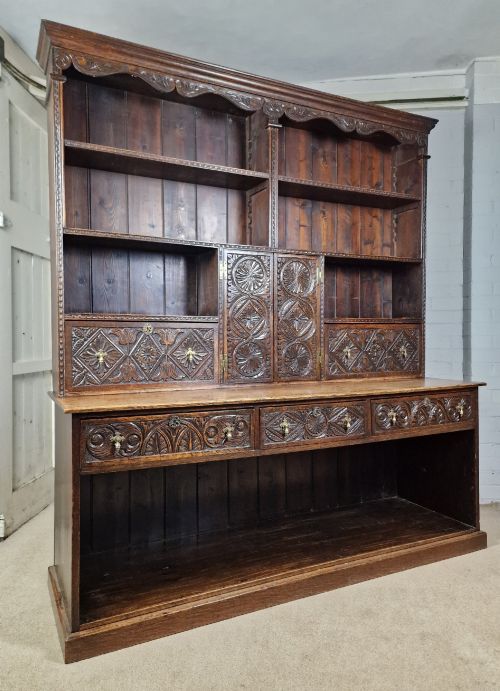
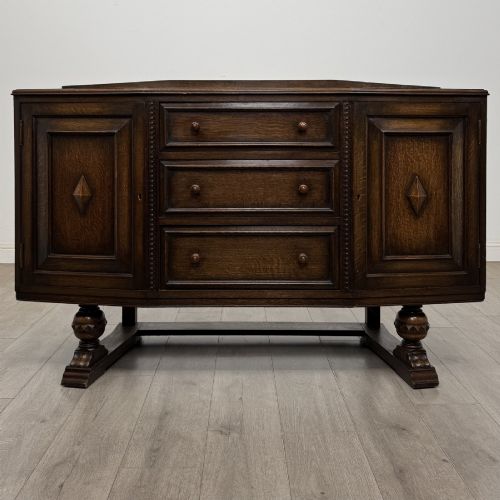
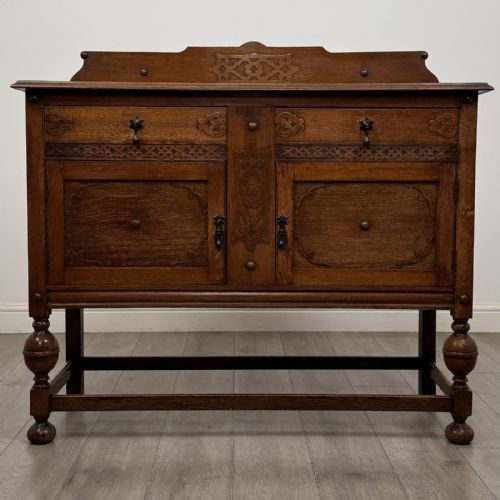
Carved oak dining storage comprises substantial furniture designed for dining spaces, encompassing sideboards, dressers, court cupboards, and buffets. These pieces provide storage for tableware and provisions while anchoring the room with prominent wooden facades.
You are most likely to encounter nineteenth-century and early twentieth-century examples on this page, particularly sideboards and dressers executed in revival styles such as Jacobean and Arts and Crafts. These frequently feature carved ornamentation, panelled doors, and plate racks.
The selection spans from eighteenth-century country pieces to elaborate Victorian and Edwardian interpretations. Regional variations include French buffets and Welsh dressers, each reflecting local domestic traditions in their proportions and arrangement of drawers.
Materials and construction
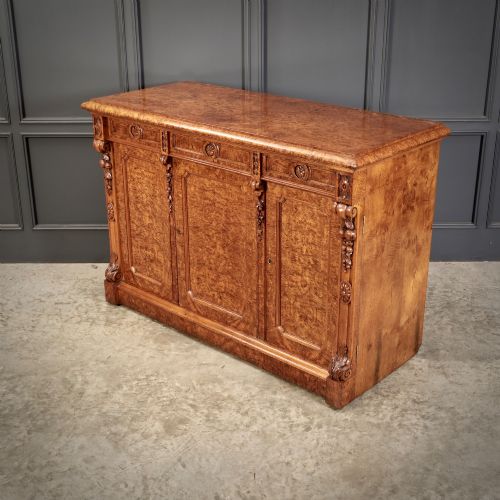
Solid oak serves as the primary material, frequently complemented by secondary timbers like pine and walnut, alongside decorative veneers such as pollard oak. Metal hardware, including brass and iron handles, secures doors and drawers while adding functional contrast to the wood.
Construction relies on traditional joinery methods suited to heavy timbers, including mortise and tenon joints for frames and panel construction to accommodate wood movement. Surfaces receive extensive hand-carving, displaying motifs like strapwork, foliage, and geometric patterns.
Carved Oak Dining Storage Retail Price Guide 2026
Typical asking prices for carved oak dining storage among the pieces listed under this phrase on Sellingantiques today, from the lower quarter to the upper quarter. They describe what is for sale here now, not the wider market.
Period examples span the eighteenth, nineteenth, and early twentieth centuries, encompassing Victorian, Edwardian, and Arts and Crafts eras.
Assessing quality and execution
The depth and crispness of the carving distinguish finer pieces from simpler production, where shallow machine work replaces hand-chiselled detail. Superior examples maintain balance between ornate decoration and the architectural proportions of the carcass.
Timber selection dictates overall merit, visible in the choice of quarter-sawn oak with prominent medullary rays or figured pollard oak veneers. Original hardware, intact plate racks, and sound structural integrity further elevate a piece above standard utility items.
Maple and Co
The Carved Oak Dining Storage Glossary
- Court cupboard
- A heavy enclosed piece of furniture featuring an upper recess supported by pillars above a lower cupboard section. These seventeenth-century style items were traditionally used for displaying plate.
- Plate rack
- An open wooden shelving superstructure fixed to the top of a dresser to display ceramic plates and platters. It allows everyday tableware to remain visible and accessible.
- Pollard oak
- Timber taken from trees that have been pollarded, producing wood with dense, highly figured knot clusters and swirling grain patterns. It was favoured for decorative veneering on Victorian furniture.
- Breakfront
- A cabinet design where the central section projects forward from the flanking outer sections. This architectural arrangement creates depth and shadow across the front elevation.
Carved Oak Dining Storage: Frequently Asked Questions
What is the difference between a sideboard and a court cupboard?
A sideboard functions primarily as a low storage surface with cupboards and drawers beneath a flat top, designed for serving food and storing linen. A court cupboard is a taller, more architectural piece featuring an upper recessed cabinet supported by heavy pillars.
While sideboards prioritise surface area and accessible storage, court cupboards emphasise display and enclosed compartment space. Both serve dining room storage needs but occupy different visual scales within a room.
How do I care for antique oak furniture?
Keep oak furniture away from direct heat sources and strong sunlight, which can dry out the timber and cause splitting. Maintain a stable room temperature to prevent the wood from expanding and contracting excessively.
Apply traditional beeswax periodically to nourish the grain and protect the finish from moisture. Avoid silicone-based polishes that build up a residue and dull the surface over time.
What defines Jacobean style furniture?
Jacobean style draws inspiration from the early seventeenth century, featuring straight lines, heavy proportions, and geometric mouldings. Decoration often includes chip-carved strapwork, lozenges, and cup and cover turning on legs.
Revival pieces from the nineteenth and twentieth centuries reinterpreted these robust characteristics for contemporary dining rooms. They utilised dark-finished oak to replicate the aged appearance of seventeenth-century originals.
Where were Welsh dressers traditionally used?
Welsh dressers originated in domestic kitchens and dining spaces to store and display utilitarian earthenware, pewter, and provisions. The lower cupboards and drawers held bulky cookware, while the upper plate rack kept everyday crockery within reach.
Over time, these functional items transitioned into principal dining room furniture. They now serve to display decorative ceramics alongside practical storage.