

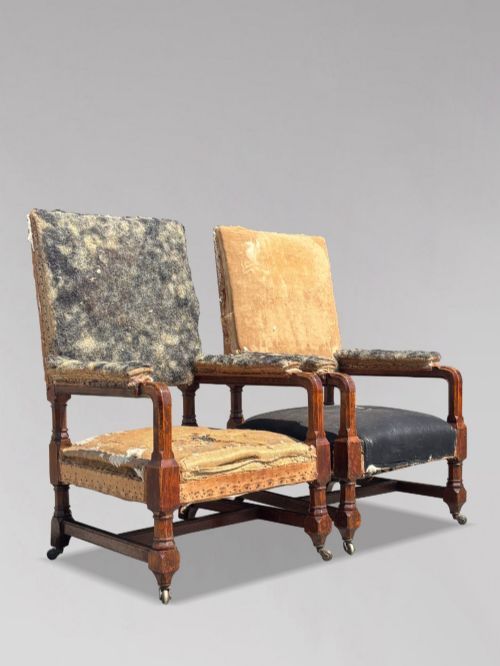
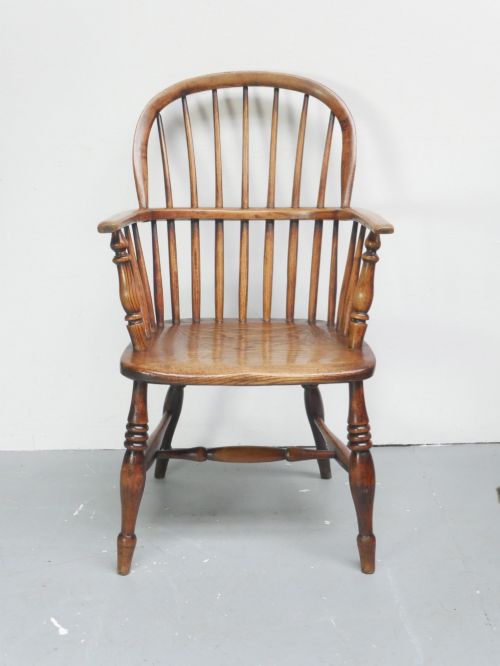
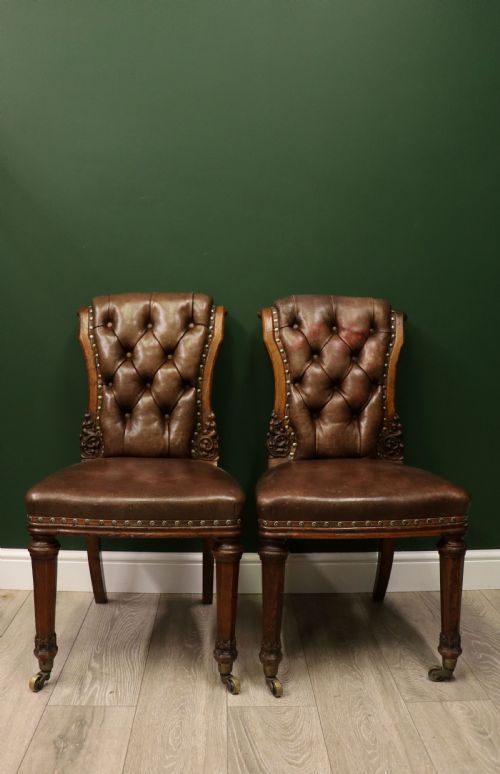
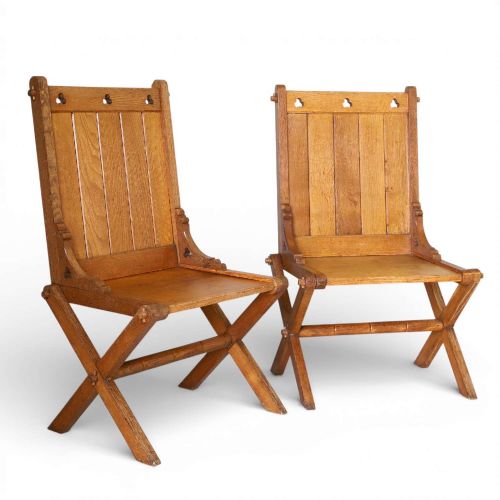
Carved Oak Desk Chairs
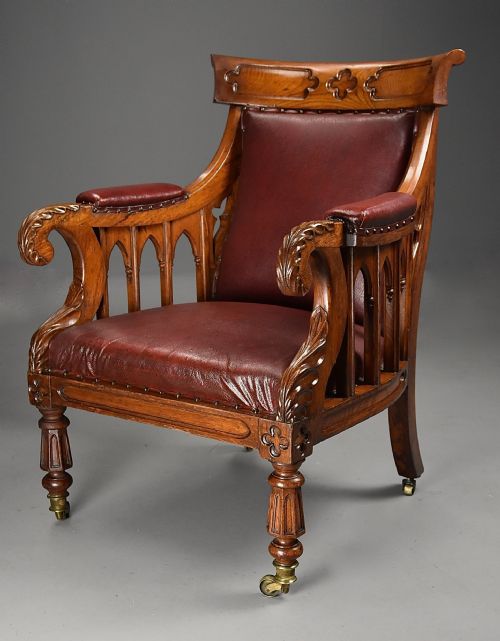
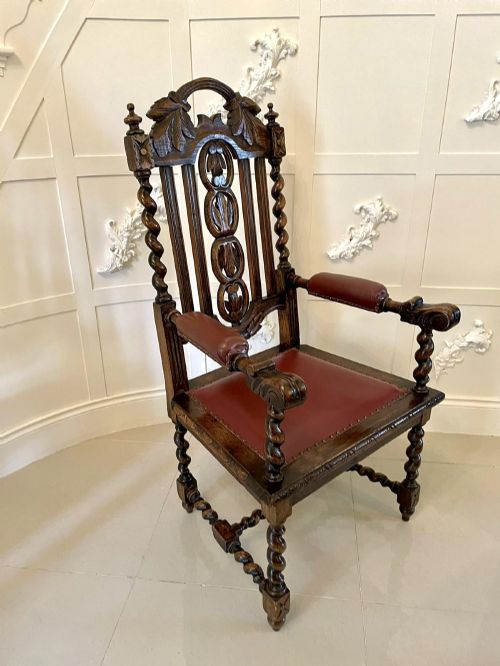
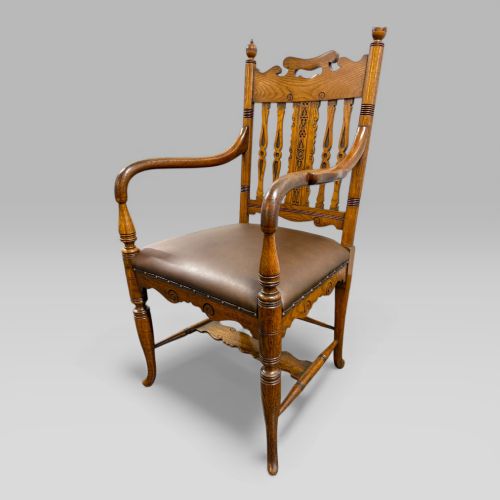
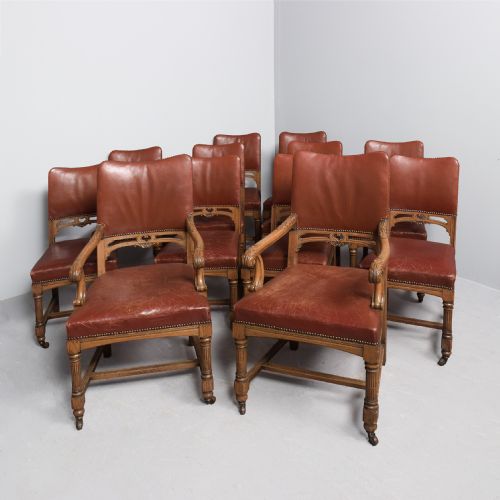
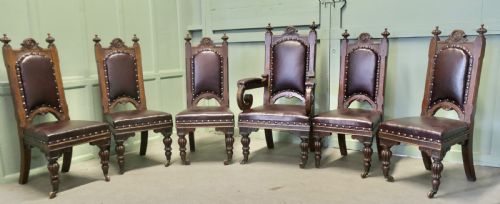
These carved oak desk chairs bring heavy timber, Gothic tracery, and solid nineteenth-century construction directly to a working study.
Carved Oak Desk Chairs
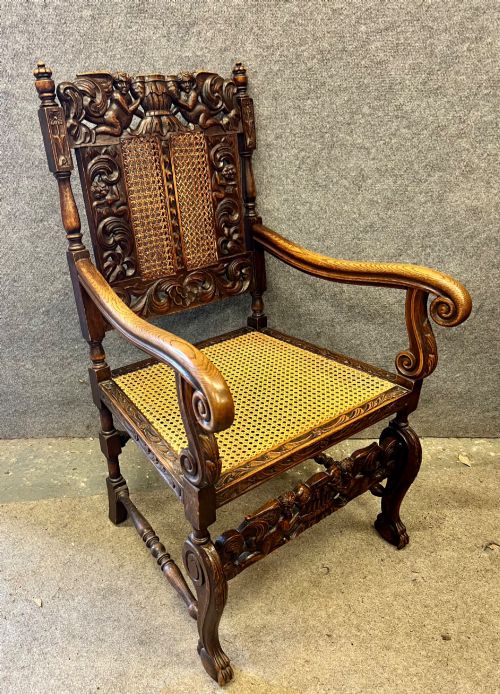
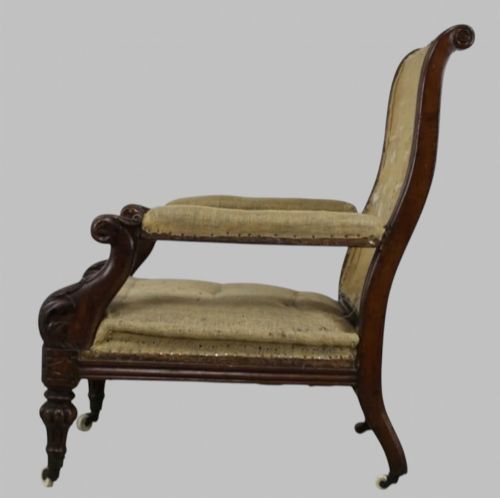
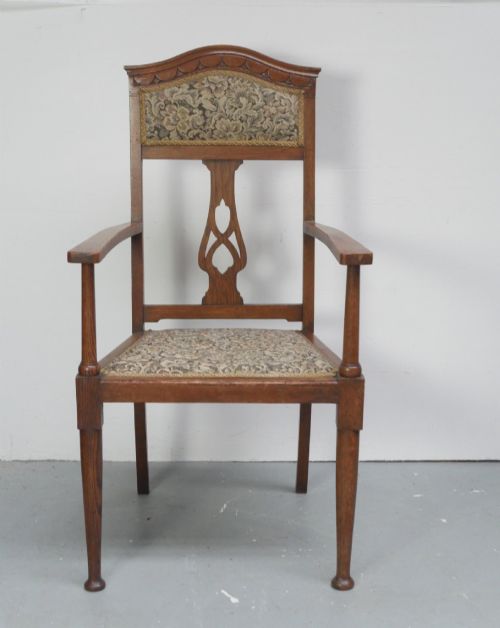
Carved oak desk chairs unite sturdy domestic timber with formal seating designs intended for libraries, offices, and studies. The selection spans the eighteenth, nineteenth, and early twentieth centuries, drawing heavily on Victorian and Edwardian interpretations of earlier eras.
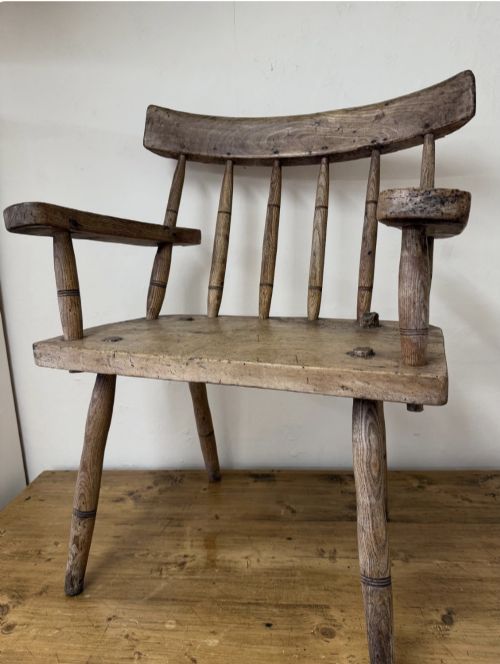
Most examples appearing here belong to the nineteenth century, covering heavy Victorian Gothic Revival styles alongside simpler country house captain's chairs and Windsor forms. Makers built these pieces using solid oak frames, frequently incorporating leather inserts, brass details, and turned supports.
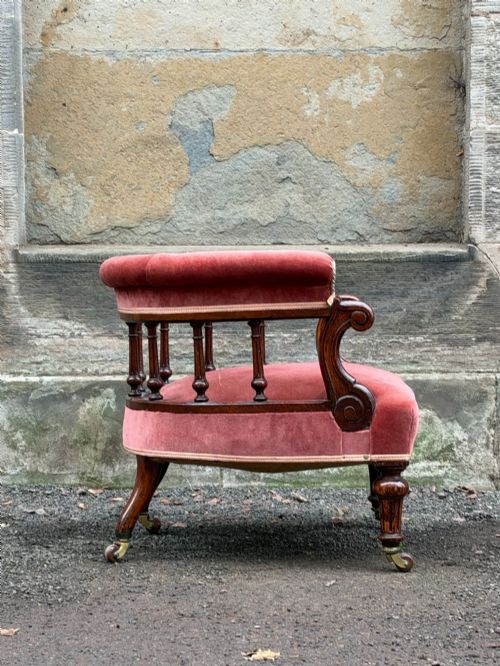
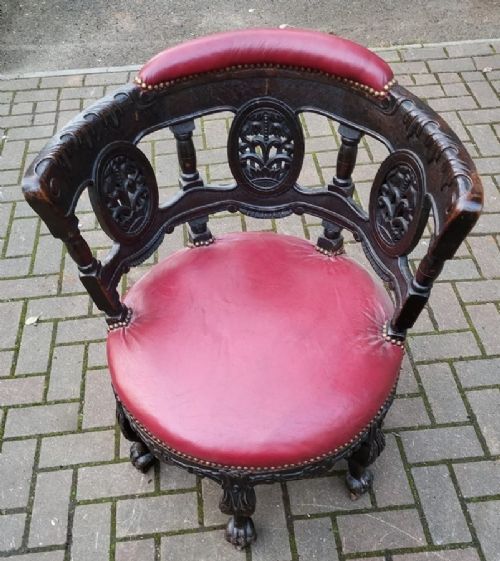
Forms range from swivel desk chairs and revolving office seats to high-backed library armchairs and smokers' bows. Buyers encounter both singular writing chairs and matched pairs or sets, reflecting the diverse domestic and institutional spaces these seats originally occupied.
Materials and Construction Methods
Carpenters relied primarily on solid oak, selected for its dense grain and durability, frequently supplemented by secondary timbers such as elm, ash, and beech in Windsor and country models. Frames utilise traditional mortise and tenon joinery to withstand the twisting loads placed on office and library seating.
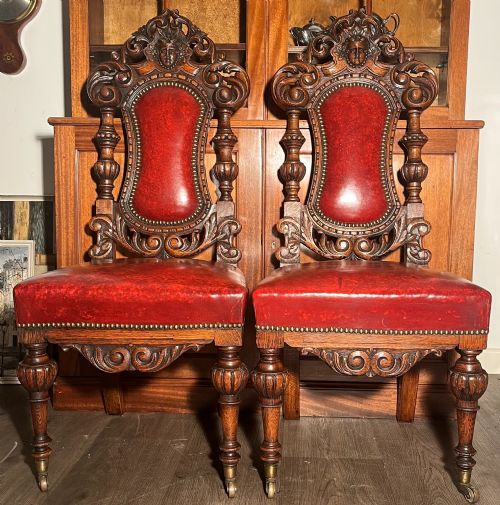
Carving ranges from crisp linenfold panels and geometric strapwork to elaborate Gothic trefoils, tracery, and animal or human masks. Upholstery materials include buttoned leather, studded red leather, cane, horsehair, and contemporary fabric updates, secured with brass tacks or timber pins.
Carved Oak Desk Chairs Retail Price Guide 2026
Typical asking prices for carved oak desk chairs among the pieces listed under this phrase on Sellingantiques today, from the lower quarter to the upper quarter. They describe what is for sale here now, not the wider market.
Victorian office workers evidently took their seating seriously, commissioning swivel chairs sturdy enough to survive a small fortress siege.
Judging Quality and Execution
The distinction between standard commercial seating and exceptional cabinetwork lies in the depth and sharpness of the carved enrichment. Crisp relief carving executed directly into the solid timber frame indicates a workshop of higher standing than shallow machine routing.
Structural integrity governs utility in swivel and revolving desk chairs, where the original mechanical action, iron spindle, and wooden spider underframe must operate smoothly without excessive play. Proportion also dictates value, as generous library armchairs with balanced proportions and original leather upholstery command greater presence than cramped or altered variants.
John Taylor of Edinburgh·S&H Jewell·Gillows·Bruce James Talbert·A. W. N. Pugin
The Carved Oak Desk Chairs Glossary
- Gothic Revival
- A nineteenth-century design movement drawing inspiration from medieval architecture, featuring pointed arches, trefoils, and heavy carved tracery. This style dominates many Victorian library and desk seats.
- Smoker's Bow
- A sturdy low-backed Windsor armchair with a rounded continuous arm bow, common in nineteenth-century offices and smoking rooms. These pieces often feature elm seats combined with turned oak spindles.
- Captain's Chair
- A low-backed wooden armchair designed for swivel or stationary use at a desk, featuring a curved upper rail supported by numerous spindles. They provide compact support for prolonged writing tasks.
- Swivel Desk Chair
- A revolving office seat mounted on a central iron or timber pillar, allowing movement for administrative tasks. Nineteenth-century versions often combine bentwood or solid oak elements with leather pads.
- Trefoil
- A three-lobed ornamental shape resembling clover leaves, frequently pierced or carved into the splats and backs of Gothic Revival seating. This motif provides a distinct architectural reference.
Carved Oak Desk Chairs: Frequently Asked Questions
How do I date an oak desk chair?
Dating relies on combining stylistic clues with structural evidence, such as tool marks, timber shrinkage, and assembly methods. Nineteenth-century pieces often display machine-assisted turning or heavy Gothic revival motifs, whereas eighteenth-century variants show hand-cut joinery and simpler vernacular lines.
Hardware provides another indicator, as nineteenth-century swivel mechanisms differ significantly from modern steel fittings. Comparing the chair's proportions and carving style against documented cabinetmaker designs helps narrow the manufacturing window.
Are these chairs suitable for daily computer work?
Antique desk chairs accommodate modern daily use provided the timber frame remains solid and the seat height matches your desk. Many nineteenth-century swivel and captain's chairs offer ergonomic lumbar support through their curved wooden backs.
Consider pairing stationary side chairs with a desk cushion if you require additional padding during long working hours. Regular checks of the joints and swivel mechanism ensure the antique structure withstands continuous movement.
What is the difference between a captain's chair and a smoker's bow?
While both share a low, rounded continuous arm bow supported by spindles, captain's chairs traditionally feature more formal turned legs and wider seats intended for office use. Smoker's bows typically display simpler country construction with elm seats and heavier bracing.
Both forms prioritize low-slung, sturdy comfort over delicate ornamentation. Nineteenth-century manufacturers produced both types extensively for professional and domestic workspaces.
How should I maintain the leather seat?
Preserve leather upholstery by applying a neutral leather cream or wax conditioner periodically to prevent the hide from drying and cracking. Avoid placing the chair near direct heat sources or strong sunlight, which accelerates fading and fibre degradation.
Dust wooden frames regularly with a dry cloth and check structural joints annually for stability. Proper humidity control in the room prevents both the oak timber and the leather from contracting too rapidly.