

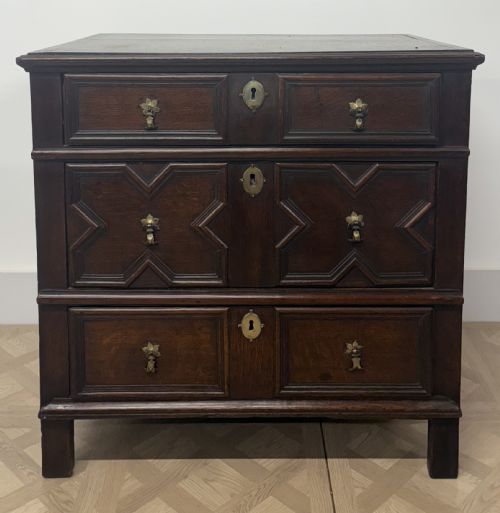
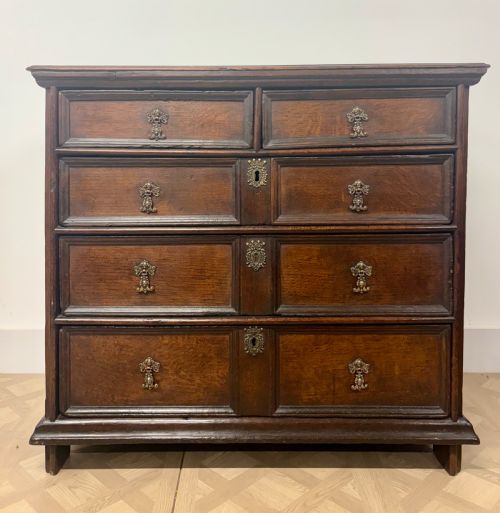
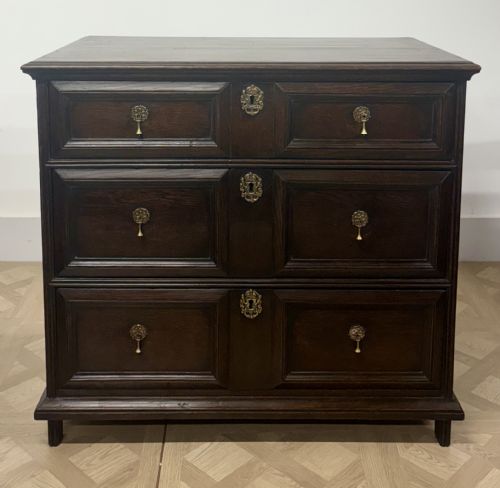
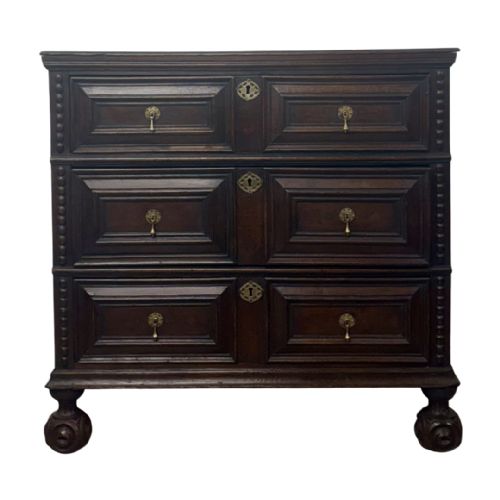
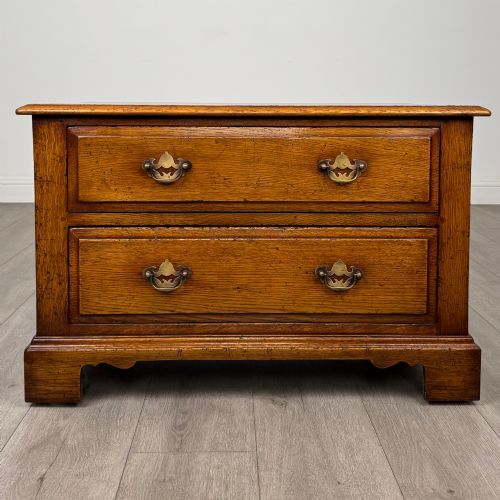
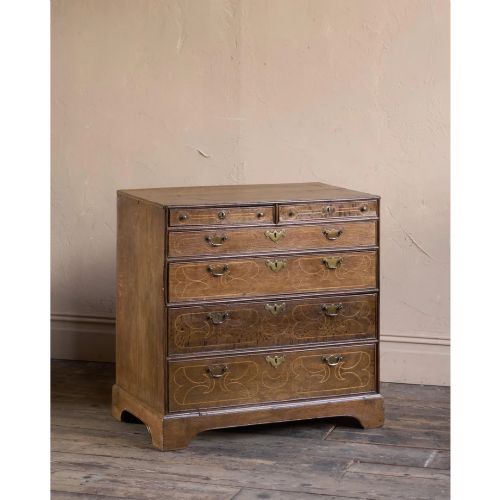
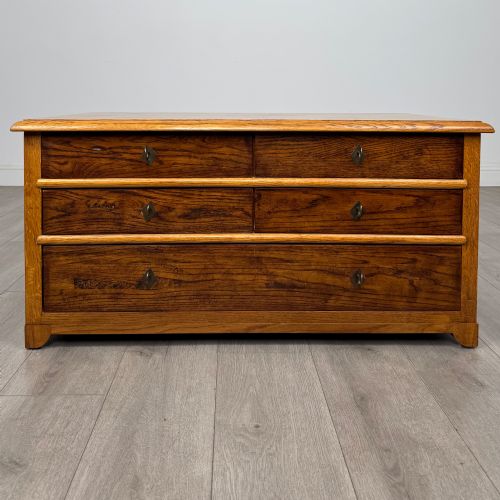
Carved Oak Commode Chest
These carved oak commode chest examples combine sturdy timber construction with continental or native design, offering practical storage alongside historic character.
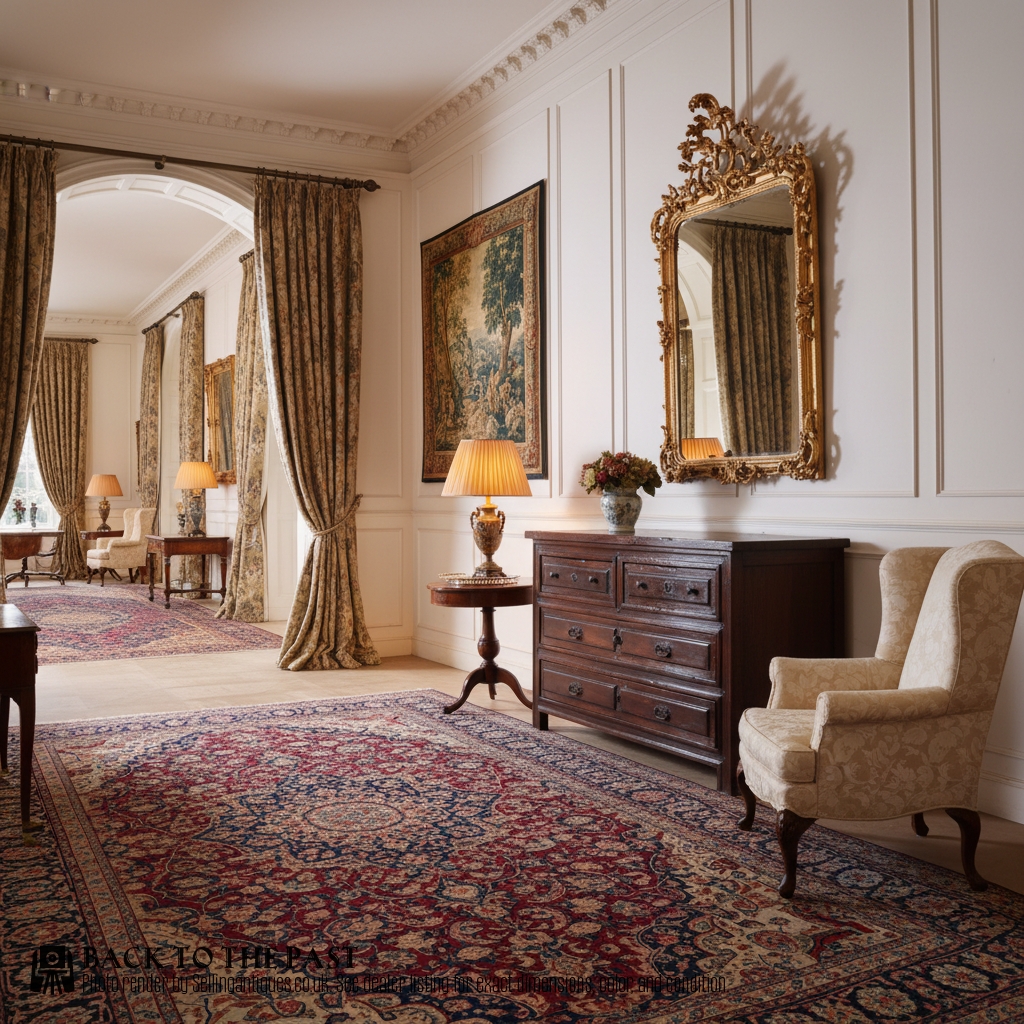
Carved Oak Commode Chest
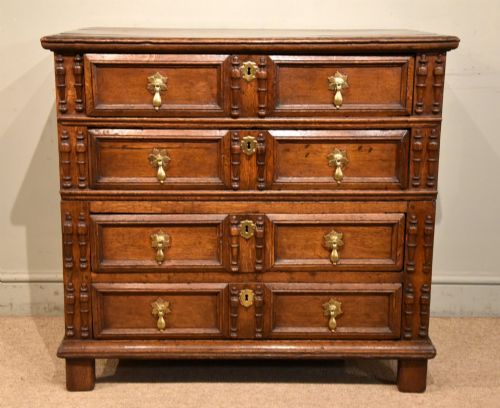
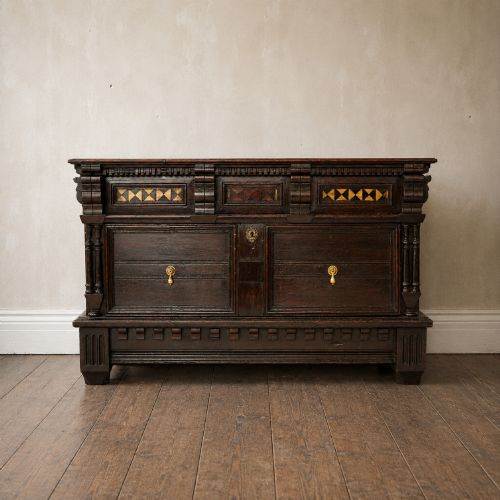
When searching for a carved oak commode chest, you encounter sturdy timber storage units spanning several centuries of cabinetmaking. The pieces range from seventeenth-century English geometric designs to eighteenth-century French commodes and later provincial interpretations.
The selection here leans heavily towards substantial chests of drawers and commodes, alongside related forms such as washstands and box stools. Oak dominates the material record, frequently paired with brass hardware, marble tops, and walnut elements.
How they were made
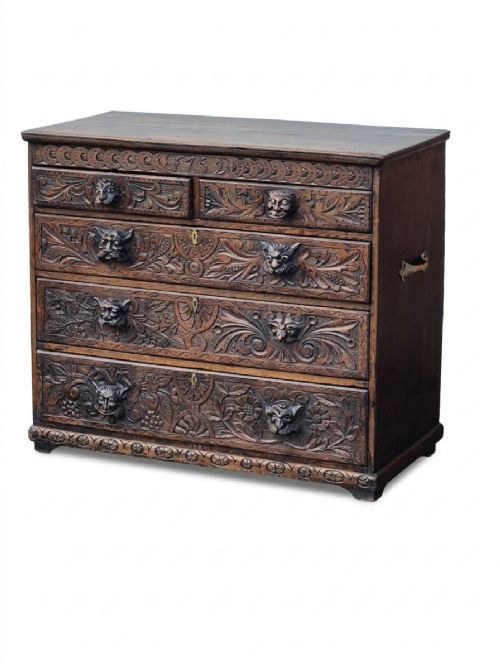
Cabinetmakers constructed these pieces primarily from solid oak, often utilising frame and panel techniques to accommodate the natural movement of the timber. Surfaces received elaborate carving, geometric mouldings, and occasionally ebonising or bleaching depending on the period.
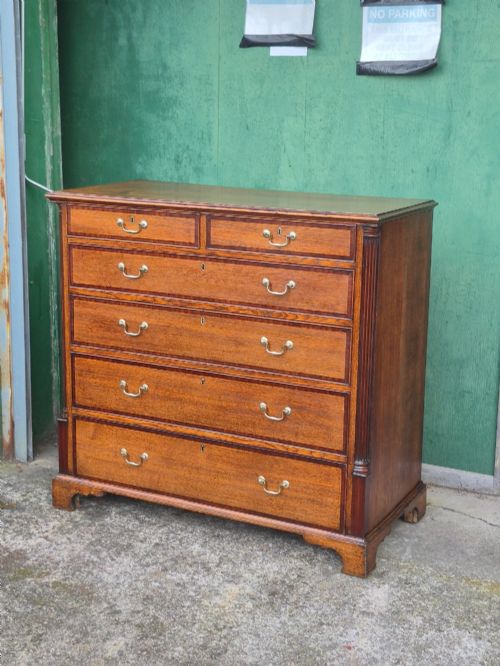
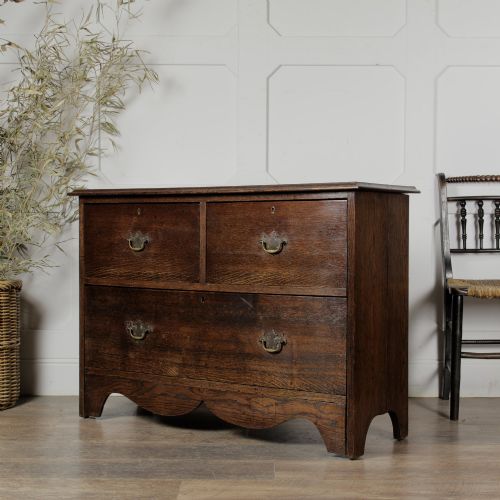
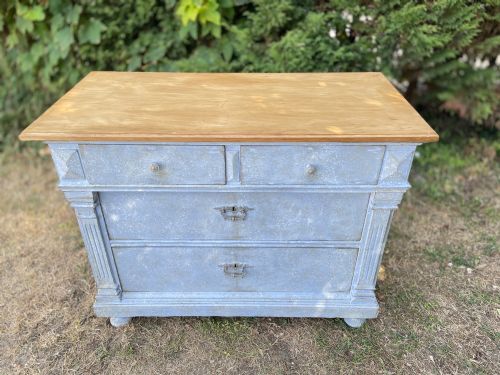
Hardware played a functional and decorative role, with original brasses secured to drawer fronts alongside iron fixings. Later French and continental examples sometimes incorporated marble tops and painted wood finishes to modify the heavy appearance of the oak.
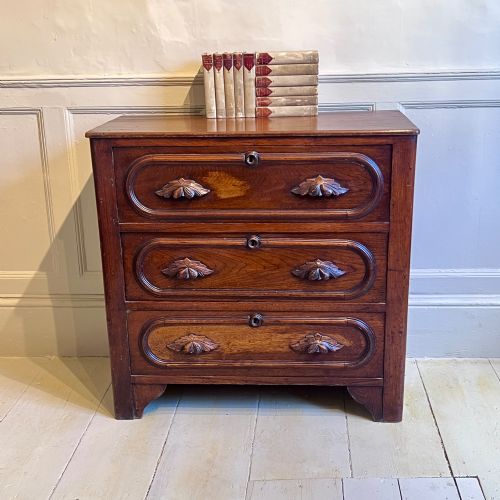
Green Man grotesques peer out from Victorian drawer fronts, watching over the room with leafy expressions.
What varies in quality
The sophistication of the carved ornament and geometric moulding sets the finer examples apart from simpler utilitarian pieces. Crisp detailing in seventeenth-century geometric fronts or eighteenth-century French carving indicates superior workshop execution.
Originality of components also dictates standing, with survivals retaining early brasses and untouched timber patination holding greater historical integrity. Later alterations, replacement elements, and marriage of parts shift a piece toward the lower end of the range.
The Carved Oak Commode Chest Glossary
- Commode
- A low chest of drawers or cabinet, frequently of French origin. These pieces often feature decorative hardware and polished marble tops.
- Geometric moulding
- Raised wooden ornamentation applied to drawer fronts in repeating patterns, typical of seventeenth-century English cabinetmaking.
- Bombe
- A swelling, convex shape characteristic of certain eighteenth-century continental commodes. This curved profile requires advanced mastery of timber shaping.
- Box stool
- A low box-form seat with a hinged lid, utilised for seating and concealed storage. Seventeenth-century examples often employ solid oak construction.
- French Provincial
- A stylistic classification denoting furniture made in the French regions rather than Paris. These pieces adapt high-style court designs into sturdier local timbers.
Carved Oak Commode Chest: Frequently Asked Questions
How do I identify a 17th-century piece?
Look for heavy oak construction utilising frame and panel methods, alongside hand-cut joinery like mortise and tenon. Geometric mouldings and deep hand-carving provide further chronological indicators.
Examine the interior drawer construction and timber patination for signs of age. Later alterations often combine early fronts with modern internal elements.
What is the difference between a chest and a commode?
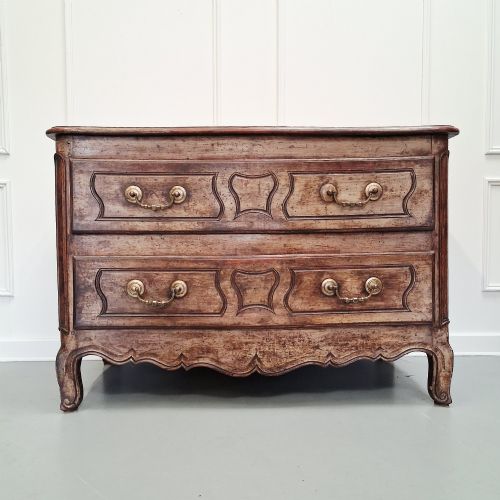
English chests traditionally emphasise linear drawer arrangements in solid timber, particularly oak. Commodes more frequently denote continental forms with curved or bombe profiles and marble tops.
Terminology often overlaps in marketplace listings due to regional translation and centuries of stylistic exchange.
Are marble tops original to these pieces?
Marble tops appear frequently on continental commodes and washstands, providing a durable surface for washing and display. Many eighteenth and nineteenth-century pieces utilised stone alongside timber.
Replacement marble slabs occur due to breakage over long periods of domestic use.
How should I care for an antique oak chest?
Maintain stable humidity and temperature levels in the room to prevent the oak timber from splitting. Avoid direct sunlight and excessive artificial heat sources.
Apply traditional wax sparingly to nourish the wood surface and preserve the natural patination built up over centuries.