




Carved Oak Chest Stand
A carved oak chest stand unites sturdy storage with elevated joinery, offering a practical anchor for traditional interiors.
Carved Oak Chest Stand
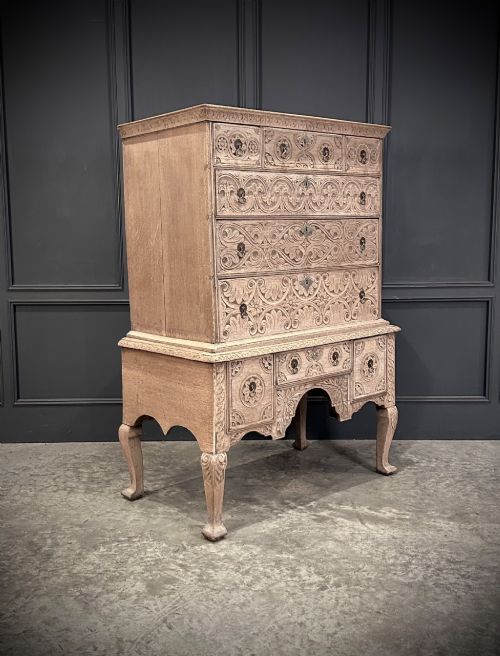
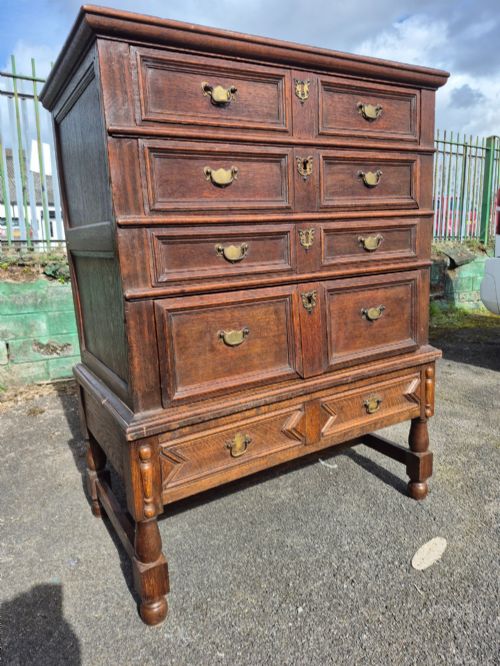
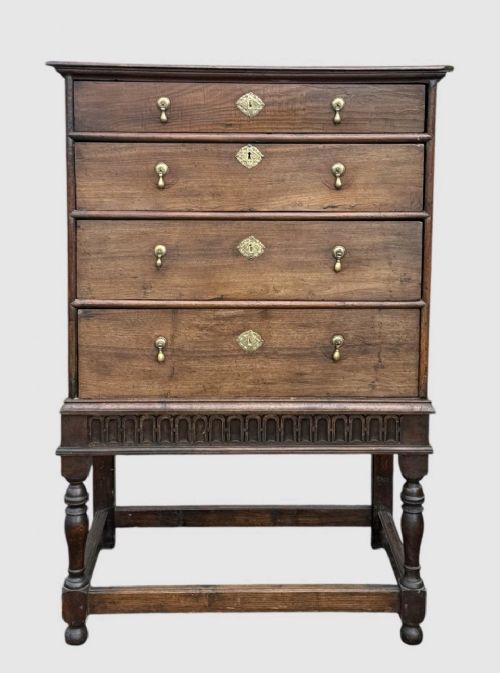
A carved oak chest stand combines a deep storage box with an elevated base, typically originating from the seventeenth and eighteenth centuries. These pieces function as compact cupboards or display units while retaining the heavy timber construction of early domestic furniture.
Buyers encountering this group will frequently find seventeenth century and eighteenth century examples alongside later interpretations. The form ranges from simple coffer bodies on raised legs to intricate drawers and fitted cabinets.
Periods represented across the inventory span from the Charles II era and Jacobean styles through to later revival pieces from the Victorian and Edwardian periods. Regional variations include English oak formats alongside French provincial and continental adaptations.
Materials and construction methods
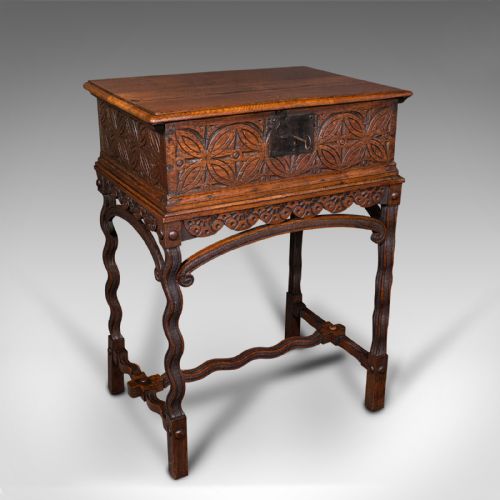
Construction relies heavily on solid oak timber joined with traditional pegged mortise and tenon framing. Panels are frequently hand carved with geometric patterns, scrolling foliage or strapwork.
Metalwork plays a structural and decorative role, incorporating brass drop handles, iron hinges and sometimes wrought iron mounts. Secondary woods and occasional giltwood accents appear alongside marble or metal details in specific cabinet variants.
Listings feature oak material predominantly, alongside walnut, brass, iron, marble and giltwood across various centuries.
Factors determining quality
Quality rests upon the crispness of the original hand carving and the integrity of the timber frame. Pieces retaining their matching base and original brass hardware demonstrate superior historical value.
Proportion and execution of the stand relative to the upper chest distinguish finer workshops from provincial output. Patina accumulated across centuries of surface wear indicates genuine age and honest upkeep.
The Carved Oak Chest Stand Glossary
- Chest on stand
- A storage box or chest elevated upon a distinct supporting frame with legs. This form lifts the contents off damp floors and eases daily access.
- Coffer
- A heavy wooden box with a hinged lid used for storing valuables or textiles. When placed on a stand, it gains height and presence.
- Bible box
- A small desktop box with a slanted or flat lid designed to hold sacred texts and writing materials. Placed on a stand, it functions as a compact writing desk.
- Bleached oak
- Timber that has been lightened in tone through age, exposure or chemical treatment. This finish highlights the grain pattern of the wood.
Carved Oak Chest Stand: Frequently Asked Questions
What is a carved oak chest stand?
A carved oak chest stand is a piece of furniture comprising a wooden storage box mounted on an elevated leg frame. These items combine deep chest storage with the display height of a table.
Most examples date from the seventeenth and eighteenth centuries, utilising dense native timbers and traditional joinery techniques.
How do I date a chest on stand?
Dating relies on examining the construction methods, tool marks, wood shrinkage and carving styles. Seventeenth century pieces often show hand-riven timber and pegged joinery.
Later revival items from the nineteenth and twentieth centuries may feature machine sawn elements or standardised hardware fittings.
Where should I place it at home?
These compact stands suit hallways, living rooms or bedrooms where floor space is at a premium. They provide useful surface space on top and enclosed storage within.
Keep them away from direct heat sources and strong sunlight to protect the aged oak surface and prevent timber splitting.
Are the stands original to the chests?
Many early pieces feature bases that were paired with the upper chest during a later historical period. Bespoke frames were sometimes constructed to elevate older bible boxes or coffers.
Examining the underside, joint interfaces and timber colour helps determine whether the upper and lower sections grew up together.