

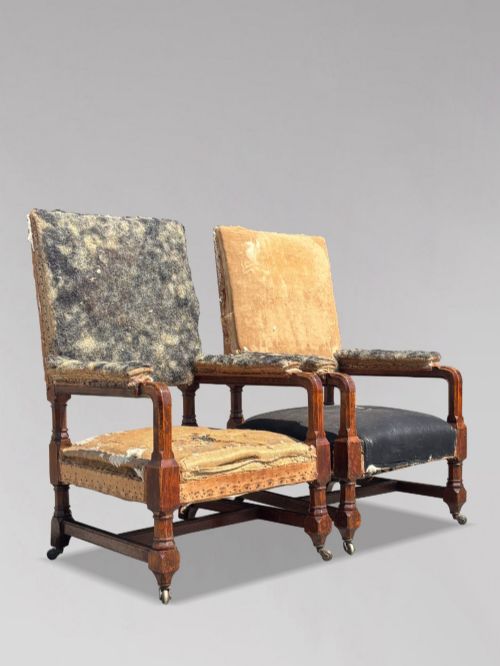
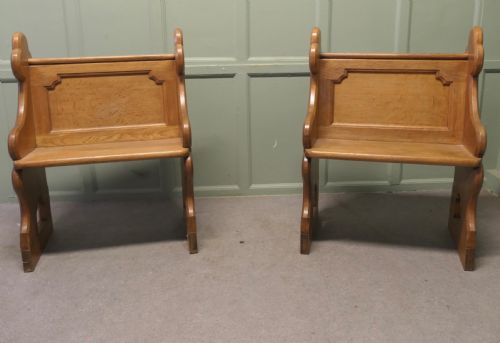
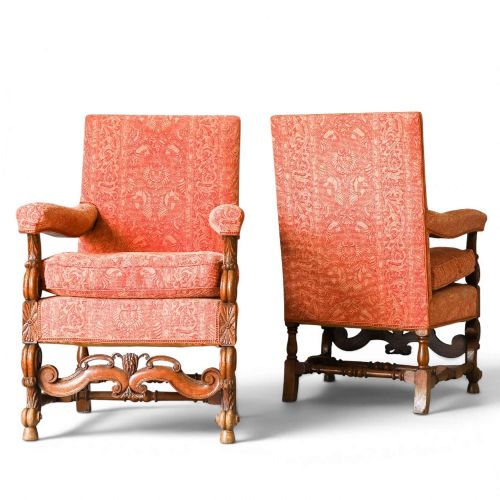
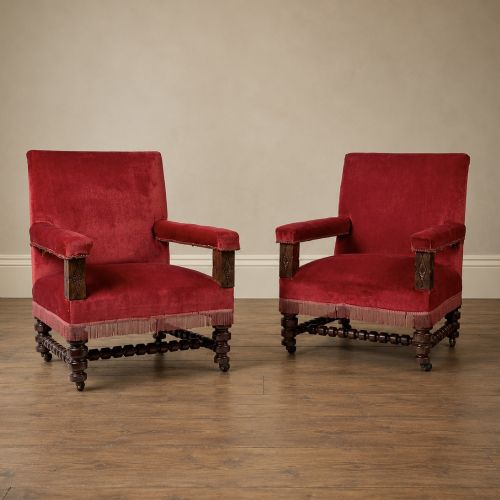
Carved Oak Chair Pair
A carved oak chair pair brings substantial presence and historic character to any room, combining robust joinery with decorative carving.
Carved Oak Chair Pair
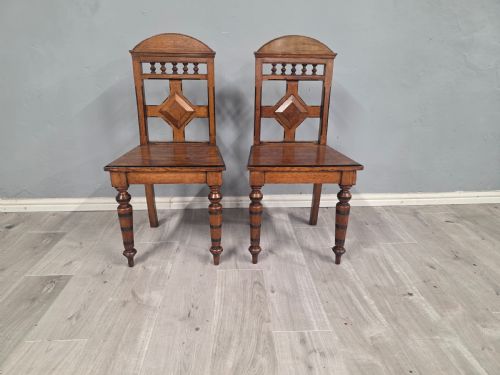
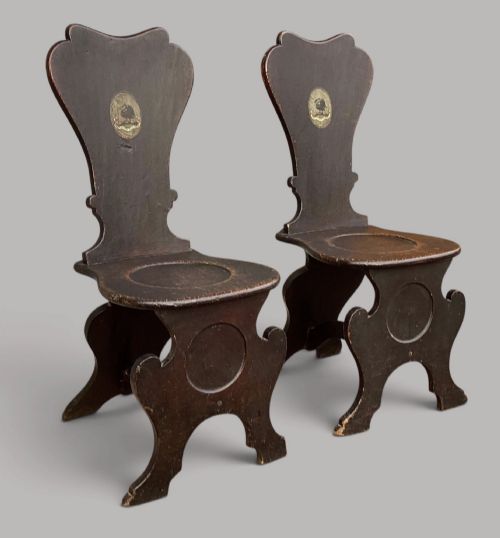
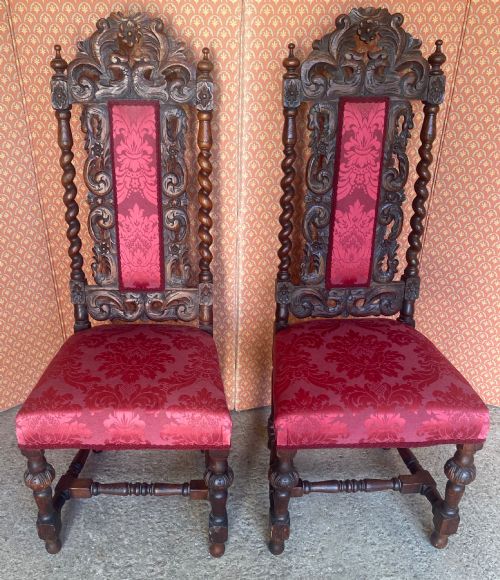
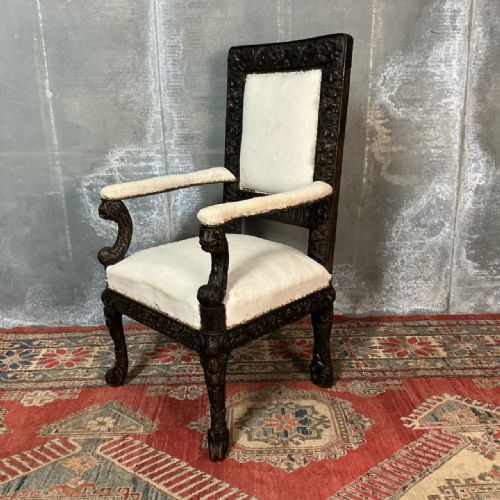
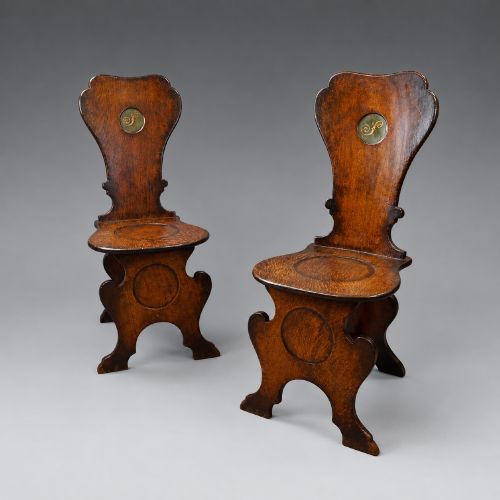
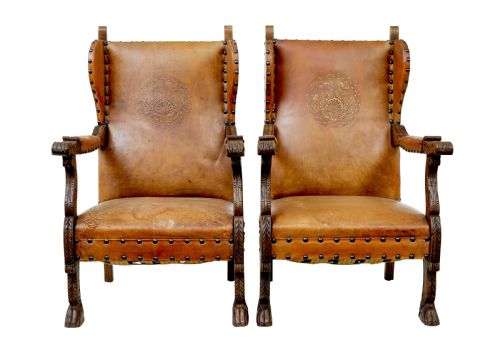
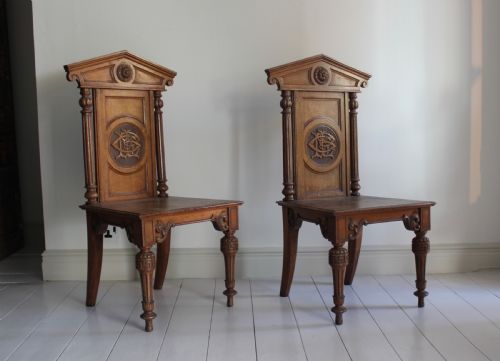
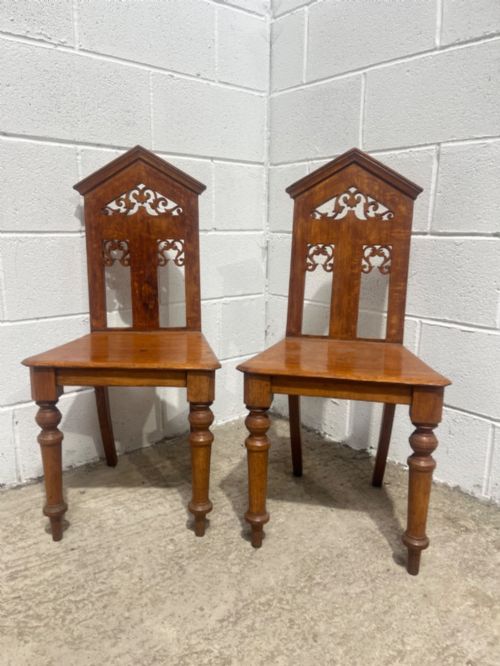
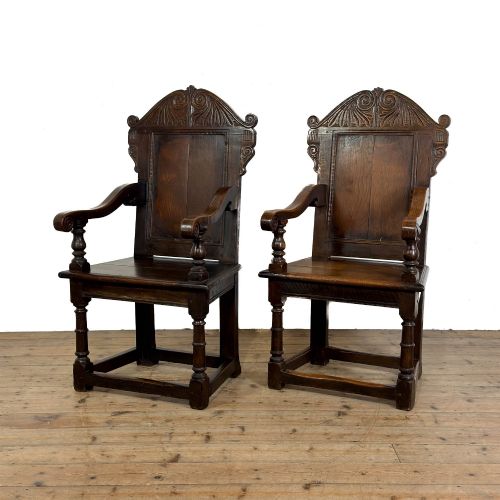
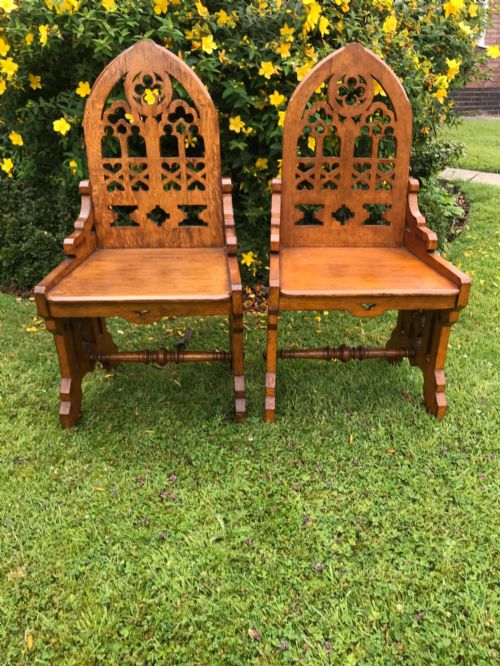
A carved oak chair pair unites heavy structural timber with deliberate ornamentation, spanning forms from high-backed hall chairs to substantial armchairs and sgabello designs. Buyers seeking this search phrase encounter numerous nineteenth-century interpretations, alongside occasional seventeenth, eighteenth, and early twentieth-century examples.
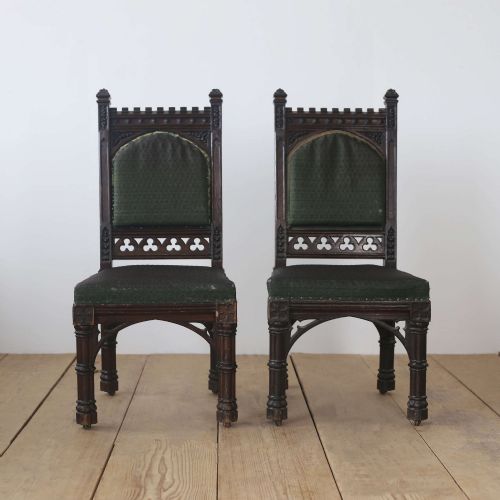
The selection ranges from austere Gothic Revival models and heraldic shield-backed hall seats to grand Renaissance Revival armchairs upholstered in velvet, leather, or damask. Most items on this page belong to the Victorian era or draw directly upon Jacobean, Baroque, and Carolean design vocabularies.
Makers and workshops across Britain and continental Europe produced these matched duos for grand hallways, libraries, and formal reception rooms. Regional variations appear in Scottish armorial clan chairs, Irish painted scabello forms, and English Gothic iterations.
Materials and construction methods
Solid oak provides the structural foundation for every piece in this category, selected for its density, durability, and capacity to hold deep chisel work. Subsidiary materials such as elm, brass studs, and painted highlights support the primary timber framework.
Upholstery techniques vary from exposed wooden backs and plank seats to padded elements covered in embossed leather, velvet, damask, or woven leather. Joinery relies on traditional mortise and tenon methods, secured with pegs to withstand heavy daily use.
Carved Oak Chair Pair Retail Price Guide 2026
Typical asking prices for carved oak chair pair among the pieces listed under this phrase on Sellingantiques today, from the lower quarter to the upper quarter. They describe what is for sale here now, not the wider market.
Some hall chairs feature carved armorial shields so stern they make guests reconsider tracking mud inside.
Evaluating craftsmanship and design
The distinction between standard production and superior work lies in the crispness and depth of the carved ornament, whether executed in a Gothic, Renaissance, or Jacobean style. Master carvers brought dimension and life to heraldic shields, trefoil details, and strapwork panels.
Uniformity across the pair determines its success as a matched set, evident in the consistency of the timber grain, matching proportions, and identical hand-finishing details. Well-integrated upholstery schemes that complement the era of the wooden frame elevate the standing of the pieces.
Gillows·Gillows of Lancaster
The Carved Oak Chair Pair Glossary
- Sgabello
- A Renaissance chair type featuring a wooden seat, solid trestle supports, and an ornamental backrest. These pieces served primarily as decorative hall seating.
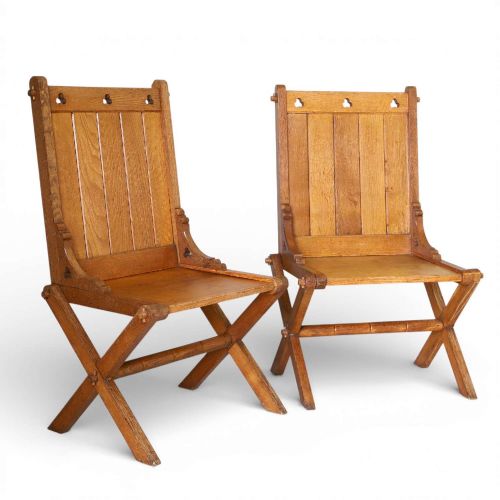
- Glastonbury chair
- A low-arm wooden chair design based on an ancient relic, featuring X-framed legs and an inclined back. They often incorporate religious motifs or trefoil carvings.
- Armorial
- Adorned with heraldic bearings or family crests. These designs frequently appear painted or carved upon the backs of hall chairs.
- Baronial
- A heavy, imposing style of furniture drawing inspiration from medieval castles and great halls. This aesthetic relies on exaggerated scale and deep relief carving.
- Wainscot chair
- An early wooden armchair constructed with panelled backboards and turned legs. They represent a sturdy evolution from box seating.
Carved Oak Chair Pair: Frequently Asked Questions
Where were carved oak chairs typically placed?
These chairs originally stood in grand entrance halls, formal libraries, and reception rooms where visitors waited. Their imposing timber frames and heraldic motifs were designed to project status and lineage.
Today, they function well as statement pieces in hallways, studies, or dining spaces, providing both historic interest and practical seating.
How do I distinguish revival periods from older originals?
Examine the tool marks, timber shrinkage, and joinery methods beneath the frame to understand the manufacturing era. Most nineteenth-century revival pieces utilise machine-assisted preparation combined with hand carving.
True seventeenth-century examples display irregular hand-sawn timber surfaces, pegged joints shaped by drawknives, and distinct wear patterns accumulated over centuries of use.
Are upholstered versions difficult to maintain?
Original or period replacement upholstery requires gentle care, particularly delicate fabrics like velvet, damask, or embossed leather. Vacuuming with a soft attachment prevents dust accumulation in the carved crevices.
Leather surfaces benefit from occasional feeding with appropriate conservation waxes to prevent cracking, while modern replacement fabrics offer easier day-to-day durability.
What defines a matched pair versus a true pair?
A true pair was constructed alongside one another in the workshop by the same hand using sequential timber planks. They share identical dimensions, carving depth, and wear characteristics.
Matched pairs consist of two very similar individual chairs brought together later by dealers or collectors because of their compatible style, wood tone, and proportions.