
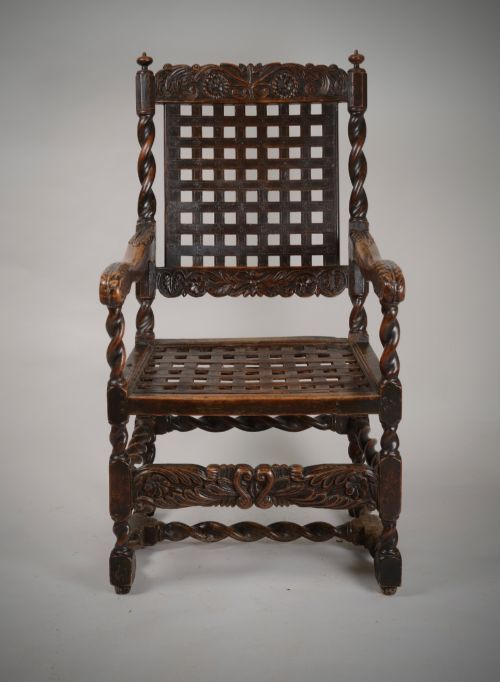
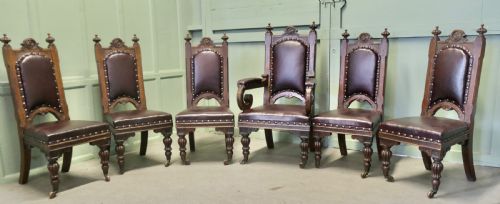
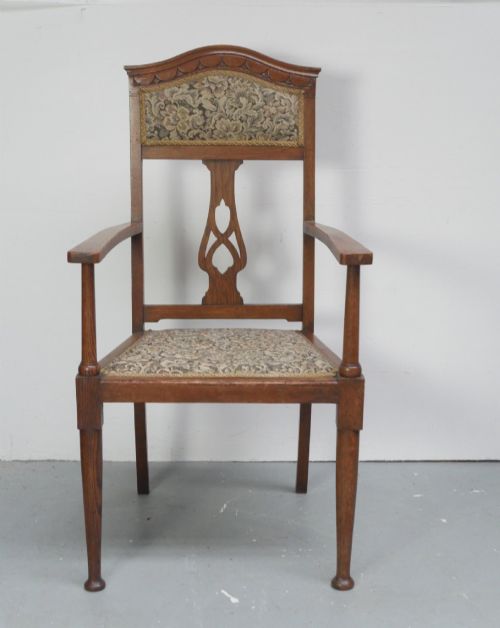
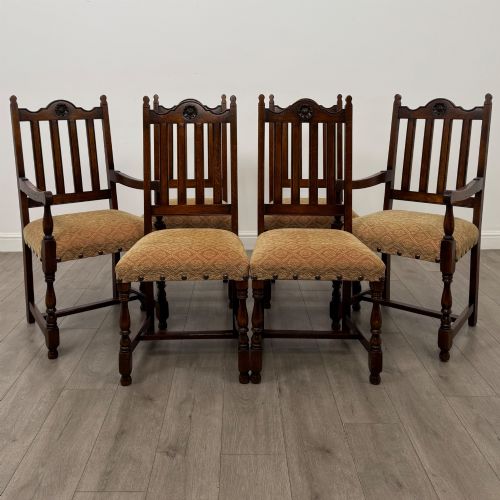
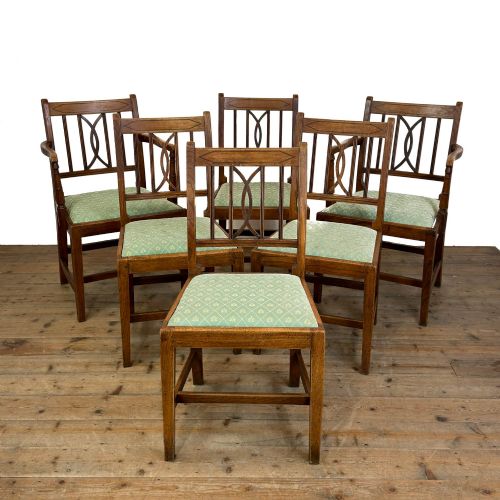
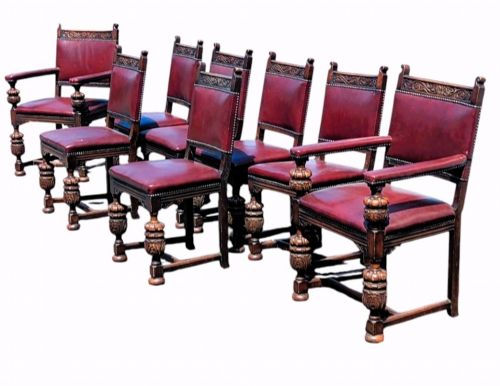
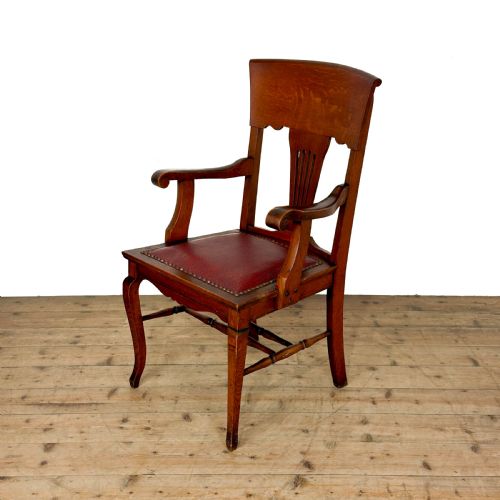

Carved Oak Carver
A carved oak carver brings tactile weight and centuries of revival craftsmanship straight to the head of a dining table.
Carved Oak Carver
A carved oak carver is a substantial armchair designed with arms, intended historically for the head of the table or for parlour use, appearing frequently in revivalist styles across this selection. Buyers search this phrase to find seating that combines structural timber with decorative relief work, spanning eras from seventeenth-century joined construction to twentieth-century revivals.
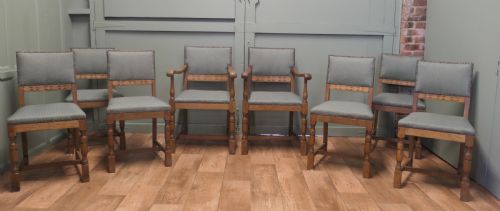
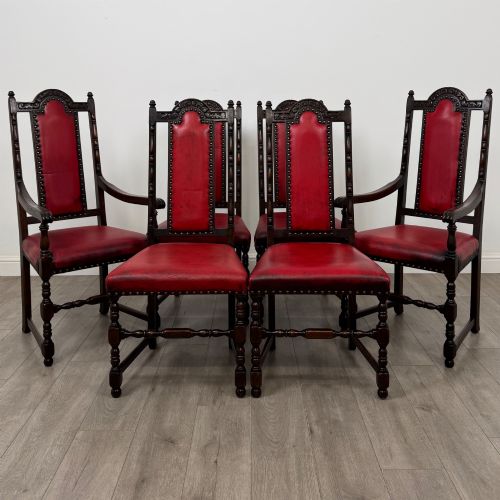
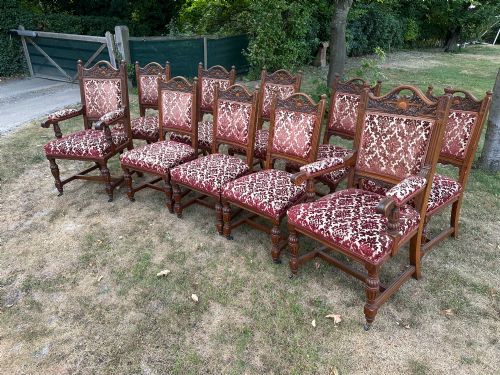
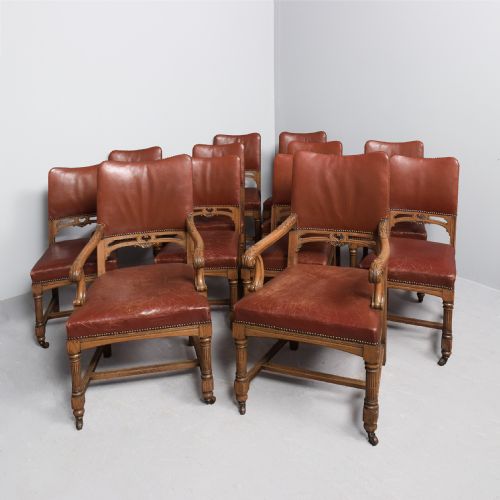
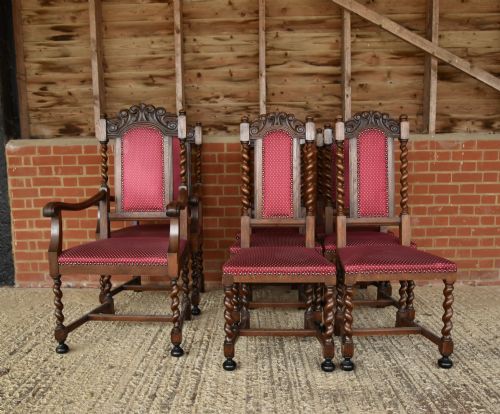
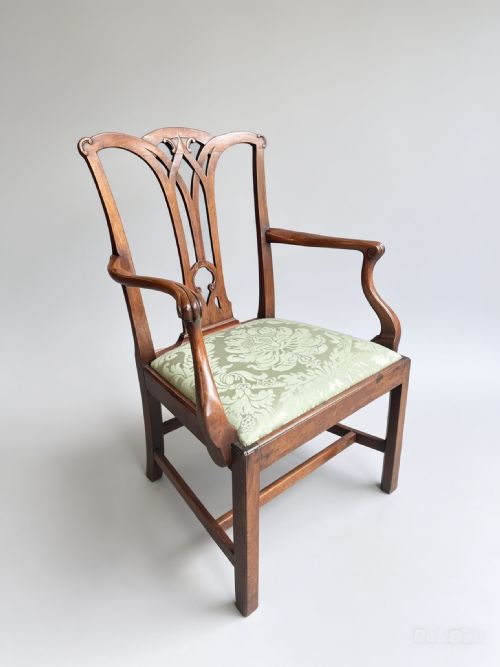
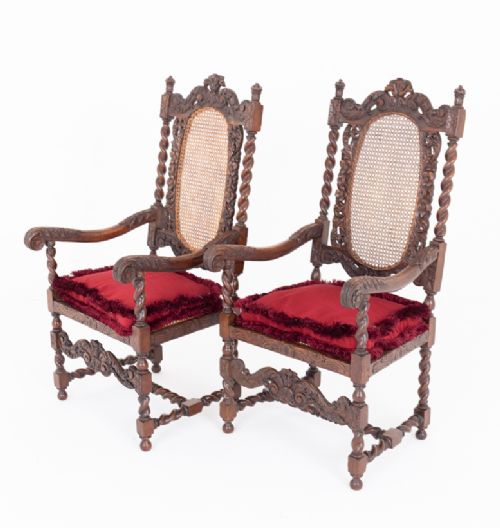
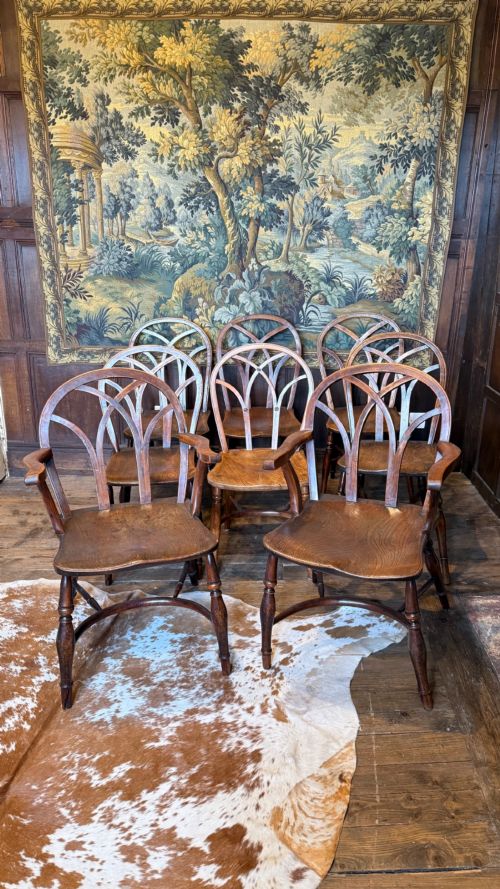
The pieces seen here range from substantial Victorian Gothic and Jacobean revival armchairs to Edwardian country chairs and Arts and Crafts designs. Most examples date from the nineteenth and twentieth centuries, utilising historic motifs like twist legs and high panelled backs to echo earlier centuries.
Materials and construction methods
Makers built these carvers primarily using solid oak, frequently paired with secondary woods like elm, and fitted seating in leather, cane, fabric, or woven hide. Frames relied on traditional joined or pegged construction, allowing heavy timber to support deep hand-carved crests, panels, and strapwork.
Surface ornamentation involved chiselling, gouging, and turning to produce spiral barley twists or flat geometric reliefs. Upholstery methods included brass studding to secure leather or velvet pads directly into the timber frame.
Listings feature oak carvers spanning the seventeenth century through to the nineteen-thirties, with heavy representation from Victorian and Edwardian revival periods.
Distinguishing quality in carved oak carvers
Quality rests upon the depth and crispness of the carving, where sharp, hand-chiselled detailing outshines shallow, mechanical stamping. The integration of the arms to the uprights reveals whether a maker prioritised rigid timber connection or superficial stability.
Proportion and timber selection dictate the visual balance of the armchair, distinguishing well-figured grain and honest structural heft from heavy, uninspired mass. Original seating materials, such as intact woven leather or cane work, elevate the integrity of the piece.
Edward Pearce
The Carved Oak Carver Glossary
- Carver
- An armchair designed with open sides and armrests, traditionally set at the head of a dining table alongside matching side chairs. These pieces offer wider proportions to accommodate formal attire.
- Jacobean Revival
- A nineteenth and twentieth-century design movement replicating the heavy, rectilinear forms and geometric panelling of seventeenth-century English furniture. Pieces often feature strapwork and chip-carved motifs.
- Barley Twist
- A decorative turning technique resembling a spiralling rope, popular on the legs and stretchers of seventeenth-century furniture and revived during the Victorian and Edwardian eras. The shape is cut and smoothed by hand or lathe.
- Cane
- Woven rattan material utilised for chair backs and seats to provide flexible, breathable support. It requires careful hand-weaving through holes drilled in the oak frame.
- Joined Chair
- An item of furniture constructed using mortise and tenon joints secured with wooden pegs rather than metal nails or screws. This traditional method provides immense structural endurance.
Carved Oak Carver: Frequently Asked Questions
What is a carved oak carver?
A carved oak carver is a substantial armchair featuring wooden armrests and decorative relief carving, traditionally placed at the head of a dining table. These seats combine structural framing with historical revival styles.
They function as both practical seating and decorative focal points, utilising heavy timber and upholstery such as leather, cane, or fabric.
How do I date a carved oak carver?
Dating relies on examining construction methods, timber patination, and the specific revival style employed by the maker. Seventeenth-century originals show joined peg construction, while nineteenth and twentieth-century revivals exhibit machine-assisted cuts alongside hand-chiselled details.
Matching the carved motifs, such as Jacobean strapwork or Arts and Crafts linear simplicity, helps place the chair within specific periods like the Victorian era or the Edwardian decades.
Where should I place a carver chair?
Carvers suit the head and foot of a dining table where their wider arms balance the composition of standard side chairs. They also function independently as occasional armchairs in hallways, studies, or bedrooms.
Because of their substantial wooden frames and decorative backs, they work best against panelled walls or where space allows the carved details to remain visible.
How do I care for antique oak furniture?
Maintaining antique oak involves keeping chairs away from direct heat sources and rapid humidity changes to prevent the timber from splitting. Regular dusting with a dry, soft cloth preserves the natural finish without building up heavy chemical residues.
Leather, cane, and fabric inserts require specific maintenance suited to their respective materials, such as occasional light conditioning for hide seats.