

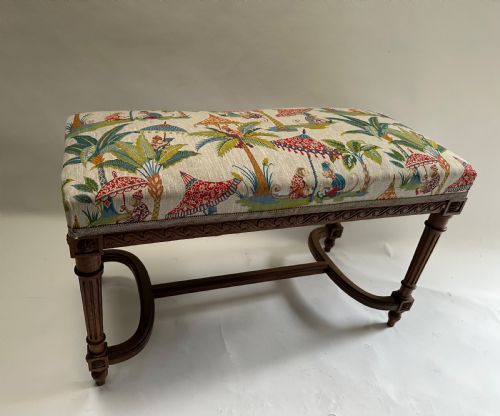
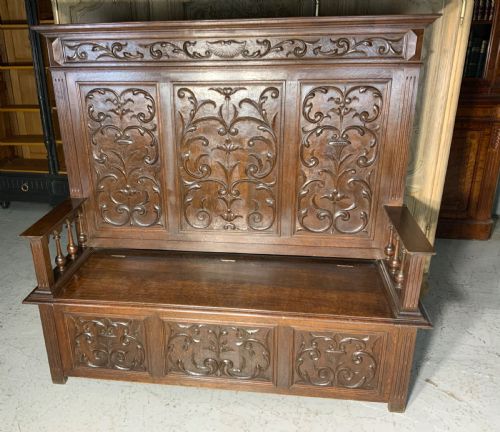
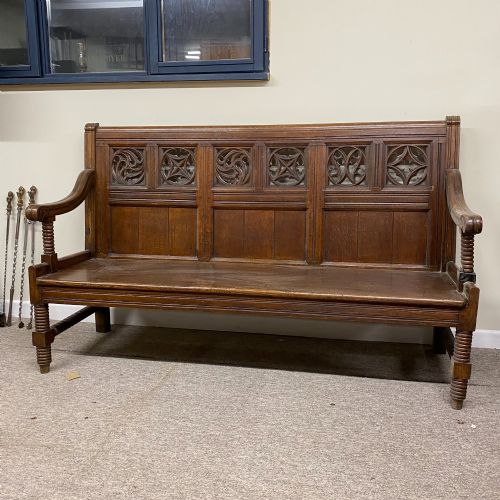

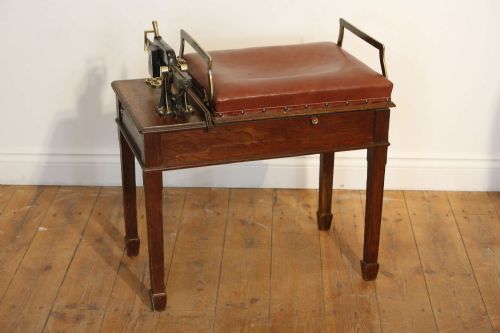


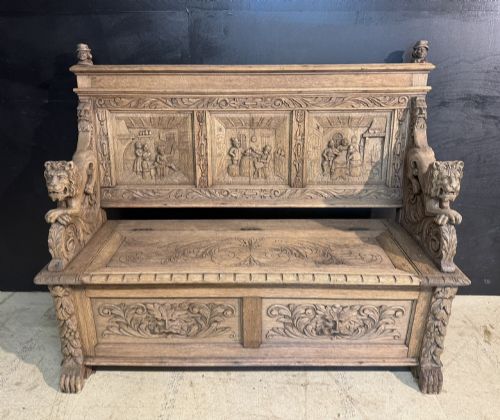

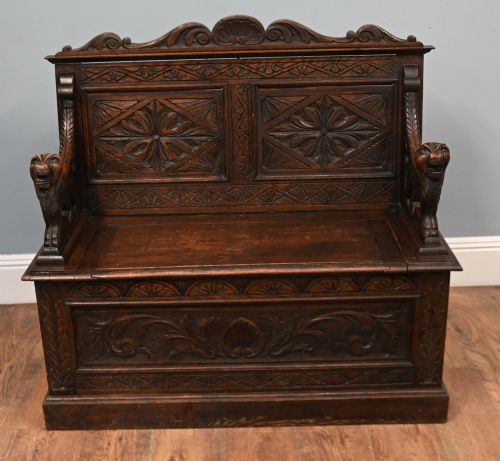



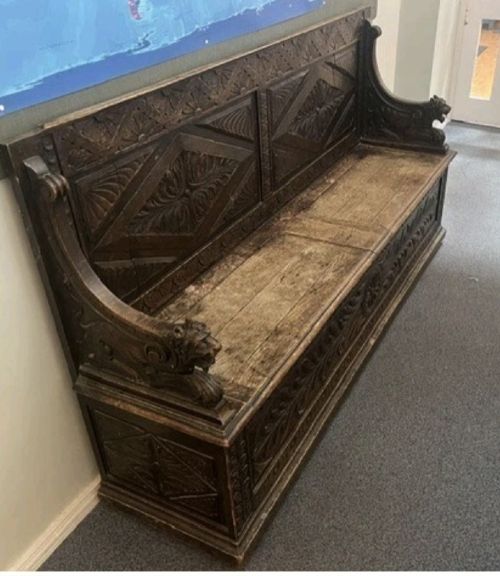
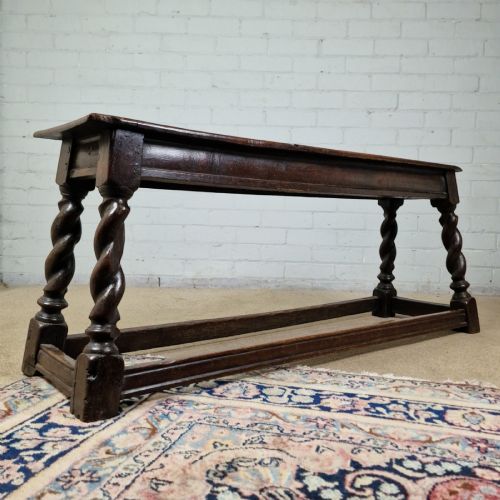
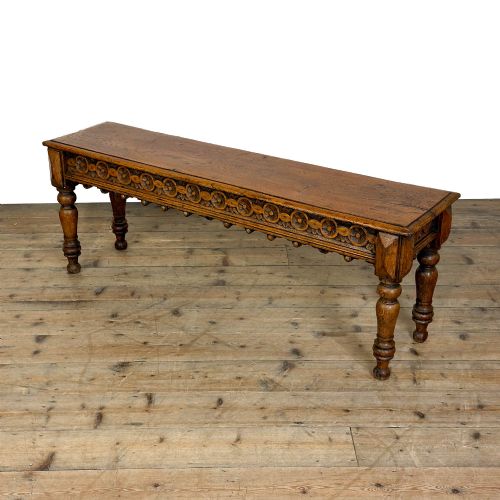
Carved Oak Bench Seat
When you examine a carved oak bench seat, you are looking at sturdy historical seating built to anchor a hallway or parlour with solid timber.
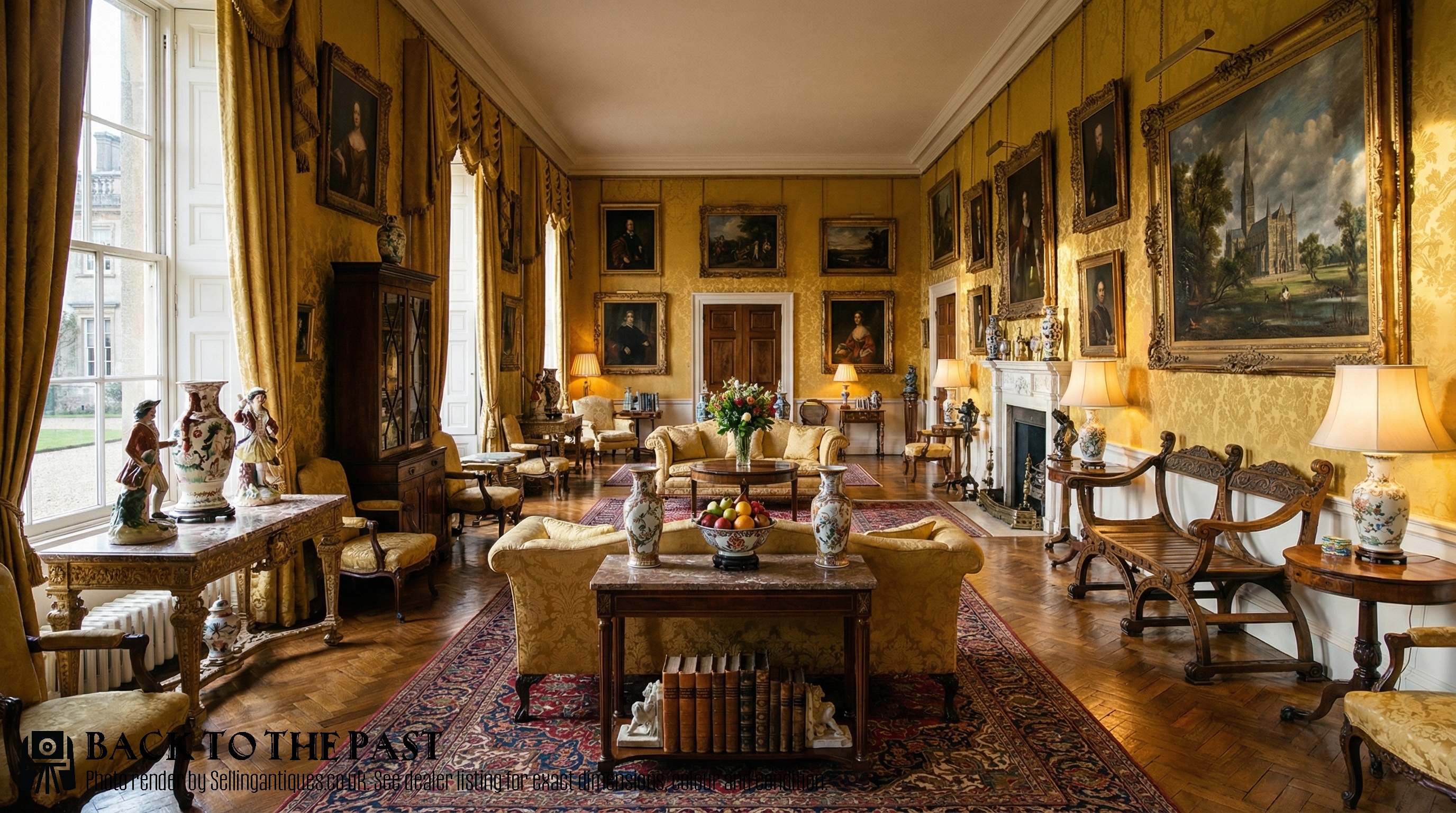
Carved Oak Bench Seat
A carved oak bench seat encompasses a diverse range of historic seating, from high-backed settles and monk's benches with folding tops to narrow hall seats and architectural window benches. These items served functional roles in domestic interiors across centuries, providing both a place to sit and, frequently, concealed storage beneath the lid for blankets or boots.
Buyers browsing this selection will most frequently encounter Victorian examples alongside pieces from the Edwardian era and the later decades of the nineteenth century. These often feature regional characteristics, such as Welsh or Cotswold influences, or incorporate decorative movements like Gothic Revival and Arts and Crafts styling.
The form spans straightforward plank benches on trestle ends to elaborate box settles adorned with linenfold panels, figural carvings, and trefoil supports. Their primary purpose remains largely unchanged from their origins, functioning as robust, practical furniture designed for heavy daily use near an entranceway.
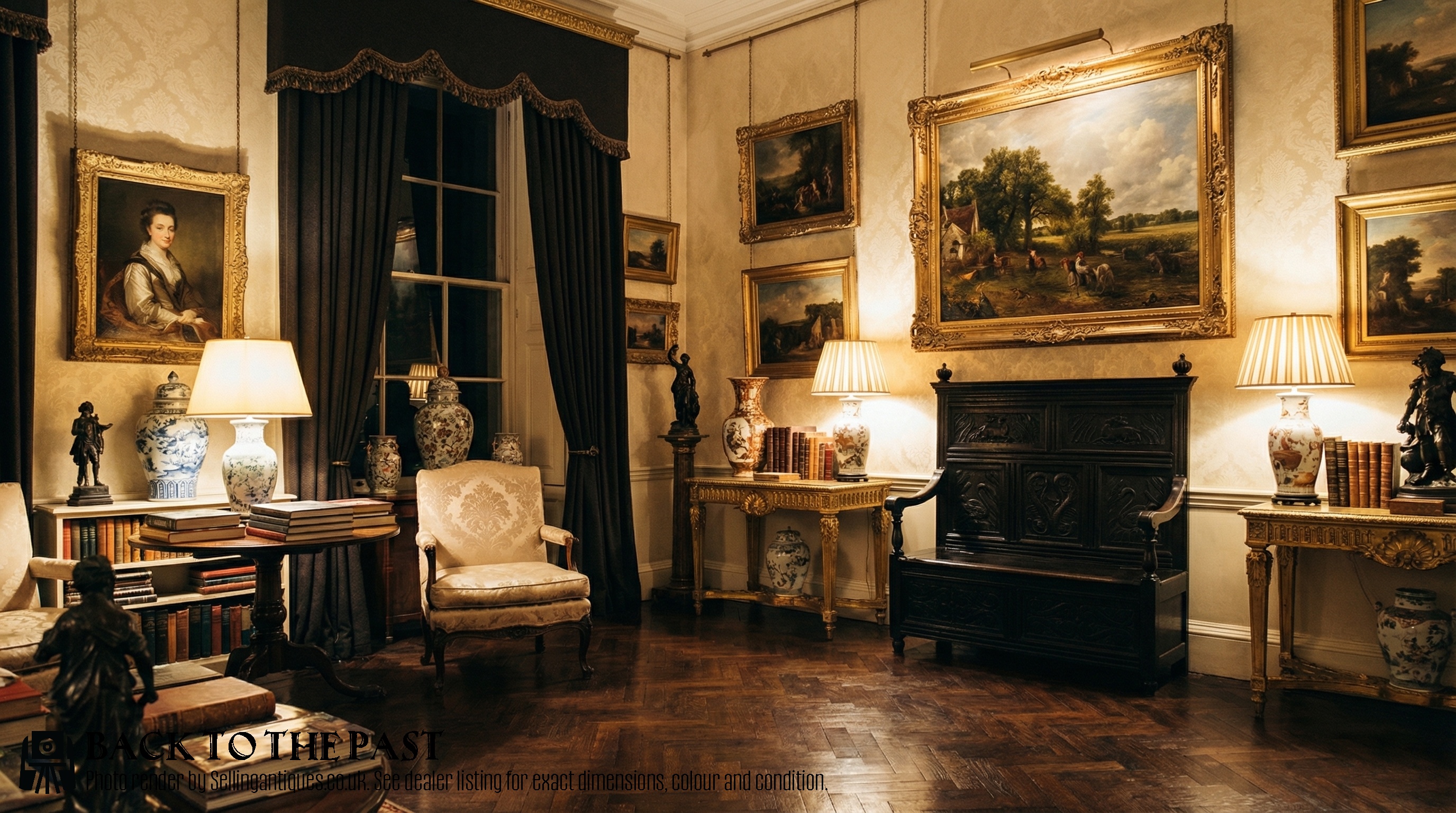
What varies in quality
Quality in these benches is dictated by the depth and crispness of the carving, the thickness of the solid oak boards, and the integrity of the original joinery. Superior examples display thoughtful proportions, harmonious ornamentation, and well-executed architectural details rather than hasty surface embellishment.
Carved Oak Bench Seat Retail Price Guide 2026
Typical asking prices for carved oak bench seat among the pieces listed under this phrase on Sellingantiques today, from the lower quarter to the upper quarter. They describe what is for sale here now, not the wider market.
Listings span from the 17th century through the Edwardian period, featuring solid oak alongside brass, iron, and leather elements.
GIllows·James Shoolbred & Co.·Shapland & Petter
The Carved Oak Bench Seat Glossary
- Settle
- A wooden bench with a high back, solid arms, and often a storage box beneath the seat. It was traditionally placed near the hearth to block draughts.
- Monk's bench
- A versatile convertible seat featuring a hinged back that folds down over the arms to form a small table. This dual-purpose design is characteristic of later nineteenth and early twentieth-century production.
- Box settle
- A bench incorporating a hinged seat lid that opens to reveal a deep storage compartment. This form functioned as a combined chest and seat in hallways and communal rooms.
- Trefoil
- A three-lobed decorative ornament resembling a clover leaf, commonly found carved into the Gothic Revival supports and panels of nineteenth-century seating.
- Linenfold
- A style of wood carving that imitates folded linen, frequently used on the flat panels of sixteenth and seventeenth-century oak furniture and later revival pieces.
Carved Oak Bench Seat: Frequently Asked Questions
Where should I place a carved oak bench seat?
These benches traditionally anchor an entrance hall, mudroom, or wide corridor where their sturdy construction withstands heavy foot traffic.
They also function effectively beneath large windows or as standalone accent seating in a living room, provided the depth matches the available floor space.
How do I maintain the finish on an antique oak bench?
Maintain the wood by applying a quality beeswax periodically to nourish the dry timber and preserve the historic surface sheen.
Avoid placing the seat near direct heat sources or in strong sunlight, which can dry out the oak and cause the historic panels to split.
How can I tell a Victorian revival piece from an earlier one?
Victorian revival pieces often display machine-sawn timber marks, standardised hinges, and softer, more repetitive carving styles influenced by Gothic or Jacobean tastes.
Earlier examples from the seventeenth or eighteenth centuries reveal irregular hand- adzed surfaces, pegged joints without modern metal screws, and deep natural patination from age.