


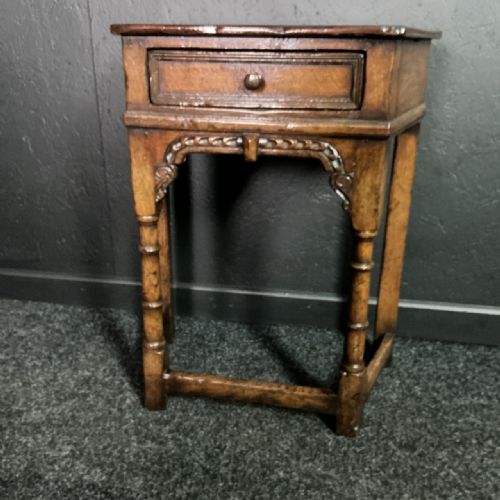
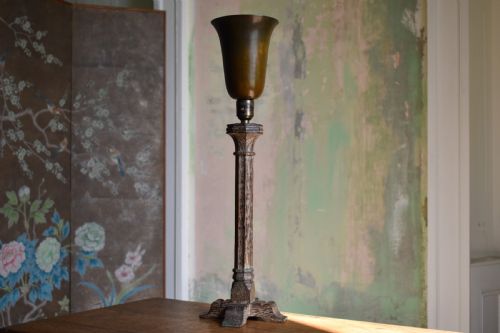
Carved Oak Bedside Table
A carved oak bedside table brings rich texture and enduring utility to a bedroom, anchoring the space with traditional cabinetwork.
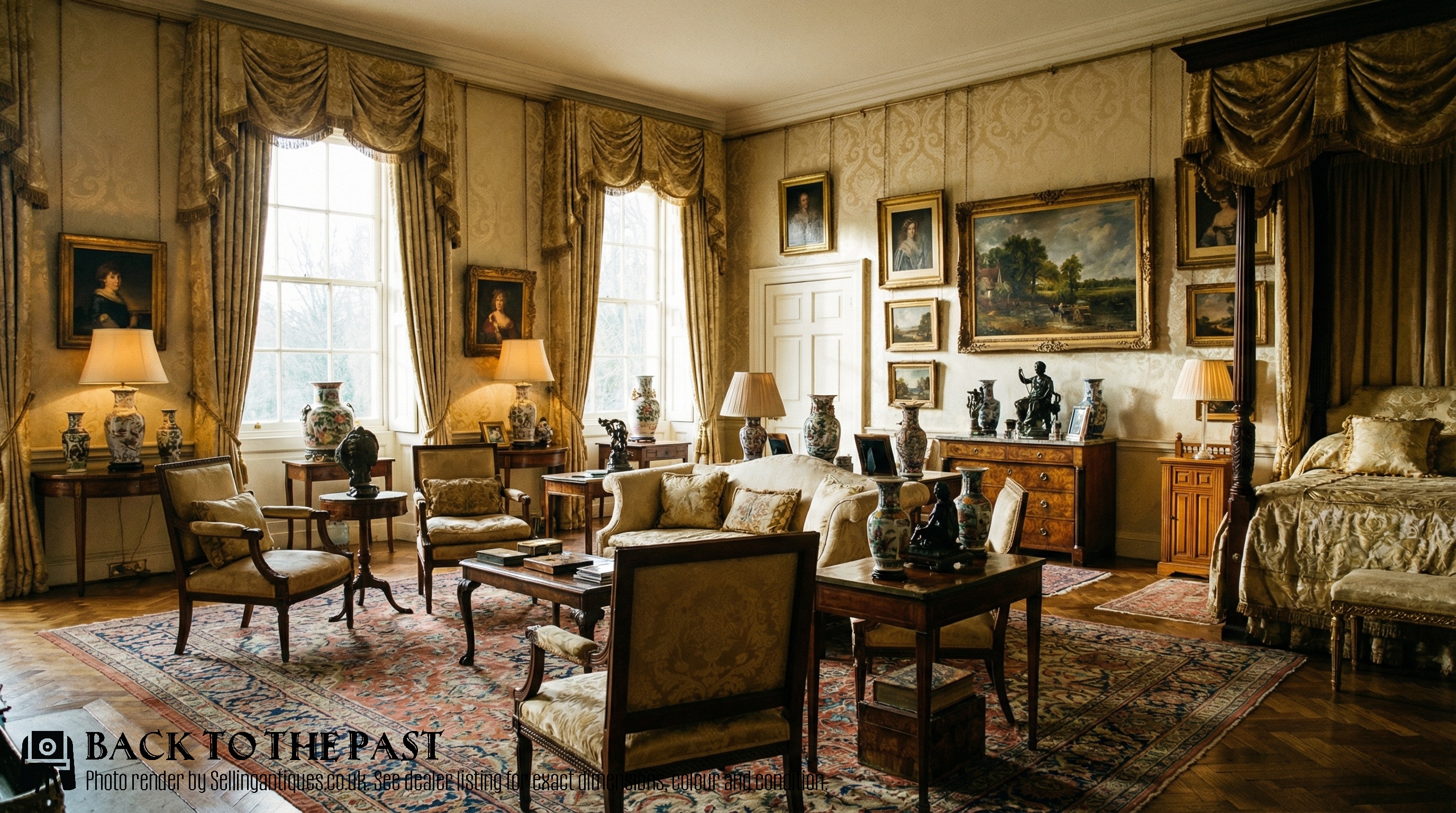
Identifying carved oak bedside table forms
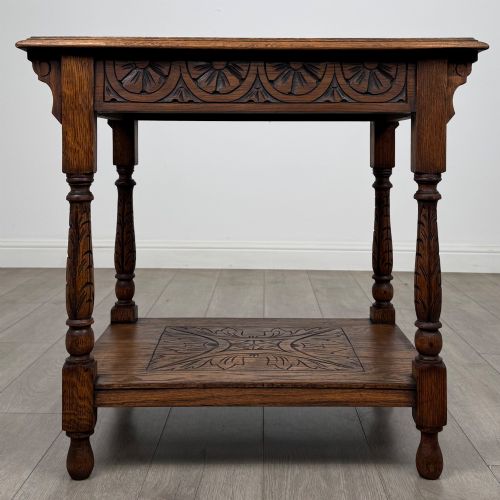
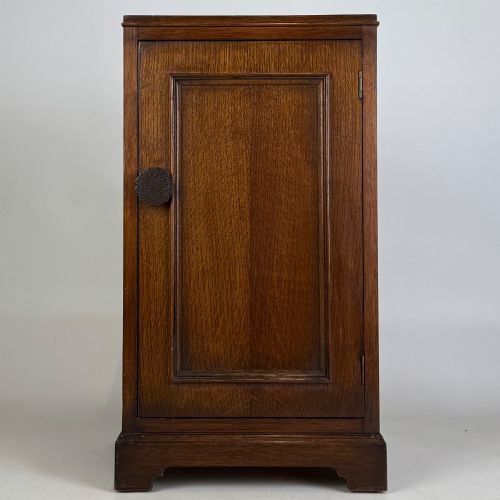
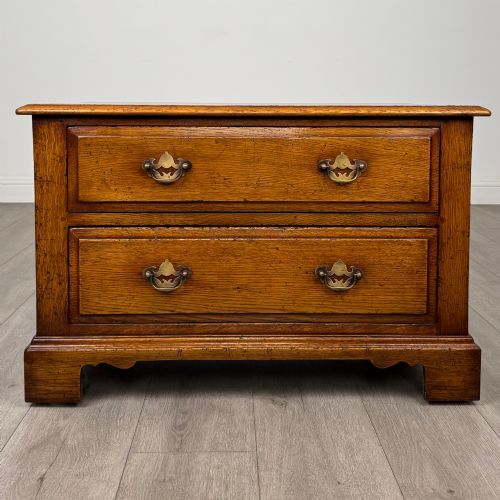
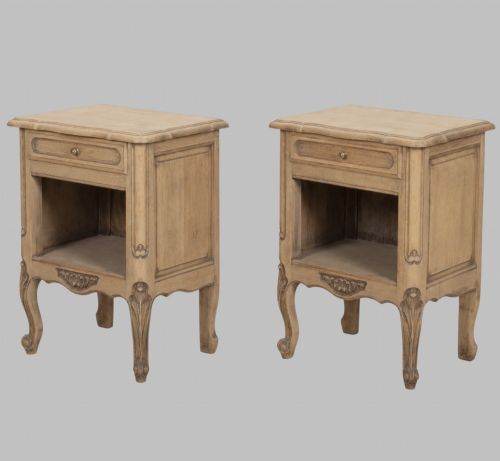
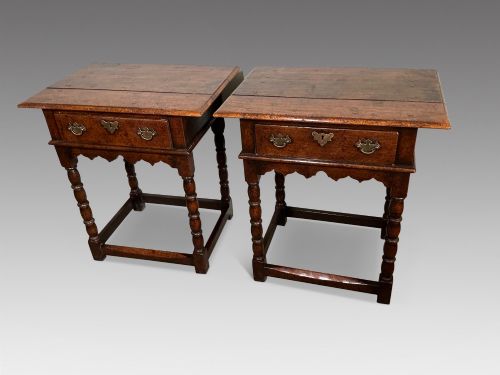
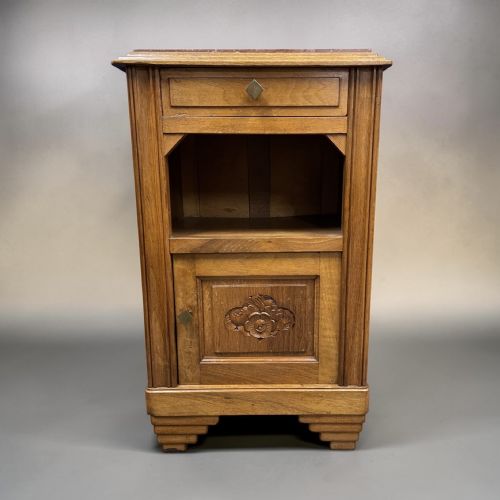
A carved oak bedside table unites sturdy timber construction with ornamental surface detail, serving as a practical night storage unit. These items appear in various forms, including enclosed bedside cupboards, night tables with single drawers, and open side cabinets.
The pieces on this page span several decades and stylistic revivals, originating from Victorian, Edwardian, and early twentieth-century workshops. Buyers encounter both British vernacular examples and continental pieces influenced by French provincial and Jacobean styles.
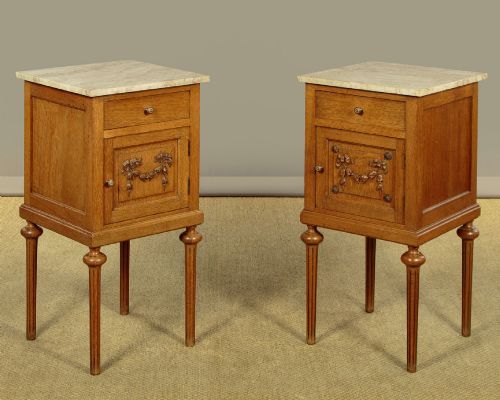
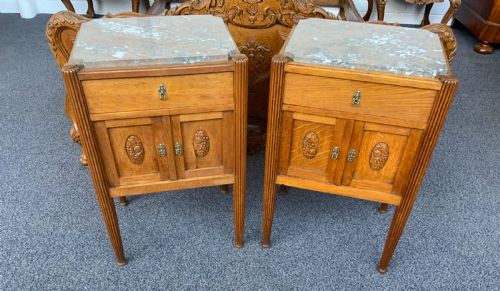
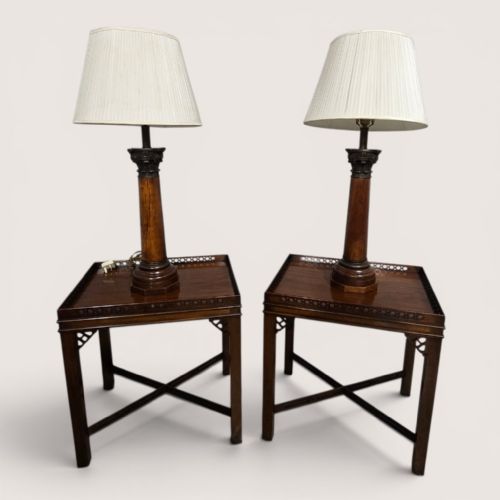
Most examples function as compact storage cabinets with panelled doors or single drawers, while select variations feature contrasting marble tops. Pairs frequently appear in the record, alongside individual cabinets and side tables adapted for bedroom use.
Materials and construction methods
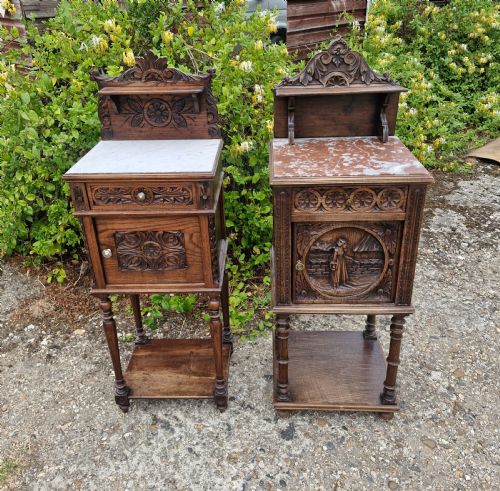
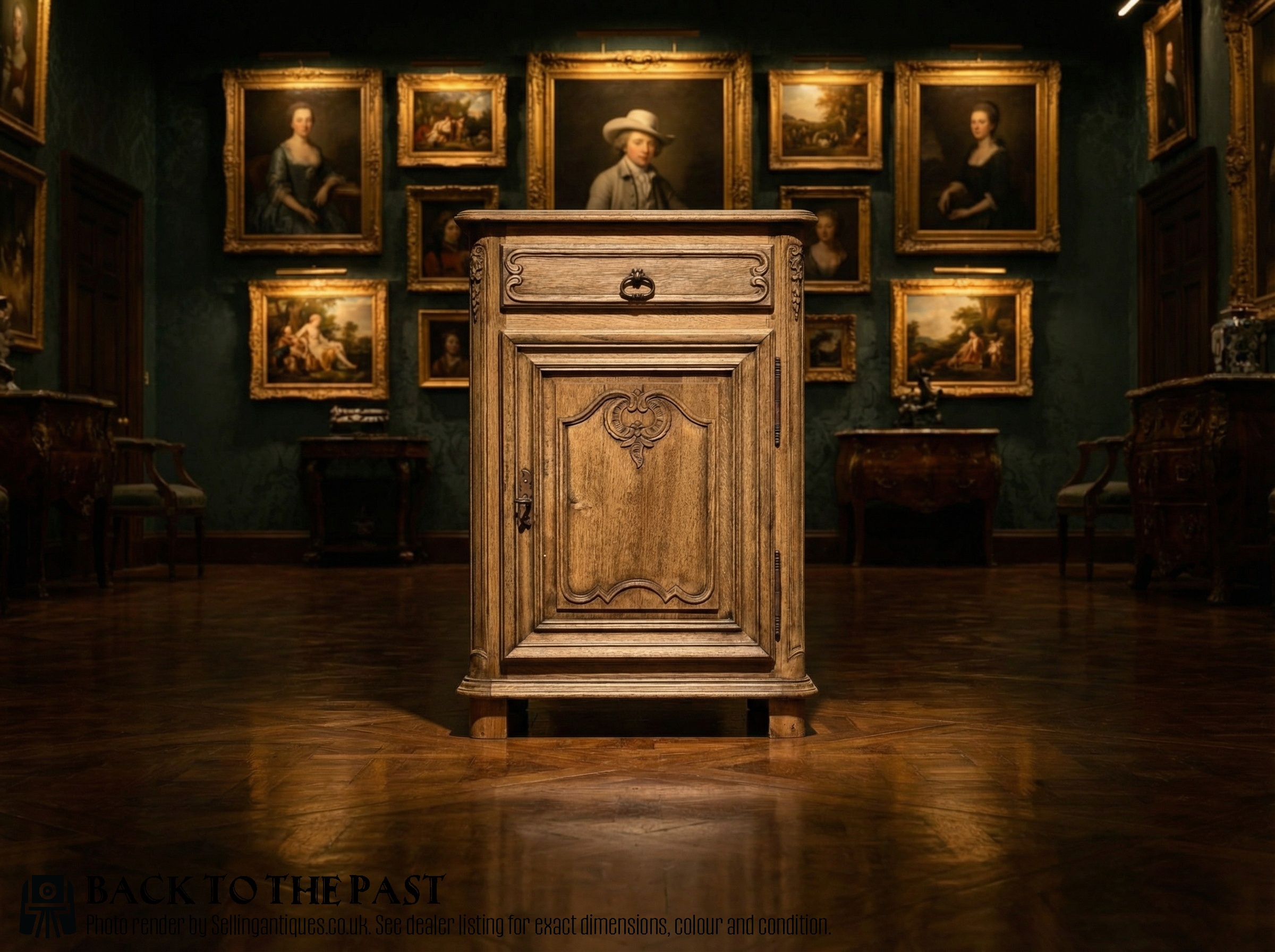
Makers utilised solid oak for the primary framework, doors, and tops, capitalising on the timber's heavy grain and durability. This dense material supported deep relief carving, particularly on door panels and friezes.
Metal fittings such as brass and iron were incorporated for handles, hinges, and occasional structural reinforcement. Certain continental examples also integrated heavy marble slabs fitted directly onto the oak carcass.
Retail Price Guide 2026
Typical UK retail prices for carved oak bedside table, calculated from the Sellingantiques database of over a million retail prices indexed since 2003. This retail price guide relies exclusively on Sellingantiques data; no external sources or auction records are used, so the figures do not describe the wider market.
One industrious nineteenth-century oak washstand has retired gracefully to duty as a bedside table.
Judging quality and craftsmanship
Quality rests in the crispness of the hand-carved detail and the selection of the oak timber. Finer cabinets display deep, confident chisel work rather than shallow mechanical stamping.
Construction methods distinguish standard utility pieces from superior examples, visible in tight joinery, panel alignment, and original hardware. The integration of contrasting stone surfaces, such as fitted marble tops, indicates higher production tiers.
Simpson Halifax
The Carved Oak Bedside Table Glossary
- Jacobean Revival
- A nineteenth and twentieth-century style imitating seventeenth-century British furniture. It is characterised by heavy proportions, geometric mouldings, and strapwork carving.
- Frieze
- The decorative horizontal band situated beneath the top surface of a cabinet. Carved oak examples often display scrolling foliage or chip carving in this zone.
- Panel
- A central piece of timber fitted within a grooved frame to prevent warping. Raised and carved panels frequently form the doors of these cabinets.
Frequently Asked Questions
What periods do these carved oak tables come from?
The available pieces span the late nineteenth century through the 1920s, encompassing Victorian, Edwardian, and early twentieth-century eras.
Stylistic influences also stretch across British revival designs and French provincial or chateau aesthetics from the same period.
What materials besides oak are used?
Solid oak forms the primary structural timber across every piece listed in the archive and current selection. Brass and iron hardware appear frequently as hinges, pulls, and handles.
Selected continental pieces incorporate fitted marble slabs set directly into the upper surface of the oak cabinet.
How do French styles differ from British ones?
French variants often present as night tables or bedside cupboards with lighter proportions and characteristic provincial carving. British examples tend to favour heavier Jacobean revival motifs and solid oak construction.
Both regional traditions utilise panelled doors and compact footprints suited for bedside placement.