


Carved Oak Bedroom Furniture
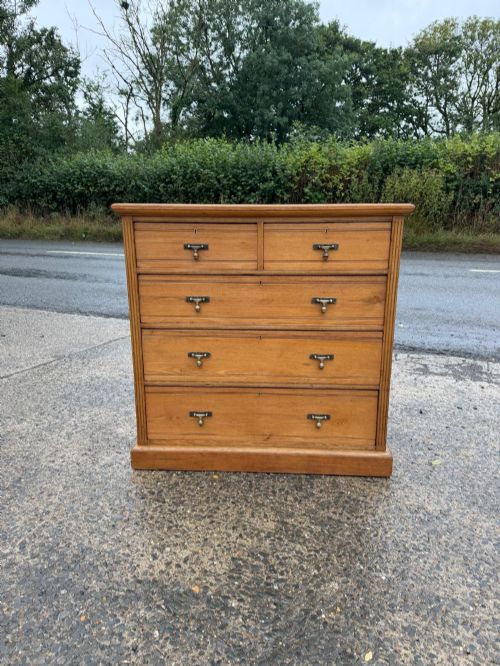
These carved oak bedroom furniture pieces range from seventeenth-century chests to Edwardian wardrobes, offering solid construction and historic character for modern interiors.
Carved Oak Bedroom Furniture
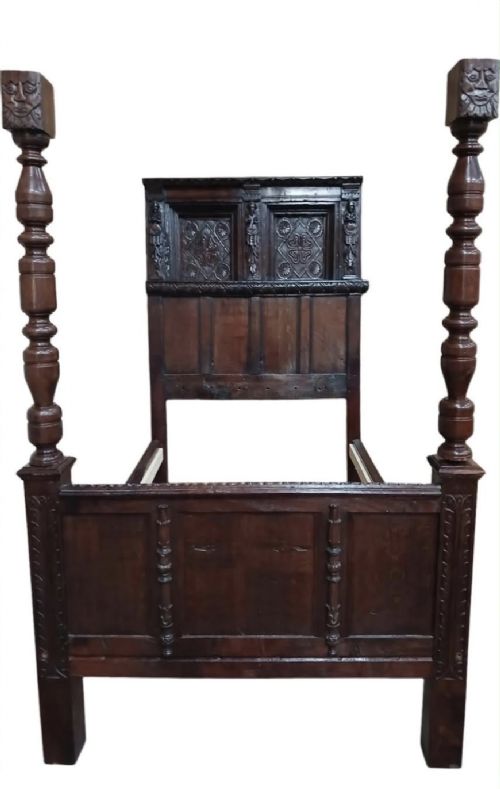
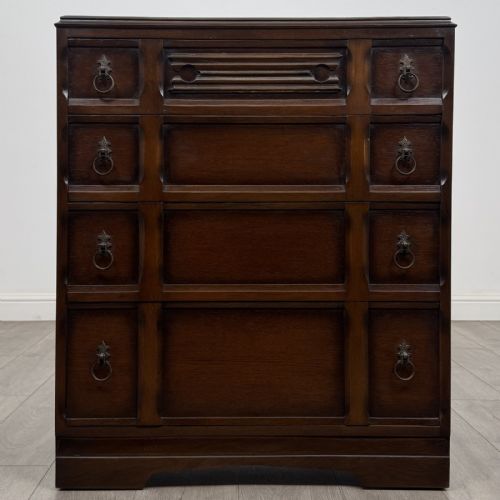
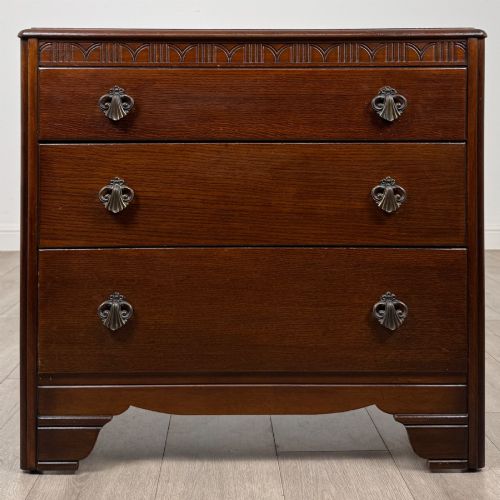
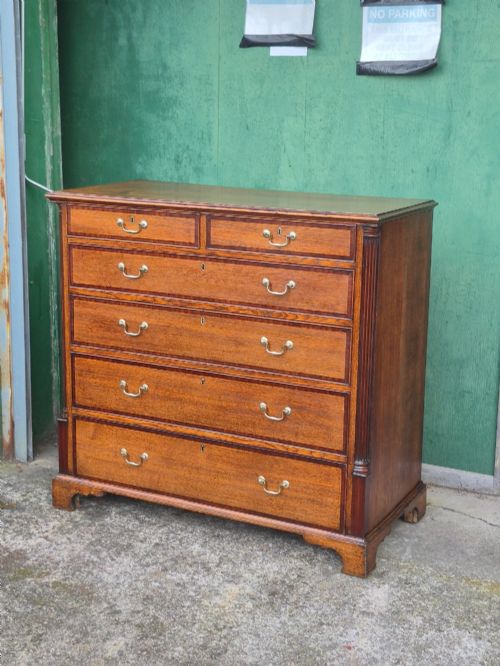
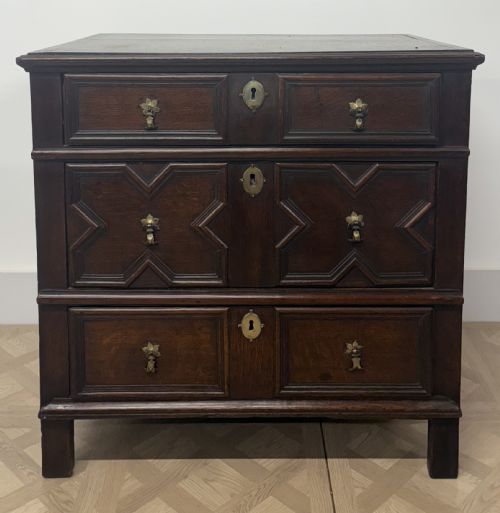
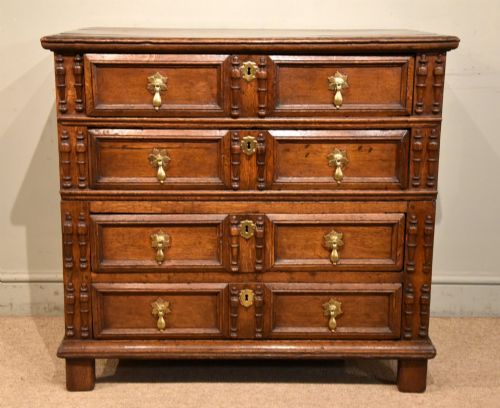
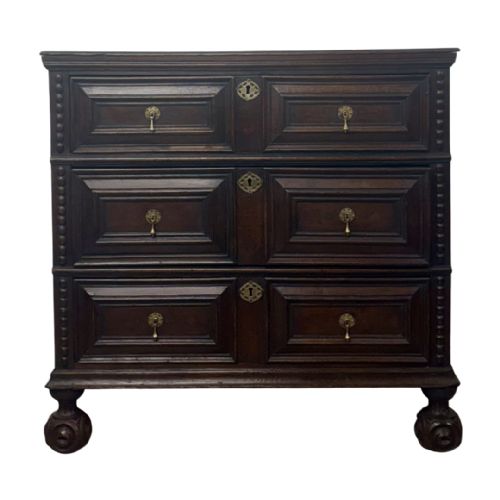
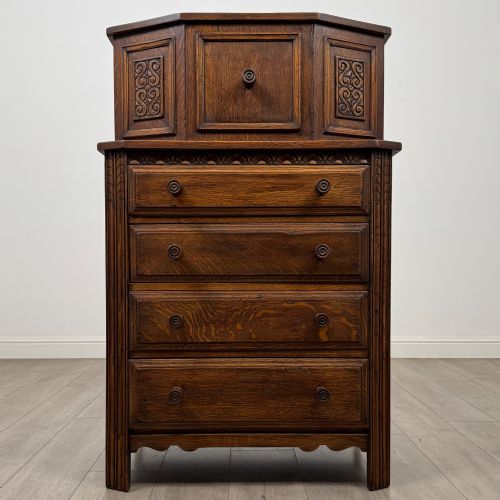
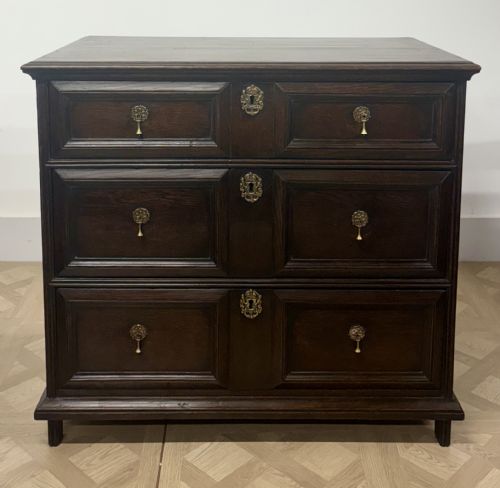
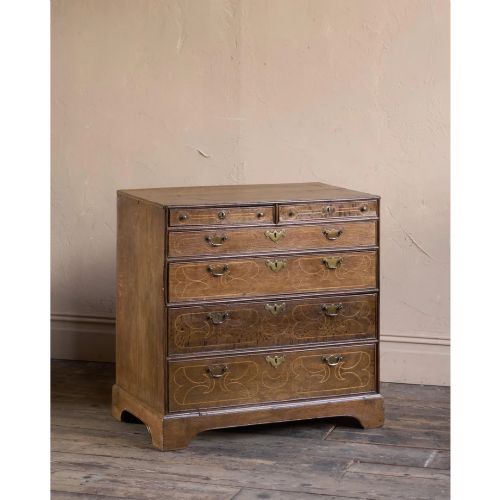
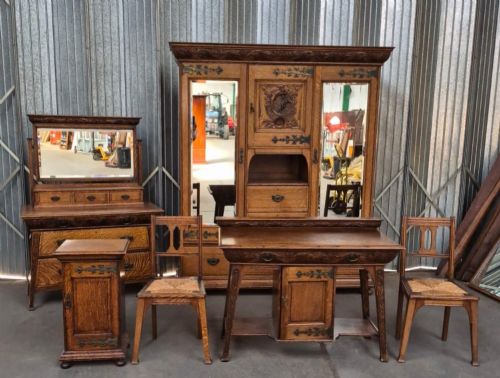
Carved oak bedroom furniture encompasses practical storage and sleeping pieces spanning multiple centuries, from seventeenth-century Jacobean chests to Edwardian wardrobes and nineteen-thirties beds. Chests of drawers dominate the selection, appearing alongside dressing tables, bedside cabinets, and complete bedroom suites.
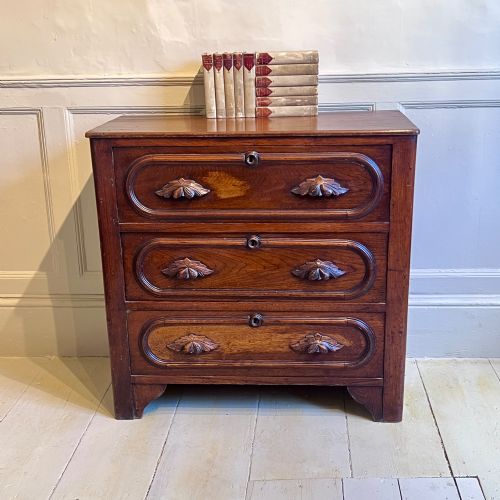
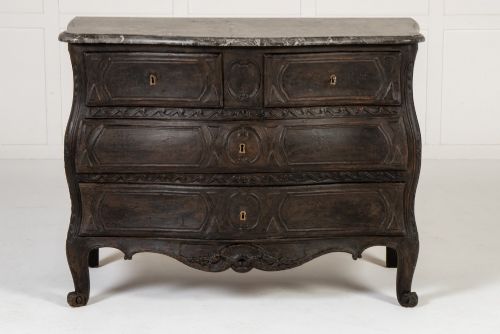
Buyers frequently encounter nineteenth-century revival styles and Edwardian examples alongside earlier seventeenth-century survivals. Pieces range from straightforward domestic storage to elaborate Gothic revival beds and French provincial commodes.
Judging the range
Quality differences stem from the depth and crispness of the carving, the integrity of the timber, and the retention of original fittings. Pieces retaining their period brasses and uncompromised structural oak command greater interest than heavily restored alternatives.
The sophistication of the design dictates the tier of the piece, distinguishing vernacular domestic items from high-style Jacobean geometric chests or arts and crafts suites.
Carved Oak Bedroom Furniture Retail Price Guide 2026
Typical asking prices for carved oak bedroom furniture among the pieces listed under this phrase on Sellingantiques today, from the lower quarter to the upper quarter. They describe what is for sale here now, not the wider market.
Listings feature oak alongside brass, glass, marble, and iron across periods spanning the seventeenth century to the nineteen-thirties.
Shapland and Petter
The Carved Oak Bedroom Furniture Glossary
- Jacobean
- A style spanning the early to mid seventeenth century, characterised by geometric panelling and robust carved oak. It represents a foundational period for British cabinetmaking.
- Commode
- A low chest of drawers or cabinet, frequently associated with eighteenth-century French design. These pieces often feature painted finishes or bombe profiles.
- Tester bed
- A bed featuring a wooden canopy or tester supported by posts. Early examples utilise substantial carved oak framing.
- Pollard oak
- Timber taken from trees that have been pollarded, producing a decorative knotty grain pattern. Makers utilised it for veneering prominent surfaces.
- Arts and Crafts
- A late nineteenth and early twentieth century movement prioritising honest construction and visible craftsmanship. Limed oak finishes frequently appear on these pieces.
Carved Oak Bedroom Furniture: Frequently Asked Questions
How do I identify a seventeenth century oak chest?
Seventeenth-century pieces typically display hand-cut joinery, pegged framing, and deep geometric carvings executed in solid timber. The grain patterns and patination develop a deep, dark warmth through centuries of handling.
Examine the interior drawer construction and the rear panels for adze marks or hand-riven boards. These physical indicators confirm period manufacturing techniques before mass production.
What defines an arts and crafts bedroom suite?
Arts and crafts suites emphasise plain structural honesty, often featuring limed oak surfaces and minimal applied ornament. Metalwork fittings, particularly in brass or copper, receive careful artisanal attention.
These pieces reject heavy Victorian ornamentation in favour of clean architectural lines. They coordinate storage and dressing elements into a unified room scheme.
Are gothic revival pieces difficult to place?
Gothic revival items introduce strong architectural silhouettes featuring pointed arches, tracery, and dark oak tones. They anchor modern spaces by providing a distinct focal point.
Pairing these items with neutral walls allows the carved details and historic proportions to stand out. Bedside chests and chairs adapt easily to contemporary bedroom layouts.
How should I care for antique oak furniture?
Maintain stable humidity levels in the room to prevent the solid oak from drying out or splitting. Avoid placing pieces near direct heat sources or in harsh sunlight.
Apply a traditional beeswax polish sparingly to nourish the timber and preserve the historic finish. Regular dusting with a soft cloth protects the patinated surface.