

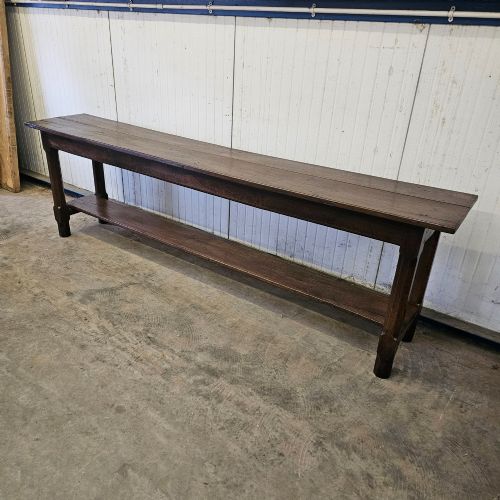
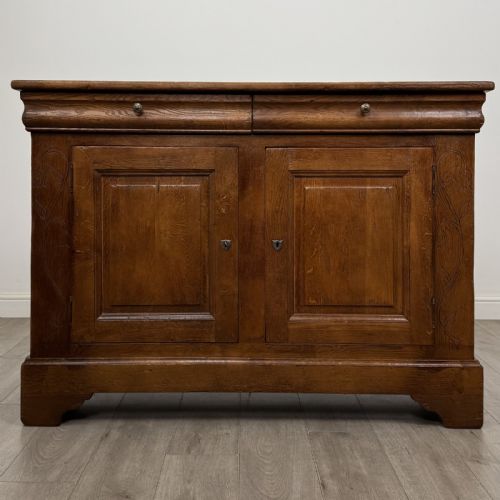
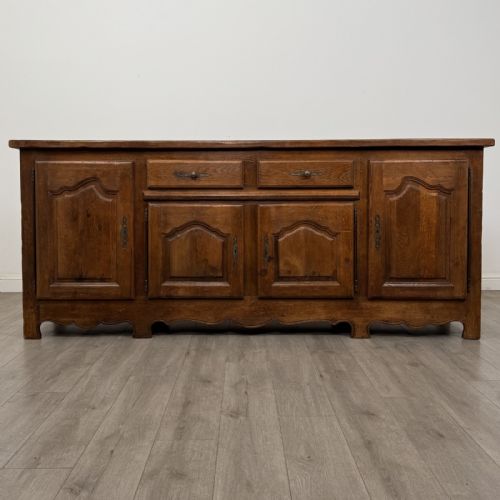
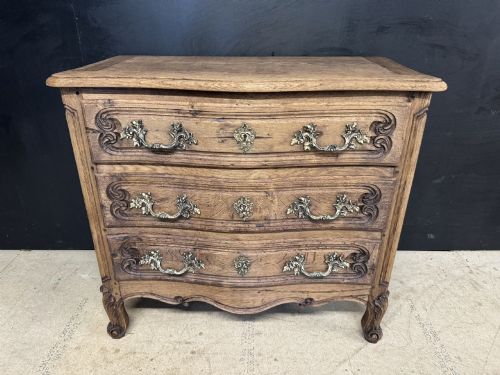
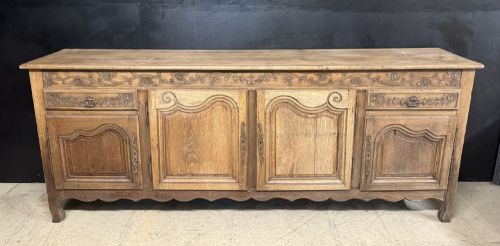
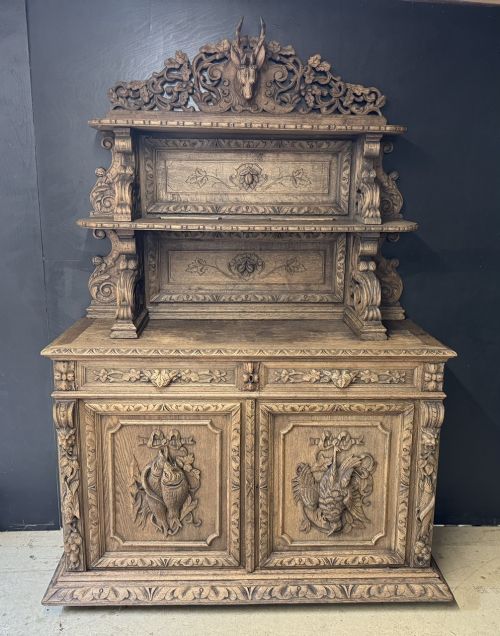
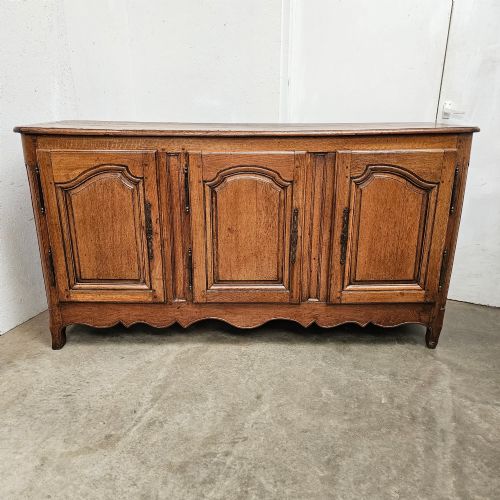
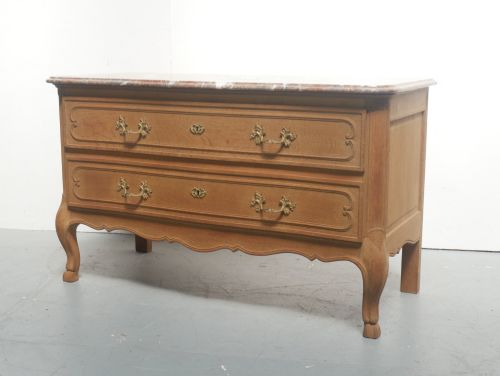
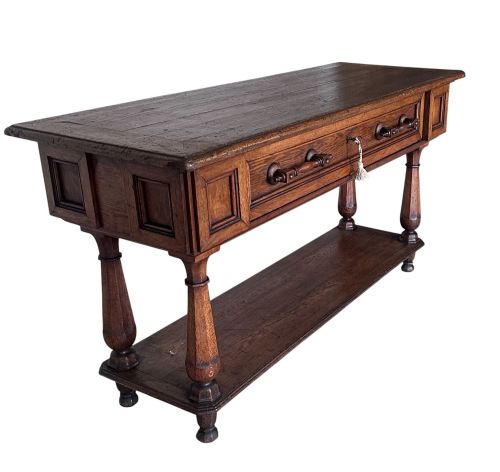
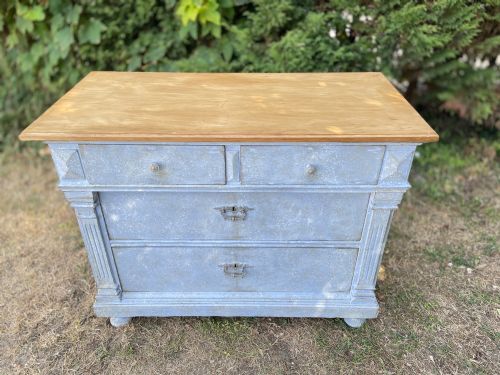
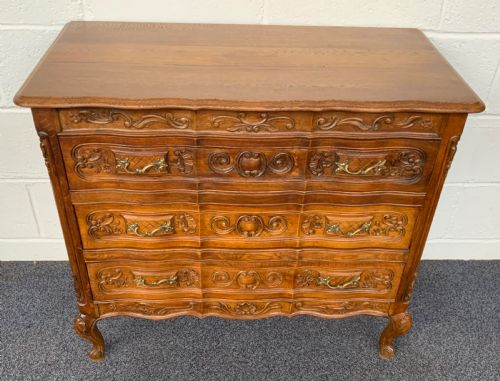


Country French Oak Dresser
A country french oak dresser brings substantial provincial character into a room, offering generous storage through robust timbers and traditional regional craft.
Country French Oak Dresser
Forms vary from low dresser bases and serpentine commodes to tall housekeeper cupboards and monumental buffets à deux corps. These practical items served rural households for food storage and linen organisation, built to endure daily domestic demands.
How they were made
Joiners relied on solid oak as the primary structural timber, frequently complemented by fruitwood and walnut for contrasting mouldings or panels. Iron hinges, brass handles, and occasionally marble tops complete the construction of these provincial pieces.
Makers employed traditional panelled framing and carved detailing, incorporating techniques like diamond-point patterns and serpentine shaping. Surfaces range from scrubbed or bleached finishes to rich, polished dark timber.
Country French Oak Dresser Retail Price Guide 2026
Typical asking prices for country french oak dresser among the pieces listed under this phrase on Sellingantiques today, from the lower quarter to the upper quarter. They describe what is for sale here now, not the wider market.
The listings span from the mid-eighteenth century through the early twentieth century, incorporating oak, fruitwood, walnut, marble, and iron.
What varies in quality
The standard of carving distinguishes standard utility furniture from finer provincial commissions, with deep relief work and balanced proportions indicating superior craftsmanship. Crisp execution in mouldings and drawer construction marks the upper tier.
The integrity of the timber and the retention of original brass or iron hardware influence the standing of a piece. Alterations to surfaces or replaced elements shift examples away from their original state.
The Country French Oak Dresser Glossary
- Commode
- A low chest of drawers or cabinet, often featuring curved serpentine fronts or marble tops in French furniture.
- Buffet à deux corps
- A large two-part storage cabinet consisting of a lower sideboard base beneath an upper cupboard section.
- Enfilade
- A long sideboard or buffet featuring three or more doors in a continuous linear arrangement along the front.
- Fruitwood
- Dense timber harvested from fruit-bearing trees such as pear or cherry, utilised for contrasting details in provincial pieces.
- Serpentine
- A curved line that undulates gently inwards and outwards, frequently seen on the fronts of eighteenth-century commodes.
Country French Oak Dresser: Frequently Asked Questions
What is a country french oak dresser used for?
These robust pieces provide substantial storage for dining rooms, kitchens, or hallways, functioning as sideboards, linen cupboards, or serving surfaces.
Their deep drawers and spacious cupboards accommodate tableware, linens, and household provisions while anchoring the room's aesthetic.
How do I date an 18th century piece?
Dating relies on examining construction marks, hand-cut dovetails, timber patination, and stylistic markers such as regional carving patterns.
Eighteenth-century examples typically display pegged joinery and simpler hand-wrought iron hardware compared to later nineteenth-century revivals.
Are marble tops original to these dressers?
Marble slabs appear frequently on commodes and sideboards, particularly from the nineteenth century onwards, providing a durable and cool surface for food preparation or serving.
Some earlier pieces were adapted later with marble insertions, so inspecting the fit against the oak frame clarifies originality.
How do I care for antique oak furniture?
Maintenance requires keeping the timber away from direct heat sources and extreme humidity fluctuations to prevent wood splitting.
Applying occasional natural wax feeds the dry oak and preserves the finish without creating artificial gloss.