


Carved Nightstands
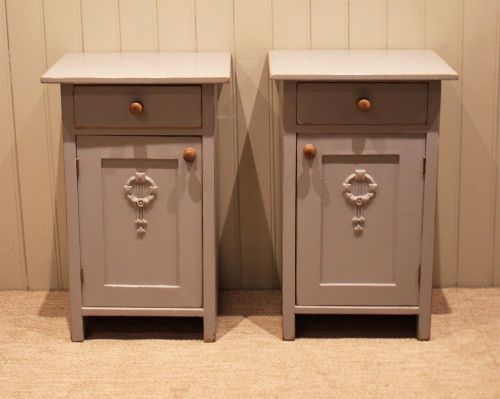
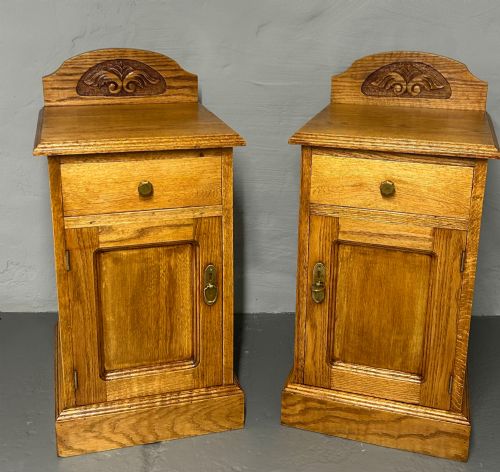
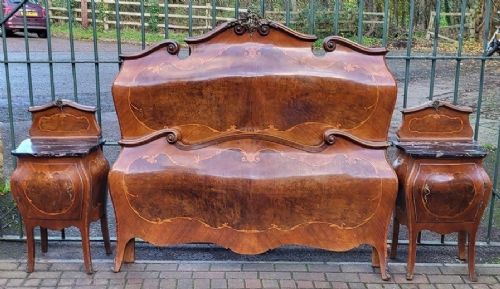
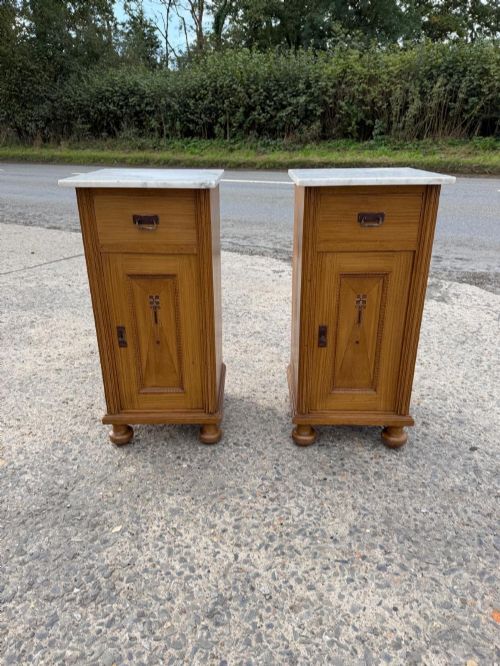
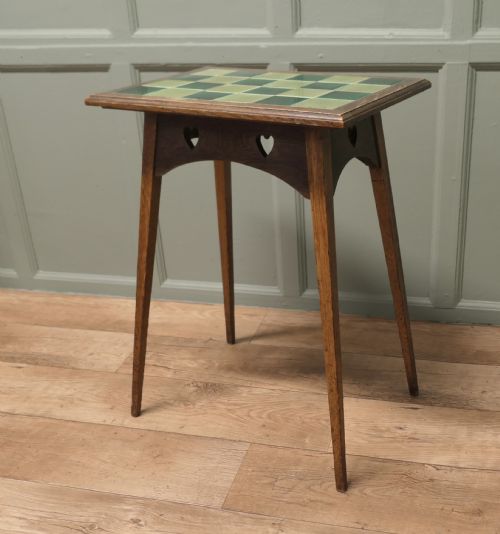
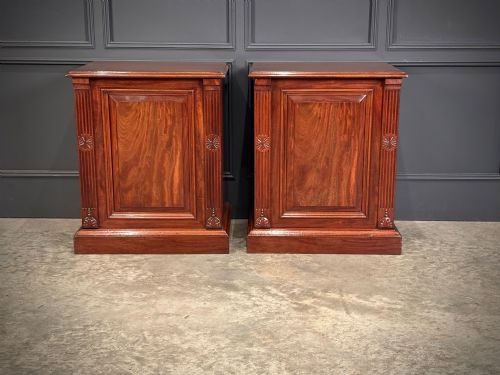
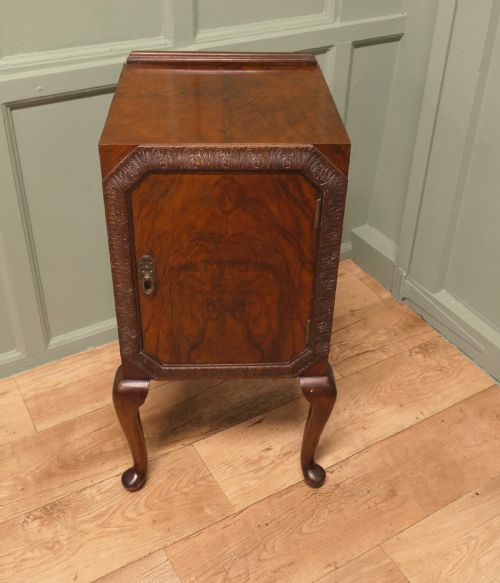
These carved nightstands bring practical bedside storage and period character, ranging from Edwardian oak to French walnut forms.
Carved Nightstands
When searching for carved nightstands, buyers encounter bedside cabinets, cupboards, and side tables produced across the nineteenth and early twentieth centuries. These pieces originate from British, French, and wider European workshops, reflecting regional stylistic preferences from Edwardian simplicity to Gothic Revival.
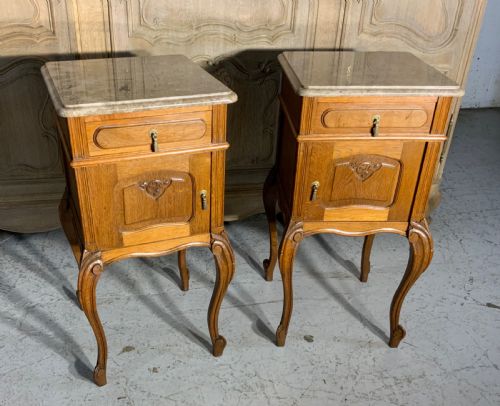
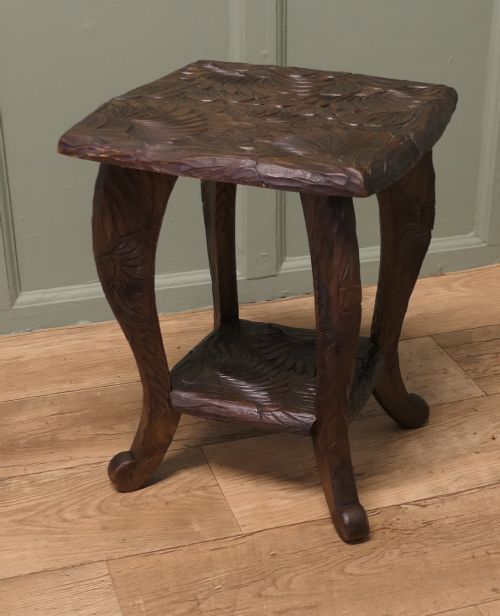
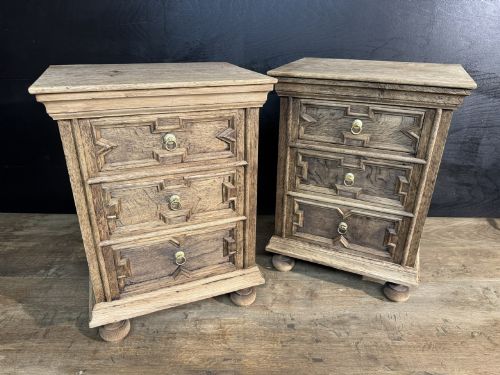
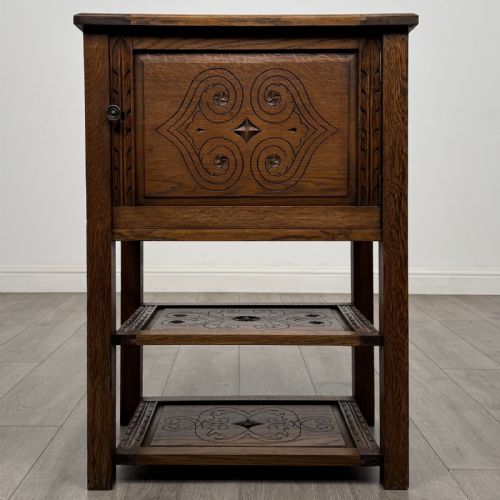
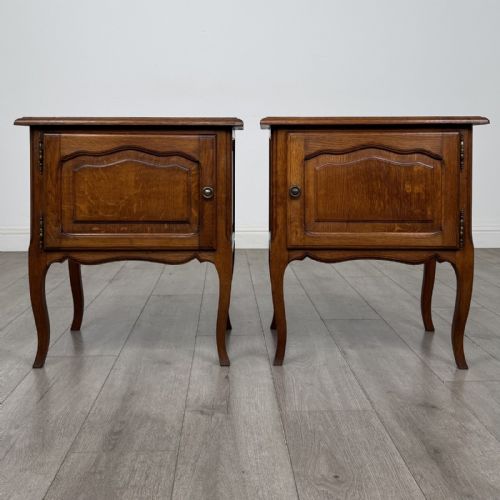
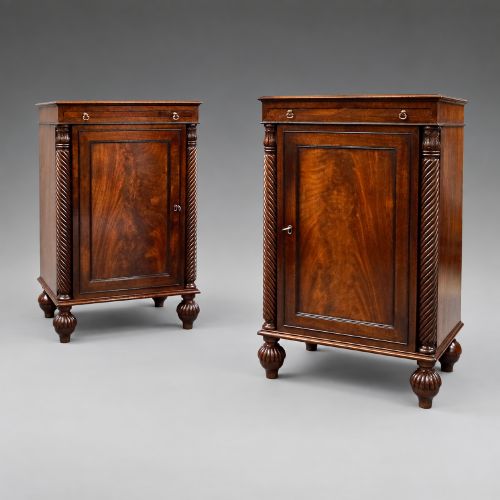
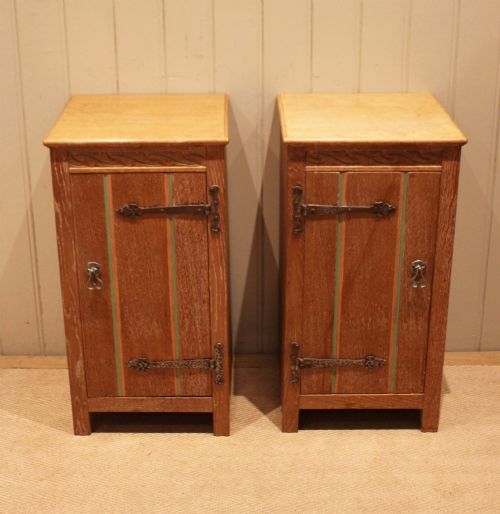
The selection on this page relies heavily on pairs of bedside cabinets from the Edwardian era and the nineteen-twenties, alongside individual side tables and occasional tables. Common configurations include enclosed cupboards with doors, open shelving, and pieces fitted with marble tops.
Construction dates span from the eighteen-eighties through to nineteen-thirty, with Victorian and Edwardian examples forming the core of the available options. These items served a functional purpose in period bedrooms, evolving from simple pot cupboards to more decorative bedside chests.
Materials and Construction
Timbers such as mahogany, oak, and walnut dominate the construction of these items, often selected for their durable grain and suitability for carving. Craftspeople utilised solid woods alongside burr walnut veneers to create decorative surface patterns on door fronts and tabletops.
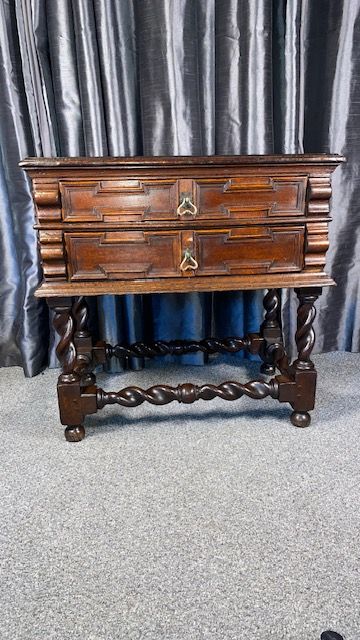
Surface details frequently incorporate applied carvings, barley twist or bobbin turned legs, and cabriole supports. In addition to woodwork, certain designs integrate brass galleries, inset marble slabs, and original painted finishes.
Joinery techniques follow traditional cabinet-making standards of the period, employing pegged joints, panelled doors, and dovetailed drawers. Metal fixings such as brass handles and hinges are typically original to each piece.
Carved Nightstands Retail Price Guide 2026
Typical asking prices for carved nightstands among the pieces listed under this phrase on Sellingantiques today, from the lower quarter to the upper quarter. They describe what is for sale here now, not the wider market.
The selection includes pieces from the 18th Century, 19th Century, and early 20th Century, constructed from oak, mahogany, walnut, and marble.
Assessing Quality
The calibre of a carved nightstand rests upon the crispness of its woodwork and the integrity of its timber. Superior examples display deeply defined hand-carved details rather than shallow, mechanical impressions, alongside well-figured grain in the mahogany or walnut.
Proportion and structural balance distinguish finer items from simpler utilitarian furniture. Pieces retaining original hardware, uncompromised marble tops, and intact painted finishes represent higher standards of preservation.
James Shoolbred·Trevor Page And Co·Liberty London
The Carved Nightstands Glossary
- Pot cupboard
- A small bedside cabinet originally designed to house a chamber pot. These enclosed pieces typically feature a single door above a small compartment.
- Marble top
- A stone slab fitted to the surface of a cabinet to provide a durable, liquid-resistant shelf. This feature appears frequently on French bedside pieces.
- Gallery
- A raised raised border or rail fitted around the edge of a tabletop. Made from brass or wood, it prevents items from sliding off the surface.
- Barley twist
- A type of turning resembling a spiral rope. This decorative woodworking technique appears on the legs and supports of late nineteenth and early twentieth-century furniture.
Carved Nightstands: Frequently Asked Questions
What is the difference between a bedside table and a cabinet?
Bedside tables generally offer open storage surfaces or single shelves, while cabinets feature enclosed doors to conceal items.
Cabinets provide a more private compartment for bedside storage, whereas tables prioritise open access.
Are marble top bedside tables practical for daily use?
Marble provides a durable, heat-resistant surface that easily withstands water glasses and lamps.
This stone top offers robust protection against daily wear while maintaining a traditional aesthetic.
How do I identify an Edwardian nightstand?
Edwardian pieces often display lighter oak or mahogany timbers, frequently incorporating inlaid details or simpler turned legs.
These items date from nineteen hundred to nineteen-ten and reflect a move towards less heavy designs than their Victorian predecessors.
Can I mix different wood tones in the bedroom?
Mixing woods such as mahogany, oak, and walnut is common when curating antique furniture over time.
Matching the period or the quality of craftsmanship creates a cohesive interior rather than strict uniformity of timber colour.