


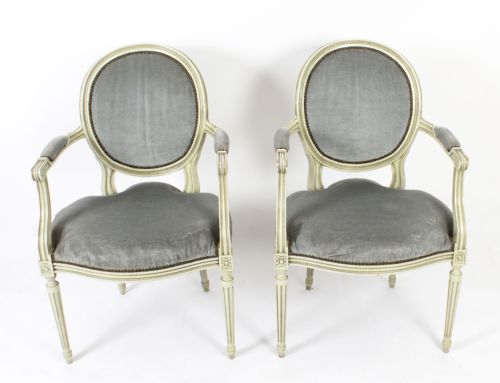


Carved Medallion Chairs
Carved medallion chairs bring classical symmetry and neoclassical restraint into a room, offering upright seating framed by distinct circular backs.
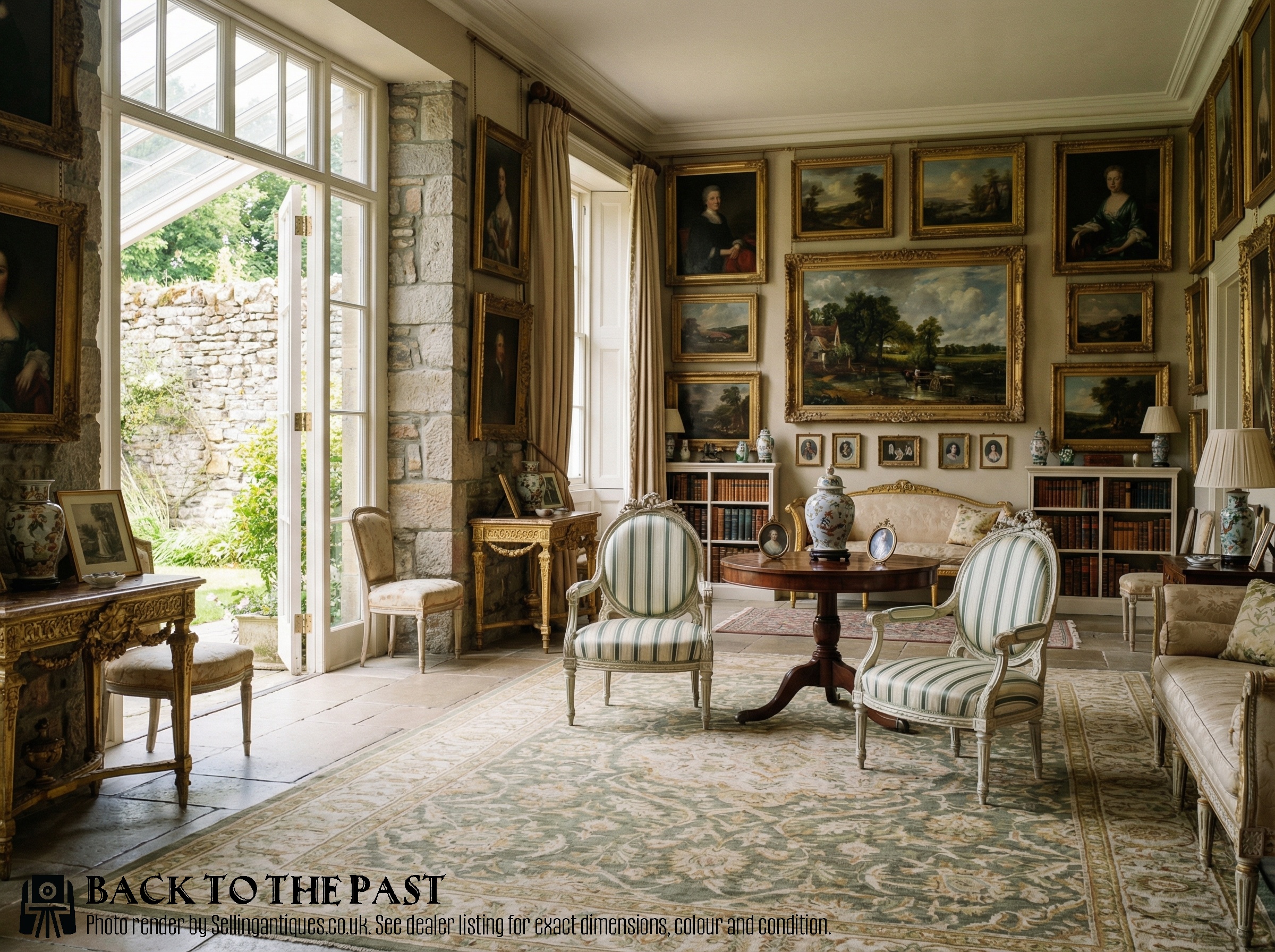
Carved Medallion Chairs
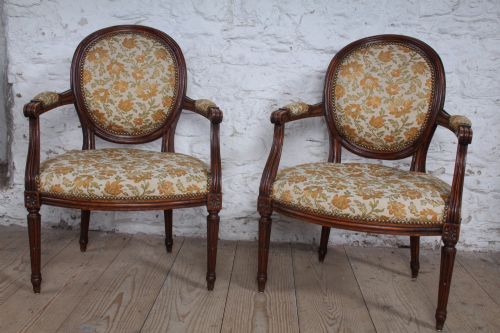
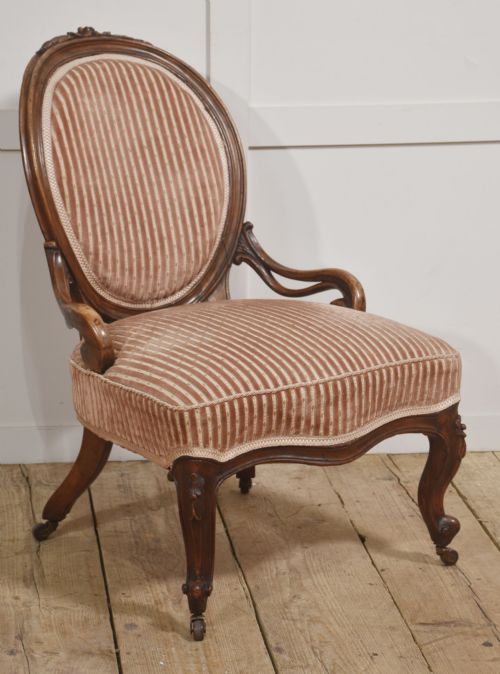
Carved medallion chairs draw upon classical motifs, presenting distinct round or oval backrests framed in wood. Buyers searching for carved medallion chairs encounter forms ranging from pairs of bedroom chairs to sets of dining chairs and salon armchairs. These seating pieces span periods from the eighteenth century through the Victorian and Edwardian eras, incorporating Louis XVI style and revival aesthetics.
The regional origins and revivals evident in these selections point toward French neoclassical inspiration. Makers adopted the medallion back to create formal yet balanced silhouettes suitable for drawing rooms and dining spaces. The inventory includes single hall chairs alongside sets of four, six, or eight pieces.
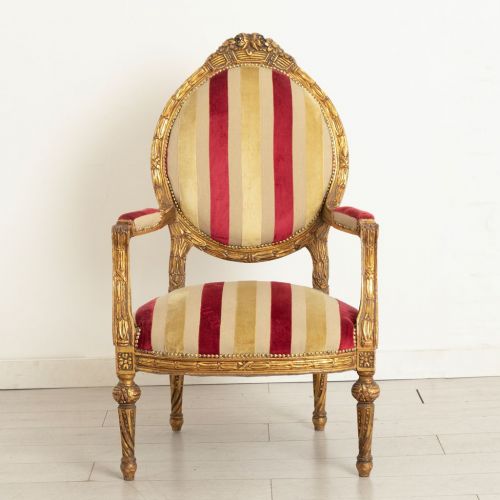
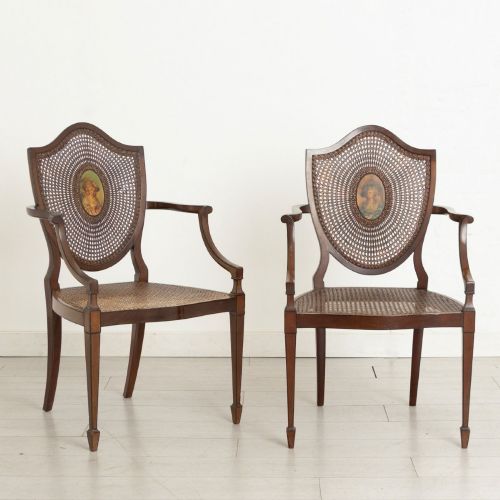
Wood frameworks support upholstery in linen, velvet, or general fabric, while cane inserts appear in specific designs. The construction varies from giltwood and painted wood to plain walnut and ebonised timber, reflecting the diverse interpretations produced across different decades.
How they were made
Carpenters shaped the timber frames using traditional joinery methods to support the characteristic circular or oval backrests. Wood carvers applied decorative detailing directly to the surface of the wood before applying finishes such as giltwood, paint, or dark ebonisation.
Upholsterers secured internal padding and finished the pieces using materials including velvet, linen, and standard fabric. Brass accents sometimes reinforced structural or decorative elements on the frames of these armchairs and side chairs.
Materials recorded across the inventory include giltwood, painted wood, brass, velvet, linen, and cane.
What varies in quality
The crispness and depth of the wood carving distinguish finer examples from simpler production pieces. Carved details around the medallion frame and legs show the hand of a skilled artisan when the lines remain sharp and well-defined.
The choice of primary material and finish dictates the overall character of the piece. Giltwood and carefully painted surfaces require superior preparation compared to standard wood finishes, while the selection of textiles for the upholstery alters the tactile presence of the chair.
The Carved Medallion Chairs Glossary
- Medallion back
- A circular or oval padded backrest framed by carved wood. This shape defines the primary visual characteristic of Louis XVI revival seating.
- Giltwood
- Timber treated with a thin layer of gold leaf applied over a prepared ground. It imparts a brilliant metallic sheen to the carved frame.
- Fauteuil
- An open-framed armchair with upholstered back and seat and exposed wooden armrests. These pieces typically feature padded elbow rests.
- Ebonised
- Wood stained or painted to resemble solid ebony. This dark finish provides a formal contrast against lighter upholstery fabrics.
- Louis XVI style
- A neoclassical aesthetic characterised by straight tapered legs and classical motifs. It rejects the asymmetrical curves of earlier rococo designs in favour of geometric restraint.
Carved Medallion Chairs: Frequently Asked Questions
How do I identify Louis XVI style?
Louis XVI style pieces display straight fluted legs and symmetrical geometric forms rather than the sweeping curves of the rococo era. Carved ribbons, beading, and classical urns frequently adorn the wooden frames.
The aesthetic emphasises restraint and proportion, aligning closely with the neoclassical revival movements of the nineteenth and early twentieth centuries.
Where should I place these chairs?
These chairs suit reception rooms, bedrooms, or dining settings where formal seating enhances the interior. Pairs function well as accent pieces beside a fireplace or console table.
Larger sets integrate into dining spaces around antique tables, while individual hall chairs provide sculptural impact in entryways.
What materials are used for upholstery?
Original and replacement upholstery utilises velvet, linen, standard fabric, and cane inserts. The choice depends on the period and the specific room for which the chair was intended.
Luxury finishes often incorporate silk or heavy woven textiles, while simpler salon pieces utilise understated linen or patterned cloth.