




Carved Marquetry Display Cabinet
A carved marquetry display cabinet brings floral wood inlay and glazed timber framing together to hold treasured objects in rooms of any period.

Carved Marquetry Display Cabinet
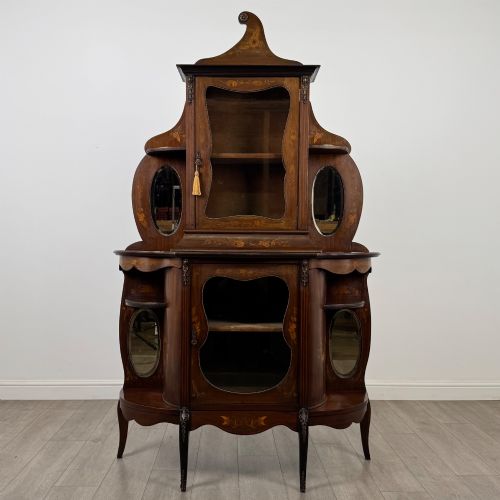
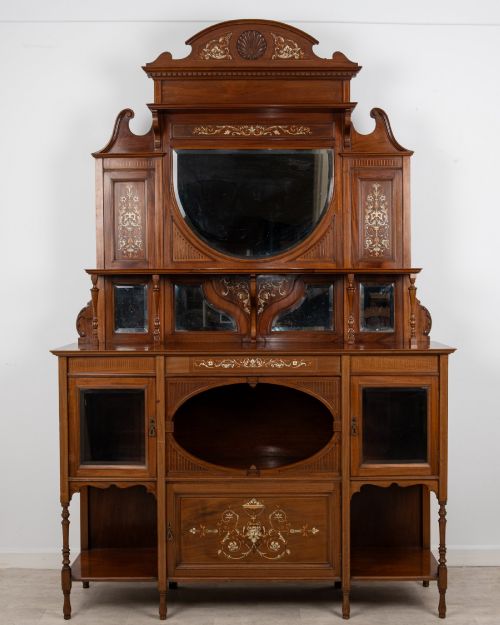
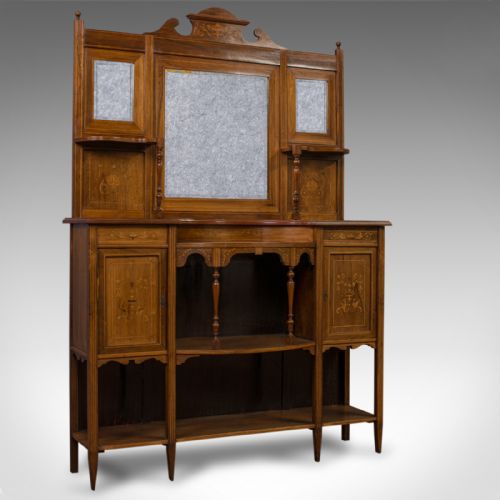
A carved marquetry display cabinet is a storage piece designed to showcase porcelain, glassware or books behind glazed doors, framed in rich timbers and detailed with contrasting wood inlays. When searching this phrase, buyers encounter formal architectural cabinets, serpentine credenzas and tall vitrines intended for drawing rooms and parlours.
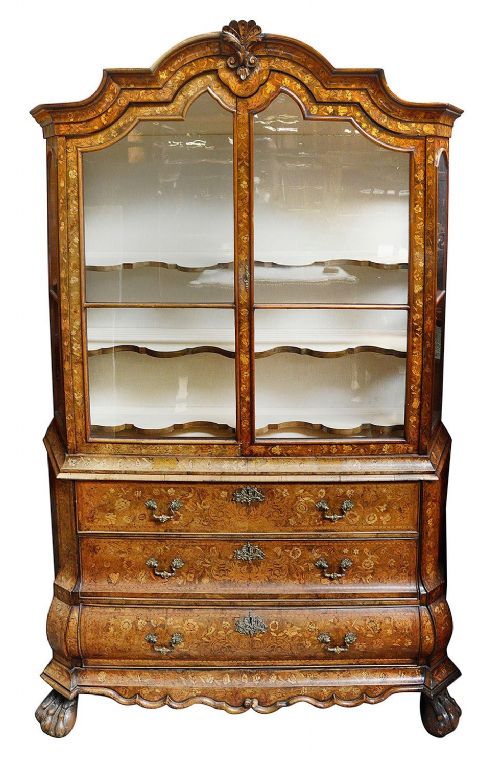
The pieces on this page span several distinct periods, with Victorian and Edwardian examples appearing frequently alongside earlier 18th century Dutch items and later 1930s interpretations. Forms range from bow front display cabinets and mirror back parlour pieces to grand credenzas and bookcase combinations on chests.
Origin and regional style shape the character of each piece significantly, shifting from British Sheraton revival mahogany and satinwood to continental walnut, rosewood, oak and fruitwood. Buyers meet everything from compact side cabinets to expansive four door exhibition pieces featuring intricate floral and foliage motifs.
How they were made
Cabinetmakers constructed these pieces using solid timbers and supportive carcases veneered in walnut, mahogany, rosewood, satinwood and kingwood, often strengthened with cross banding. Brass hardware, mirrored backs and glazed panels completed the structures, creating reflective interiors designed to catch the light.
Marquetry and boxwood inlay involved cutting intricate patterns from contrasting woods and fitting them flush into the surface veneer to form floral sprays, scrolls and architectural details. Carving was then applied to mouldings, pediments and legs, working directly into hardwoods like mahogany and oak to provide texture and depth.
Periods represented span from 18th century Dutch baroque and 19th century Victorian through to Edwardian and 1930s interpretations.
What varies in quality
Quality rests upon the precision of the wood inlay and the complexity of the cabinet's silhouette, such as serpentine fronts or bombe curves that demand advanced joinery skills. Superior examples display tightly fitted veneers and finely executed floral marquetry that remains level and secure across the whole surface.
The choice of primary and secondary timbers also distinguishes exhibition grade pieces from standard workshop output, alongside the depth and crispness of the hand carving on frames and mounts. Better cabinets integrate glass, brass fittings and interior mirror plates harmoniously without compromising the structural integrity of the main frame.
James Plunckett Art Furniture Makers
The Carved Marquetry Display Cabinet Glossary
- Marquetry
- Decorative veneer work forming pictures or patterns by assembling small pieces of tinted wood, fruitwood, boxwood or shell into a timber ground. This technique differs from simpler inlay by covering the entire surface design.
- Vitrine
- A glass fronted cabinet or display case specifically built for exhibiting fine porcelain, curiosities and small decorative objects. They often feature glazed side panels to maximise light exposure.
- Credenza
- A large sideboard or cabinet, frequently serpentine or bombe in profile, used historically for serving food or displaying valuables. In later Victorian rooms, they became prominent architectural statement furniture.
- Cross banding
- A decorative border technique where strips of veneer are laid with the grain running perpendicular to the central panel. This frames the primary timber and adds visual contrast.
- Bombe
- A swollen, bulging contour found on continental furniture, particularly Dutch pieces, where the sides and front curve outward in convex sweeps. It requires expert shaping of the underlying carcase.
Carved Marquetry Display Cabinet: Frequently Asked Questions
Where should I place a display cabinet?
These cabinets suit drawing rooms, dining rooms or studies where natural light can illuminate the glass shelves and interior contents. Positioning them away from direct sunlight protects both the polished timber and the wood inlay from fading.
Ensure the floor is level so the doors and glazed panels hang true and open smoothly without rubbing against the decorative framework.
How do I clean and maintain marquetry?
Dust the surfaces regularly with a soft, dry cloth and apply a quality beeswax sparingly to nourish the timber and protect the fine veneer. Avoid modern aerosol sprays containing silicones, which can penetrate hairline cracks in old finishes.
Keep the cabinet away from sudden temperature shifts and radiators to prevent the wood and delicate boxwood inlays from drying out and lifting.
How do I date a marquetry cabinet?
Examine the secondary timbers used inside the carcase, the style of the brass hardware, and the construction methods visible behind or underneath the piece. Georgian and early 18th century examples often display hand sawn framing elements, while Victorian and Edwardian pieces show machine finished components.
Stylistic cues also help; Sheraton revival cabinets from around 1900 consciously echo 18th century neoclassical lines with lighter satinwood and mahogany proportions.
Can these cabinets support heavy books?
Display cabinets with glazed doors are primarily designed for porcelain, glassware and decorative objects rather than heavy libraries. The internal wooden shelves are usually proportioned for lighter items.
If using a combination bookcase and cabinet, check the thickness and support of the shelves before loading heavier volumes onto them.