

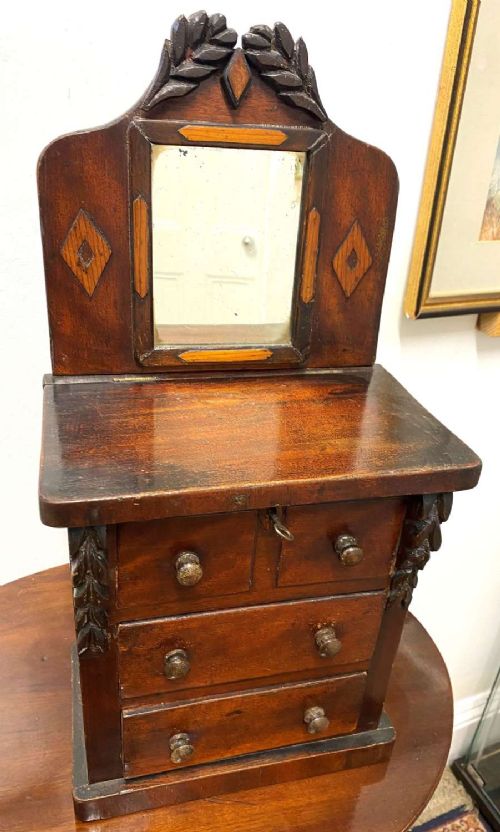
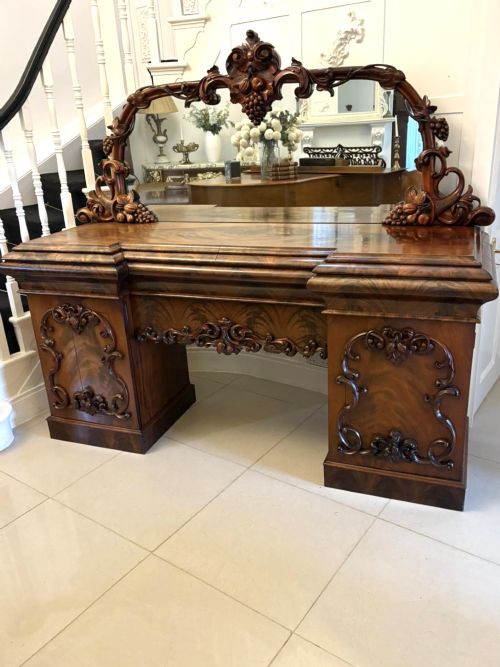
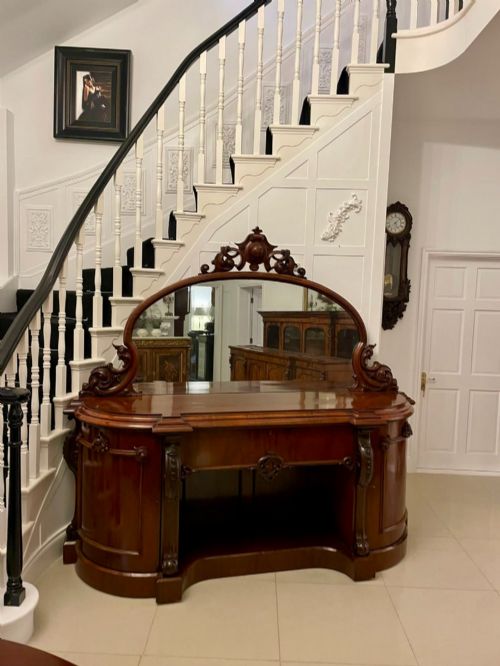
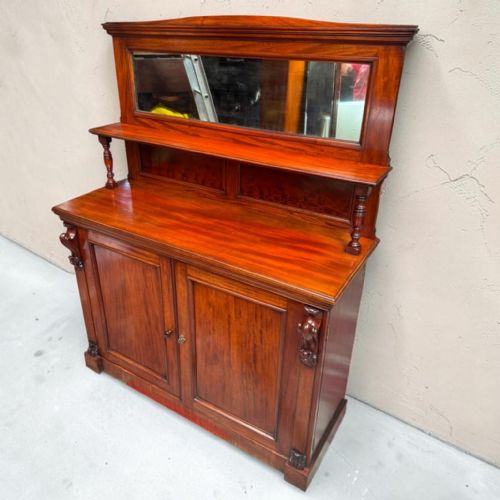
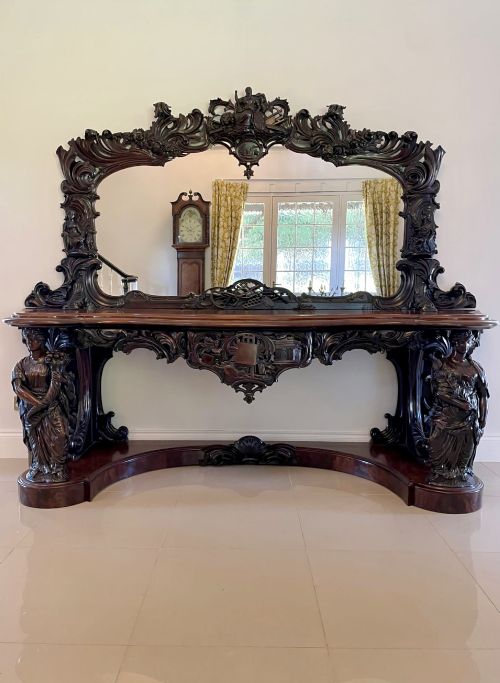
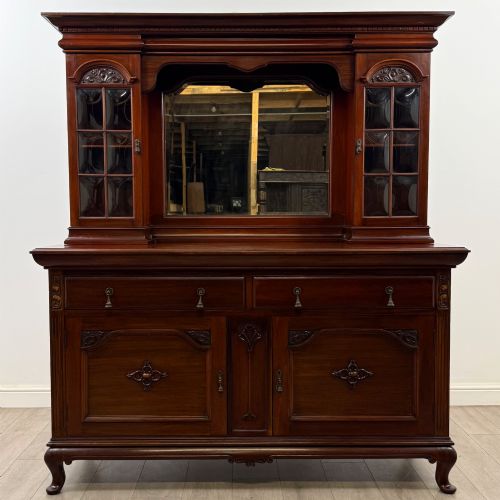
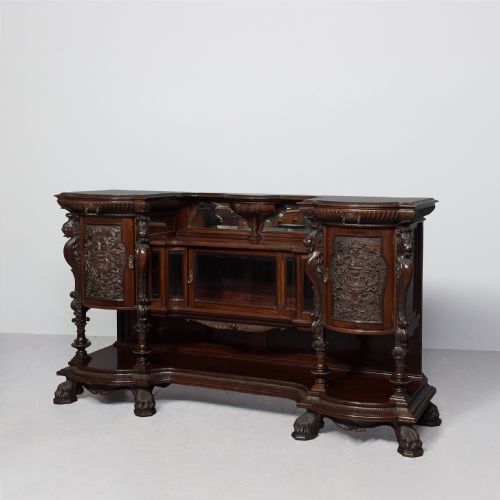
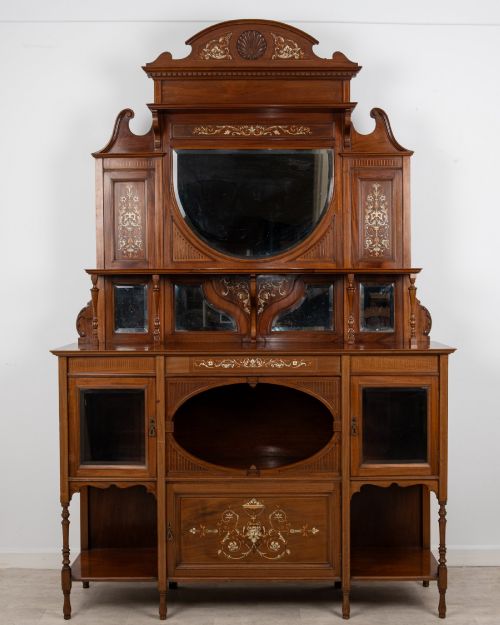
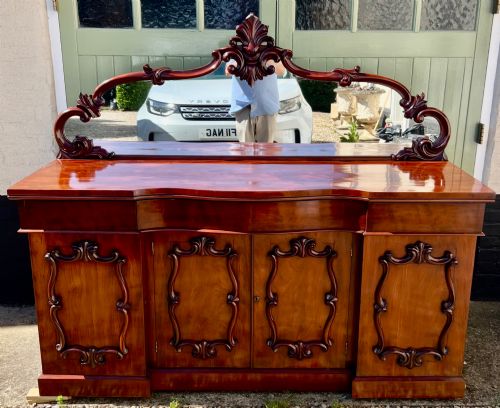


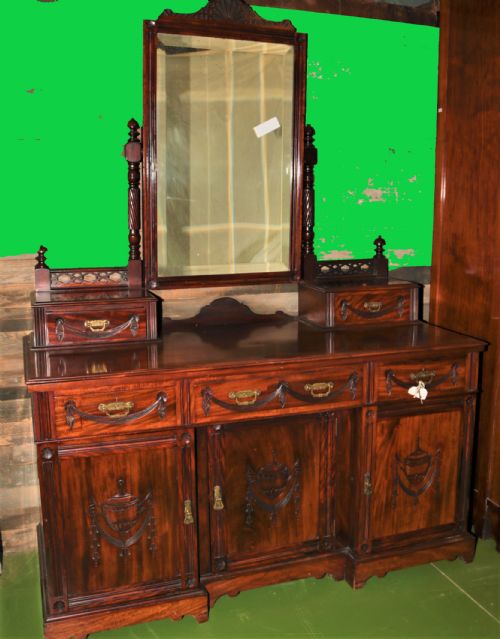


Carved Mahogany Sideboard Mirror
A carved mahogany sideboard mirror brings depth and warmth to a room, pairing polished timber with heavy glass.
Carved Mahogany Sideboard Mirror
A carved mahogany sideboard mirror is typically encountered as part of a larger mirror-back sideboard or console table originating from the nineteenth or early twentieth century. These pieces combine substantial timber frames with integrated glass plates, designed to sit atop a matching base or attach directly to the sideboard structure.
Most examples date from the Victorian and Edwardian eras, spanning decades such as eighteen fifty through to nineteen ten. Alongside British Victorian and Edwardian pieces, French Napoleon III and Empire influences appear, bringing varied decorative carving and proportions to the timber framing.
How They Were Made
Frames are constructed from solid mahogany or flame mahogany veneer laid over secondary timbers, often selected for strong grain patterns. Artisans shaped the timber using hand-carving techniques to produce elaborate foliate scrolls, pediments, and structural mouldings.
Mirrors utilise thick glass plates secured within rebated frames, frequently accompanied by brass hardware on associated cabinetry. Some pieces incorporate parcel gilt highlights or marble tops beneath the mirror frame to contrast the deep reddish-brown tones of the mahogany.
Carved Mahogany Sideboard Mirror Retail Price Guide 2026
Typical asking prices for carved mahogany sideboard mirror among the pieces listed under this phrase on Sellingantiques today, from the lower quarter to the upper quarter. They describe what is for sale here now, not the wider market.
Some Victorian console tables hide secret compartments behind their heavily carved mahogany friezes for keeping small treasures safe.
What Varies in Quality
Quality depends on the depth and crispness of the hand-carving on the mahogany frame, where sharp relief work distinguishes superior pieces from plain production. The choice of timber also plays a role, with figured flame mahogany veneer displaying more pronounced movement than standard stock.
The integration between the mirror and the sideboard base indicates the level of original design, with exhibition pieces showing substantial scale and refined proportions. Original silvering on the mirror glass and the retention of matching brass mounts contribute to a more cohesive piece.
Maple & Co·Lamb of Manchester
The Carved Mahogany Sideboard Mirror Glossary
- Flame mahogany
- A veneer cut from timber where the grain creates a flamy, feather-like pattern. This distinctive figure is prized for decorative furniture panels.
- Mirror back
- A tall glass plate fixed to the rear of a sideboard or console table. It reflects light and displays objects placed on the surface below.
- Console table
- A table designed to stand against a wall, frequently paired with a matching wall mirror or pier glass. These tables often feature marble tops.
- Chiffonier
- A low sideboard or cabinet with shelves and doors, sometimes fitted with a superstructure for display. The form evolved during the nineteenth century.
- Parcel gilt
- A decorative technique applying partial gilding to specific carved details on a wooden surface. It highlights architectural elements against the dark mahogany.
Carved Mahogany Sideboard Mirror: Frequently Asked Questions
How do I clean a mahogany frame?
Use a soft, dry cloth to remove dust from the carved wooden surfaces regularly. Avoid harsh chemical cleaners that can damage the polish.
Apply a traditional beeswax polish sparingly when the timber appears dry, buffing gently to maintain the natural sheen.
Are the mirrors original to the sideboards?
Most mirrors remain with their original sideboards, fitted securely into the rear supports or framing structure. Original mirror glass often displays subtle signs of age within the silvering.
Inspect the fixings at the back to understand how the mirror attaches to the base cabinet. Period pieces show traditional joinery consistent with the era of manufacture.
Where should I place a mirror back sideboard?
Position the piece against a sturdy wall in a dining room, hallway, or living space with adequate support. The substantial weight of the timber and glass requires a stable foundation.
Place the sideboard opposite a window to allow the mirror plate to reflect natural light into the room. Ensure the floor is level to prevent any strain on the frame joints.
How do I distinguish Victorian from Edwardian pieces?
Victorian examples tend to feature heavier proportions, deep carving, and rich flame mahogany veneers. Styles from this period often incorporate elaborate architectural pediments and bold scrolls.
Edwardian pieces generally present lighter forms influenced by revival styles like Chippendale or Arts and Crafts. The carving on these later items is often more restrained and linear.