



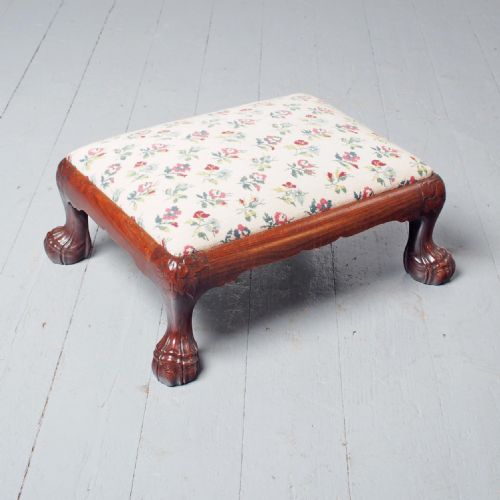

Carved Mahogany Pouffe
These carved mahogany pouffes are sturdy footstools and ottomans designed to bring comfort and period style to a room.
Carved Mahogany Pouffe
When you search for a carved mahogany pouffe, you are looking at footstools and ottomans built from solid timber and upholstered in various fabrics.
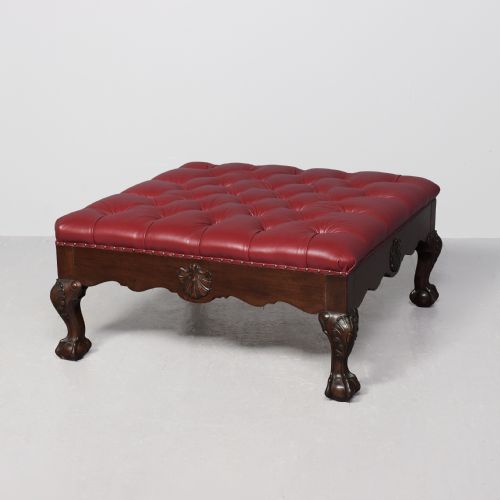
The pieces listed on this page span the Victorian era, the nineteenth century, and the early twentieth century, showing styles such as Chippendale Revival and Art Nouveau.
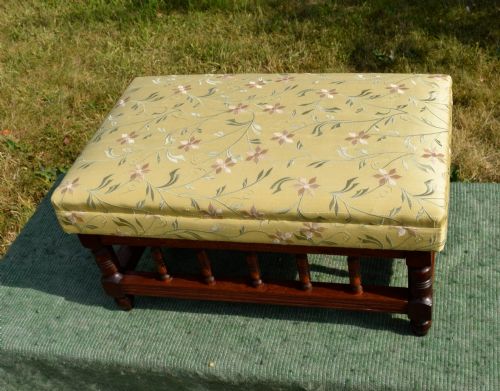
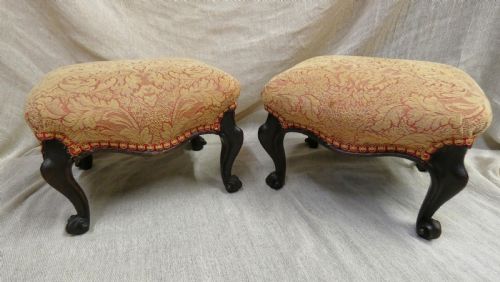
You will most commonly encounter footstools and stools featuring carved wooden frames paired with covers ranging from plain leather to damask and velvet.
How they were made
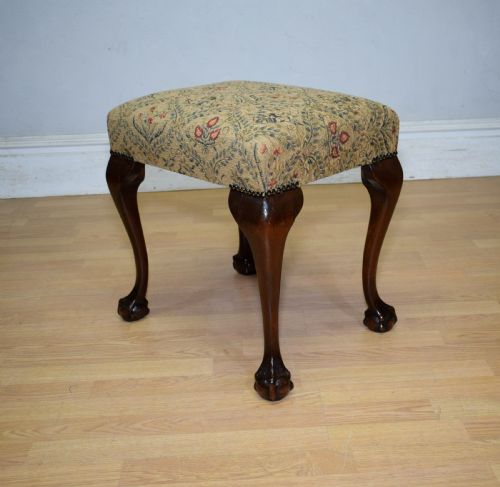
Maker workshops built these frames using solid mahogany, shaping the wood to form cabriole legs and decorative borders.
Upholstery methods combined traditional stuffing with fabrics like burgundy hide, velvet, damask, and finished edges with gimp trim or brass details.
At least one industrious maker ensured posterity by signing their footstool with a firm label.
What varies in quality
Quality depends upon the depth and crispness of the timber carving on the frame, alongside the integrity of the joinery connecting the legs to the base.
The choice of covering material and the precision of the upholstery, from hide to patterned textiles, separate standard examples from finer commissions.
Whytock and Reid
The Carved Mahogany Pouffe Glossary
- Mahogany
- A dense reddish-brown tropical hardwood chosen for its durability and suitability for intricate carving. It forms the primary structural frame of these stools.
- Cabriole leg
- A furniture leg that curves out and then tapers inward, finishing in a pad or claw foot. This shape originates from classical furniture design and appears on revival pieces.
- Damask fabric
- A reversible figured textile woven on a jacquard loom, featuring patterns formed by contrasting lustrous and matte weaves. It provides a decorative top layer for upholstery.
- Gimp trim
- A narrow woven band used to conceal tacks and secure the edges of fabric on upholstered furniture. It adds a neat finished line to the textile border.
- Burgundy hide
- A deep red leather skin prepared for upholstery, offering a smooth and hard-wearing surface. It appears on substantial pieces designed for heavy use.
Carved Mahogany Pouffe: Frequently Asked Questions
What is a carved mahogany pouffe used for?
These items function primarily as footstools and low seats in a reception room or study. They provide a sturdy platform for resting feet or a secondary seat when entertaining.
The solid timber frames allow them to bear weight reliably while the upholstered top offers cushioned support.
How do I identify a Victorian pouffe?
Victorian examples often display heavier proportions and dark wood finishes, occasionally blending revival styles with later decorative touches like Art Nouveau motifs.
Examining the construction of the frame and the type of upholstery trim helps place the piece within the nineteenth century.
Which wood is used in these stools?
The frames consist entirely of mahogany, selected for its strength and ability to hold detailed carved ornamentation.
This timber develops a deep patina over decades of handling and polishing.
What upholstery fabrics appear on them?
Upholstery materials include leather, burgundy hide, velvet, and damask fabric, often finished with brass elements or gimp trim.
These textiles reflect both the original period of manufacture and subsequent reupholstery work by later owners.