
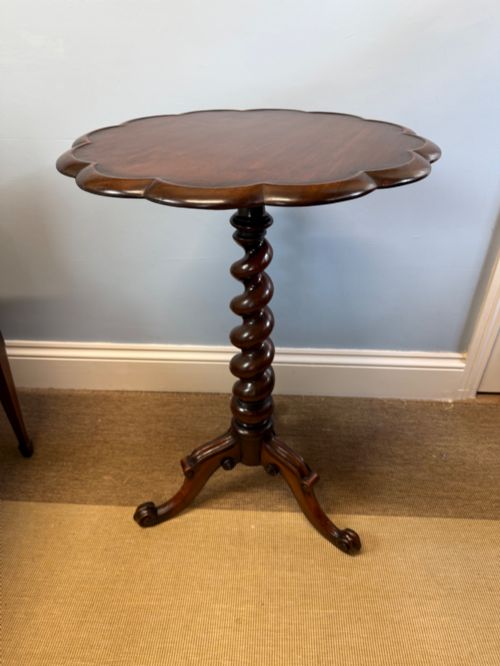
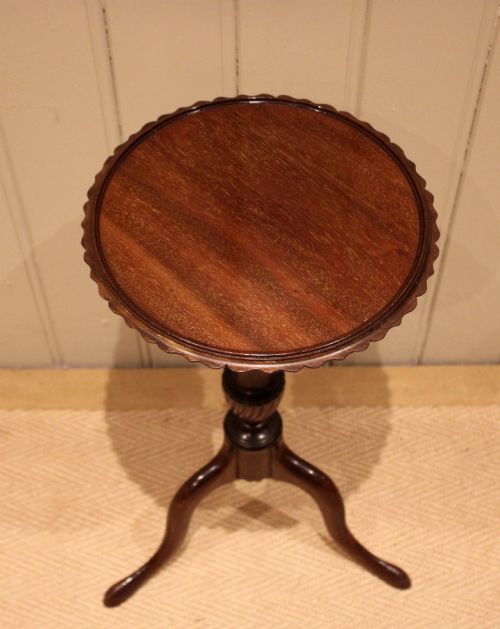

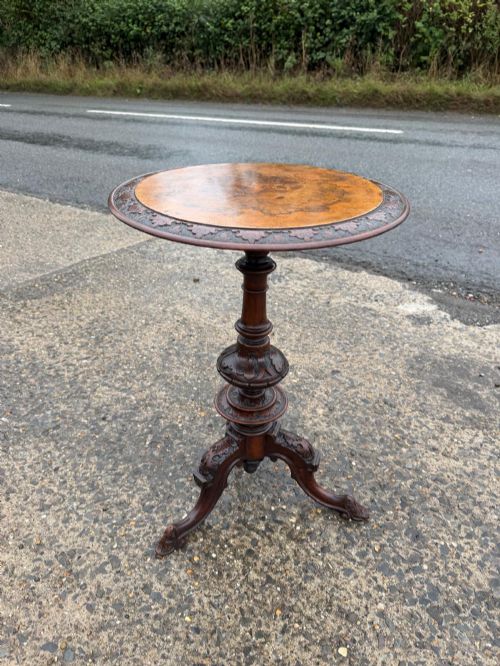
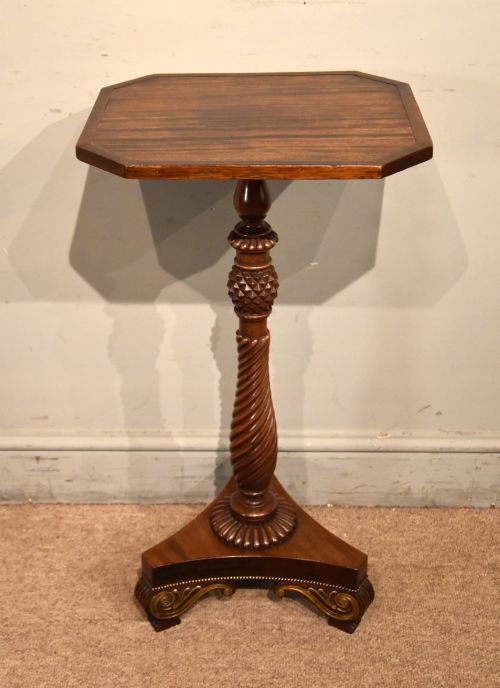
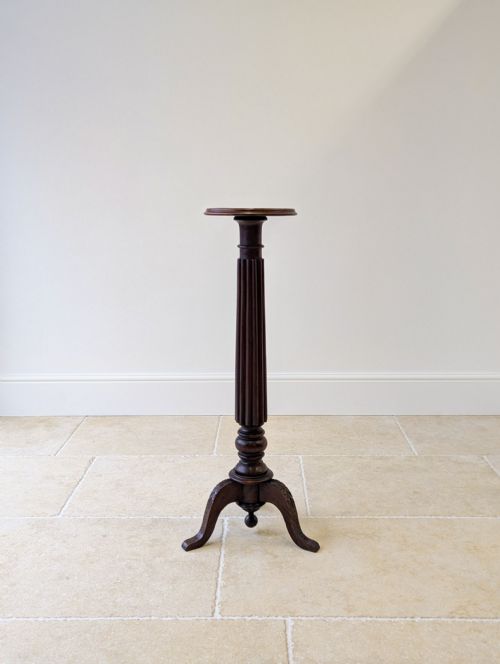
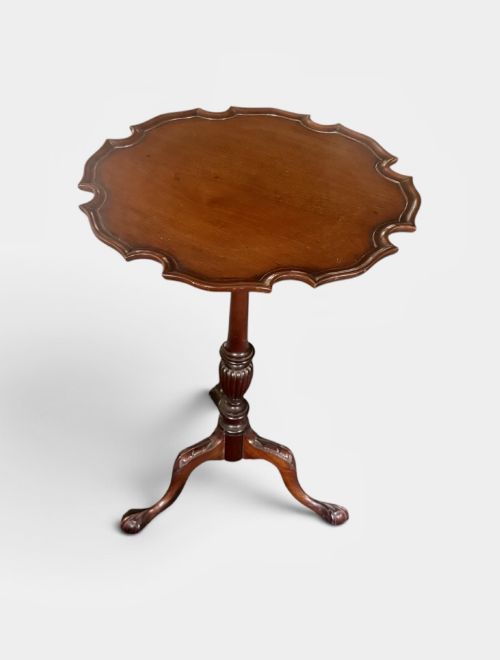
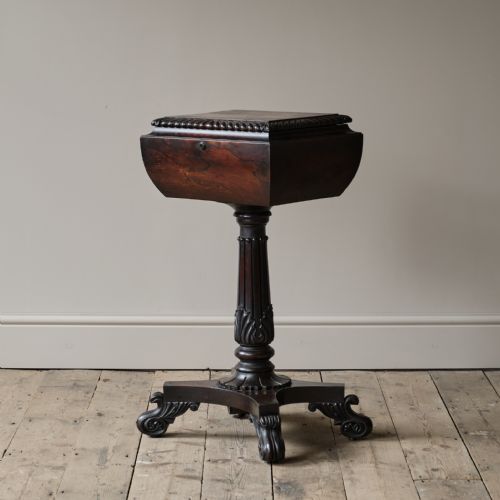
Carved Mahogany Pedestal Stand
These carved mahogany pedestal stand examples offer solid timber construction and distinct period presence for displaying lamps, plants, and decorative objects.

Carved Mahogany Pedestal Stand
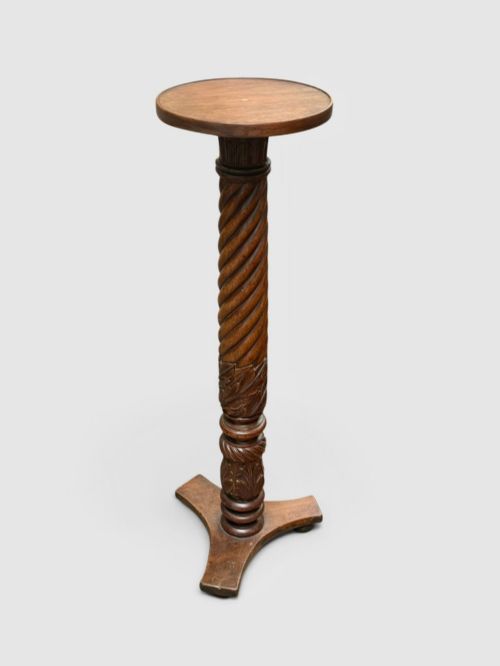
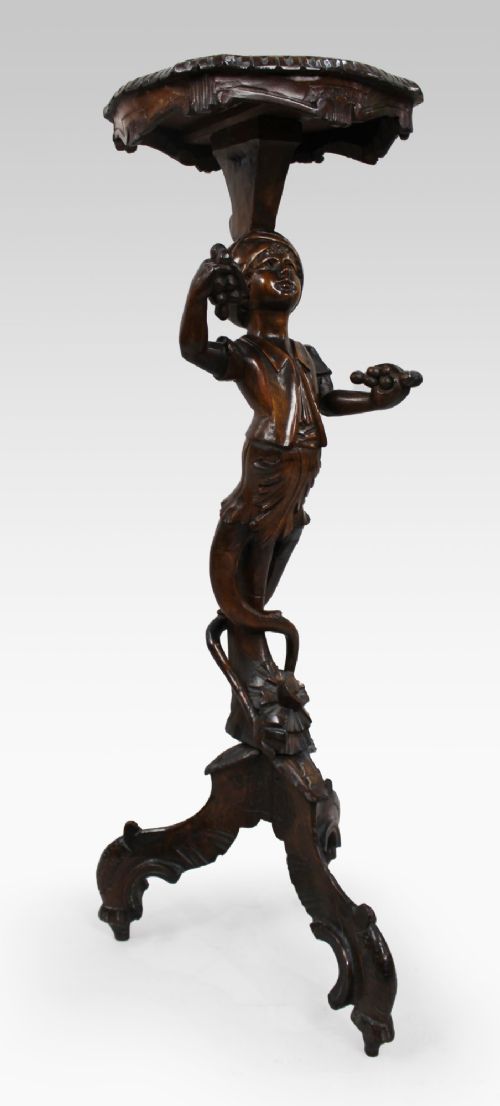
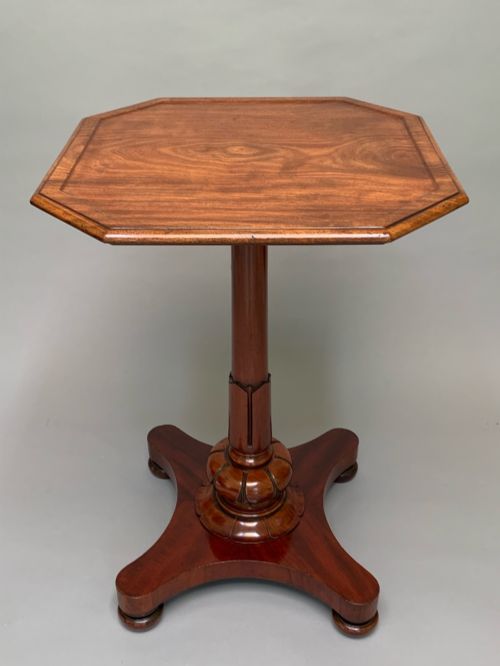
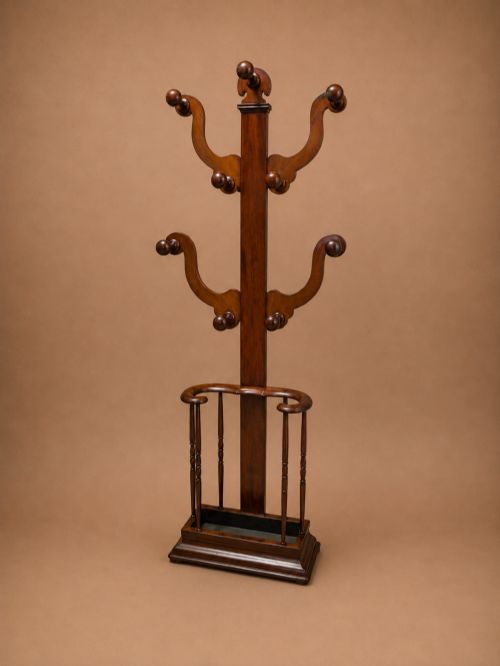
A carved mahogany pedestal stand serves as a raised platform or small occasional table, encompassing forms like wine tables, torcheres, and plant stands. The pieces span the eighteenth century, the Regency era, the Victorian period, and the Edwardian years.
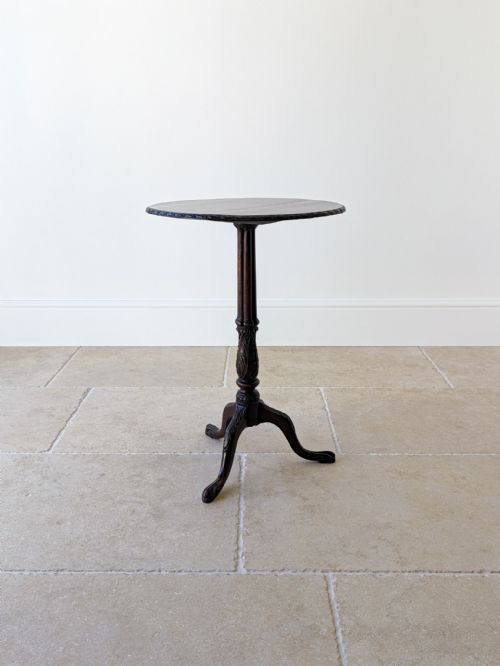
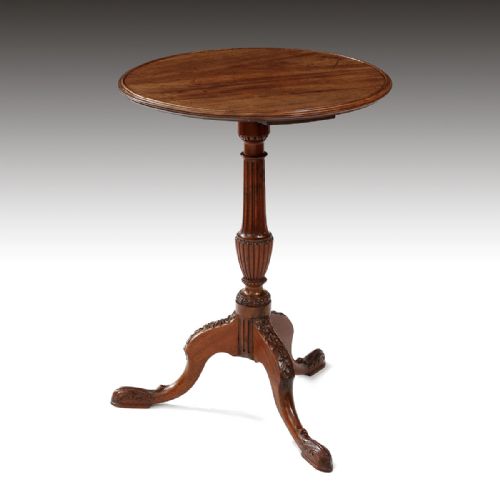
Buyers on this page most frequently encounter nineteenth century and Victorian tripod tables alongside tall Edwardian plant stands. These items function as compact display surfaces in sitting rooms and hallways.
Materials and construction
Makers utilised solid mahogany, frequently augmented by burr wood veneers, rosewood, and walnut for decorative tops and columns. The timber was turned on lathes to form central pedestals and hand-carved with classical motifs along the legs and capitals.
Tripod bases provide stability through three shaped legs joined to the central column, while heavier display columns sometimes integrate brass or marble elements. Tops range from simple circular designs to shaped pie crust rims and dishtop profiles.
Carved Mahogany Pedestal Stand Retail Price Guide 2026
Typical asking prices for carved mahogany pedestal stand among the pieces listed under this phrase on Sellingantiques today, from the lower quarter to the upper quarter. They describe what is for sale here now, not the wider market.
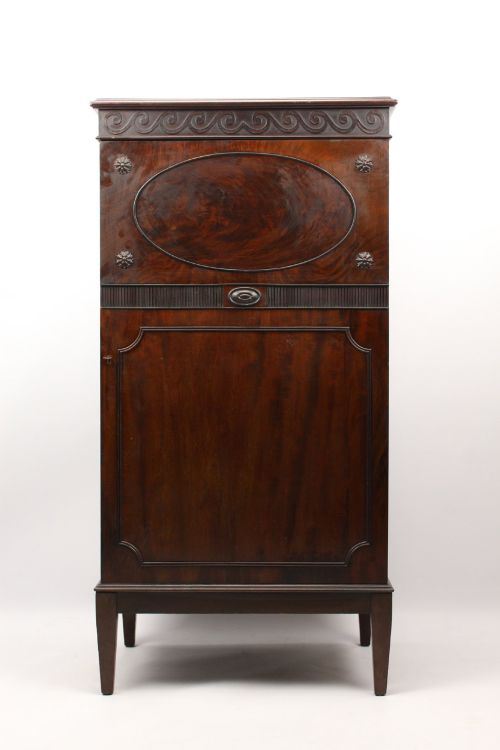
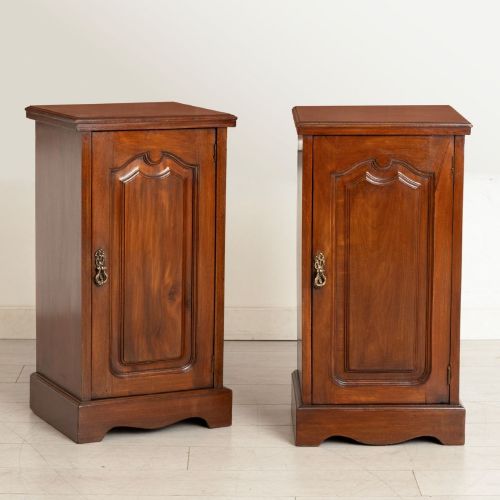
The furniture forms include wine tables, torcheres, occasional tables, and bedside cabinets with tripod or column supports.
Judging the standard
Quality rests in the crispness of the hand-carving and the selection of figured timber for the top. Crisp acanthus leaves and well-defined reeding on the central shaft separate superior examples from plain utility pieces.
Structural integrity of the tripod joint dictates long-term stability, as does the retention of original tilt-top mechanisms where fitted. Finer items exhibit careful matching of mahogany grain across the visible surfaces.
Gillow·Denby & Spinks
The Carved Mahogany Pedestal Stand Glossary
- Torchere
- A tall stand designed specifically to elevate a candelabrum or light source. These slender columns often feature elaborate carved decoration near the top and base.
- Tripod table
- A small table supported by three legs radiating from a central pillar. This configuration prevents rocking on uneven historical flooring.
- Pie crust rim
- A raised, decoratively carved edge shaped to resemble pastry crust on a pie. This detail is typically worked directly from the solid timber top.
- Tilt top
- A table top hinged to the central pillar so it can pivot vertically when not in use. This mechanism allowed tables to be stored flat against a wall.
- Jardiniere
- A decorative container or stand intended to hold plants or floral arrangements. In these listings, they appear combined with tall pedestals.
Carved Mahogany Pedestal Stand: Frequently Asked Questions
What were carved mahogany pedestal stands used for originally?
These items functioned as movable surfaces for holding candles, wine glasses, or reading materials beside seating furniture. Tall torcheres specifically elevated lighting fixtures to illuminate dark corners of period rooms.
Over time, their roles expanded to include displaying prized ceramics, bronzes, and potted plants within domestic interiors.
How do I tell a Georgian stand from a Victorian revival piece?
Georgian examples display lighter timber scantlings, restrained carving, and patination achieved through decades of wax polishing. The joinery beneath the top often utilises hand-cut dovetails and pegged tenons specific to the eighteenth century.
Victorian revival pieces, particularly those from the Chippendale revival of the late nineteenth century, tend to be heavier with denser, deeper relief carving. The secondary woods and screw fixings underneath usually reflect industrial manufacturing methods.
Can I use a torchere stand for a modern lamp?
Torcheres provide stable platforms for modern table lamps provided the weighted base fits the diameter of the top. Consideration should be given to the height of the stand relative to surrounding seating.
Routing power cords down the central pillar requires care to preserve the exposed timber and historical feet of the stand.
Why do some tops tilt while others remain fixed?
Tilting mechanisms were incorporated into wine and occasional tables to save floor space when the room was cleared. The brass catch and block beneath the top permit the surface to lock flat or swing upright.
Fixed tops belong to stands built solely for permanent display where space-saving storage was unnecessary.