
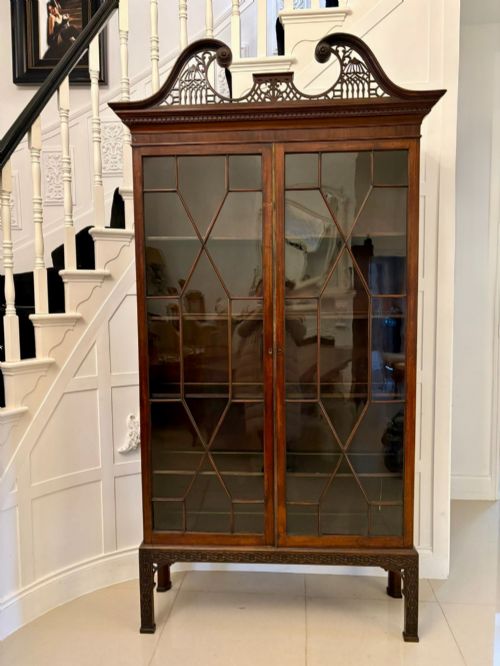
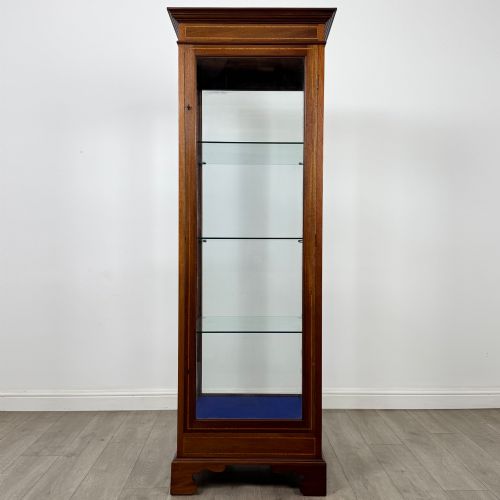
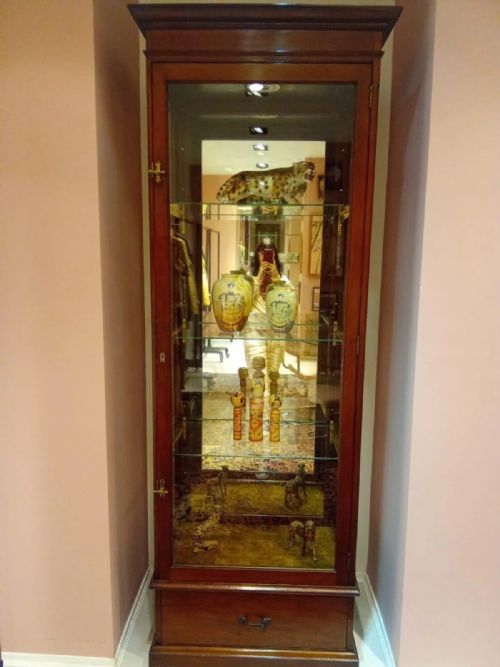
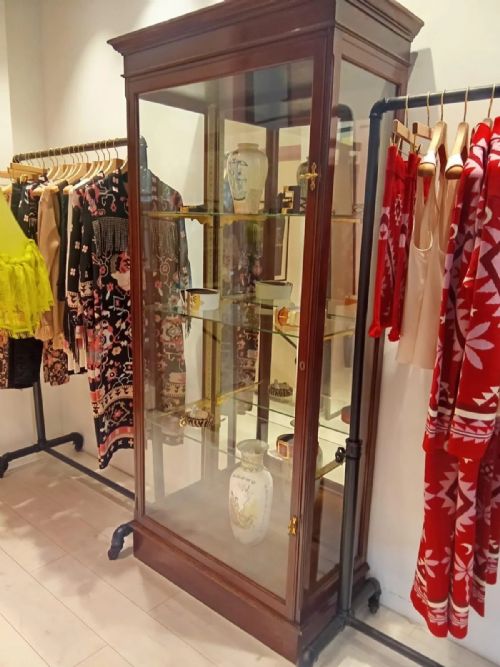


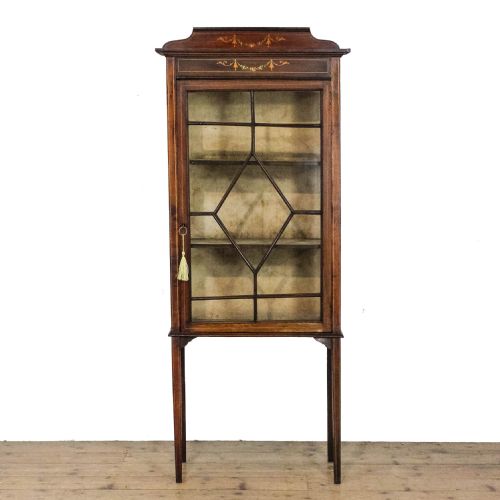


Tall Mahogany Display Case
A tall mahogany display case stands ready to hold your collection, combining rich timber and clear glass for maximum visual impact.
Tall Mahogany Display Case
When you search for a tall mahogany display case, you encounter upright storage and exhibition furniture designed to protect and showcase prized objects. These pieces originate from various eras including the Victorian and Edwardian periods, stretching from the mid nineteenth century into the twentieth century. Forms range from dedicated shop display cabinets and freestanding vitrines to extensive bookcase cabinets and narrow corner units.
The most common examples on this page date from the Edwardian era and the Victorian period, frequently utilising rich mahogany timbers paired with expansive glass panels. You will find both domestic china cabinets and commercial shop display cases adapted for home use. They stand tall to maximise floor space while offering multiple levels of internal shelving behind glazed doors.
How they were made
Cabinet makers constructed these tall cases using solid and veneered mahogany, often selecting timber with deep grain patterns. Structural frames support large sheets of glass to allow maximum light into the interior chamber.
Many examples incorporate secondary materials such as brass hardware, mirrored backs, and delicate fruitwood inlay or satinwood crossbanding. Shelving inside is frequently adjustable to accommodate objects of varying heights.
Listings feature mahogany, glass, brass, satinwood, mirror, fruitwood inlay, paint, and fabric across multiple historical periods.
What varies in quality
The refinement of the timber and the crispness of any carved detailing or inlay set the finest examples apart from standard commercial pieces. Superior construction is evident in the proportion of the proportions, the clarity of the glass, and the smooth operation of doors and adjustable internal fittings.
Commercial shop display cases built for retail environments differ in structural emphasis from domestic china cabinets made for the drawing room, though both demand precise joinery to support heavy glass doors and multiple shelves over decades of use.
E. Pollard & Co. Ltd.
The Tall Mahogany Display Case Glossary
- Astral glazed
- A method of dividing glass panes with slender wooden bars. This technique creates geometric patterns across the door front.
- Bijouterie cabinet
- A shallow display table or cabinet with a glazed top and sides. These pieces were traditionally used for holding small valuables and jewellery.
- Crossbanding
- A decorative border of veneer placed around the edges of a panel. The grain runs perpendicular to the central timber.
- Bow front
- A convex curved cabinet front. This curved shape adds visual softness to upright furniture.
- Pedestal
- A tall standalone support or narrow cabinet. These pieces elevate objects to eye level.
Tall Mahogany Display Case: Frequently Asked Questions
How do I clean the glass and mahogany?
Use a soft, dry cloth to remove dust from the mahogany surfaces without disturbing the polish. Apply a mild glass cleaner to a separate cloth rather than spraying directly onto the glass near the wooden frame.
Regular gentle maintenance preserves both the timber finish and the historic glazing bars. Avoid silicone based polishes which can build up on antique wood over time.
Can the shelves be adjusted?
Many tall mahogany display cases feature adjustable wooden or glass shelves supported by historic rack and pinion systems or modern brass brackets. This allows you to reconfigure the interior height to suit books, ceramics, or sculptures.
Check individual listings to confirm whether the internal shelving is fixed or movable. Most shop display cabinets and bookcase variants offer flexibility for different display items.
Are these cases suitable for heavy books?
Bookcase cabinets and taller library pieces are structurally engineered to bear the weight of heavy volumes on their shelves. Shop display cases and delicate bijouterie cabinets are better suited to lighter ornaments, china, and collectables.
Review the internal construction and shelf thickness before loading any cabinet with dense collections. Distributing weight evenly prevents sagging across wider spans.
How do I distinguish Victorian from Edwardian cases?
Victorian display cases often feature deeper, heavier mahogany tones, rich carving, and robust architectural proportions. Edwardian examples tend to display lighter framing, delicate satinwood inlay, and more slender silhouettes influenced by changing interior tastes.
Cabinet feet, handle styles, and internal mirror usage also provide clues to the manufacturing decade. Comparing construction details helps establish the chronological origins of each piece.