
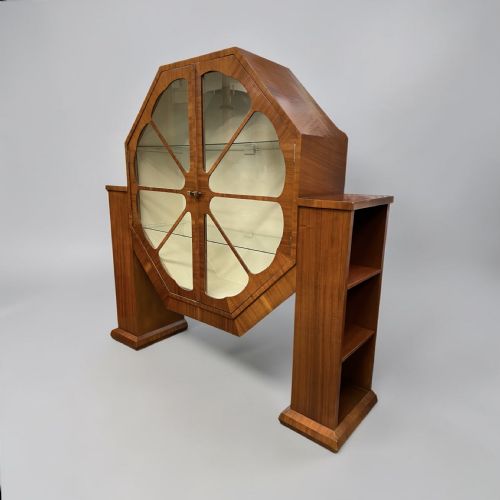
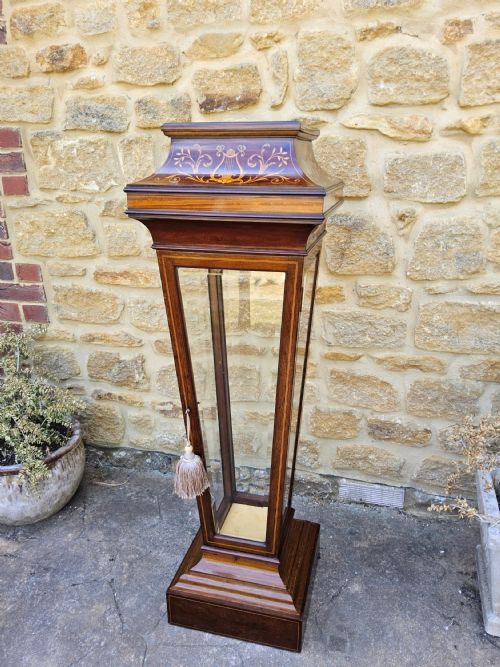


Antique Glass Display Pedestal
An antique glass display pedestal elevates your chosen objects, combining sturdy wood or brass with clear glass to showcase treasured items.
Antique Glass Display Pedestal
When you search for an antique glass display pedestal, you encounter elevated stands, vitrines, and cabinets designed to showcase small objects. These pieces range from towering nineteenth-century mahogany cabinets to low Edwardian vitrines and glass domes.
The versions most commonly met on this page combine timber frames in mahogany, walnut, or satinwood with glass viewing panels. They emerge from periods spanning the Georgian era through Art Deco and the early twentieth century.
Many items function as tabletop display stands, tazzas, or countertop shelves rather than floor-standing furniture. Their primary purpose remains the framing and protection of collectibles, specimens, or precious small items.
Materials and construction
Makers constructed these pieces using dense hardwoods such as mahogany and walnut, occasionally incorporating satinwood or giltwood for decorative contrast. Structural stability was essential to support heavy glass panels and display domes safely.
Cabinetmakers utilised brass for hinges, locks, and framing, pairing metal elements with clear blown or cast glass. Inlay work and delicate joinery mark the finer examples from Edwardian and Victorian workshops.
Listings feature items spanning the 18th century through Art Deco 1930, built from mahogany, walnut, brass, and clear glass.
What separates the finest examples
Quality rests upon the clarity and thickness of the glass, alongside the precision of the timber framing. Superior pieces display crisp inlay, tight joinery, and well-balanced proportions that support the transparent enclosure without appearing heavy.
The refinement of decorative elements, such as brass mounts or carved wood details, distinguishes standard utilitarian counters from domestic display furniture. Intricate detailing indicates a higher grade of craftsmanship during manufacture.
The Antique Glass Display Pedestal Glossary
- Vitrine
- A glass-sided cabinet designed for displaying fine objects or porcelain. These enclosures protect fragile items from dust while offering all-round visibility.
- Display Dome
- A blown glass cover, often paired with a wooden base, historically used for taxidermy or precious ornaments. They shield delicate pieces beneath a clear curved canopy.
- Inlay
- A technique where contrasting woods or materials are set into the surface of a piece to create decorative patterns. Edwardian makers utilised this frequently on cabinet frames.
- Giltwood
- Timber treated with gold leaf or gold paint to produce a rich metallic finish. French Empire and nineteenth-century pieces often feature this treatment.
Antique Glass Display Pedestal: Frequently Asked Questions
What fits inside a glass pedestal cabinet?
These cabinets suit small collectibles, porcelain, and delicate ornaments that benefit from elevated, dust-free placement.
Their enclosed glass shelves keep fragile items secure while allowing clear visibility from multiple angles in a room.
How do I clean an antique glass dome?
Use a soft, lint-free cloth and mild glass cleaner, taking care not to pressure fragile blown glass sections.
Lift the dome cautiously from its wooden base if possible to clean the interior surface safely.
Are these pedestals sturdy enough for heavy items?
Mahogany and walnut structures provide solid support, though weight capacity depends on the shelf construction and glass thickness.
Most items are engineered for lighter decorative objects rather than heavy sculptures.
How do I date an Edwardian display cabinet?
Examine the wood species, typical Edwardian inlaid motifs, and the construction style of the glass door frames.
Characteristic lighter mahogany tones and subtle stringing help separate these from earlier Victorian or later Art Deco pieces.