
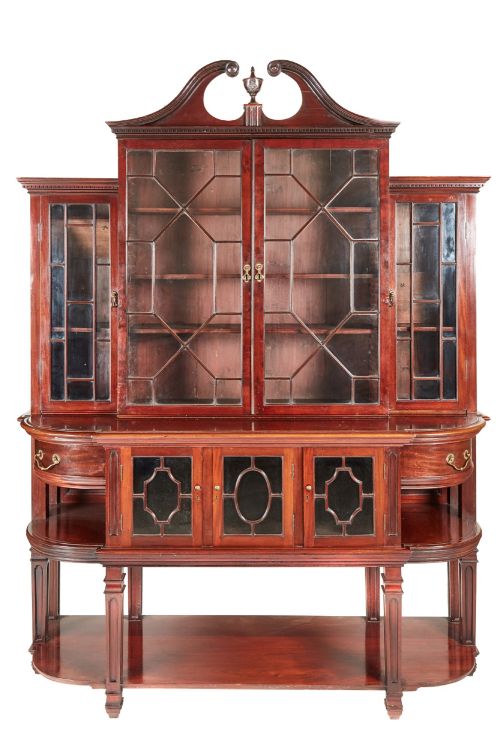
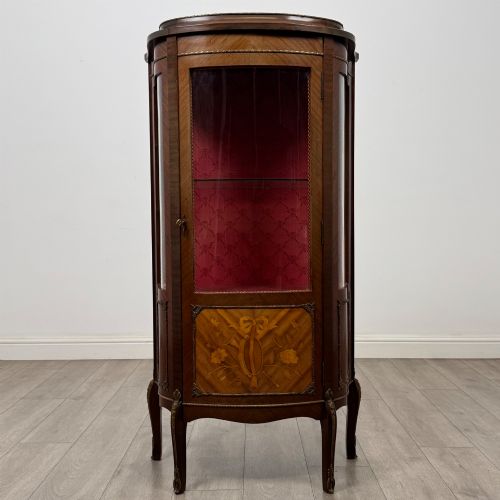
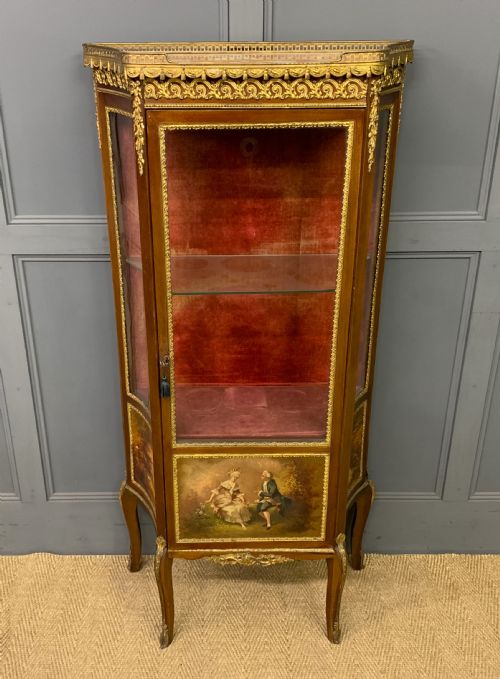
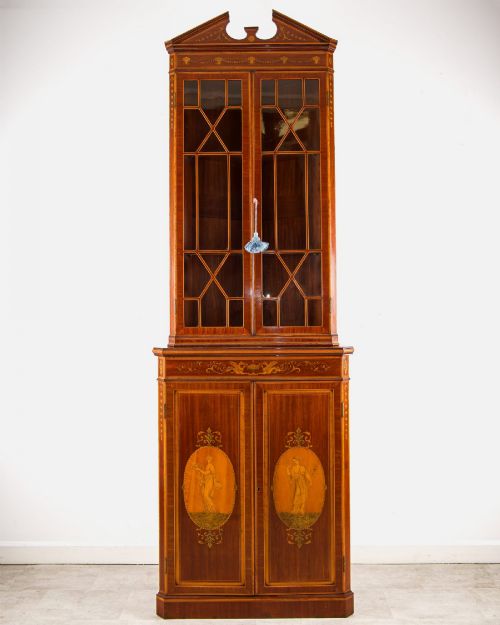


Red Mahogany Vitrine Cabinet
A red mahogany vitrine cabinet turns a room into a gallery, holding porcelain and small treasures behind clear glass panes.
Red Mahogany Vitrine Cabinet
A red mahogany vitrine cabinet serves primarily to display prized possessions while protecting them from dust. These pieces range from upright display cases and corner cabinets to bijouterie tables and pentagonal counters.
The selections available here stem largely from the Victorian and Edwardian eras, alongside various twentieth-century iterations. Pieces frequently adopt continental revival styles, incorporating French Rococo and Neoclassical design elements.
Makers often shaped these display pieces with serpentine fronts or glazed astragal doors. Buyers encounter formats varying from tall floor cabinets down to low glass-topped tables meant for jewellery and medals.
Assessing Quality and Craftsmanship
Superior examples distinguish themselves through the precision of their timber selection and inlay work. The crispness of ormolu mounts and the fluidity of curved glass fronts signal higher workshop standards.
Proportion and structural harmony separate standard production pieces from finer commissions. Cabinets retaining original glass panels, silk linings, and working brass locks command greater attention from collectors.
Listings feature mahogany display pieces spanning from the late nineteenth century through to the nineteen-thirties, dominated by Edwardian and Victorian examples.
Paul Sormani·Edwards and Roberts
The Red Mahogany Vitrine Cabinet Glossary
- Vitrine
- A glass-fronted cabinet designed specifically for the display of fine objects and porcelain. These pieces usually feature extensive glazing to let light reach the contents from multiple angles.
- Bijouterie table
- A glass-topped display table, often waist-high, used for showcasing smaller decorative items such as jewellery or coins. They typically lift open via a hinged lid.
- Astragal glazing
- A method of dividing a glass door or window into smaller panes using narrow wooden or metal bars. This framing adds a decorative geometric pattern to the front of a cabinet.
- Vernis Martin
- A simulated Japanese lacquer finish developed in eighteenth-century France and revived later on decorative furniture. It involves multiple layers of translucent varnish over painted scenes.
- Ormolu
- Gilded bronze applied as a decorative mount to furniture pieces. Workshops cast and chased these metal elements to frame glass panels and corners.
Red Mahogany Vitrine Cabinet: Frequently Asked Questions
What is a red mahogany vitrine cabinet used for?
These cabinets house collections of ceramics, glass, silverware, and small curiosities. The glass panels allow owners to view their items safely while keeping dust away.
Lower bijouterie variants specifically suit flat items like medals, documents, and jewellery. They sit at hand height for easy inspection of the contents.
How do I date an Edwardian vitrine?
Edwardian pieces date from roughly 1901 to 1910, often displaying lighter mahogany tones and delicate satinwood inlay. They frequently lean towards Neoclassical revival motifs rather than heavy Victorian styling.
Construction methods also help with dating, as machine-sawn timber and standardised brass screws became more common by this period. Makers labels or stamps inside drawers provide definitive chronological markers.
Are all vitrines French?
Many fine vitrines originate from France, particularly those featuring ormolu mounts and painted Vernis Martin panels. However, English workshops produced numerous display cabinets during the Victorian and Edwardian eras.
English versions often adopt Georgian revival styles, such as astragal-glazed breakfront bookcases adapted for display purposes. Regional proportions and timber choices usually indicate the country of origin.
How do I clean the inside of a vitrine?
Cleaning requires removing the displayed objects carefully to avoid chipping fragile ceramics or glass. A soft, dry cloth works best for dusting wooden surfaces and internal fabric linings.
Glass panels can be wiped with a mild glass cleaner applied to the cloth rather than sprayed directly inside. This prevents moisture from reaching old wood or tarnishing delicate brass and ormolu mounts.