
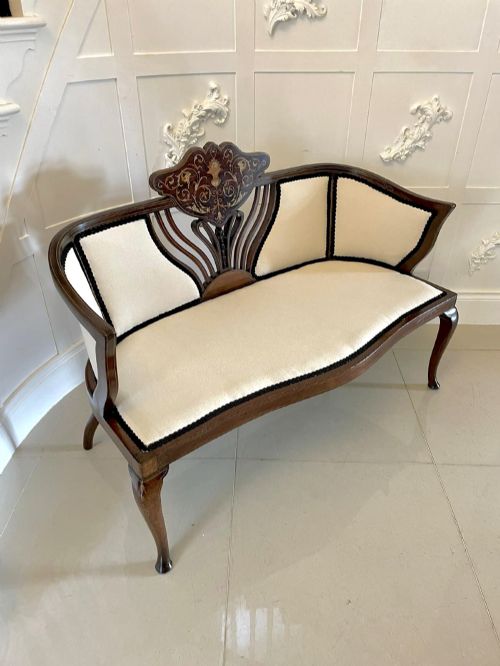
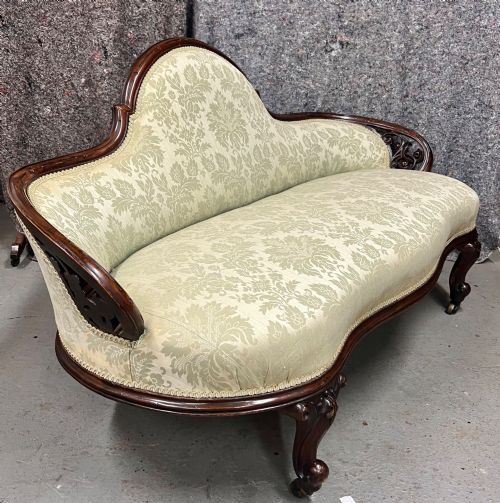
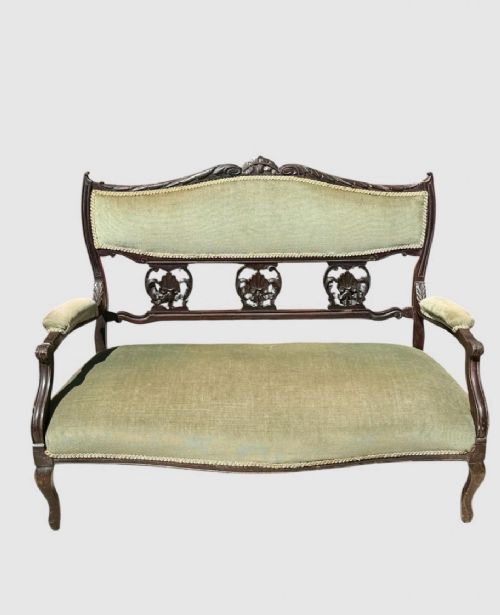


Carved Mahogany Loveseat
These carved mahogany loveseats combine solid timber frames with upholstered seating, offering compact two-seater proportions for traditional interiors.
Carved Mahogany Loveseat
A carved mahogany loveseat is a two-seater settee or small sofa designed for intimate seating, appearing in forms from Victorian and Edwardian periods down to the nineteen thirties. When you search for a carved mahogany loveseat, you meet compact settees and framed couches that range from Georgian revival styles to English Country House seating.
Most examples found here date from the Victorian and Edwardian eras, featuring carved wooden frames paired with fabric or leather upholstery. These smaller sofas serve well as end-of-bed seating or salon furniture where standard three-seater dimensions prove too large.
How they were made
Makers built the structural frames using solid mahogany, frequently incorporating turned supports and detailed hand carving along the crest rails and arm terminals. Selected pieces introduce decorative contrast through satinwood and boxwood inlay.
Upholstery methods varied from traditional horsehair stuffing secured with springs and webbing to later padding covered in fabric, leather, or specialised upholstery material.
The listings span furniture production from eighteen fifty through nineteen thirty, encompassing Victorian, Edwardian, and Georgian revival aesthetics.
What varies in quality
Quality rests upon the crispness of the timber carving and the architectural proportion of the frame, alongside the fidelity of revival styles such as George II and Hepplewhite designs. Pieces displaying refined satinwood inlay or substantial mahogany scantlings sit at the upper end.
The integrity of the underlying woodwork and the standard of upholstery execution further distinguish individual settees, whether retaining historic coverings or presenting restored leather and fabric surfaces.
The Carved Mahogany Loveseat Glossary
- Mahogany
- A durable tropical hardwood prized for its rich reddish-brown tone and stability in cabinetmaking. It forms the primary structural frame for these settees.
- Settee
- A medium-length upholstered seat with a back and arms, designed to accommodate two or more people. It shares functions with the sofa and couch.
- Inlay
- A decorative technique where contrasting woods like satinwood and boxwood are inserted into recesses within the mahogany surface. This adds linear detail to the frame rails.
- Hepplewhite revival
- A late nineteenth-century stylistic movement copying the lighter, elegant chair-back and shield-back furniture designs associated with the eighteenth-century designer George Hepplewhite.
- Salon settee
- A lighter decorative sofa intended for formal reception rooms rather than heavy daily use, often featuring delicate frame carving and inlay.
Carved Mahogany Loveseat: Frequently Asked Questions
How do I date a mahogany settee?
Dating relies on stylistic clues, framing techniques, and recorded period markers such as Victorian, Edwardian, or Georgian revival influences. Structural details and inlay motifs help narrow the decade of manufacture.
Later twentieth-century examples often display simpler turned frames and standardised upholstery techniques distinct from nineteenth-century workmanship.
What is the difference between a settee and a sofa?
Historically, settees featured wooden frames with partial upholstery, while sofas offered fully padded construction designed for lounging. Over time, the terms became interchangeable.
In practical use, both describe two-seater upholstered resting places found across Victorian and Edwardian interiors.
Can I use a salon settee daily?
Salon settees were originally built for light reception room duties rather than heavy family lounging. Their lighter frames require mindful placement in active modern households.
Checking the internal timber and joining helps determine if a specific piece suits regular seating or functions better as a decorative accent.
What maintenance do leather and fabric seats need?
Upholstered surfaces benefit from regular gentle vacuuming to remove dust from crevices and carved wooden details. Leather portions require occasional conditioning to prevent drying.
Keeping antique frames away from direct heat sources protects both the polished mahogany and the underlying joinery from movement.