

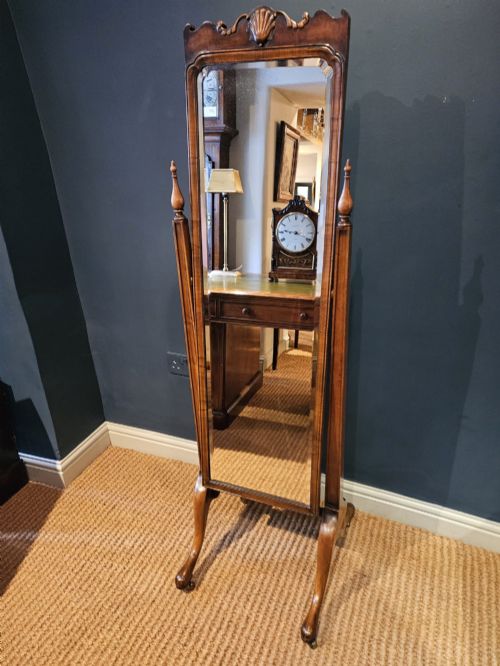
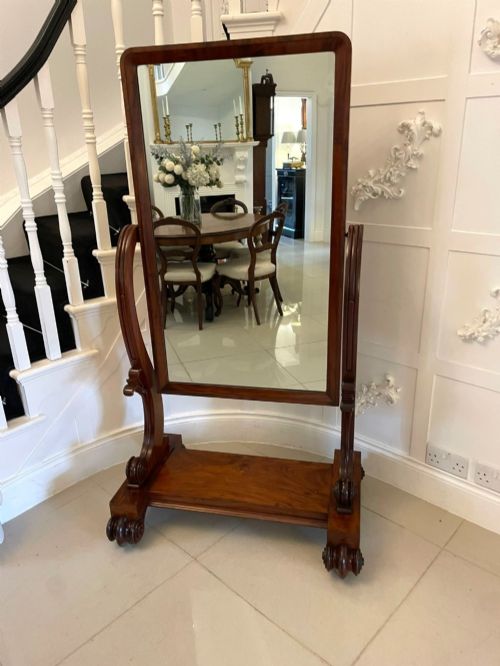
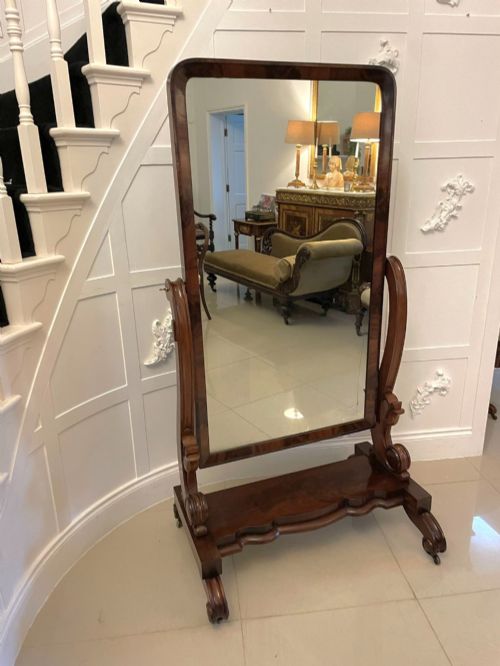
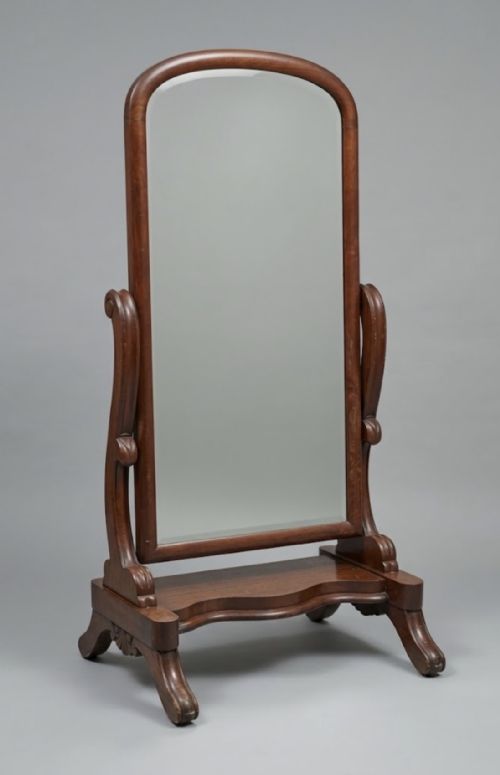



Carved Mahogany Floor Mirror
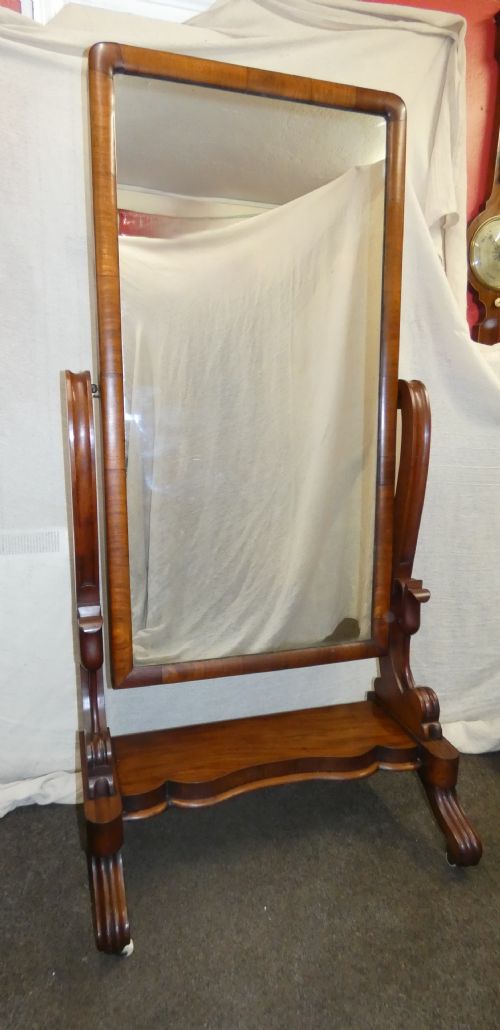
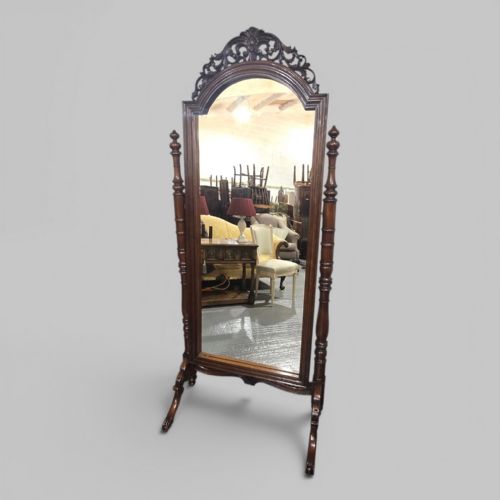
A carved mahogany floor mirror brings scale and rich timber warmth to a room, moving smoothly on its frame to catch the light.
Carved Mahogany Floor Mirror
A carved mahogany floor mirror stands as a substantial piece of furniture designed to tilt within a vertical frame, offering a full-length reflection. The examples found here span the nineteenth century, including Victorian, Regency, and William IV periods, alongside Edwardian and French Empire interpretations.
Most pieces take the form of cheval mirrors, which utilise a freestanding wooden chassis supported by sturdy side posts and feet. Buyers will also encounter dressing mirrors and specialised variants such as boot maker's mirrors designed for specific domestic rooms.
How they were made
Craftsmen built these frames primarily from solid or flame mahogany, often incorporating brass pivots, candle sconces, or mounts to handle the weight of the heavy glass. Carved detailing appears along the crests, scrolls, and feet, reflecting the prevailing styles from Regency curves to Victorian grandeur.
The mirror glass itself sits securely within a swinging frame, held by adjustable brass thumbscrews or pins that allow the user to alter the angle of reflection.
Carved Mahogany Floor Mirror Retail Price Guide 2026
Typical asking prices for carved mahogany floor mirror among the pieces listed under this phrase on Sellingantiques today, from the lower quarter to the upper quarter. They describe what is for sale here now, not the wider market.
What varies in quality
Quality rests in the depth and crispness of the timber carving, the choice of figured flame mahogany veneers, and the substantial weight of the supporting frame. Finer examples display balanced proportions with well-turned columns, robust brass hardware, and original mirror plates showing honest age.
Simpler workshop pieces offer modest execution with plainer wood selections and minimal ornamentation, while larger bespoke examples exhibit superior joinery and more ambitious decorative carving.
The Carved Mahogany Floor Mirror Glossary
- Cheval mirror
- A large freestanding floor mirror suspended on a vertical frame with pivoting side supports. This allows the glass to swing freely to different angles.
- Flame mahogany
- A highly figured veneer cut from the fork of the mahogany tree where the branch meets the trunk. It creates a distinctive flame-like pattern across the wood surface.
- William IV
- A British design period spanning the 1830s characterised by robust classical proportions and bold scrolling woodwork. Pieces from this era often feature heavy mahogany frames.
- French Empire
- A neoclassical design style drawing influence from ancient Rome, marked by dark polished mahogany and restrained classical mounts. These mirrors bring a formal architectural presence to an interior.
Carved Mahogany Floor Mirror: Frequently Asked Questions
How do I adjust a cheval mirror?
Most frames use brass thumbscrews or threaded pins on the side posts to control the tension of the swinging glass. Tightening these fittings holds the mirror plate firmly at the desired angle.
Regular checking of these pivots ensures the heavy glass remains stable during daily use without slipping.
What is the difference between a cheval mirror and a dressing mirror?
A cheval mirror stands directly on the floor as a full-length piece, supported by its own upright legs and frame. A dressing mirror is traditionally smaller and built to sit atop a chest of drawers or a dressing table.
Both types utilise a swinging frame design, but their scale and intended placement within a room differ significantly.
How do I care for antique mahogany wood?
Maintain the finish by dusting with a soft, dry cloth and avoiding harsh chemical polishes or modern aerosols. Applying a quality beeswax occasionally helps nourish the timber and preserve the depth of the grain.
Keep the frame away from direct sunlight and strong heat sources to prevent the mahogany from drying out or splitting.