

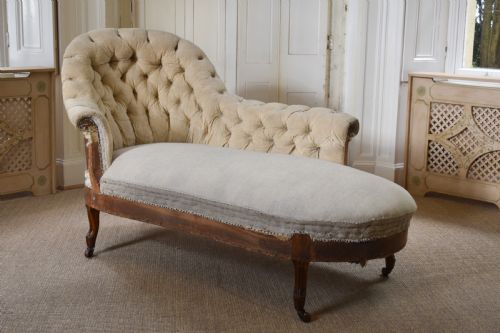
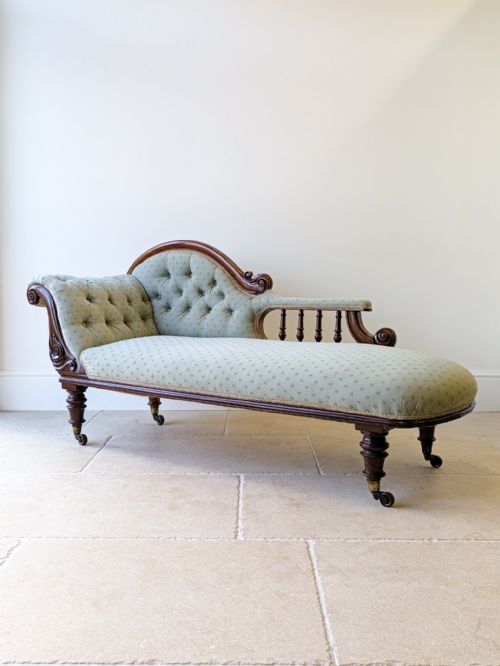
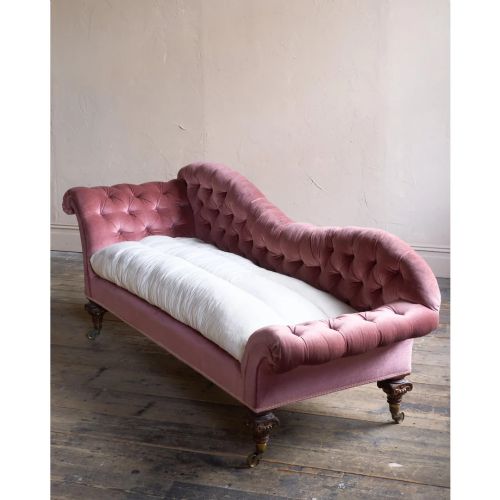
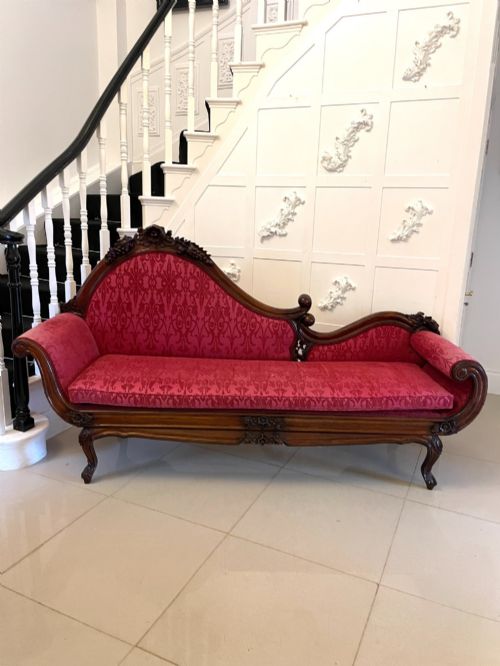
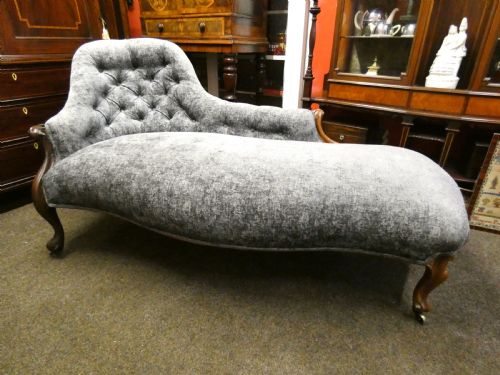
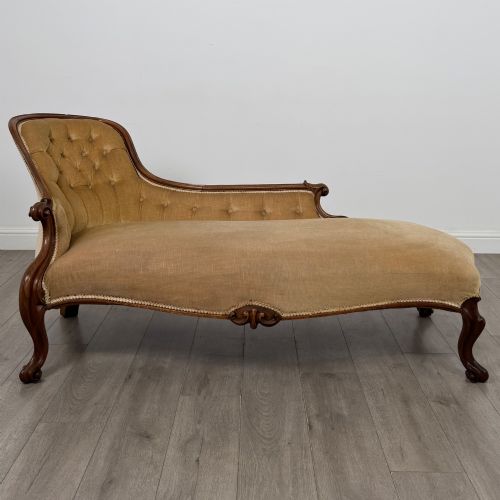
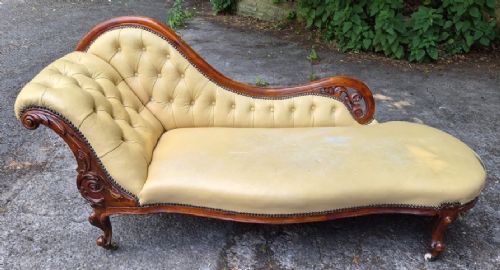


Carved Mahogany Fainting Couch
A carved mahogany fainting couch is a long, reclining seat designed for rest, offering both elegance and comfort for your home.
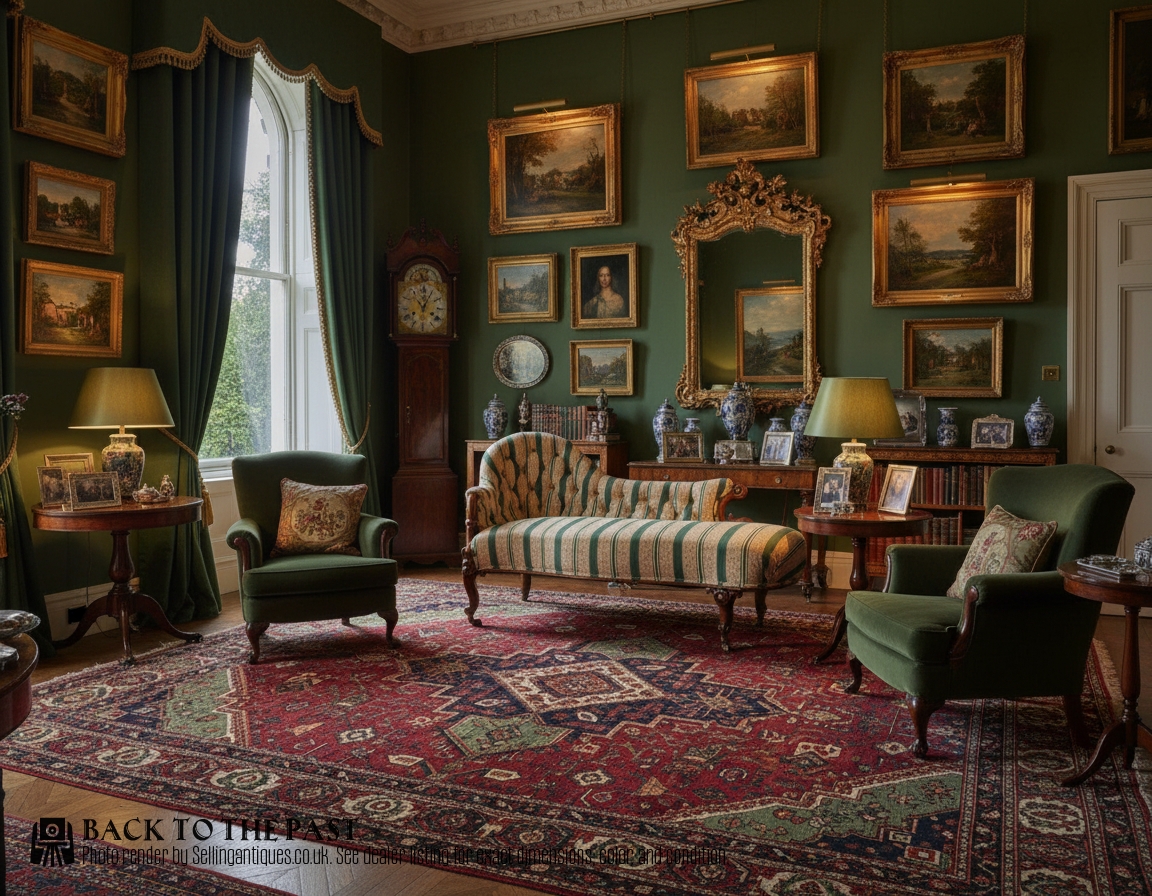
Carved Mahogany Fainting Couch
When you search for a carved mahogany fainting couch, you encounter pieces primarily from the Victorian and Regency periods, alongside William IV examples. These daybeds and chaise longues serve as sculptural lounging furniture with raised headrests and sweeping frames.
The most common versions on this page date from the mid-nineteenth century around eighteen-fifty to eighteen-sixty, featuring rich timber frames and upholstered surfaces. They appear under various descriptions such as chaise longues, scroll arm sofas, and récamiers.
Makers shaped these reclining seats to suit formal parlours and private chambers, combining deep timber frames with plush textiles. They provide an elongated seat for semi-reclining posture, reflecting nineteenth-century domestic comfort.
How they were made
Cabinet makers utilised solid mahogany to construct the structural frames, carving intricate details such as ionic column legs, scroll arms, and double spoonbacks. This dense hardwood allowed for sharp, enduring relief work along the show wood borders.
Upholstery completed the core construction, employing traditional stuffing techniques layered beneath fabrics like velvet, damask, and leather. Brass elements occasionally appeared in castors or decorative mounts, securing the mobility and finish of the heavy timber frames.
Carved Mahogany Fainting Couch Retail Price Guide 2026
Typical asking prices for carved mahogany fainting couch among the pieces listed under this phrase on Sellingantiques today, from the lower quarter to the upper quarter. They describe what is for sale here now, not the wider market.
Listings feature Victorian, Regency, and William IV periods utilising mahogany, velvet, damask, and brass.
What varies in quality
Quality rests primarily in the crispness of the timber carving and the architectural ambition of the frame design, distinguishing standard production from exceptional country house pieces. Deeply figured mahogany and sophisticated elements like ionic columns elevate a piece above simpler moulded frames.
The integrity of the structural joinery and the grace of the scroll work determine the overall presence of the daybed. Finer examples balance robust timber construction with refined upholstery proportions that harmonize with the underlying woodwork.
The Carved Mahogany Fainting Couch Glossary
- Chaise longue
- An upholstered sofa in the form of a chair combined with a long seat for reclining. This French term translates to long chair.
- Récamier
- A type of daybed or couch with two raised ends or one raised scroll end, named after a prominent French society figure painted holding such a pose.
- Spoonback
- A chair or sofa backrest hollowed out in the shape of an egg spoon to fit the human spine. This padded wooden frame appears frequently on Victorian seating.
- Scroll arm
- An armrest curved outward or inward in a continuous spiral shape. This flourish defines the side profile of many nineteenth-century daybeds.
Carved Mahogany Fainting Couch: Frequently Asked Questions
What is a fainting couch?
A fainting couch is an elongated seating form designed for reclining in a semi-recumbent posture without fully lying down. They gained prominence in the nineteenth century for domestic parlours and private withdrawing rooms.
These pieces feature a raised end for head support and an open side for long skirts and dresses. They combine structural timber framing with soft upholstery to create a comfortable resting place.
How do I date a mahogany daybed?
Dating relies on stylistic markers such as Regency classical lines, William IV robust proportions, and Victorian ornamentation. Examining the timber grain and carving styles helps place the piece within the nineteenth century.
Structural traits like Ionic columns or scroll arms point toward specific decades between eighteen-fifty and eighteen-sixty. Comparing the upholstery profile to known period forms provides further chronological context.
Where should I place a chaise longue?
A chaise longue fits well in a spacious living room, bedroom, or dressing area where it can serve as a focal point or reading spot. Because one side is open, positioning it against a wall with the headrest visible maximises its aesthetic impact.
Ensure there is enough floor clearance around the piece to appreciate the carved mahogany frame and scroll work. Lighting from the side helps highlight the wood grain and upholstery texture.
What fabrics were used on these couches?
Original upholstery fabrics included silk damask, heavy velvet, and durable leather tailored to suit formal nineteenth-century interiors. These materials were chosen for their tactile richness and ability to complement dark mahogany wood frames.
Subsequent re-upholstering often utilises similar historical textile patterns to maintain the character of the Victorian and Regency periods. The choice of fabric directly influences the visual weight of the reclining couch.