
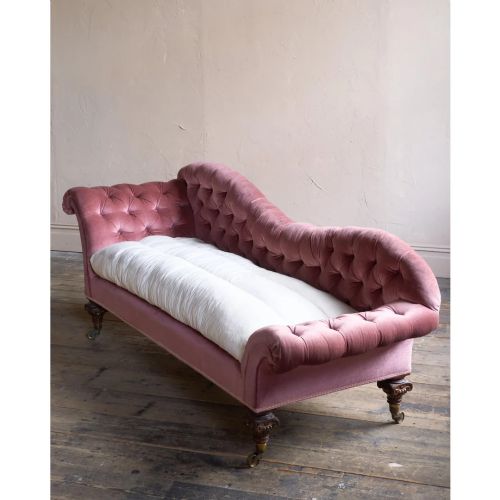
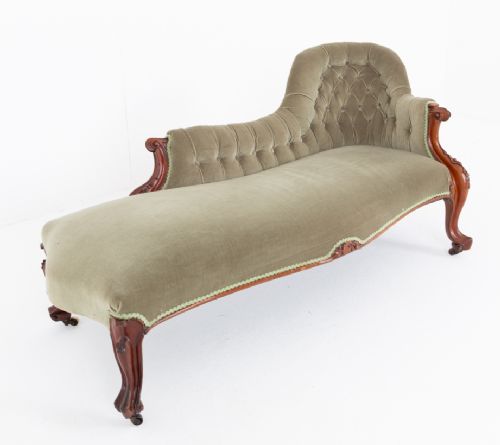
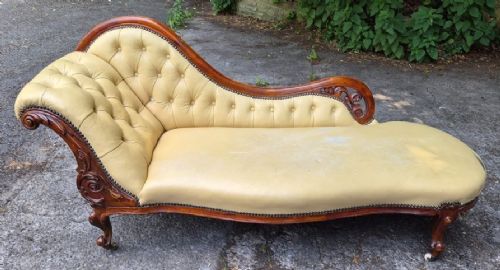


Tufted Chaise Lounge
A tufted chaise lounge offers a resting place of deep comfort, uniting nineteenth-century craftsmanship with singular elegance.
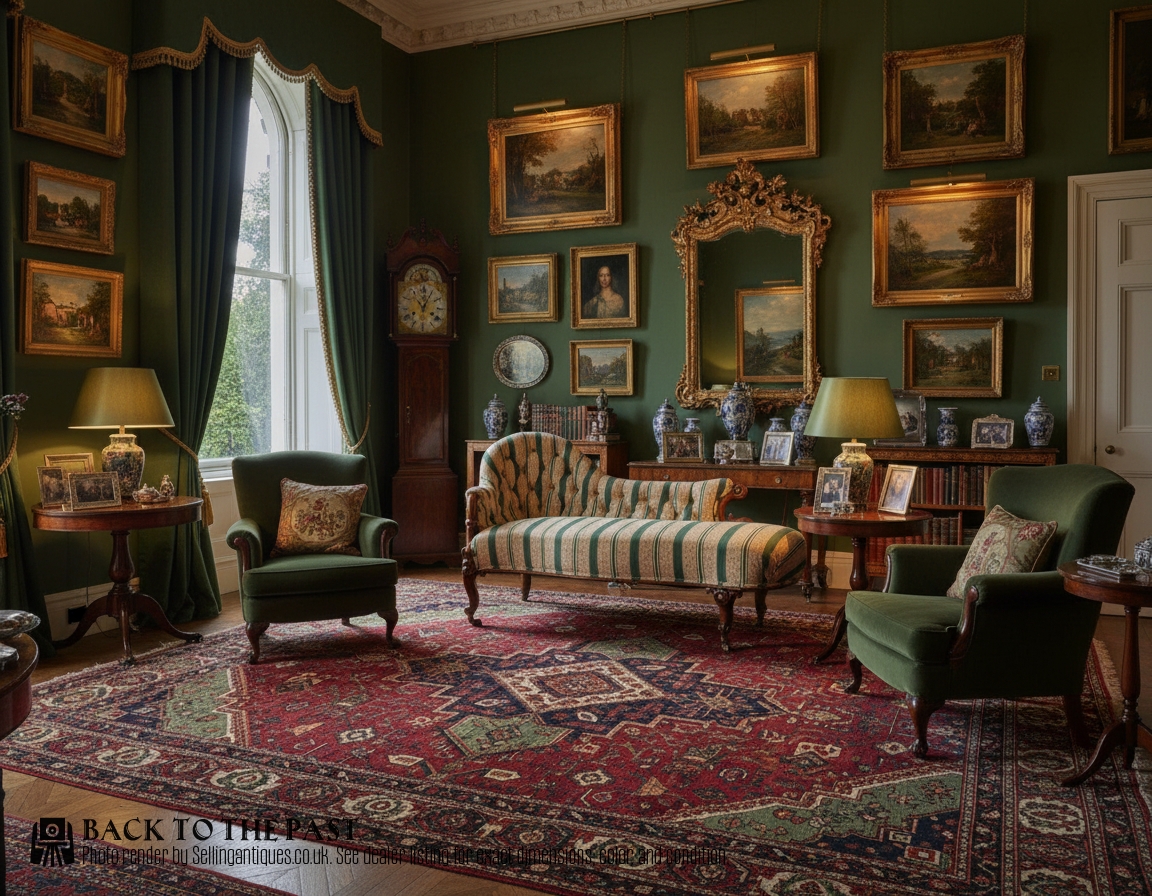
Tufted Chaise Lounge
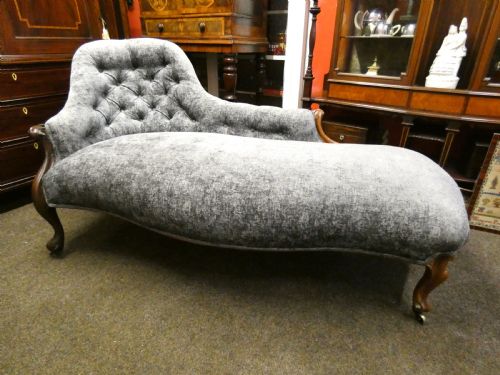
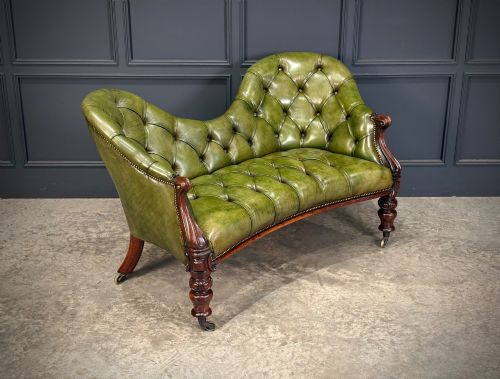
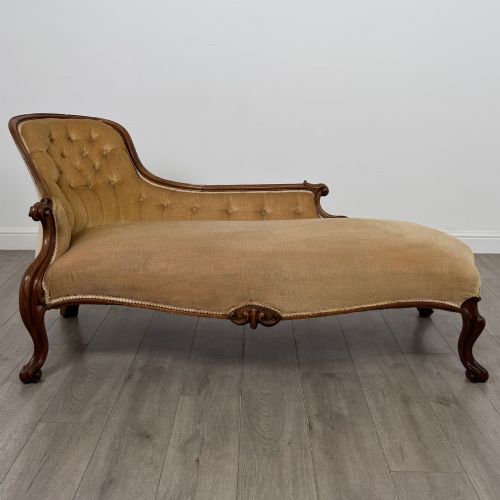
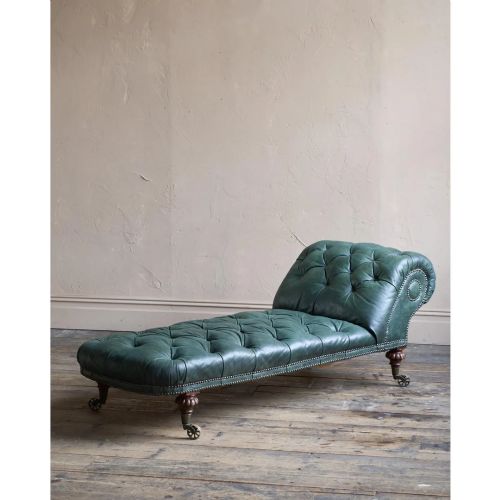
A tufted chaise lounge provides an elongated seat designed for reclining in a semi-recumbent posture, originating predominantly from the nineteenth century. These seating pieces emerge frequently in Victorian designs, often featuring buttoned upholstery and single-ended scrolled backs.
Buyers encounter variations spanning from early Victorian rosewood frames to later walnut and mahogany constructions. The form encompasses daybeds, kidney sofas, and Chesterfield-style chaises with low backs and generous proportions.
Origins trace through the nineteenth century, including specific decades such as the eighteen-fifties, sixties, and eighties, alongside Regency periods. These diverse forms serve equally as day beds, settees, and library couches.
Materials and construction methods
Frames rely upon solid timbers including mahogany, rosewood, walnut, and wood, frequently carved by hand with substantial structural integrity. Joinery supports the weight and contour of the single-ended or double spoon-back silhouettes.
Upholstery materials incorporate leather, velvet, fabric, and blue damask, secured via traditional buttoning techniques. Brass elements and ionic column legs provide structural or decorative support.
Surface treatments range from gilt decoration to polished mahogany and rosewood finishes, highlighting the natural grain of the wood.
Materials recorded across the inventory include mahogany, rosewood, walnut, brass, leather, velvet, fabric, and damask.
Distinctions in quality
Quality rests upon the crispness of carved woodwork and the depth of the timber frame, distinguishing robust rosewood and mahogany structures from simpler woods. Maker attribution, such as works associated with Howard and Sons, Holland and Sons, or H. Goodall and Sons, elevates the standing of a piece.
The execution of buttoned upholstery and the selection of covering materials - ranging from whisky brown leather to rich velvet and damask - shape the refined character of the daybed or chaise. Proportions and the balance of the scrolled back relative to the carved legs define the visual harmony.
Howard & Sons·H. Goodall & Sons·Holland & Sons·Jas Shoolbred
The Tufted Chaise Lounge Glossary
- Chaise longue
- An upholstered sofa in the shape of a chair that is long enough to support the legs. This form dominates the nineteenth-century selections.
- Buttoned
- An upholstery technique where buttons are pulled deep into the padding to secure the stuffing and create a diamond pattern. This method defines many Victorian pieces.
- Day bed
- A long chair or bed used for resting during the day. Examples include bobbin-turned frames and reclining variants.
- Rosewood
- A dense, dark timber prized for its rich grain and utilised extensively in nineteenth-century frames. It provides exceptional weight and durability.
- Spoon-back
- A padded chair or settee back shaped like the bowl of a spoon. This design appears on Victorian double spoon-back sofas and chaises.
Tufted Chaise Lounge: Frequently Asked Questions
How do I identify a Victorian chaise lounge?
Victorian examples typically feature dark timber frames in mahogany, walnut, or rosewood, accompanied by buttoned upholstery in leather or velvet. Many incorporate scrolled backs and carved wooden legs.
They span periods from the eighteen-fifties through the eighteen-eighties, often displaying characteristic nineteenth-century proportions and craftsmanship.
Where should I place a chaise lounge in a room?
These pieces suit living spaces, bedrooms, or libraries where their elongated form can rest against a wall or float within a generous floor plan. They pair well with armchairs and footstools.
Consider the single-ended back orientation to ensure the open side faces toward the centre of the room.
What materials were used for nineteenth-century chaises?
Framing relies predominantly on hardwoods such as mahogany, rosewood, walnut, and general wood. Supporting details occasionally incorporate brass and carved ionic column legs.
Upholstery options span leather, velvet, fabric, and damask, often finished with deep buttoning.