
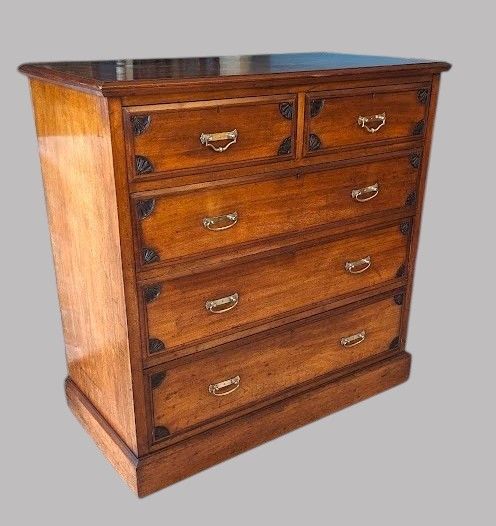

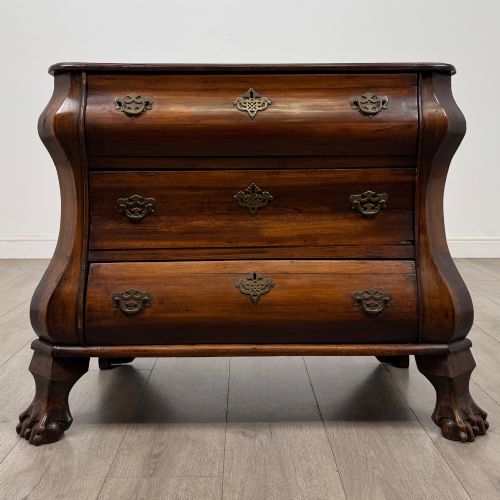
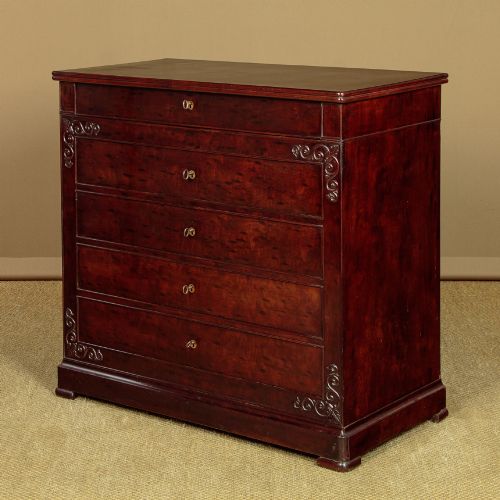
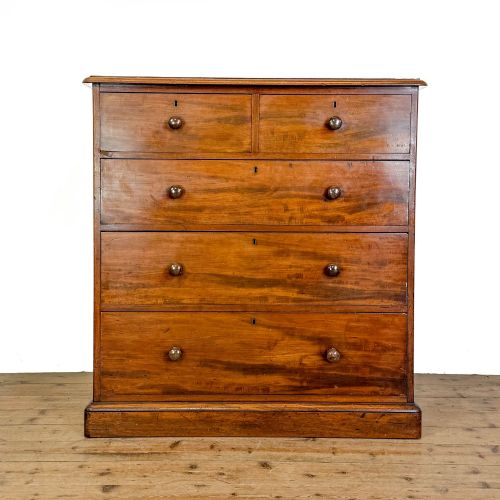
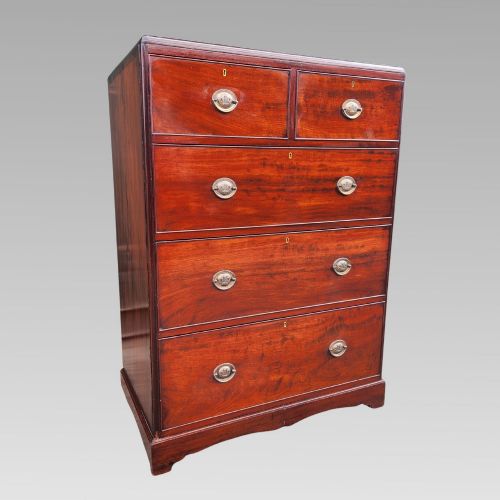
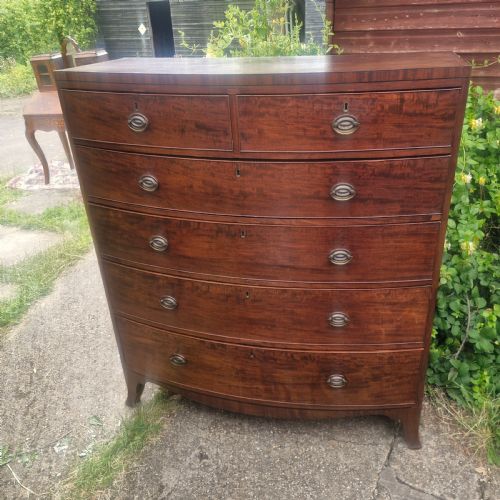
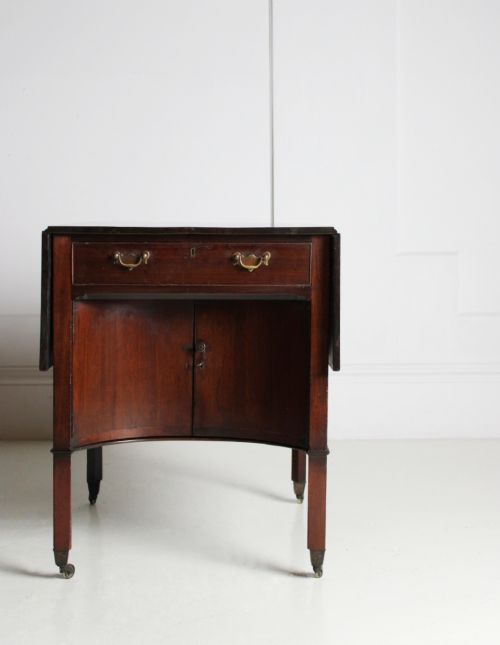
Carved Mahogany Commode
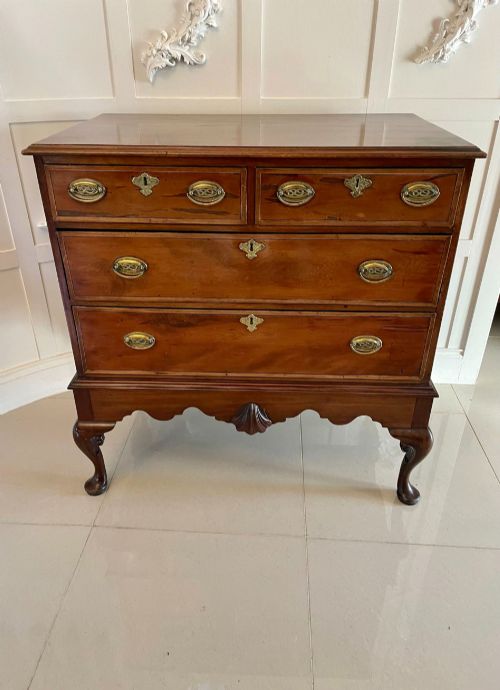
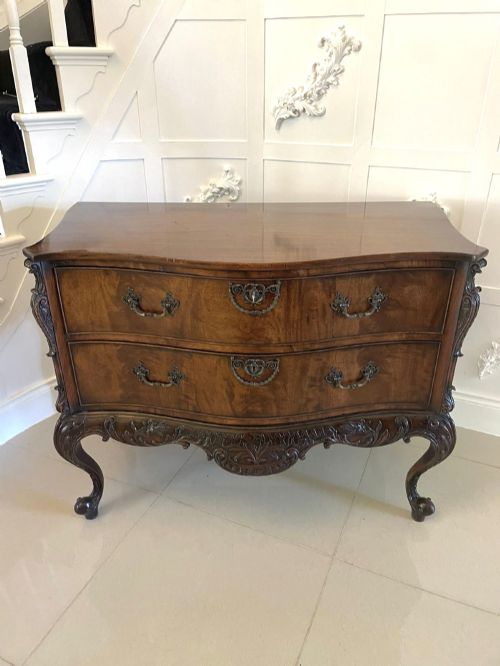
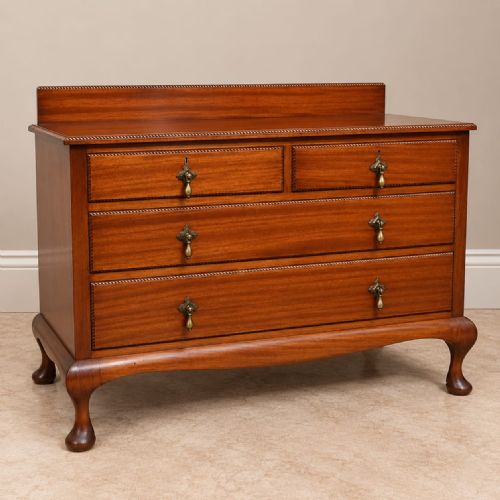
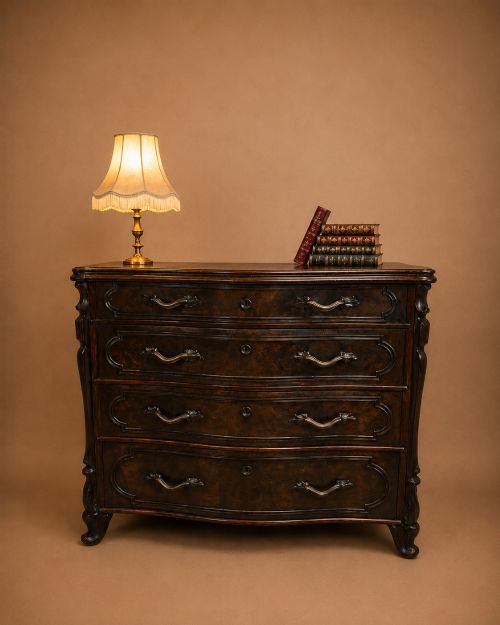
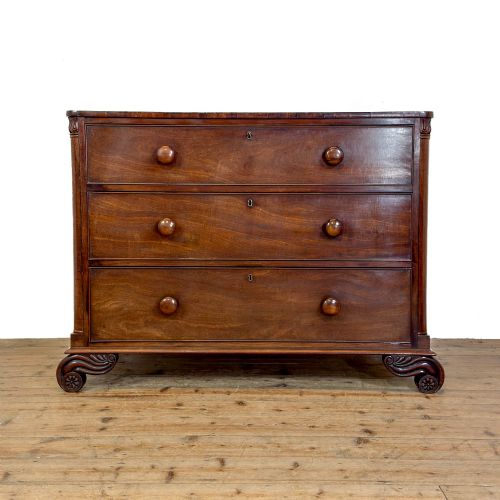
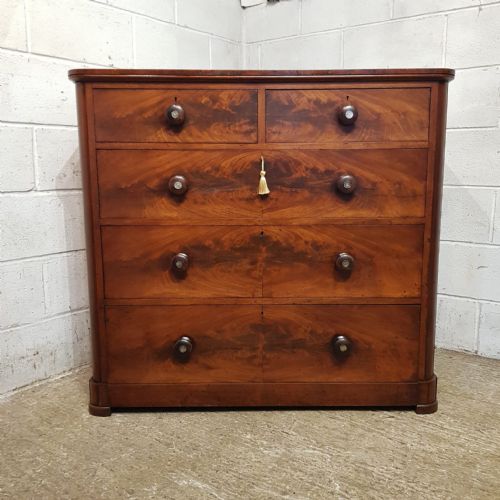
A carved mahogany commode brings solid weight and rich grain to a room, offering deep drawers and sculptural silhouette.
Carved Mahogany Commode
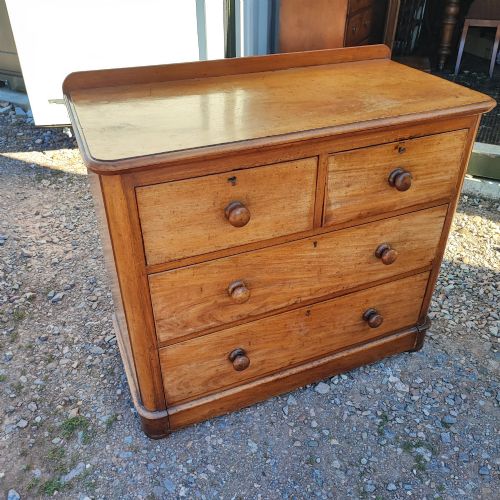
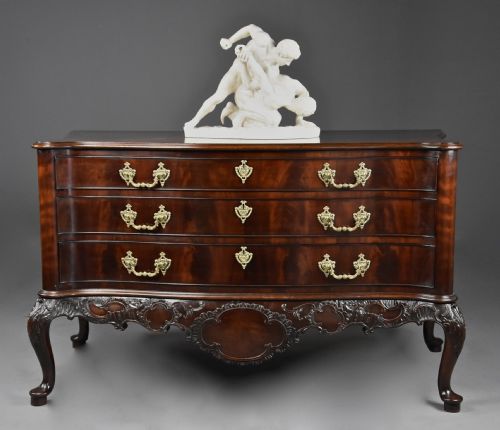
A carved mahogany commode serves as a substantial storage piece, taking the form of a chest of drawers, a serpentine cabinet, or a bedside cupboard. When searching for a carved mahogany commode, buyers encounter 18th-century George III examples alongside Victorian, Regency, and Edwardian interpretations.
The selection ranges from bow-fronted chests to serpentine shapes influenced by Chippendale styles. Alongside traditional drawer chests, variations include dressing tables, pot cupboards, and occasional bedside tables constructed from the same dense timber.
How they were made
Cabinet makers built these pieces using solid mahogany and flame mahogany veneers applied over secondary woods such as pine and oak. Structural integrity relied on dovetail joints for the drawers and sturdy internal framing.
Carving was executed directly into the solid timber, particularly on bracket feet, apron rails, and pediments. Surfaces were finished with polish to accentuate the varied grain patterns of the wood.
Materials documented across the inventory include mahogany, flame mahogany veneer, brass, marble, pine, oak, and glass.
What varies in quality
The standard of timber selection defines the visual impact, with figured flame mahogany showing greater depth than plain boards. Crispness in the hand-carved details and the retention of original brass hardware separate high-workshop production from simpler utilitarian pieces.
Proportion and execution of complex shapes, such as serpentine fronts or bombe curves, demand advanced joinery skill. The precision of drawer construction and the harmony of the overall silhouette determine the tier of the piece.
The Carved Mahogany Commode Glossary
- Serpentine
- A front shape curving outward in the centre and inward at the sides. This contour requires skilled carpentry to shape the timber drawers and frame accurately.
- Flame mahogany
- A veneer cut from the fork of the mahogany tree where the branch meets the trunk. It creates a distinctive, flickering flame pattern across the surface.
- Bow front
- A convex curved front projecting outward in an arc. This form softens the geometric lines of a standard rectangular chest.
- Dovetail
- An interlocking joint used to connect drawer sides to drawer fronts. Hand-cut dovetails indicate traditional craftsmanship.
Carved Mahogany Commode: Frequently Asked Questions
How do I clean a mahogany commode?
Dust regularly with a soft, dry cloth to prevent surface buildup. Apply natural beeswax periodically to nourish the timber and maintain the sheen.
Avoid placing the furniture near direct heat sources or strong sunlight, which can dry out the wood and fade the polish.
What is the difference between a commode and a chest of drawers?
Historically, a commode refers to a low, ornate cabinet or chest with drawers, often featuring decorative mounts or marble tops. A standard chest of drawers focuses primarily on utilitarian vertical storage.
In many listings, the terms overlap depending on the decorative elaboration and the period of origin.
How do I date a mahogany commode?
Examine the construction methods visible inside the drawers and along the backboards. Hand-cut dovetails and secondary woods like oak or pine point to 18th or 19th-century origins.
Style markers such as Regency curves, Victorian proportions, or Chippendale-style carving help narrow the decade of manufacture.