
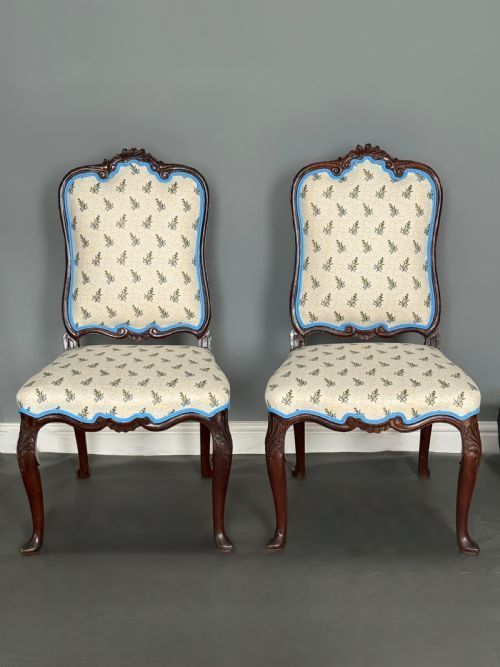
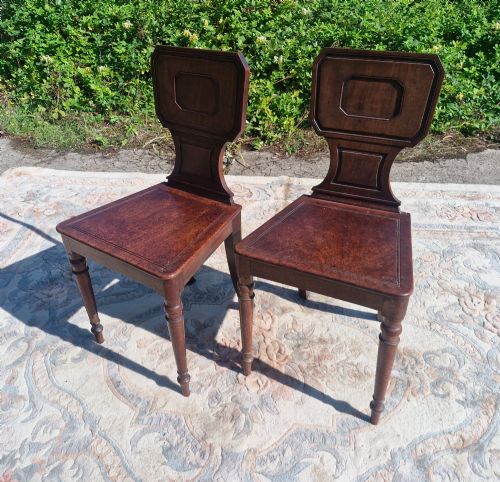
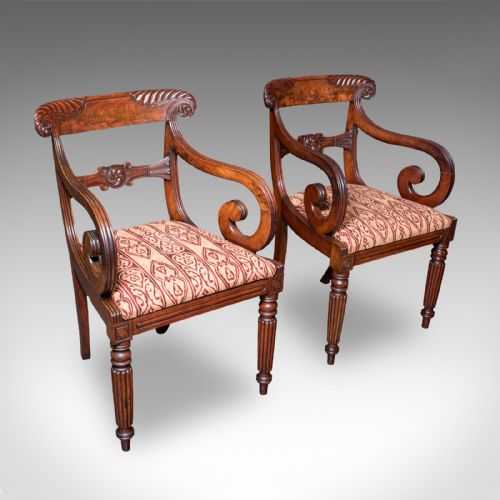
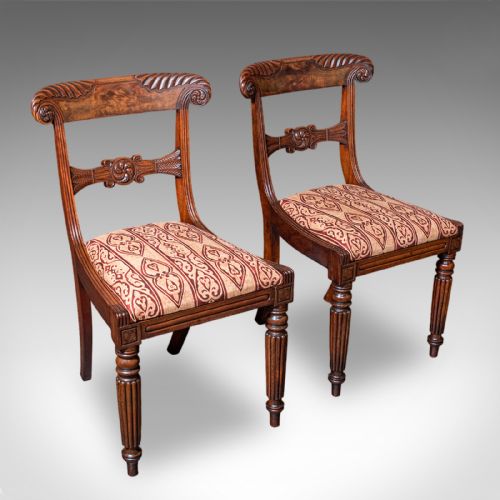
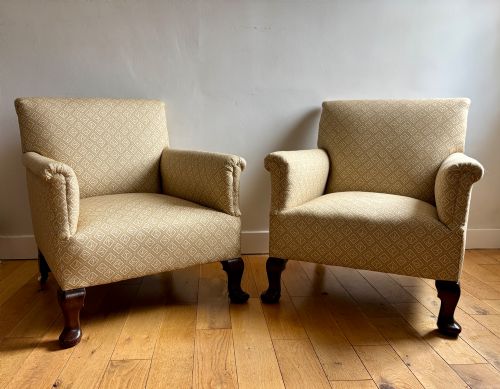
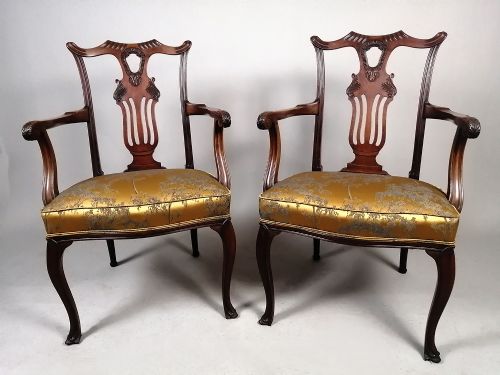
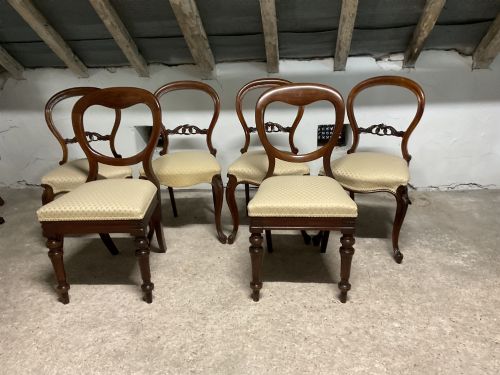
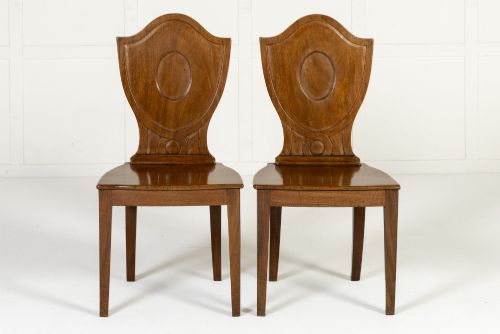
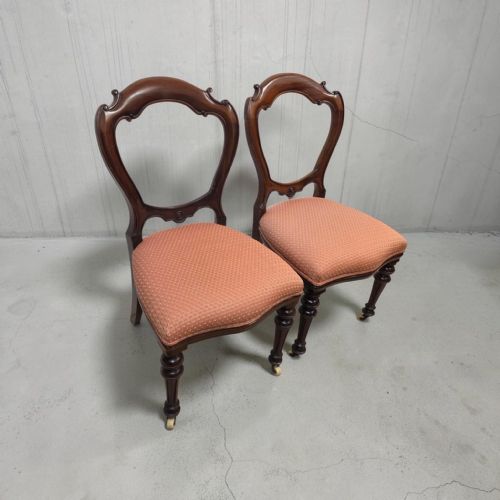
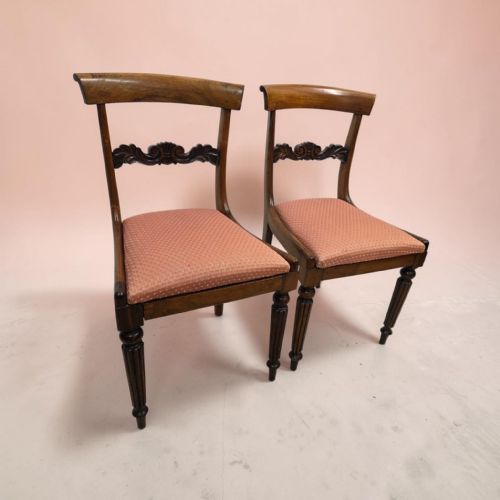
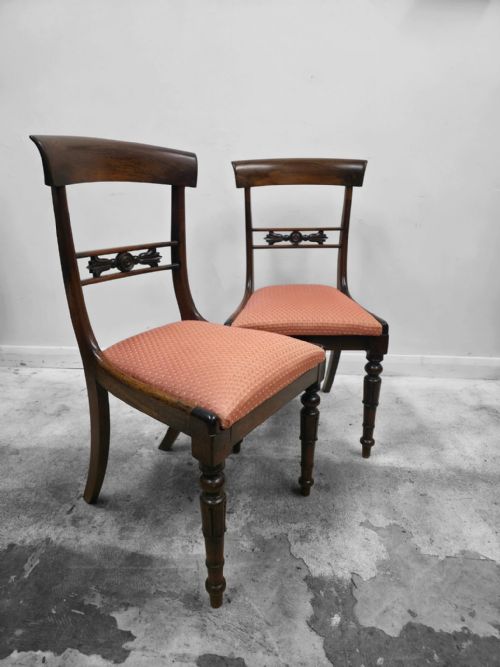
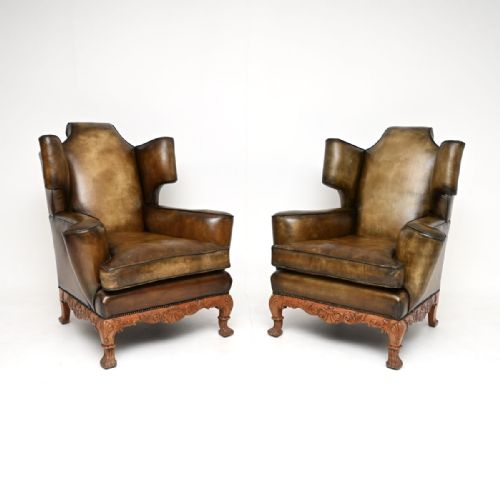
Carved Mahogany Chair Pair
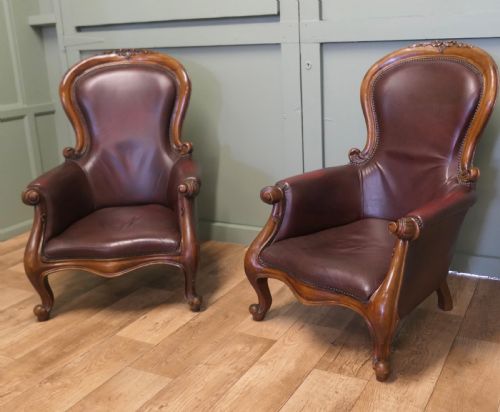
When you search for a carved mahogany chair pair, you are looking for matching seats shaped from rich timber across multiple centuries.
Carved Mahogany Chair Pair
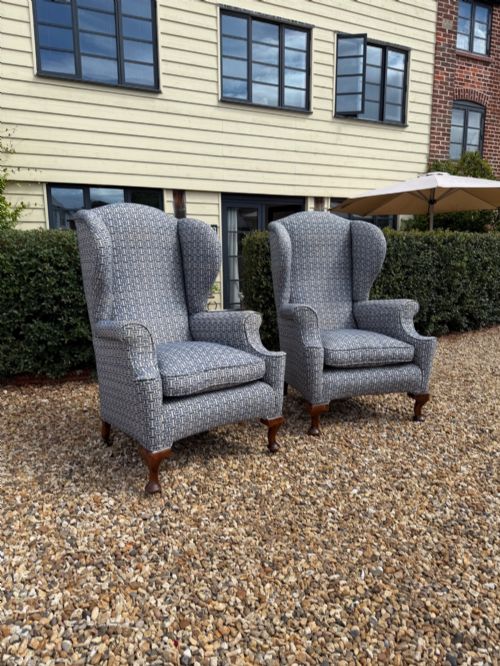
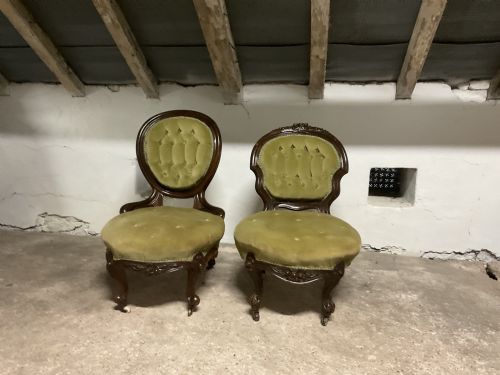
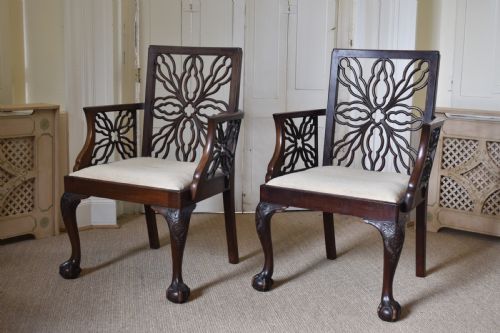
A carved mahogany chair pair brings symmetrical seating into a room, often taking the form of side chairs, armchairs, or hall chairs.
The inventory on this page spans from the 18th century through the Regency, Victorian, and Edwardian periods, demonstrating enduring appeal.
Buyers encounter forms ranging from library armchairs and dining seats to nursing chairs and tub chairs, reflecting diverse historic uses.
How They Were Made
Craftsmen utilised solid mahogany, frequently shaped with detailed carving along the backs and legs, paired with textiles like velvet, leather, and fabric for upholstered seats.
Joinery methods varied by period, incorporating brass details, cane panels, or intricate marquetry to accent the timber frames.
Listings feature mahogany across 18th-century, Regency, and Victorian periods, alongside occasional walnut frames.
What Varies in Quality
The depth and crispness of the timber carving set exceptional examples apart from simpler production, revealing the hand of a skilled maker.
The choice of figured mahogany and the preservation of original upholstery materials influence the overall character and integrity of the pair.
Whytock & Reid
The Carved Mahogany Chair Pair Glossary
- Mahogany
- A durable tropical hardwood known for its deep reddish-brown tone and fine grain, widely used in quality antique furniture.
- Side Chair
- An upright chair without arms, traditionally used at dining tables or placed against walls in hallways and reception rooms.
- Library Armchair
- A substantial upholstered seat designed for comfort, frequently featuring padded arms and robust timber framing.
- Marquetry
- Decorative patterns formed by fitting together thin veneers of wood and other materials onto a solid surface.
Carved Mahogany Chair Pair: Frequently Asked Questions
What rooms suit a pair of antique chairs?
These matching seats fit naturally into hallways, studies, and drawing rooms where symmetry matters. They offer functional seating while adding period character to corners or empty wall spaces.
Larger armchairs work well in libraries and reception rooms, while lighter side chairs or hall chairs suit more compact areas of the home.
How do I identify Regency pieces?
Regency items often display classical influences, incorporating elements like lyre backs, brass inlay, and saber legs. The timber selection typically shows strong figuring and a rich, dark polish.
These pieces date from the early 19th century and reflect a distinct shift toward ancient Greek and Roman design motifs.
Are these chairs comfortable for daily use?
Upholstered armchairs and library seats provide deep cushioning and supportive backs designed for relaxation. Dining chairs and side chairs offer a firmer, more upright posture intended for meals or formal sitting.
Many period examples retain supportive sprung or stuffed seats that accommodate contemporary living.
What defines Chippendale style woodwork?
Chippendale and revival designs feature elaborate carved details, often including ribbon backs, ball and claw feet, and intricate pierced splats. The craftsmanship emphasises flowing lines and botanical motifs.
Cabinetmakers drew inspiration from mid-18th-century pattern books, creating robust forms that remain popular in later revival periods.