
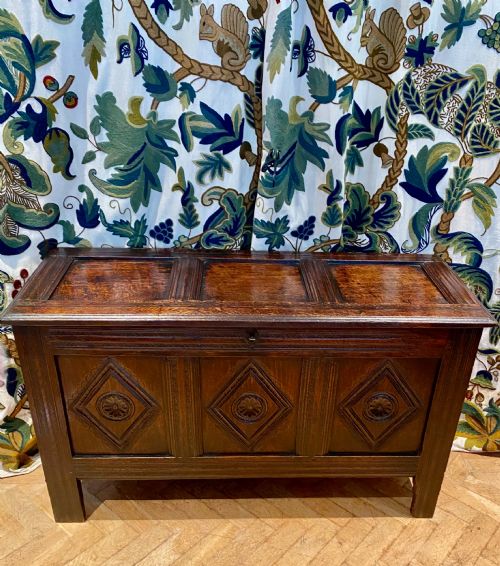
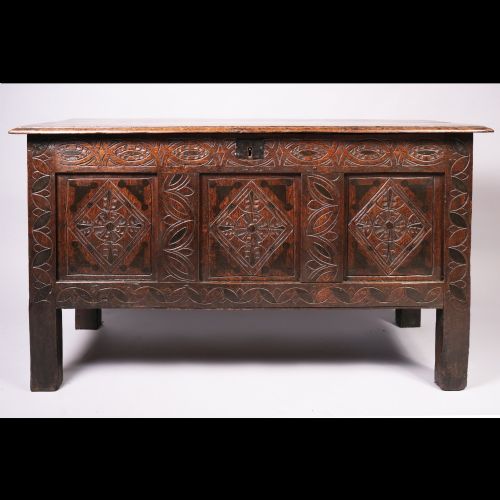


Carved Lozenge Oak Coffer
A carved lozenge oak coffer offers robust period storage, bringing substantial timber construction and geometric ornament straight into a room.
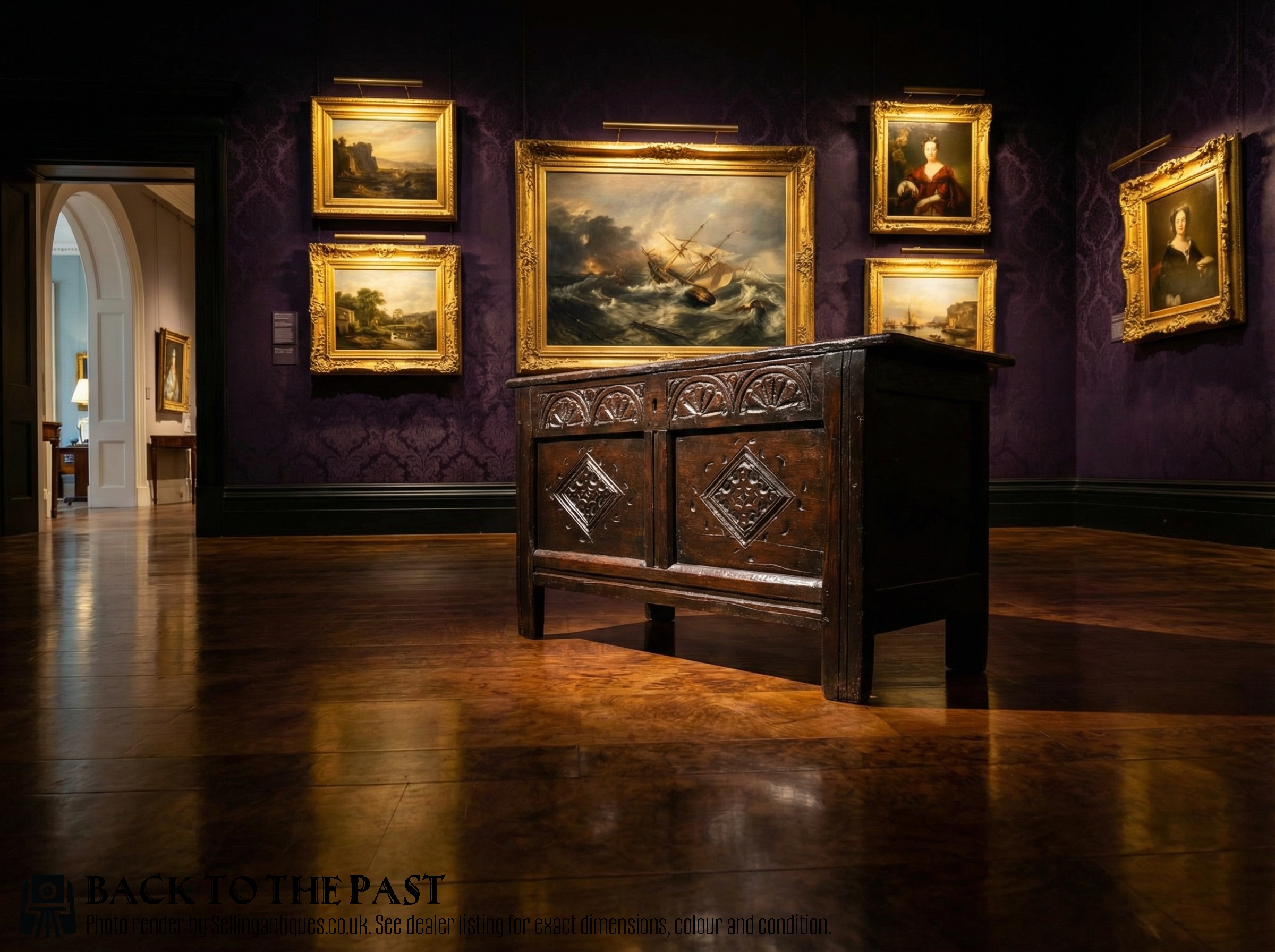
Carved Lozenge Oak Coffer
When you search for a carved lozenge oak coffer, you are looking at heavy timber storage chests defined by geometric lozenge patterns carved into their wooden panels. The examples you meet on this page span several centuries, with the earliest pieces originating in the sixteenth and seventeenth centuries alongside later revival interpretations made in the nineteenth century.
These chests take various forms, including regional English and Welsh variants such as Dorset and Yorkshire pieces, as well as simpler plank constructions. They serve primarily as blanket chests and storage trunks, utilising solid construction that has survived generations of domestic use.
How they were made
The primary material across these pieces is solid oak, occasionally joined by walnut or enhanced with ebonised wood details and contrasting iron or brass hardware. Construction methods range from simple five-plank assemblies to sophisticated panelled frames held together with traditional joinery.
Carving and inlay techniques define the decoration, utilising chisel work to create the signature lozenge motifs, leaf patterns and architectural panels seen across the fronts of the chests.
Many seventeenth-century coffers still bear the distinct carpenter's assembly numerals carved in hidden spots to keep the heavy oak panels matched correctly.
What varies in quality
The distinction between pieces rests upon the crispness of the original carving and the integrity of the timber. Sharp, deeply cut lozenges executed by contemporary hands carry greater aesthetic weight than softened or later recut surfaces.
Proportion and regional character also separate examples, with well-balanced panels and untouched original surfaces holding more presence in a room than heavily restored or clumsily altered carcases.
The Carved Lozenge Oak Coffer Glossary
- Lozenge
- A diamond-shaped geometric motif frequently carved into the front panels of seventeenth-century furniture. This shape forms the primary decorative focus of the pieces gathered here.
- Five plank coffer
- A primitive chest construction method utilising five distinct boards joined at the edges to form the box. This sturdy technique represents some of the earliest surviving storage chests.
- Jacobean
- A stylistic period spanning the early seventeenth century characterised by heavy proportions and geometric ornamentation. Pieces from this era often feature deep relief carving.
- Panelling
- A method of framing timber where thinner boards sit within grooved stiles and rails to accommodate wood movement. This technique prevents major splitting in large storage chests.
- Ebonised
- Wood treated with a chemical or dark finish to imitate expensive ebony. Makers applied this technique to create high-contrast decorative highlights on oak furniture.
Carved Lozenge Oak Coffer: Frequently Asked Questions
What is a carved lozenge oak coffer?
A carved lozenge oak coffer is a heavy wooden storage chest featuring geometric diamond motifs carved into its front panels. These pieces date principally from the sixteenth through to the nineteenth centuries.
They function as durable furniture items designed originally for storing textiles, blankets and valuables in domestic interiors.
How were these coffers used originally?
These chests served primarily for storing household linens, woollen blankets, clothing and precious documents in homes. Their robust construction allowed them to double as seating benches or tables when necessary.
Because they were heavy and secure, families often used them to store their most valuable possessions safely away from damp floors and pests.
How do I date a seventeenth-century coffer?
Dating relies upon examining the construction joints, timber tool marks, regional styles and the nature of the carved decoration. Early pieces utilise pegged mortise and tenon joints alongside hand-riven oak boards.
Later nineteenth-century revival pieces often display machine sawing marks, regular modern fixings, or softer timber handling that distinguishes them from period work.
Where should I place an oak coffer?
An oak coffer suits placement at the foot of a bed, along an entrance hallway, or as a focal point in a living space. Its flat top offers a convenient surface for displaying objects.
Keep such timber pieces away from direct heat sources and dramatic humidity changes to prevent the solid oak panels from splitting or warping over time.