


Carved Lion Head Furniture
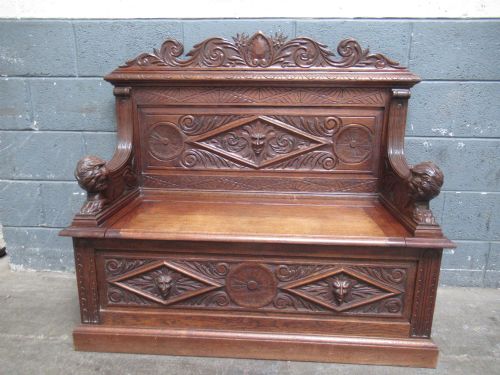
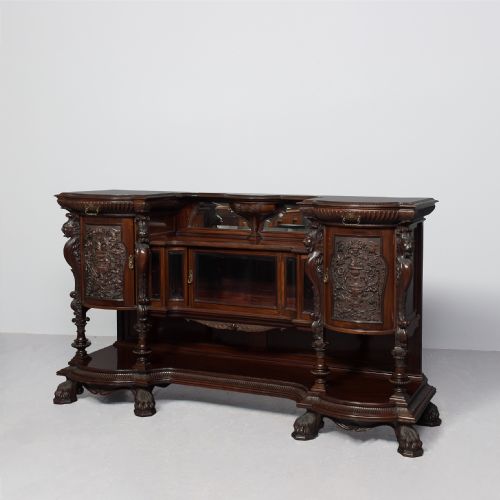
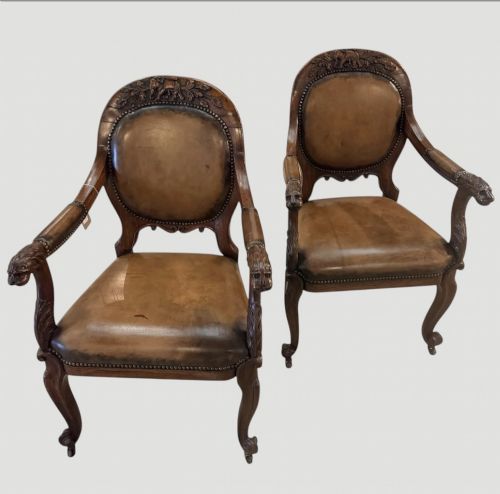
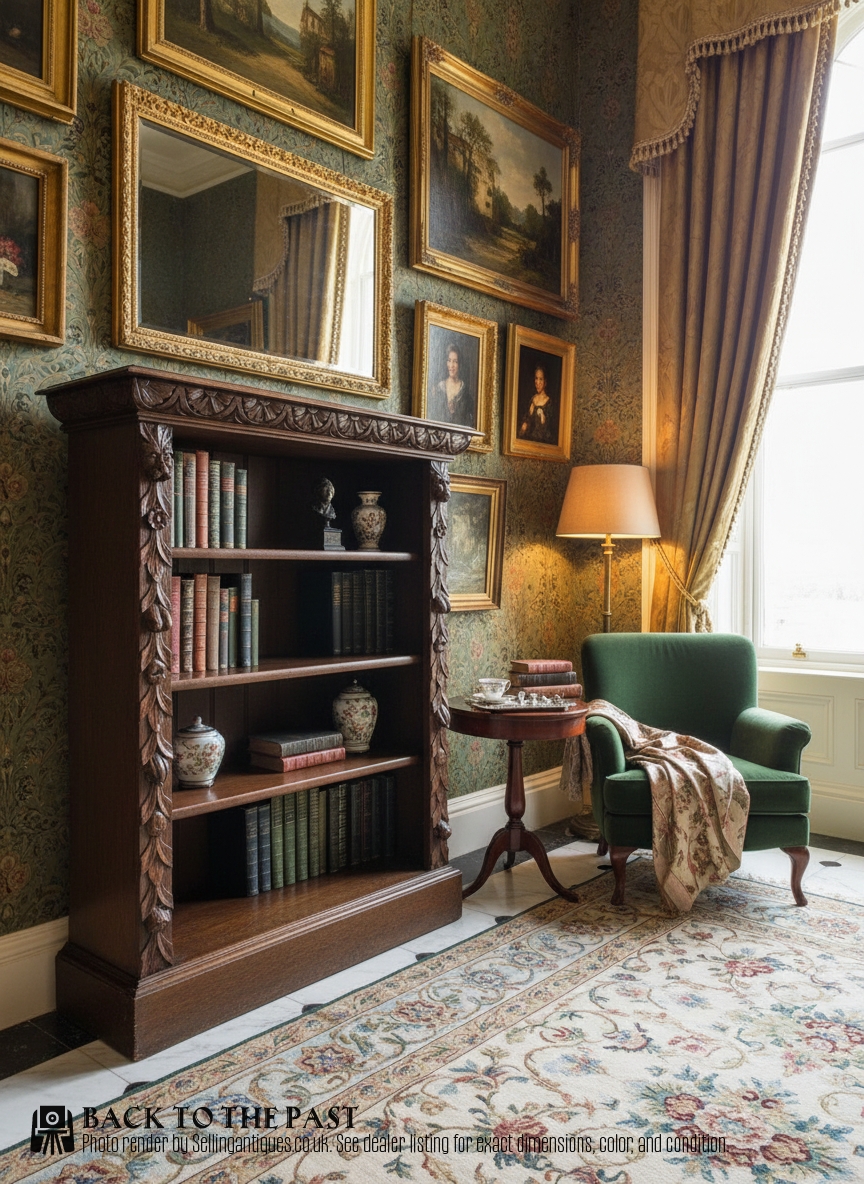
Carved lion head furniture brings bold timber detailing into rooms through seating, storage, and desks.
Carved Lion Head Furniture
The selections on this page feature oak, mahogany, and rosewood forms spanning periods from the eighteenth century to the twentieth century. Common examples include hall benches, armchairs, cupboards, and footstools produced across various regional styles.
Makers from the Victorian era onward utilised these powerful sculptural motifs on functional items like writing desks and sideboards. These works reflect stylistic revivals including Jacobean, Tudor, and Neoclassical traditions.
How they were made
Joinery techniques combined traditional mortise and tenon construction with turned supports and applied mouldings. Surfaces were finished with polishes and waxes that highlighted the natural grain variations of the timber alongside the carved details.
What varies in quality
The depth and precision of the hand-carving separate standard production pieces from finer examples. Sharp undercut details and naturalistic proportions in the timber indicate skilled handwork rather than mechanical copying.
The choice of primary timber influences the overall character and durability of the piece. Dense native and exotic hardwoods retain crisp carved edges over generations far better than softer substitute woods.
The Carved Lion Head Furniture Glossary
- Monks bench
- A convertible piece of furniture featuring a hinged top that folds down to form a table. This dual-purpose form often incorporates carved panels and arm supports.
- Rosewood
- A dense, heavily figured exotic timber valued for dark grain patterns and smooth finishes. It appears frequently in library and side chairs from the Georgian period.
- Mirror-back
- A wooden cabinet or sideboard incorporating an integrated mirror plate within the upper framework. This reflective panel brightens the surrounding timber structure.
Carved Lion Head Furniture: Frequently Asked Questions
What periods do these pieces come from?
The available inventory spans from the Georgian era through the Victorian period and into the early twentieth century. Pieces from the eighteen-eighties sit alongside earlier Georgian library chairs and later Edwardian stools.
Each period brought distinct revival styles, ranging from Tudor and Jacobean influences to French Provincial and Neoclassical designs executed in oak, mahogany, and rosewood.
How were these carved elements used?
Carved lion heads served as arm terminals on seating, drawer pulls on desks, and structural accents on bench ends and cabinet corners. These sculptural additions transformed utilitarian objects into decorative focal points.
Craftsmen integrated the feline motifs directly into the solid timber framework of hall benches, armchairs, and sideboards across multiple stylistic traditions.
What styles influence this furniture?
The pieces draw upon a broad range of historical revivals including Tudor, Jacobean, Neoclassical, and Regency designs. Victorian and Edwardian makers reinterpreted these earlier aesthetic movements with heavy sculptural detailing.
Anglo-Indian and French Provincial traditions also appear, demonstrating how different regional workshops adapted carved ornamentation to standard furniture forms.