

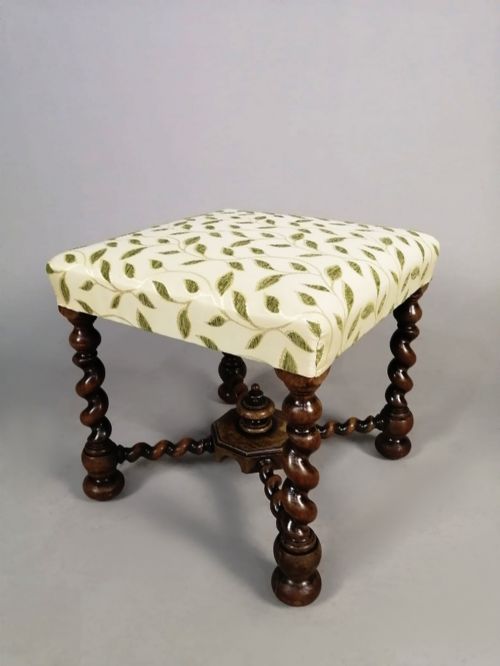
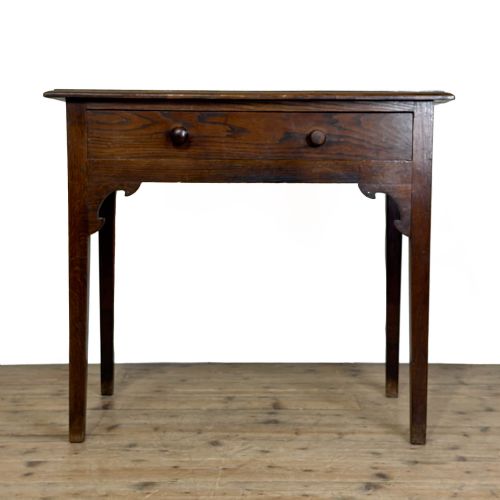
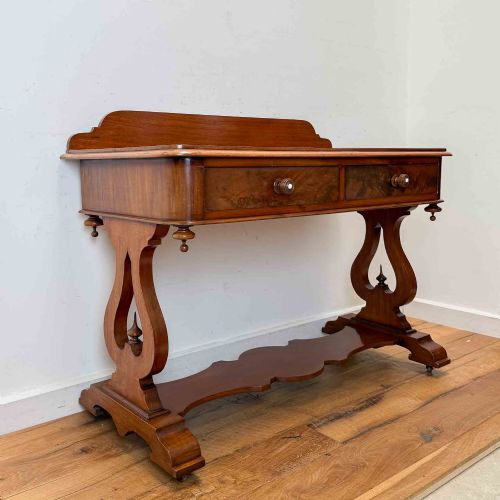
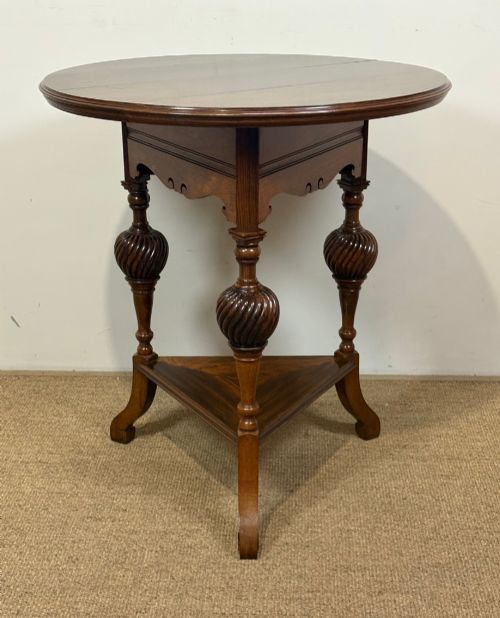
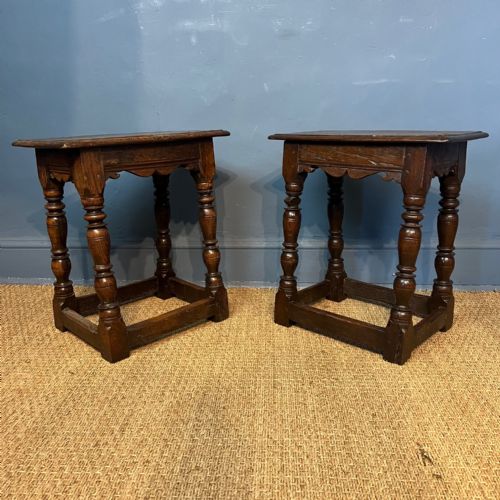
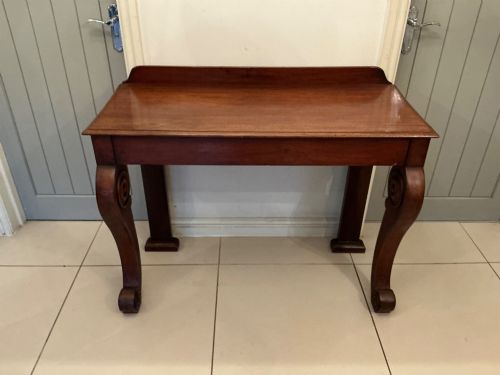
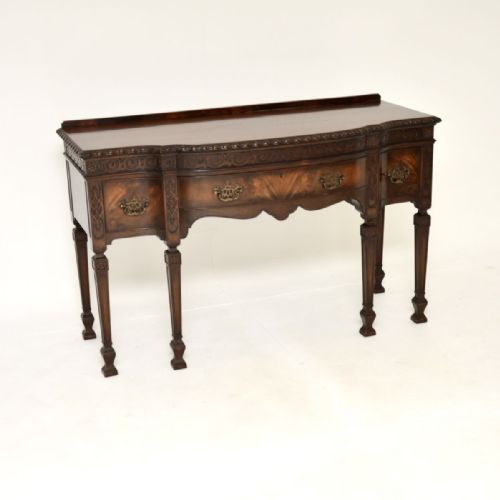
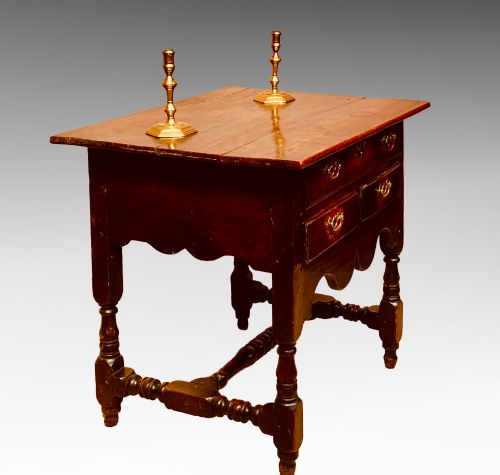
Carved Leg Wooden Table
These carved leg wooden table selections encompass centuries of craftsmanship, offering practical surfaces defined by detailed woodwork.
Carved Leg Wooden Table
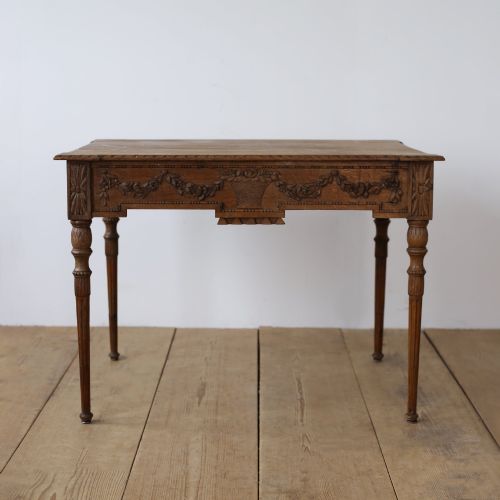
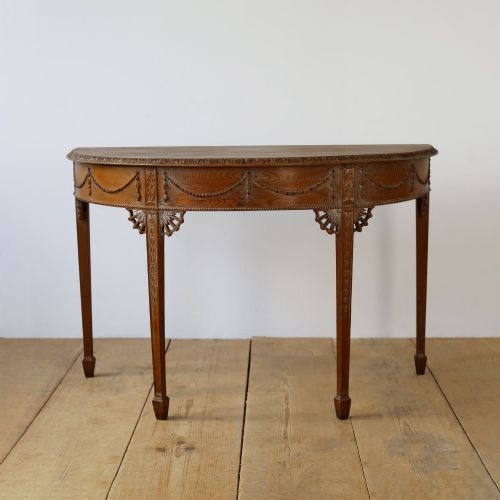
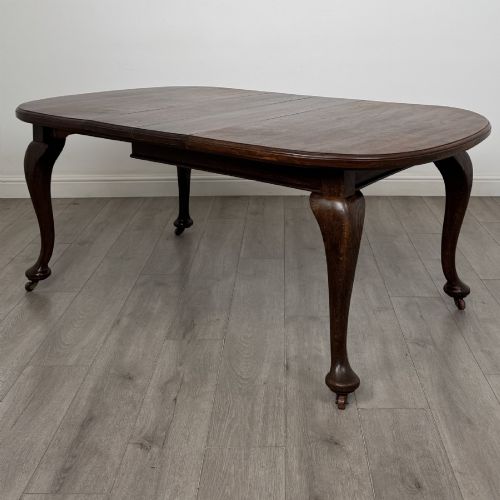
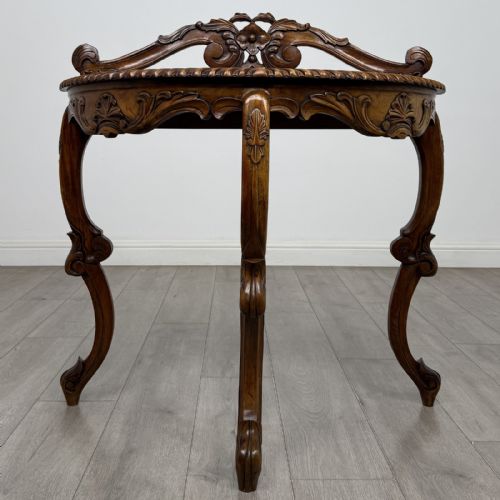
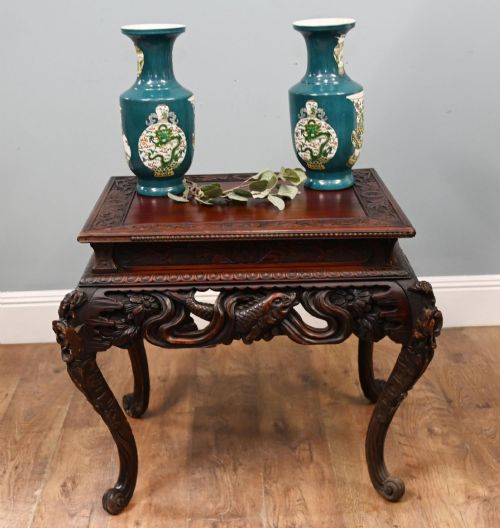
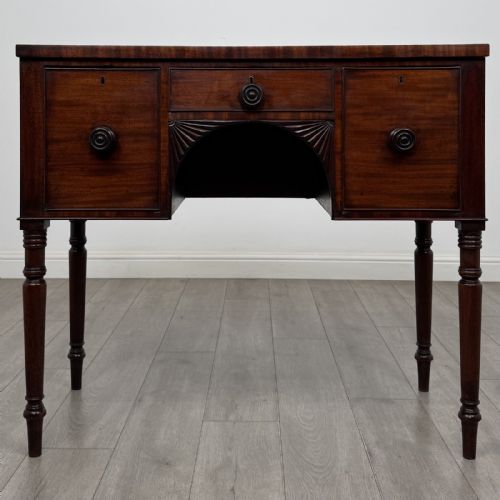
A carved leg wooden table brings functional surface area combined with sculptural timber detailing into a room. These pieces span dining tables, side tables, occasional tables, and desks originating from periods such as the eighteenth century, the Victorian era, and the early twentieth century.
The version most commonly encountered on this page is the oak or mahogany dining or occasional table featuring carved legs. These range from heavy refectory formats to lighter tripod and drop-leaf designs.
Makers and workshops across Britain, France, and India utilised regional hardwoods to construct forms influenced by Jacobean, Queen Anne, and Arts and Crafts styles. Each piece demonstrates how structural supports receive decorative attention through turning and carving.
Materials and construction methods
Construction relies heavily on dense timbers such as oak, walnut, mahogany, elm, and rosewood. Craftsmen selected these woods for their structural integrity and ability to hold crisp carved details on legs, aprons, and edges.
Joinery techniques like mortise and tenon secure the frames, while turning lathes and hand chisels shape the distinctive legs. Marquetry inlays, marble tops, and brass accents occasionally complement the primary wooden structures.
Carved Leg Wooden Table Retail Price Guide 2026
Typical asking prices for carved leg wooden table among the pieces listed under this phrase on Sellingantiques today, from the lower quarter to the upper quarter. They describe what is for sale here now, not the wider market.
Listings feature oak, walnut, mahogany, elm, and rosewood across dining, occasional, and writing tables spanning the seventeenth to twentieth centuries.
Evaluating craftsmanship and proportion
Quality rests in the harmony of proportion between the carved legs and the top surface. Superior examples display deeply chiselled motifs that integrate seamlessly with the structural frame rather than appearing as an afterthought.
The selection of timber grain, the tightness of the joinery, and the retention of original surface patination distinguish finer pieces. Honest wear on the wood indicates age and usage over decades or centuries.
Liberty and Co
The Carved Leg Wooden Table Glossary
- Refectory table
- A long dining table historically used in communal halls and characterised by sturdy legs connected by longitudinal stretchers. These tables often feature substantial oak tops and carved bases.
- Drop leaf table
- A table with hinged flaps on either side that fold down to save space or lift up to extend the surface area. Supports swing out to hold the leaves in place.
- Tripod table
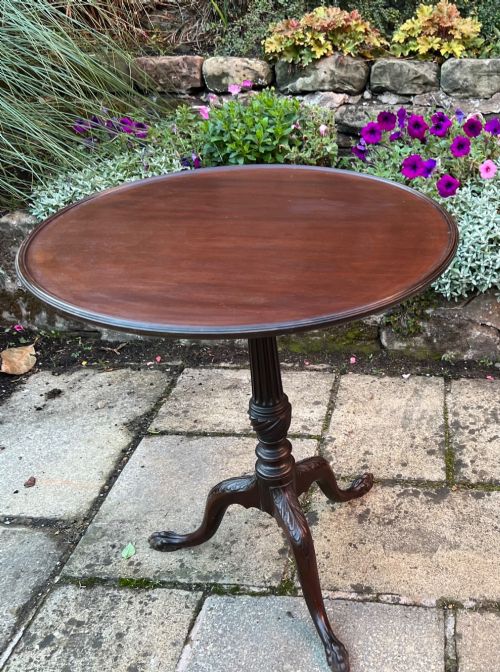
- A small occasional table supported by a single pillar resting on three carved or turned legs. This design provides stability on uneven floors.
- Marquetry
- Decorative veneer work arranged in geometric or pictorial patterns using various coloured woods. Craftsmen apply these thin pieces onto the surface of furniture.
- Claw and ball foot
- A furniture foot carved to resemble an animal's claw grasping a spherical ball. This decorative feature appears frequently on eighteenth-century and revival dining tables.
Carved Leg Wooden Table: Frequently Asked Questions
How do I care for a wooden table surface?
Maintain the timber by dusting regularly with a soft cloth and avoiding placement near direct heat sources or strong sunlight.
Apply occasional natural wax feeds to nourish the grain and preserve the historic finish without building up heavy chemical layers.
Where should I place an occasional table?
Position these versatile pieces beside seating areas to hold lamps, books, or drinks within easy reach. Smaller tripod and drop-leaf formats fit well in corners or narrow hallways.
Ensure the scale matches surrounding furniture to maintain clear pathways through the room.
What defines a refectory dining table?
Refectory tables feature elongated rectangular tops supported by sturdy legs linked together by low stretchers for extra stability. They originate from communal dining halls.
Revival versions from the early twentieth century continue this robust format using solid oak.
How do I identify the period of a table?
Examine the wood species, tool marks left by manufacture, and the specific style of the carved legs. Eighteenth-century examples often use ash, Spanish walnut, or early oak, whilst Victorian pieces frequently employ mahogany or walnut.
Stylistic revivals during the Edwardian era borrow heavily from earlier centuries, so construction joints help confirm the actual date.