
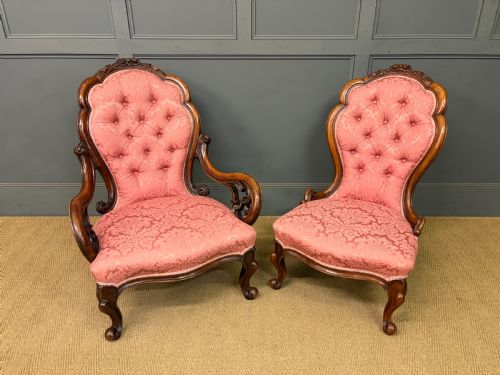


Carved Leg Slipper Chair
A carved leg slipper chair is a low-seated, upholstered form designed for nineteenth-century dressing rooms and parlours, prized for its intimate scale and ornamental woodwork.
How they were made
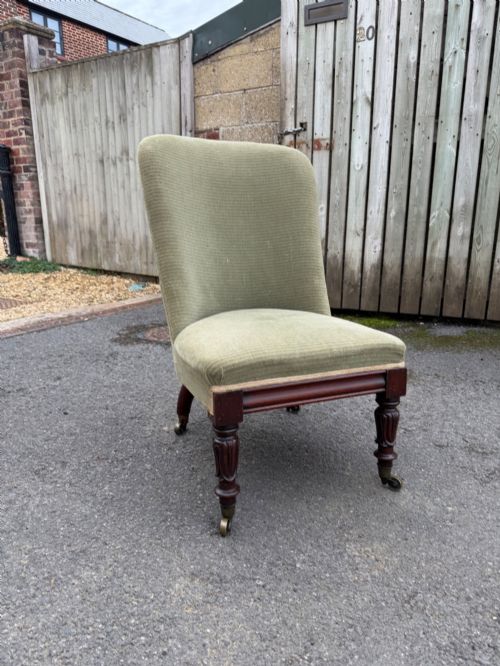
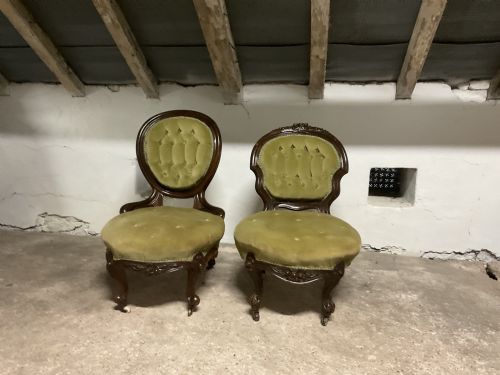
Makers constructed the structural frames of these chairs from dense hardwoods, predominantly walnut, mahogany, and rosewood, selected for their stability and capacity to hold intricate hand-carved ornamentation. Joinery relied on traditional mortise and tenon techniques to support the stress placed on low-slung, angled seat rails.
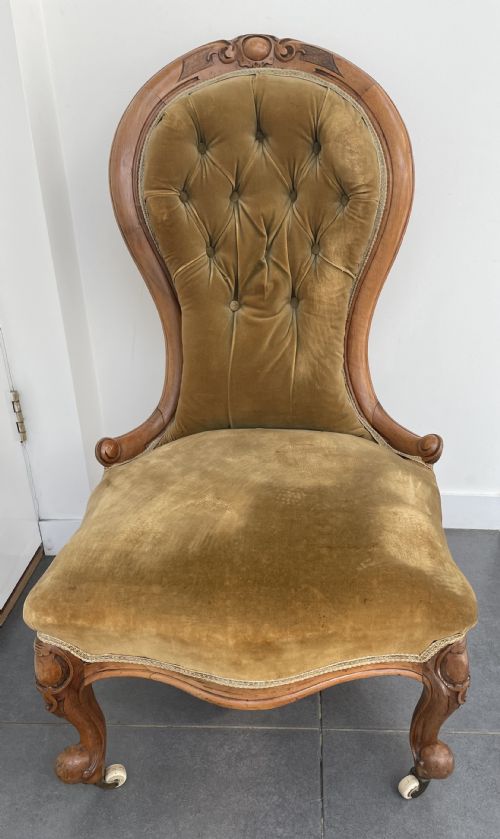
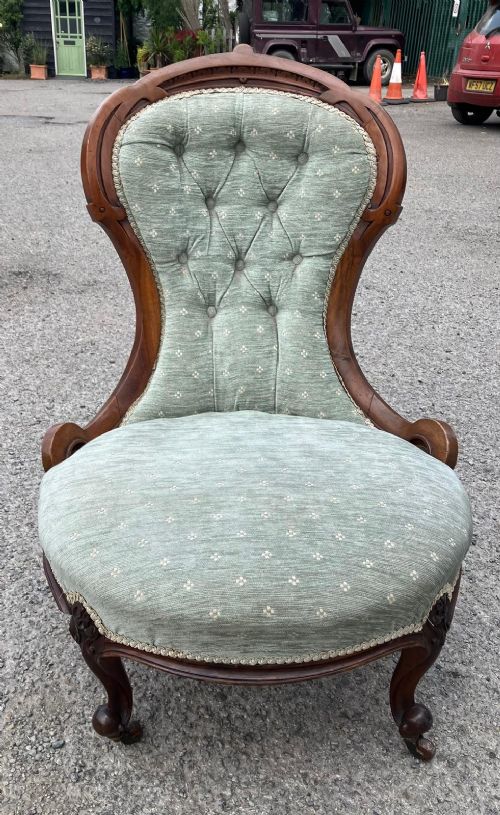
Upholstery techniques involved webbed foundations, springs, and stuffing layered beneath top fabrics such as velvet, tapestry, and plain textiles. Decorative elements included turned or cabriole legs, brass fittings, and ceramic castors that permitted mobility across carpets in period bedchambers.
What varies in quality
The refinement of the timber carving sets individual examples apart, distinguishing mass-produced commercial seating from bespoke commissions with deep relief work and fluid cabriole lines. Timber selection dictates the visual depth of the grain, particularly in highly figured walnut and rosewood frames.
Proportion and structural integrity define the higher tiers of the range. Chairs maintaining balanced low profiles with robust internal joinery demonstrate superior craftsmanship compared to simpler, heavier forms lacking architectural grace.
Many of these low-slung seats roll about on tiny porcelain wheels, proving that even a Victorian lady appreciated a chair with smooth mobility.
The Carved Leg Slipper Chair Glossary
- Nursing chair
- A low-seated upholstered chair designed during the nineteenth century to facilitate infant feeding and dressing.
- Cabriole leg
- A furniture leg featuring a double curve, typically arching outward and tapering inward to a pad or scroll foot.
- Prie dieu
- A devotional prayer chair characterised by a high back and a narrow upper shelf intended for kneeling and leaning.
- Spoon back
- A padded chair back shaped in the concave contour of a spoon to fit the human spine.
- Button back
- An upholstery technique where depressions are formed in the padding by stitches pulled tight and secured with covered buttons.
Carved Leg Slipper Chair: Frequently Asked Questions
Where were slipper chairs used?
These low seats belonged primarily in nineteenth-century bedrooms and dressing chambers where occupants changed shoes and clothing. Their compact height suited private domestic spaces rather than formal drawing rooms.
Over time, collectors relocated them to sitting rooms and libraries, valuing their small scale and decorative woodwork as accent pieces.
How do I identify a Victorian example?
Victorian pieces typically employ dense hardwoods like walnut and rosewood combined with deep buttoning and scroll-carved frames. The presence of ceramic castors on turned legs often points to this mid-to-late nineteenth-century window.
Upholstery fabrics frequently include period-appropriate velvets and tapestries, though many surviving frames have undergone later re-covering.
Are nursing chairs the same?
Nursing chairs share the characteristic low seat height of the slipper chair category, designed specifically for comfort during domestic tasks. Historical listings often group these terms interchangeably alongside boudoir and occasional chairs.
Minor variations in back height and carving distinguish specific functional types, such as prayer chairs with integrated upper shelves.
What woods were used?
Cabinetmakers relied on durable imported and domestic hardwoods capable of supporting intricate hand-carved details. Walnut and mahogany appear most frequently across surviving examples from the nineteenth century.
Rosewood frames also occur in high-status drawing room and salon pieces, prized for their rich dark grain and polished finish.