

Carved Leather Top Table
A carved leather top table brings together timber and tooled hide to anchor a study, library or writing room with traditional utility.
Carved Leather Top Table
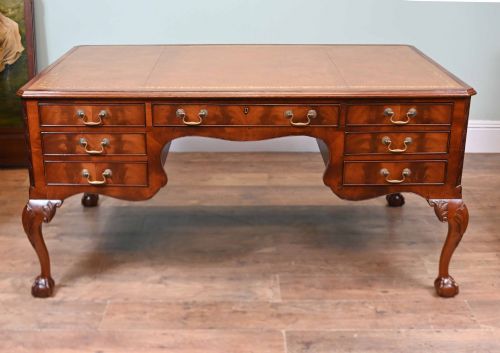
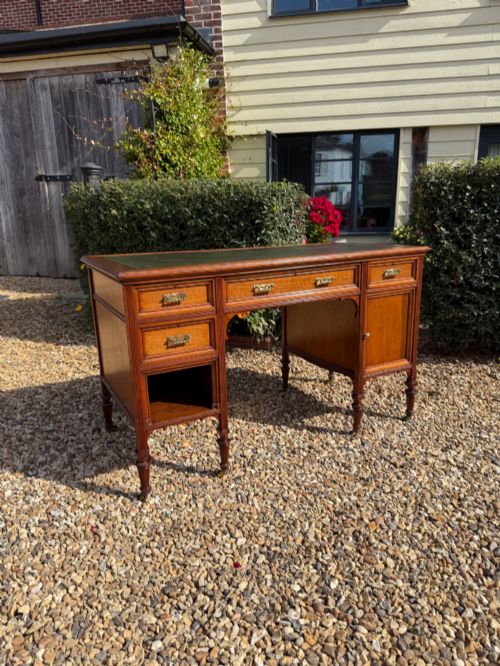
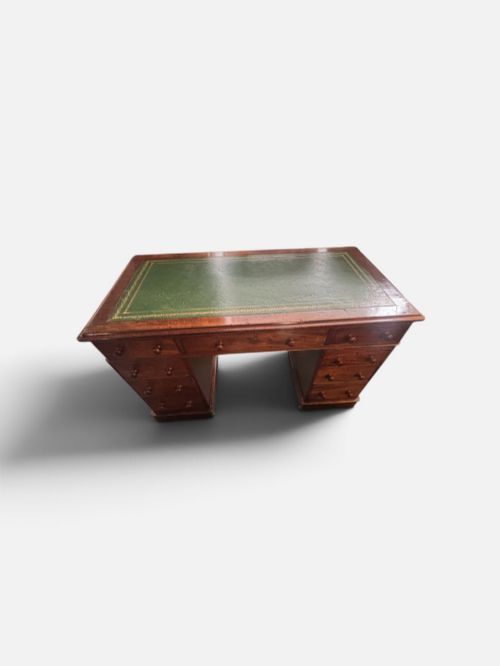
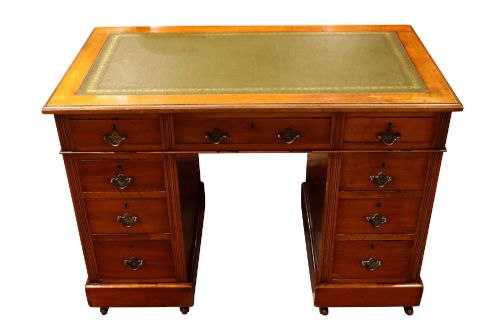
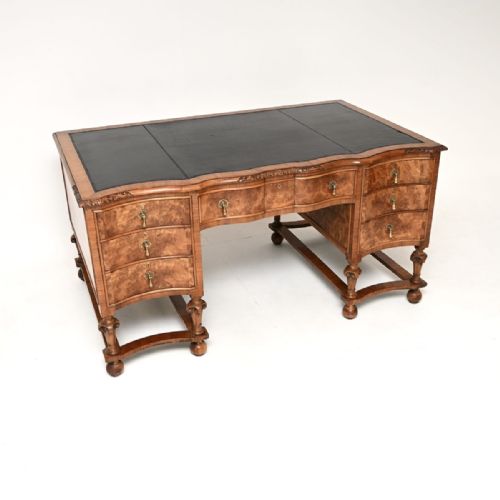
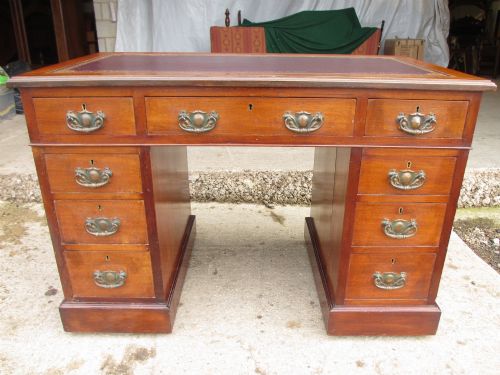
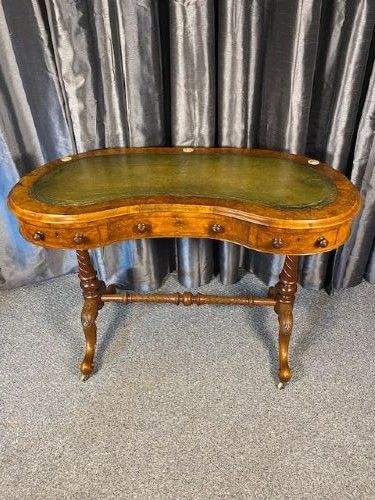
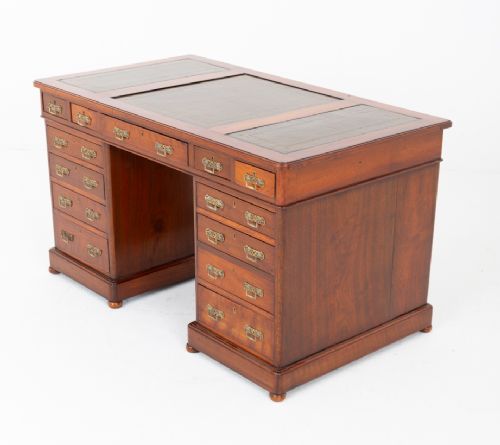
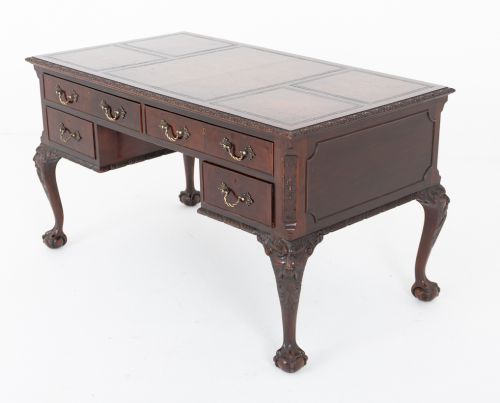
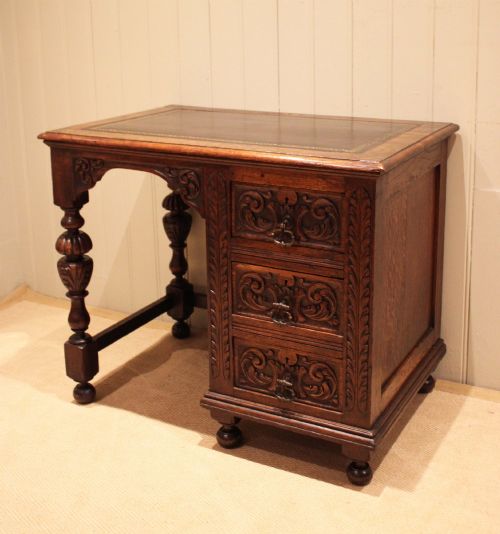
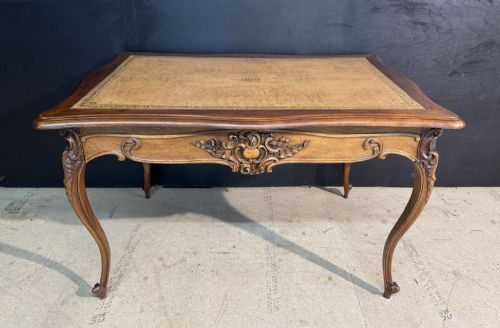
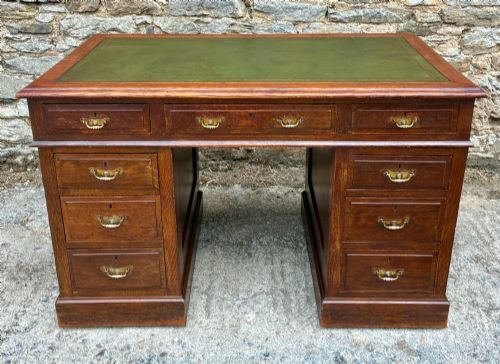
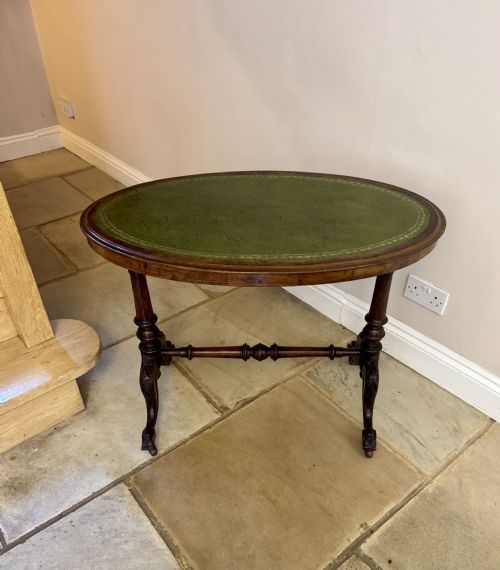
When you search for a carved leather top table, you encounter substantial writing desks, library tables, and pedestal forms dating from the nineteenth and early twentieth centuries. These pieces encompass sturdy oak library tables, figured walnut partner desks, and mahogany writing tables outfitted with leather surfaces.
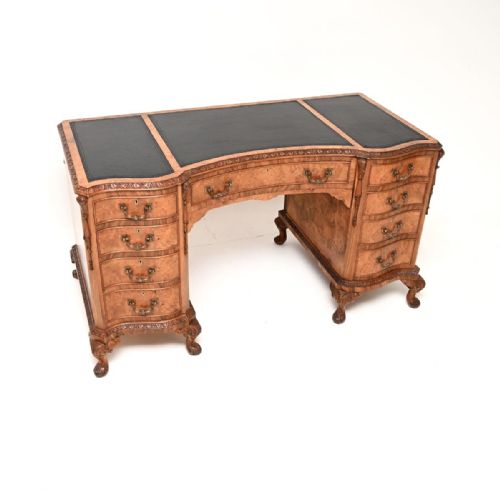
The versions most common on this page are Victorian and Edwardian pedestals and writing tables, often rendered in walnut or mahogany with carved details. They served as working furniture for offices and libraries, combining spacious timber frames with durable writing surfaces.
Materials and construction
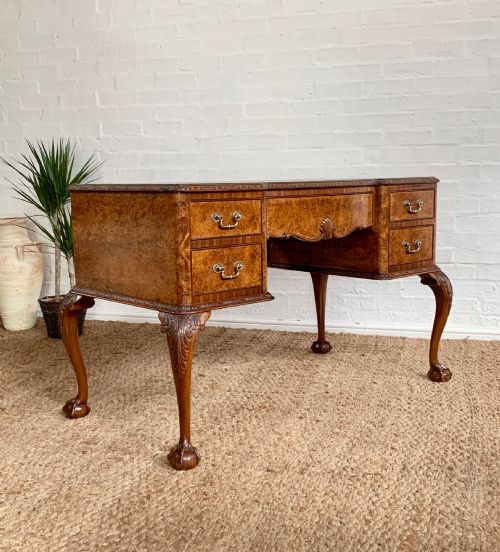
Cabinet makers utilised dense hardwoods such as mahogany, walnut, and oak to build the structural frames and pedestals. Burr walnut and figured veneers frequently appear on the drawer fronts and primary surfaces to add visual depth.
Writing surfaces employ supple leather inset into the timber top, frequently finished with blind or gilt tooling along the borders. Carved ornamentation, from floral motifs to rope twist mouldings, decorates the legs, pedestals, and friezes.
Charles Dickens desks appear here alongside royal commemorative leather surfaces, proving writers and monarchs shared a fondness for a good writing hide.
Assessing quality
The standard of a piece rests on the selection of timber veneers and the crispness of the carved details executed by the cabinet maker. Uniform figuring in the walnut or mahogany and deep, deliberate carving elevate an example above standard utility pieces.
Proportion and structural integrity define the better specimens, where drawers run smoothly and the leather insert integrates cleanly into the surrounding wood frame. Maker attribution and refined secondary woods further separate standard examples from notable workshops.
Maple and Co·James Shoolbred and Co·Edwards and Roberts·James Mein of Kelso·Gillows
The Carved Leather Top Table Glossary
- Pedestal desk
- A heavy writing table supported by two banks of drawers rather than four separate legs. This form provides substantial storage beneath the main writing surface.
- Partners desk
- A large double-sided writing table designed for two people to work opposite one another. These pieces feature drawers or cupboards on both long sides.
- Library table
- A large freestanding table used originally in large rooms for books and papers. They often feature a rectangular or circular top with a leather writing insert.
- Tooled leather
- Leather decorated with heated brass tools to impress patterns, lines, or royal ciphers around the perimeter of the writing surface. This technique adds both grip and decoration.
- Gueridon
- A small decorative freestanding table originating in France. These tables often stand on a central pillar or tripod base.
Carved Leather Top Table: Frequently Asked Questions
What is a partner's desk?
A partner's desk is a large double-sided writing table built with drawers and cupboards accessible from both faces. It allowed two people to work opposite each other in a shared study or library.
These pieces typically feature expansive leather inserts and substantial timber construction in mahogany or walnut. They represent some of the largest and most functional workspace furniture from the nineteenth century.
How do I care for the leather top?
The leather writing surface requires gentle cleaning with a slightly damp cloth followed by occasional treatment with appropriate leather dressings to prevent drying. Avoid harsh chemical cleaners and excessive moisture.
Keeping the room humidity stable helps protect both the inset hide and the surrounding wood framework. Regular light dusting preserves the gilt tooling along the borders.
Were these tables used in offices?
These tables served primarily in private libraries, studies, and grand homes rather than commercial offices. Wealthy professionals, scholars, and landed gentry utilised them for correspondence and estate management.
Their robust construction in oak, walnut, and mahogany ensured they withstood daily use by generations of writers and readers.
How do I distinguish Victorian from Edwardian desks?
Victorian desks generally display heavier proportions, darker woods, and more robust carving influenced by Gothic or Renaissance revivals. Burr walnut and rich mahogany dominate this earlier period.
Edwardian examples often show lighter scales, finer veneers, and sleeker lines drawing on Georgian revival styles. Satinwood and lighter walnut finishes become more prevalent toward the turn of the twentieth century.