


Carved Ladder Back Chair
A carved ladder back chair brings distinct upright presence and shaped slats to a room, offering sturdy seating grounded in traditional craft.
Carved Ladder Back Chair
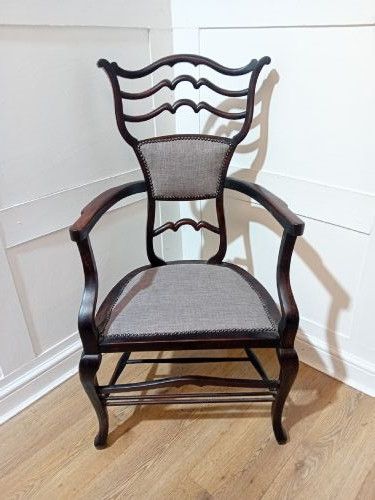
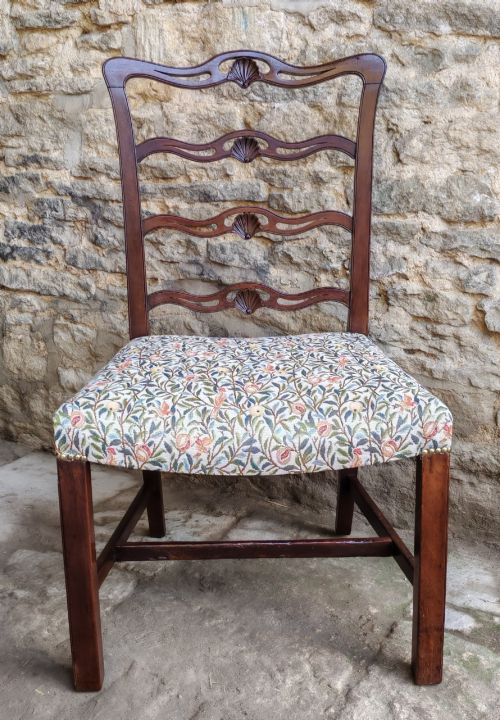
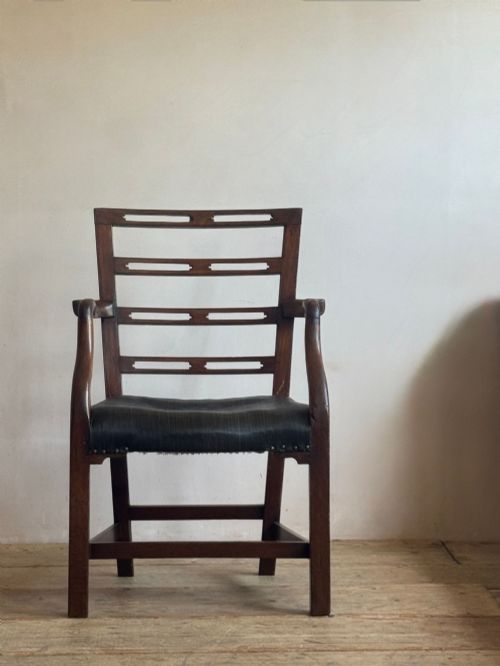
A carved ladder back chair is a traditional seating form defined by horizontal back slats rising between two upright posts. Buyers searching for a carved ladder back chair encounter variations ranging from country kitchen seating to formal dining sets.
The pieces appearing on this page span several centuries and styles, including Georgian, Edwardian, and French provincial designs. Makers utilised timbers such as mahogany and oak, fitting them with rush, fabric, or leather seats.
How they were made
Cabinetmakers shaped dense hardwoods like mahogany and oak into upright posts and curved horizontal slats, often adding carved details to the crest rails. Joints were typically pegged or tenoned to withstand daily use in dining rooms and parlours.
Seats were woven from natural cordage like rush or upholstered with fabric, tapestry, and leather, secured using upholstery studs. Some examples incorporated brass fittings or sat upon wheels for mobility in libraries and offices.
Listings span several eras, recording periods from the eighteenth century through the Edwardian period with materials including mahogany, oak, rush, and leather.
What varies in quality
The calibre of a carved ladder back chair rests upon the crispness of the carving on the slats and the selection of the timber. Dense, well-figured mahogany or sturdy oak denotes a higher grade of production.
Construction integrity dictates long-term value, visible in the tightness of the joinery and the durability of the rush or upholstery work. Pieces retaining their original seat material command greater interest from collectors.
The Carved Ladder Back Chair Glossary
- Ladder back
- A chair featuring a series of horizontal wooden slats between the upright back posts. These slats are frequently shaped or carved.
- Rush
- A marsh plant woven tightly to form traditional seat pads. It provides a durable and flexible surface for daily sitting.
- Crest rail
- The uppermost horizontal member of a chair back. This section often bears the primary carving or decorative motif.
- Stile
- The vertical upright post forming the outer edge of the chair back. It provides the main structural support for the slats.
Carved Ladder Back Chair: Frequently Asked Questions
What is a ladder back chair?
A ladder back chair is a seating form featuring horizontal wooden slats arranged between two vertical posts, resembling the rungs of a ladder. These slats are often shaped or carved to add decorative refinement.
They appear in various forms across different centuries, ranging from simple country kitchen seating to formal dining chairs made of mahogany.
Where were these chairs used?
These chairs served multiple rooms in historical homes, functioning as dining seats, desk chairs, and fireside rocking chairs. Heavier armchairs often stood in studies or parlours, while lighter side chairs populated dining tables.
Country versions suited kitchens and farmhouses, whereas mahogany models furnished formal dining rooms and townhouses.
How do I clean rush seats?
Rush seats require gentle maintenance using a dry brush or a lightly damp cloth to remove dust from the woven strands. Excess moisture should be avoided to prevent the natural fibres from weakening.
Applying a specialist wax or protective spray is unnecessary and can damage the natural straw material over time.
Are these chairs comfortable?
Comfort depends on the rake of the back posts and the type of seat fitted to the frame. Woven rush provides a supportive, slightly yielding pad, while upholstered variants offer padded cushioning.
Upright ladder backs encourage good posture, making them suitable for long periods at a dining table or desk.