


Country House Desk Chair
A country house desk chair brings robust vernacular comfort and solid timber character to a home workspace.
Country House Desk Chair
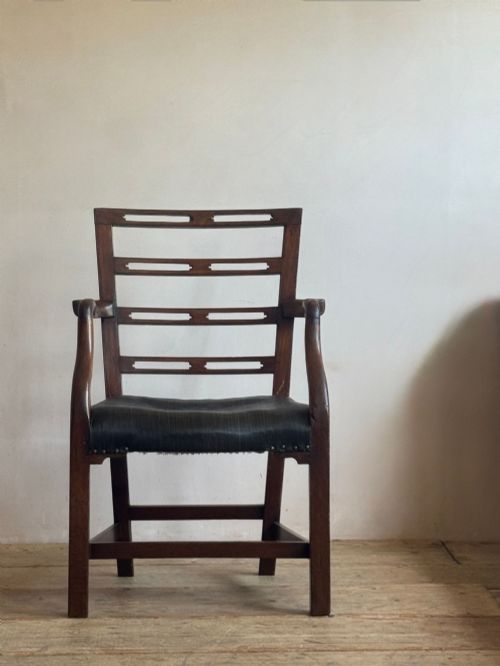
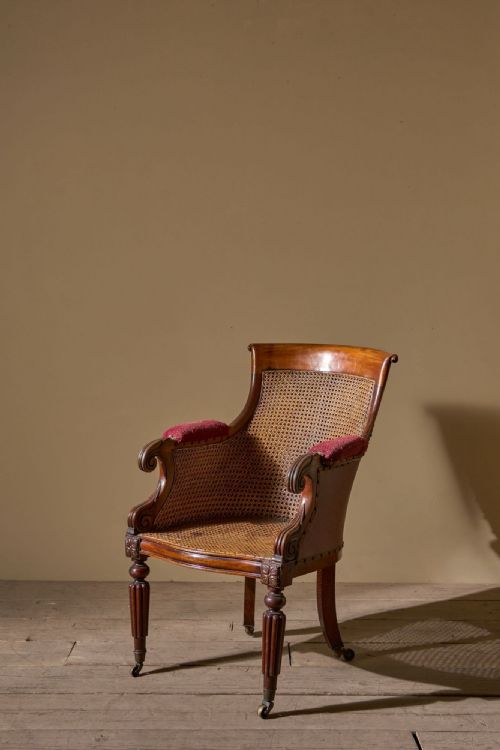
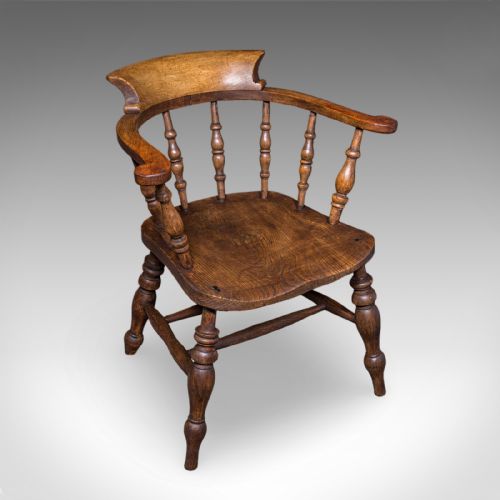
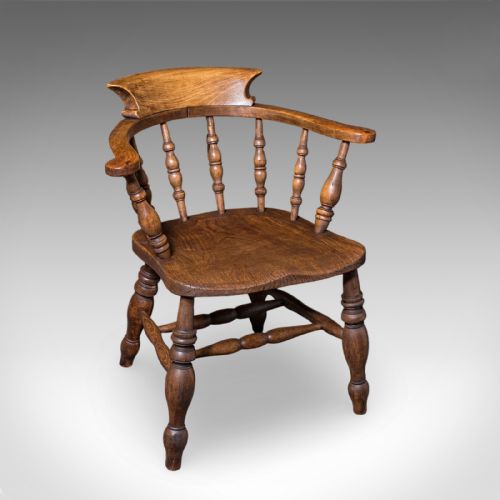
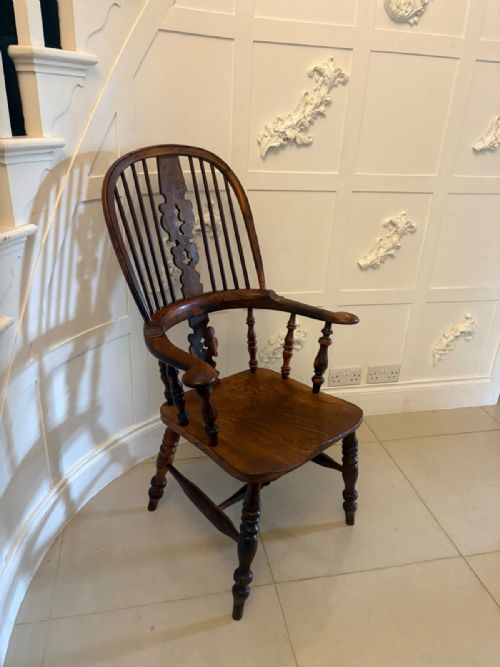
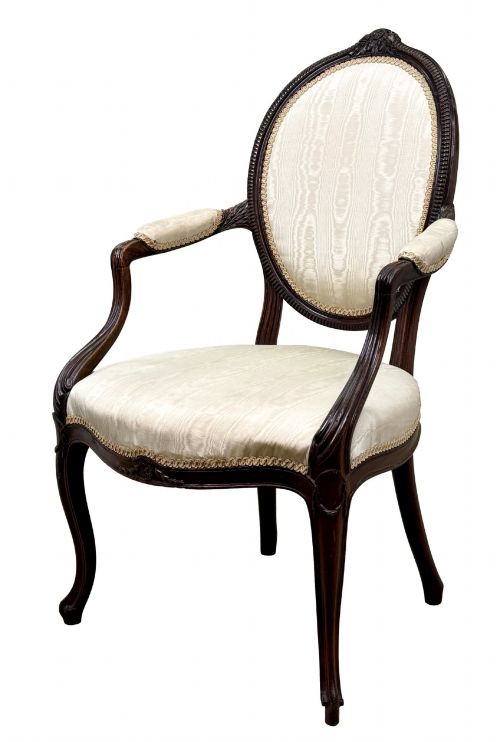
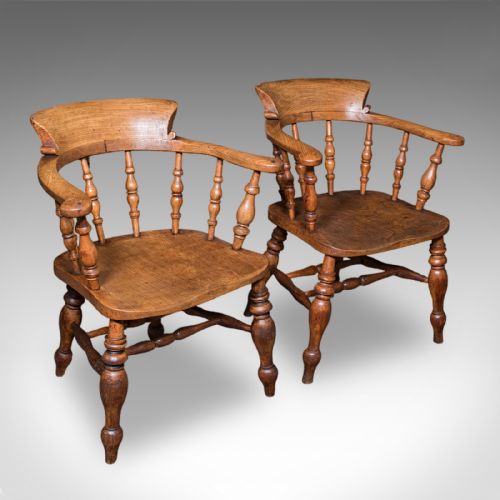
A country house desk chair encompasses sturdy utilitarian seating found across domestic studies and libraries, drawing from periods spanning the eighteenth century through to the Edwardian era. You will frequently encounter forms such as smokers bows, captain's chairs, and Windsor armchairs alongside mahogany library and Gainsborough chairs.
These pieces originate from vernacular traditions as well as formal Georgian and Victorian workshops, utilising regional timber types suited to daily sitting. Their domestic evolution prioritised accessible writing support and solid elbow room over rigid formality.
The selection ranges from elm and oak carver chairs with spindle backs to walnut library chairs fitted with leather upholstery. Each example demonstrates how provincial makers adapted standard seating forms for writing and desk work.
Materials and Construction
Makers utilised solid native timbers such as oak, elm, ash, and yew, often combining bentwood components with traditional joinery like wedged tenons. Windsor and spindleback frames rely on shaped seats bored to receive upright spindles and steam-bent hoops.
Mahogany and walnut appear in more formal library and Gainsborough variants, employing carved details and upholstered pads in leather, fabric, or needlepoint. Brass castors and wheel attachments feature on nineteenth-century desk variations designed for mobility.
Surface finishes range from scrubbed natural grain and polished wax to painted and distressed treatments accumulated through generations of domestic use.
Listings feature timbers including oak, elm, mahogany, yew, cherrywood, and walnut across Georgian, Victorian, and Edwardian periods.
Judging Quality
Quality rests in the integrity of the timber selection and the retention of original structural components rather than applied ornament. Chairs fashioned from solid yew, cherrywood, or figured walnut exhibit greater regional ambition than standard utility seating.
Proportion and comfort dictate the distinction between everyday workshop production and finer bespoke commissions. Subtle variances in arm scrollwork, hoop curvature, and saddle-seated depth separate standard regional output from exceptional vernacular craftsmanship.
Wheelers of Arncroach
The Country House Desk Chair Glossary
- Smoker's bow
- A sturdy low-backed armchair with a continuous bentwood rail forming the arms and crest, frequently utilised as a desk or smoking seat.
- Windsor chair
- A wooden chair constructed with a solid saddle-sculpted seat into which the legs and back spindles are directly joined.
- Carver chair
- An armchair traditionally placed at the head of a dining table or utilised as a substantial desk seat.
- Spindleback
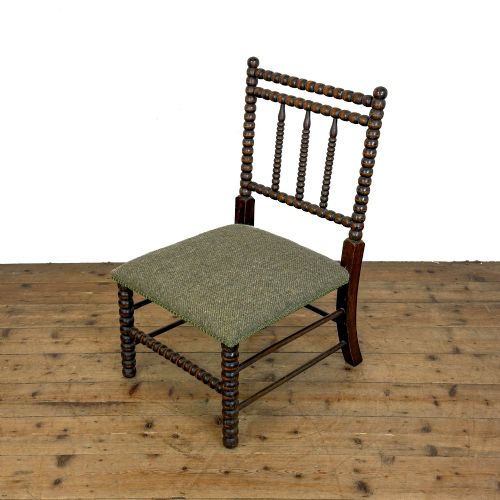
- A chair back constructed from a series of vertical turned wooden rods supporting the top rail.
Country House Desk Chair: Frequently Asked Questions
What defines a country house desk chair?
These seats combine robust domestic vernacular construction with comfortable proportions suited for writing and study environments.
They appear in various regional timber forms, from elm Windsor chairs to mahogany library seats mounted on castors.
How do I identify an eighteenth-century model?
Early pieces display hand-carved details, pegged mortise and tenon joints, and native woods like cherry and elm.
Simpler vernacular designs from this era prioritised functional ergonomics over formal stylistic conventions.
Are these chairs comfortable for daily use?
Most feature generous saddle-shaped wooden seats or upholstered pads designed for extended periods of reading and writing.
Their sturdy armrests and supportive hoop backs accommodate modern desk heights surprisingly well.
Where should I place one at home?
They suit studies, home offices, and reading corners where their timber patination adds warmth to the interior.
Wheel-mounted variants offer practical mobility across study floors.