




Vintage Chair on Wheels
These vintage chair on wheels selections bring together timber frames and iron castors for flexible seating.
Vintage Chair on Wheels
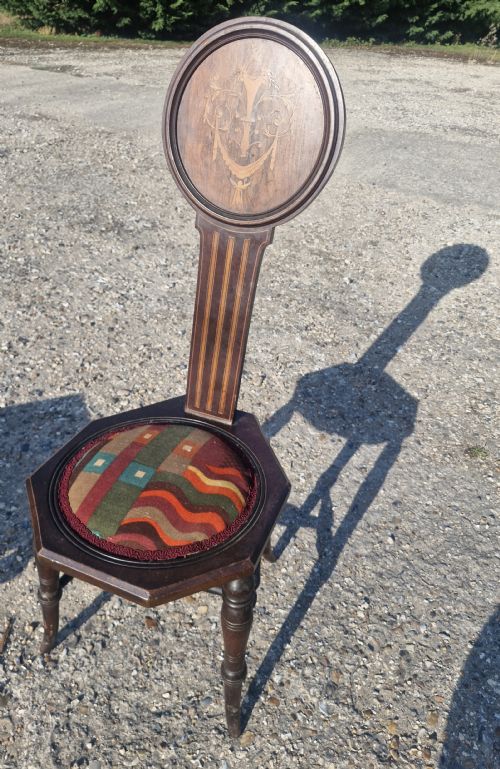
The forms range from kitchen dining sets and armchairs to low spinning chairs and reclining invalid models fitted with metal castors. These pieces originate across the nineteenth and early twentieth centuries, reflecting both Georgian country traditions and Victorian mechanical utility.
Materials and construction
Makers built these frames using traditional timbers including elm, beech, oak, yew, and mahogany, often pairing saddle seats with turned spindles. The rolling mechanism typically relies on brass and iron fittings attached to the base of the legs.
Joinery methods combine traditional Windsor construction with specialised mechanical frames seen in reclining and convalescing models. Painted continental highchairs and carved work stools demonstrate alternative surface treatments within the same broad period.
Object types include armchairs, dining chairs, desk chairs, Windsor chairs, highchairs, and medical scales.
Assessing quality and character
The distinction between standard utility seating and finer workshop pieces rests in timber selection and joinery depth. Figures utilising rich yew wood or well-figured elm command attention through grain depth and patination.
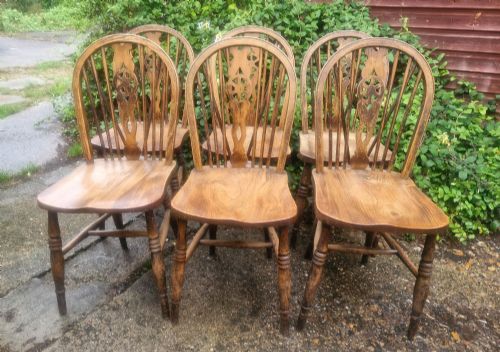
Originality of the castors and mechanical elements elevates certain armchairs and invalid seats above simpler kitchen variants. Harmonious sets, such as matched groups of wheel-back dining chairs, demonstrate greater uniformity in turning and finish.
S&H Jewell·Foot and Son·John Ward
The Vintage Chair on Wheels Glossary
- Wheelback
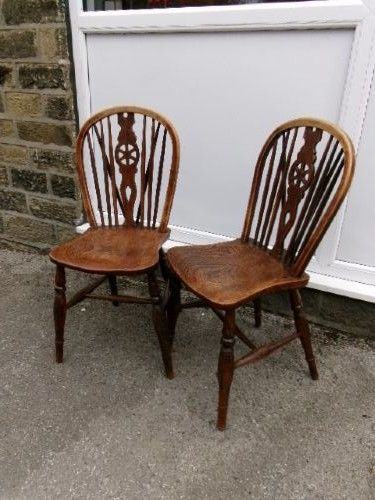
- A Windsor chair design featuring a wheel motif carved or pierced into the central splat. This detail appears frequently in nineteenth-century kitchen and dining seating.
- Castor
- A small wheel mounted on a swivel assembly attached to the bottom of a chair leg. It permits smooth movement across floor surfaces.
- Windsor chair
- A wooden chair built with a solid saddle-shaped seat into which the back and legs are dowelled directly. These forms utilise various native hardwoods.
- Spindle
- A slender, turned wooden rod used to form the back or arm supports of vernacular chairs. Artisans shaped these components on a lathe.
Vintage Chair on Wheels: Frequently Asked Questions
How do I identify Victorian invalid chairs?
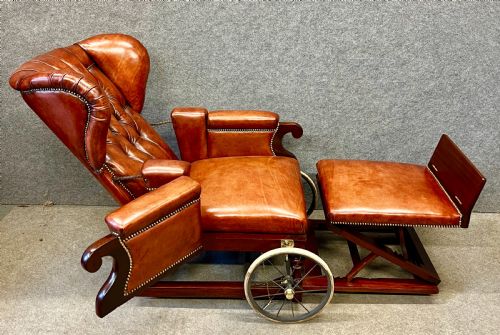
Victorian invalid chairs incorporate mechanical adjustments, reclining backs, and larger castor wheels designed for mobility indoors. Makers like John Ward specialised in these robust convalescing seats.
They often use heavier frames and specialised upholstery to support seated patients.
Which woods are most common?
Elm and beech appear most frequently in these traditional vernacular seats, often chosen for their strength and bending qualities. Yew wood and mahogany also occur in higher-status examples.
Combinations of elm seats with beech or ash spindles remain standard across English country workshops.
Are these chairs suitable for daily dining?
Many wheel-back and Windsor dining chairs function well for everyday use around a kitchen or dining table. Their sturdy timber construction endures regular domestic seating.
Checking the stability of the joints and the security of the castors ensures safe daily placement.