






Carved Knee Chairs
These carved knee chairs bring sculptural cabriole legs and rich walnut or mahogany frames into traditional interiors.
Carved Knee Chairs
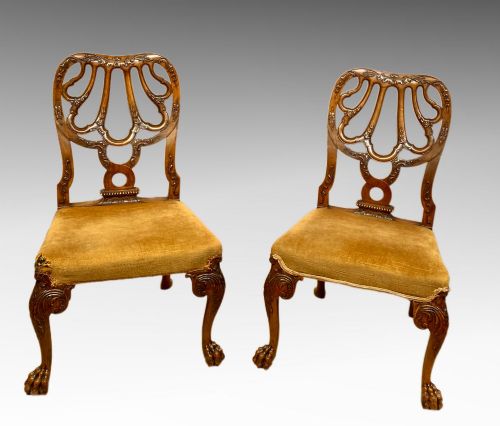
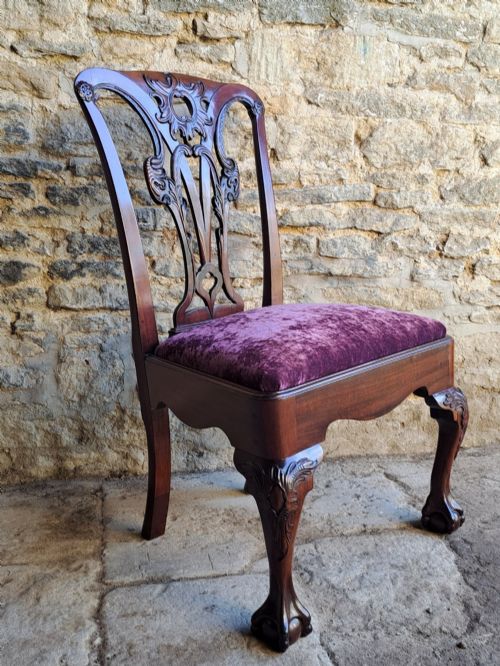
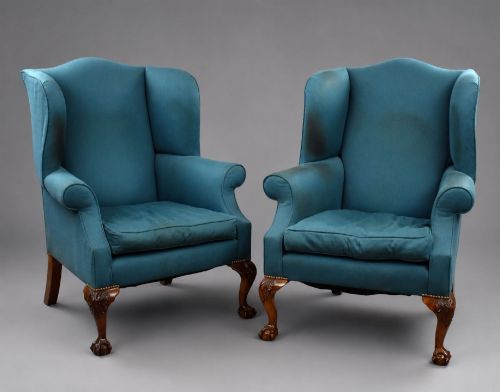
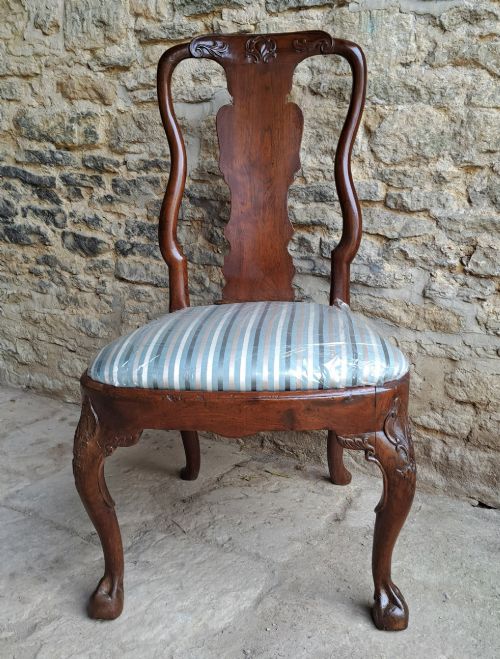
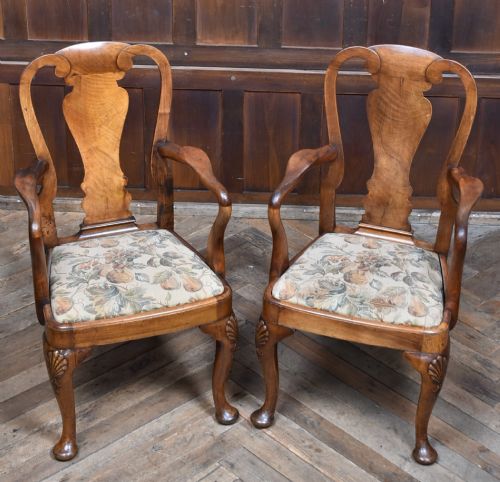
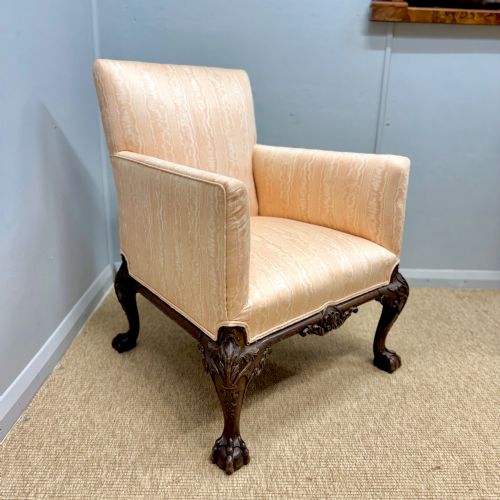
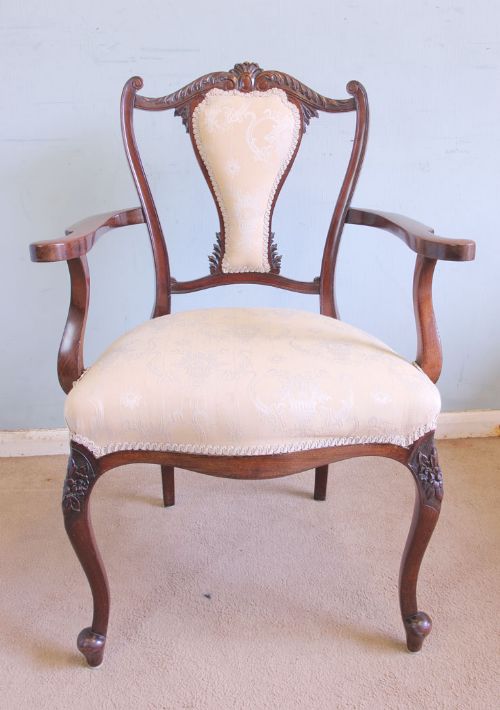
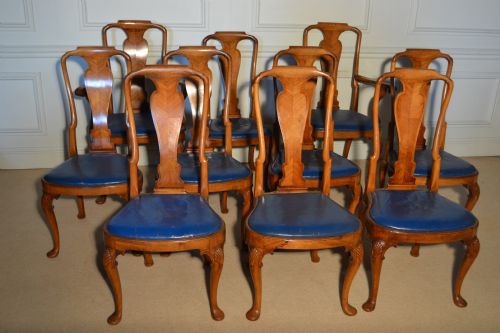
Carved knee chairs present prominent cabriole legs featuring carved shell, scroll or foliage motifs upon the upper bend, known as the knee. The selection here spans early eighteenth century Georgian originals through to twentieth century revivals.
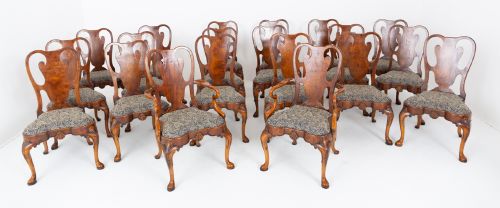
Makers often drew inspiration from earlier cabinet-making traditions, producing side chairs, library chairs and wing backs with distinctively curved profiles and padded seats.
Materials and construction methods
Cabinet-makers relied heavily on figured walnut and dense mahogany, alongside occasional regional timbers such as elm. Timber selection dictated the depth and crispness achievable in the carved knee details.
Frames frequently utilised pegged mortise and tenon joinery to support the stresses placed upon the hipped cabriole legs. Upholstery materials included period textiles, contemporary fabrics and rich velvets secured over padded seat bases.
Carved Knee Chairs Retail Price Guide 2026
Typical asking prices for carved knee chairs among the pieces listed under this phrase on Sellingantiques today, from the lower quarter to the upper quarter. They describe what is for sale here now, not the wider market.
Cabinet-makers occasionally hid intricate carvings where only polishing rags would normally reach.
Factors determining quality
The definition and depth of the carving upon the knee separate standard production from superior craftsmanship. Sharp execution of shell or scroll motifs indicates skilled hand-tooling rather than mechanical smoothing.
Timber figure and grain continuity across structural joints influence the visual weight and stability of the frame. Original patination on older walnut and mahogany surfaces retains a depth absent in heavily stripped examples.
Giles Grendey
The Carved Knee Chairs Glossary
- Cabriole leg
- A furniture leg that curves out at the knee and tapers inward to an ankle, mimicking an animal's limb. This form defines the silhouette of many eighteenth century seats.
- Hipped knee
- A structural shaping where the upper portion of the leg swells outward and merges smoothly into the seat rail. It adds visual breadth and structural strength.
- Splat
- The vertical wooden strip down the centre of an open chair back, often shaped in a vase or fiddle outline. It provides lower back support during seating.
- Ball and claw foot
- A carved terminal representing a bird's talon grasping a spherical ball, frequently terminating cabriole legs on fine Georgian seating.
Carved Knee Chairs: Frequently Asked Questions
What defines carved knee chairs?
These pieces feature prominent cabriole legs where the upper bend, or knee, displays decorative carving such as shells or foliage.
They appear primarily in walnut and mahogany timbers across Georgian and revival periods.
How do I date a carved knee chair?
Dating relies on examining timber species, joinery methods, and the style of the carved knee and back splat. Early eighteenth century examples show distinct patination and construction compared to later revivals.
Secondary woods and upholstery webbing also provide clues to the manufacturing era.
Are these chairs suitable for daily dining?
Many examples function well for regular use around a dining table, particularly sturdy sets from the Georgian Revival period. Proper weight distribution and sound frame joinery ensure everyday durability.
Upholstery can be adapted to match modern interior requirements without altering the antique wooden frame.
What is the difference between side chairs and armchairs?
Side chairs are built without armrests, designed originally to stand against walls or fit compactly around dining tables. Armchairs include supportive elbow rests, often featuring padded upholstery or open curved timber arms.
Both variants frequently share matching carved knee and cabriole leg designs within larger dining suites.