

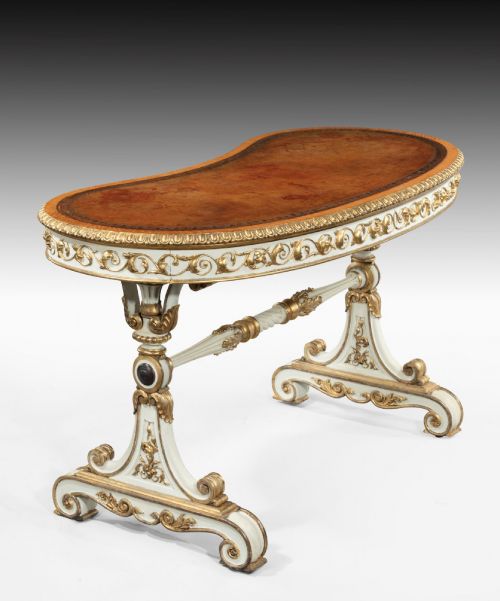
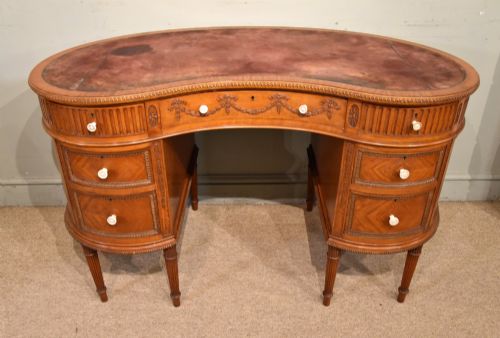
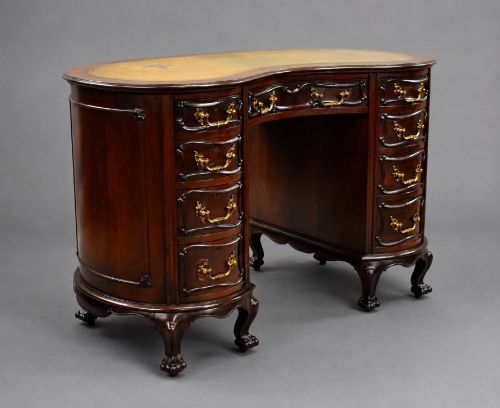
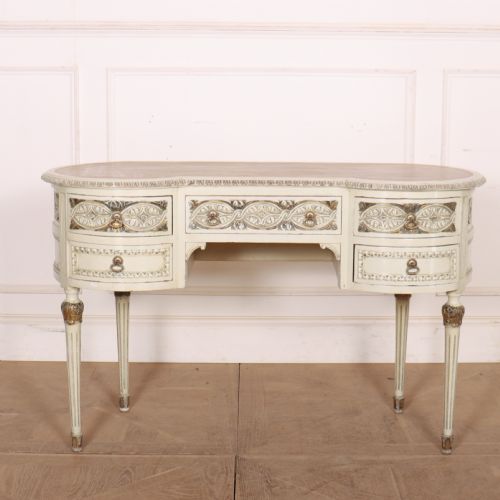

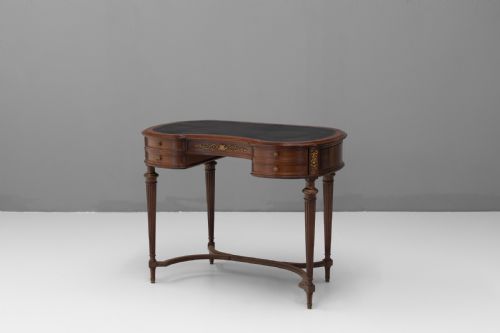


Carved Kidney Desk
A carved kidney desk is a curvaceous writing table designed to hug the body, offering both functional elegance and distinctive nineteenth-century charm.
Carved Kidney Desk
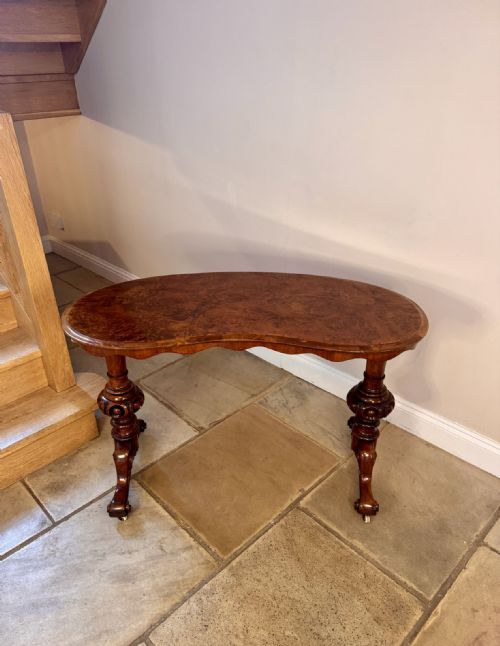
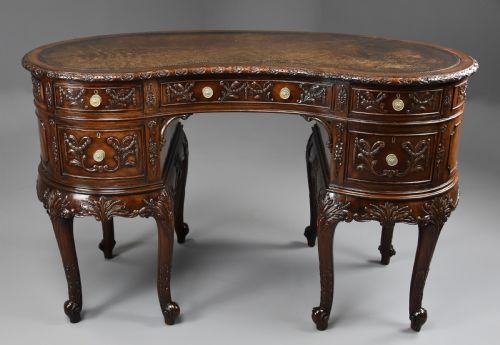
A carved kidney desk presents a distinctive curved outline, designed primarily for domestic writing and correspondence. These pieces date predominantly from the Victorian and Edwardian eras, spanning the mid-nineteenth century to the early twentieth century.
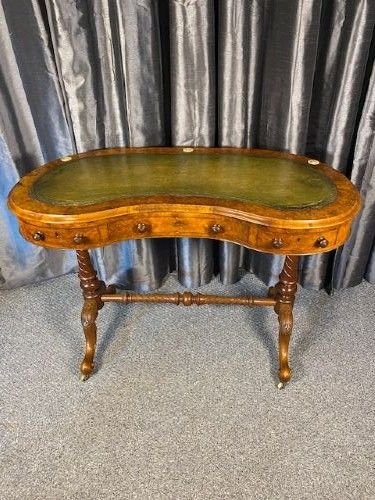
The form appears frequently in rich timbers such as burr walnut and mahogany, often fitted with inset leather writing surfaces. Alongside dedicated desks, the selection includes writing tables, dressing tables, and side tables sharing the signature curved silhouette.
Materials and construction
Cabinet makers utilised choice hardwoods including mahogany, burr walnut, and satinwood, frequently employing intricate marquetry inlay to enhance the curved surfaces. Structural stability on these complex shapes required precise joinery and careful selection of timber veneers.
Leather inserts, often tooled with gilt borders, provide the writing surface, while brass hardware and carved giltwood or painted decorations accentuate the decorative styles of the period. Skilled craftspeople also integrated carved details, ivory paintwork, and even porcelain plaques into the more elaborate examples.
Carved Kidney Desk Retail Price Guide 2026
Typical asking prices for carved kidney desk among the pieces listed under this phrase on Sellingantiques today, from the lower quarter to the upper quarter. They describe what is for sale here now, not the wider market.
One particularly ambitious Victorian piece manages to incorporate an entire Davenport top into its curved walnut frame.
Variations in quality
The distinction between standard output and the finest examples rests on the choice of timber figure and the crispness of the carving. Richly figured burr walnut and delicate marquetry indicate higher workshop ambition than plain painted or secondary woods.
Maple & Co·Shapland & Petter·Williams and Gibton
The Carved Kidney Desk Glossary
- Kidney shape
- A curved desk or table profile that indents at the centre to accommodate the user. This ergonomic form became particularly popular for ladies writing tables during the Victorian period.
- Burr walnut
- A highly figured timber veneer harvested from the growth warts of walnut trees. It yields swirling, mottled patterns prized by nineteenth-century cabinet makers.
- Marquetry
- Decorative veneer patterns assembled from different woods to form pictorial or geometric designs. It is commonly applied to the top surfaces of quality writing tables.
- Giltwood
- Timber that has been coated with a thin layer of gold leaf or gilt paint. It is often found on carved decorative elements of Victorian and Edwardian furniture.
Carved Kidney Desk: Frequently Asked Questions
Where should I place a kidney desk?
Many examples are finished on all sides as freestanding furniture, allowing them to sit proudly in the middle of a study or library rather than pushed against a wall.
Consider the lighting in your room so that natural light falls across the leather writing surface without causing heavy shadows.
How do I care for the leather top?
The inset leather surface responds well to occasional gentle dusting and specialist leather balms that prevent the hide from drying out over time.
Avoid placing damp items directly onto the leather, and keep the desk away from direct heat sources and strong sunlight.
What periods do these desks cover?
The selection spans the nineteenth and early twentieth centuries, encompassing Victorian, Edwardian, and William IV eras. Most pieces date from the mid-nineteenth century onwards.
Stylistic influences range from Neoclassical and Louis XVI revivals to early Art Nouveau details.
Were these desks made for men or women?
Many smaller kidney-shaped writing tables of the nineteenth century were traditionally designated as ladies writing tables or dressing tables. Their compact proportions suited intimate boudoirs and drawing rooms.
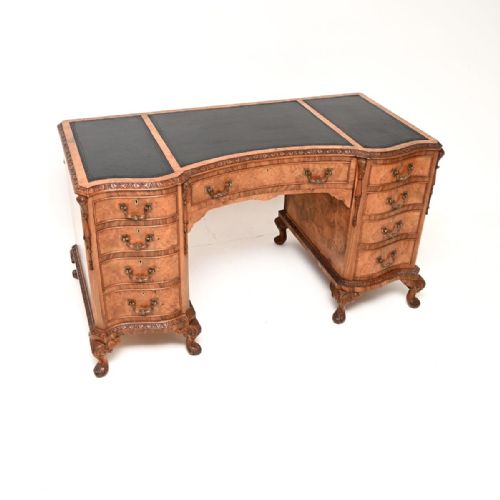
Larger pedestal variations served general library and office use regardless of gender.