
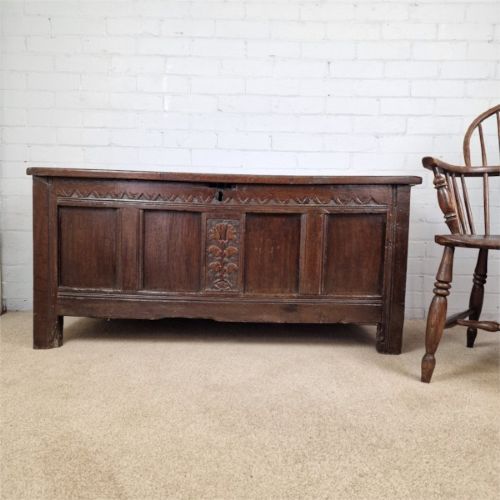

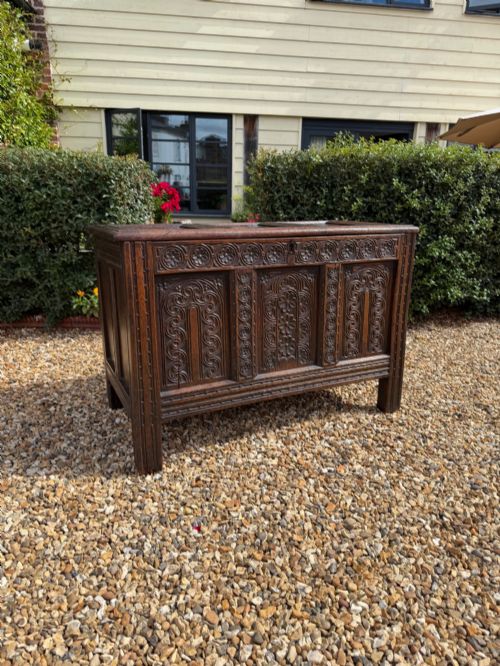
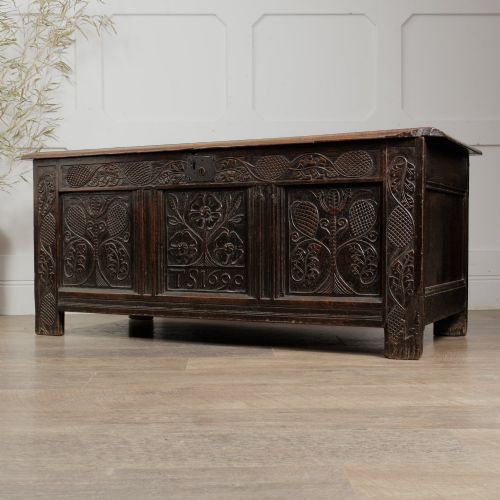
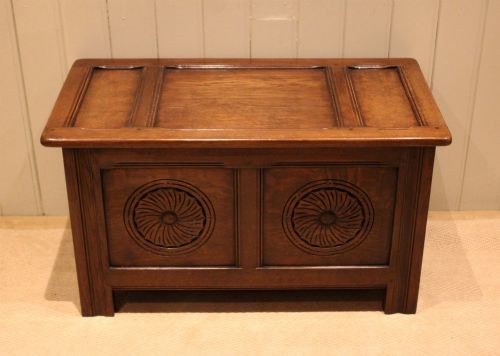
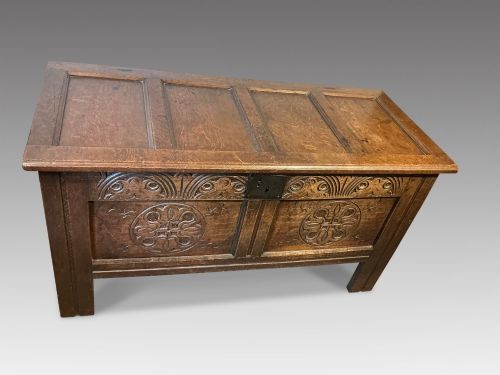
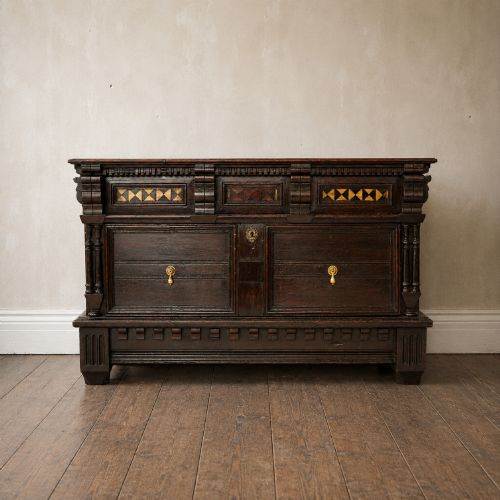
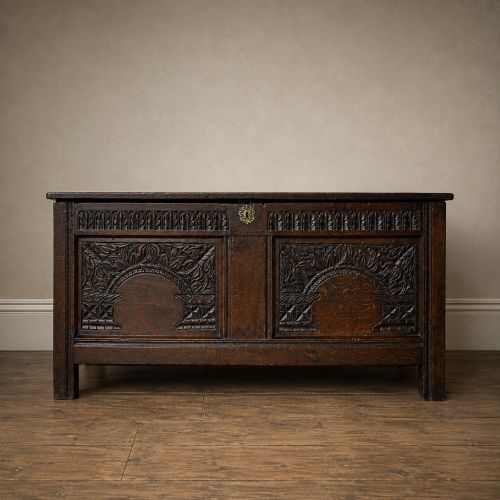
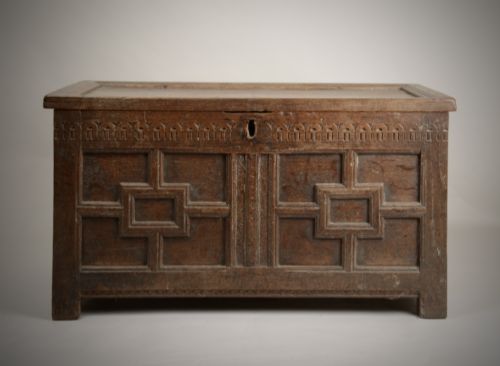
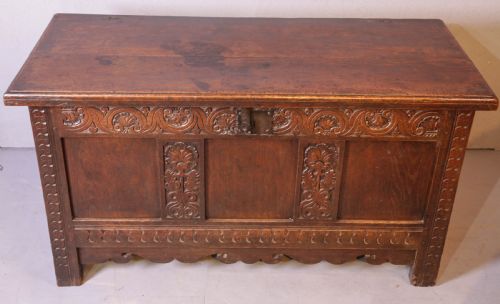
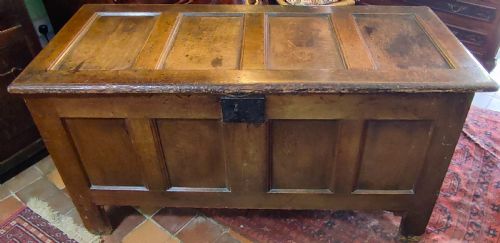

Carved Joined Coffer
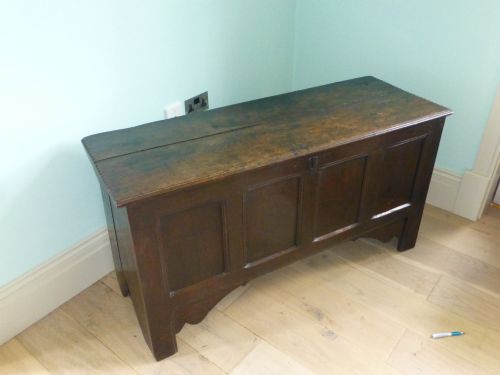
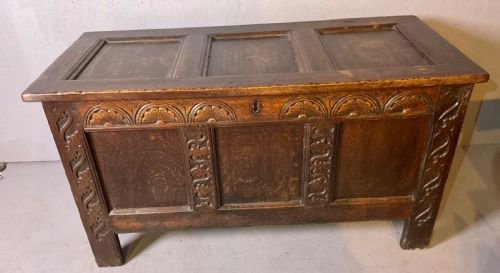
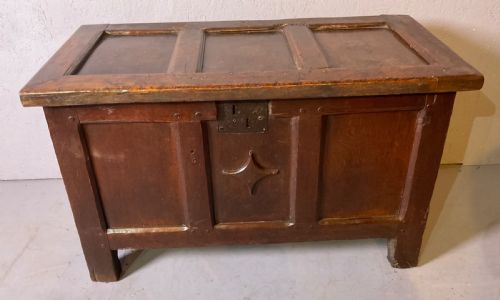
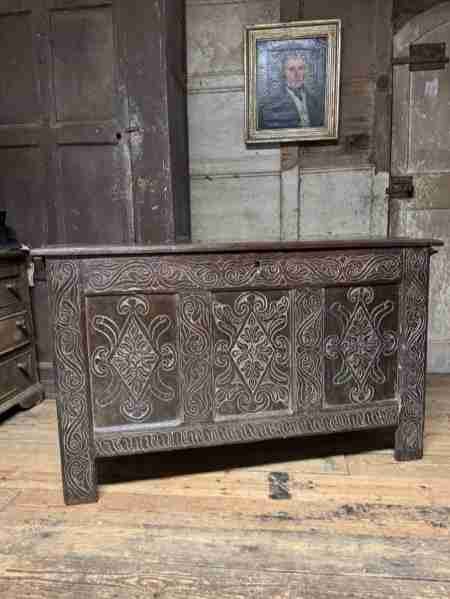
A carved joined coffer is a heavy storage chest built from timber using traditional framing methods to store household valuables.
Carved Joined Coffer
A carved joined coffer represents the core of early domestic storage, built with frame and panel construction rather than simple boards. The majority of pieces encountered here date from the seventeenth century, with examples stretching from the sixteenth century into the Georgian period.
Makers shaped these items using heavy oak, incorporating regional traits from areas such as Wales, Lancashire, and Yorkshire. Forms range from simple two-panel blanket boxes to more elaborate joined chests featuring geometric mouldings and linenfold panels.
Buyers seek these items for their robust joinery and the historic character carved into the timber fronts. The selection includes smaller proportions alongside larger regional variants designed for domestic security.
Materials and Construction
Carpenters relied primarily on English and Welsh oak, chosen for its strength and availability, shaping it into upright stiles, rails, and floating panels. Iron and brass hardware, including strap hinges and locks, secured the heavy lids against the main body.
The technique of joined construction utilised mortise and tenon joints secured with wooden pegs, allowing the timber to expand and contract naturally without splitting. Craftsmen decorated the framework using surface carving, punchwork, and applied geometric mouldings.
The listings show seventeenth-century oak pieces dominate the selection, accompanied by sixteenth-century linenfold examples and eighteenth-century mule chests.
Assessing Quality and Character
Quality rests upon the crispness of the original carving and the integrity of the joined frame, where tighter tolerances distinguish finer workshop production. Pieces retaining their original surface patination and unreplaced timber components command greater appreciation among collectors.
Regional distinctiveness also shapes the standing of a coffer, as specific geometric layouts or dated inscriptions tie individual items to known historical schools of carpentry.
Thomas Dennis
The Carved Joined Coffer Glossary
- Joined coffer
- A storage chest constructed using frame and panel joinery secured with wooden pegs rather than simple nailed boards.
- Linenfold
- A style of carved wooden panel popular in the sixteenth century that resembles folded fabric.
- Stile
- The vertical upright member in the frame of a coffer that provides structural support.
- Mule chest
- A joined storage chest featuring one or more drawers built into the base beneath the main compartment.
Carved Joined Coffer: Frequently Asked Questions
What were coffers used for originally?
Households utilised these heavy chests to store valuable textiles, documents, and personal belongings securely.
Their robust construction and locking lids made them practical strongboxes in early homes.
How do I date an early oak coffer?
Carpentry techniques, tool marks, and stylistic motifs help establish the period of manufacture.
Peg placement and panel thickness often reveal whether a piece belongs to the sixteenth or seventeenth century.
Where should I place a coffer at home?
These solid oak chests suit hallways, living rooms, or bedrooms as functional storage furniture.
Keep them away from direct heat sources to prevent the timber from drying out.
What is the difference between a coffer and a chest?
A coffer strictly uses frame and panel joined construction rather than simple boarded box building.
This method allows for more decorative carved facades and stronger structural frames.