



Carved Jewellery Box
A carved jewellery box organises small keepsakes using timber or metal shaped by hand during the eighteenth, nineteenth, and early twentieth centuries.
Carved Jewellery Box
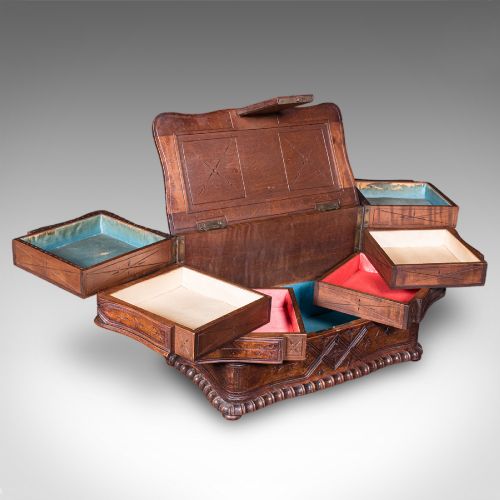
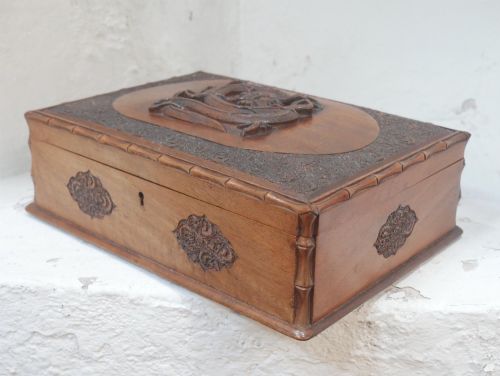
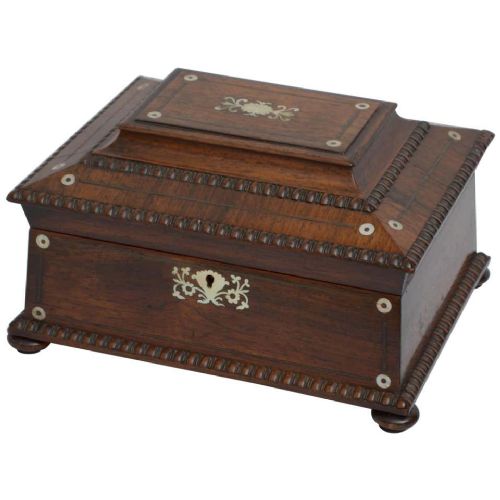
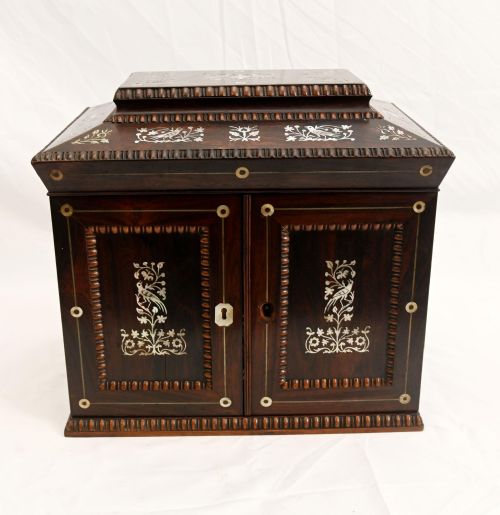
A carved jewellery box serves as a small chest for rings, trinkets, and personal valuables. These pieces appear in varied forms such as rectangular work boxes, sarcophagus-shaped caskets, and miniature coffers.
The selections on this page span several eras, notably the Victorian period, Edwardian years, and the nineteenth century. Makers constructed them across regions from Britain and France to India, China, and Germany.
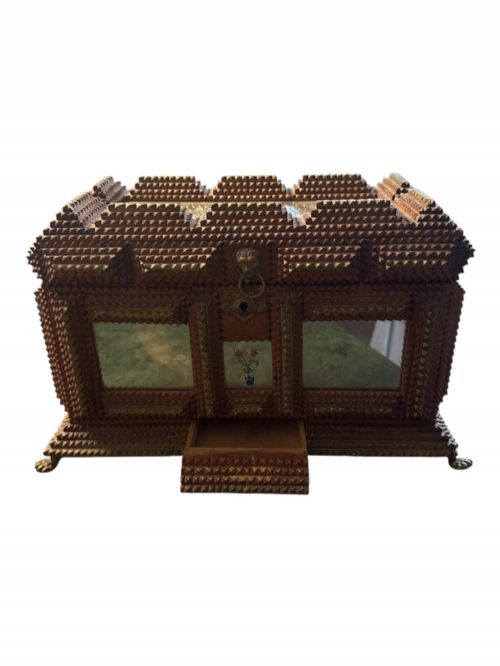
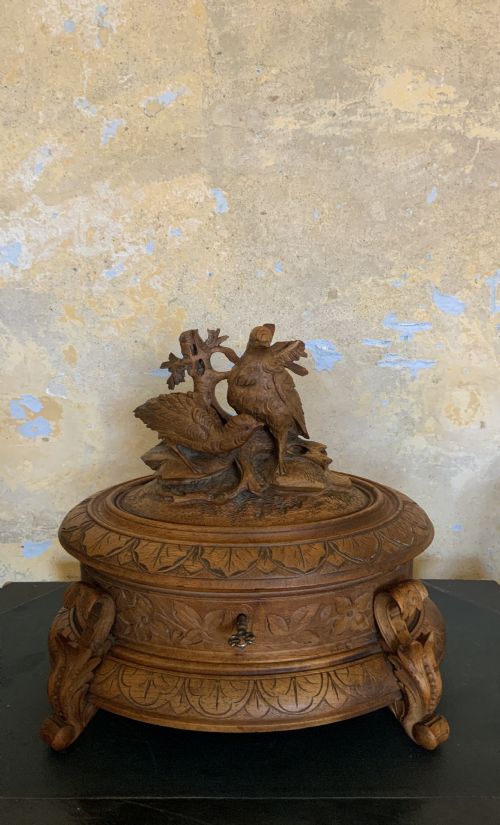
Buyers encounter diverse regional interpretations including Anglo-Indian sandalwood containers, Black Forest walnut caskets, and intricate tramp art objects. Each item reflects the storage traditions and decorative tastes of its domestic or colonial origin.
How They Were Made
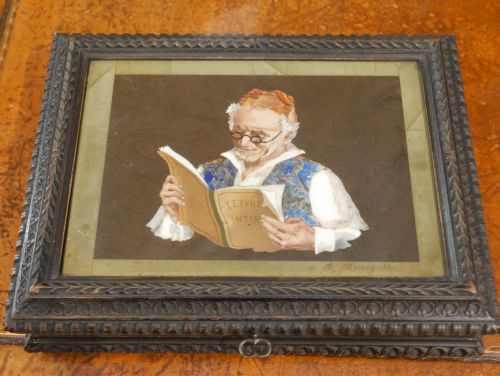
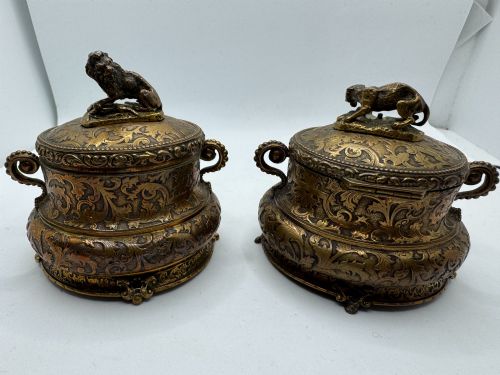
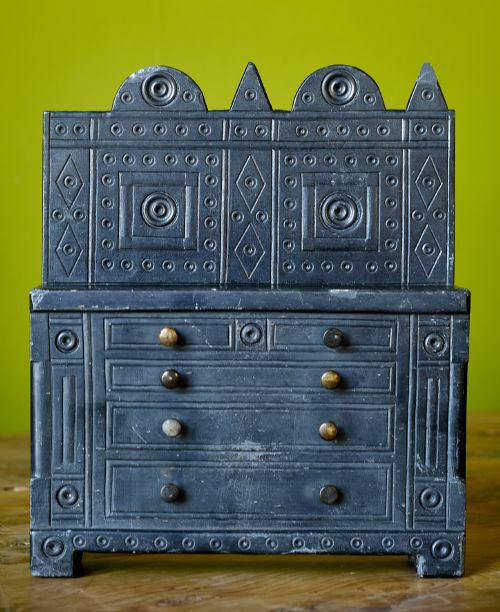
Artisans built these containers using dense hardwoods like oak, walnut, mahogany, coromandel, and sandalwood alongside metals such as bronze, brass, and steel. Some examples incorporate organic elements like mother-of-pearl, porcupine quill, and slate.
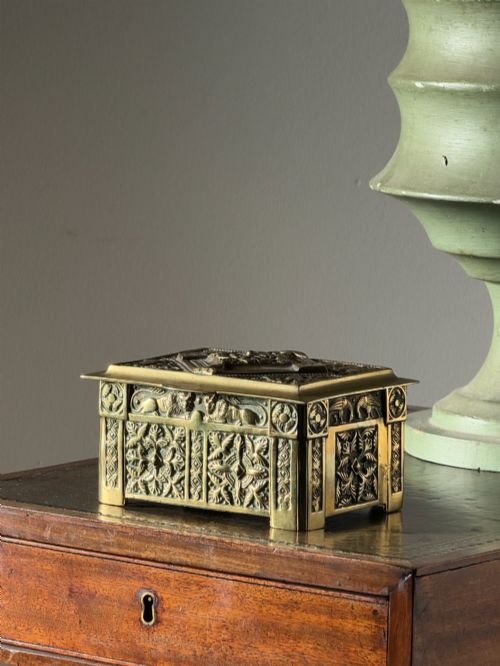
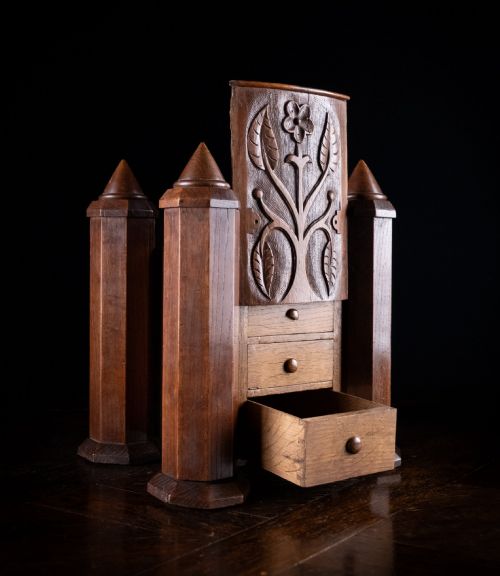
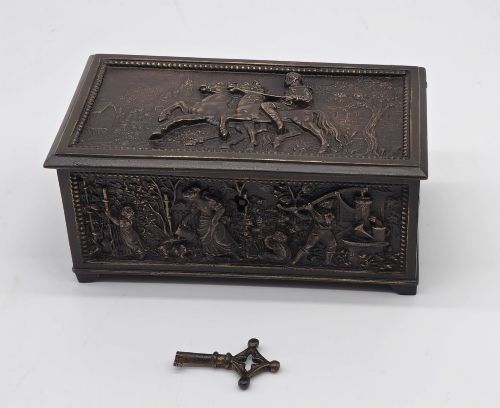
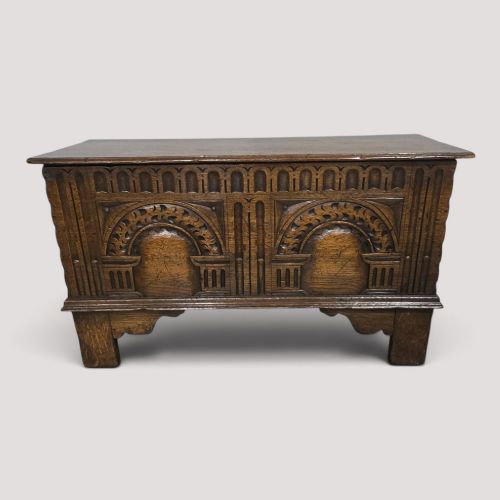
Craftsmen shaped the exteriors through deep relief carving, marquetry inlay, and cast metal decoration. Interiors often feature fitted compartments lined with textile materials designed to protect delicate personal items.
Carved Jewellery Box Retail Price Guide 2026
Typical asking prices for carved jewellery box among the pieces listed under this phrase on Sellingantiques today, from the lower quarter to the upper quarter. They describe what is for sale here now, not the wider market.
Certain nineteenth-century makers utilised porcupine quills as an exotic decorative veneer on small keepsake caskets.
What Varies In Quality
The standard of execution depends on the depth and crispness of the exterior carving or metalwork. Superior examples display sharply defined motifs and tightly fitted joints without visible gaps.
Material selection dictates much of the inherent value, with solid exotic woods and finely chased bronze outperforming simple pine or stamped alloys. Original internal fittings and intact hardware elevate the integrity of the piece.
Andrew Grima
The Carved Jewellery Box Glossary
- Black Forest
- A regional style originating from central Europe, characterised by deeply carved naturalistic animal and foliage motifs executed in walnut or lime wood.
- Anglo-Indian
- Describing items produced in the Indian subcontinent during the British colonial period, frequently utilising sandalwood, ebony, or porcupine quill work.
- Casket
- A small ornamental box or chest intended for holding jewellery or precious documents.
- Marquetry
- The art of applying decorative veneer pieces to a structure to form geometric or pictorial designs.
- Tramp art
- A form of folk craft created by self-taught makers using notched, chipped, or carved wood pieces salvaged from packing crates.
Carved Jewellery Box: Frequently Asked Questions
What is a carved jewellery box?
A carved jewellery box is a small decorative container designed for storing rings, pins, and personal valuables. These objects feature hand-carved ornamentation on wood, metal, or stone surfaces.
Craftsmen produced them in various regional styles, ranging from European gothic motifs to intricate eastern floral patterns. They function as both practical organisers and decorative tabletop items.
How were antique boxes used?
Victorian and Edwardian owners kept these caskets on dressing tables or desks to hold daily accessories. They secured precious keepsakes, letters, and sewing tools away from dust and damage.
Larger variations served as miniature furniture or presentation pieces given on special occasions. Their fitted interiors kept delicate chains and rings separated during storage.
How do I identify the period?
Dating relies on examining the timber species, construction methods, and decorative style visible on the exterior. Victorian pieces often use walnut or coromandel with heavy brass hardware, while Edwardian versions favour lighter woods or silver mounts.
Regional clues like Anglo-Indian sandalwood or Black Forest carvings point to specific manufacturing centres. Tool marks and lining materials also offer clues to the era of production.
How should I clean my box?
Maintenance requires gentle dusting with a dry, soft cloth to prevent grime accumulation on carved wooden surfaces. Avoid chemical polishes that can damage aged lacquers, patinas, or delicate ivory and mother-of-pearl inlays.
Leather or fabric interiors benefit from light air circulation rather than liquid cleaning agents. Keeping the container away from direct sunlight preserves the natural colour of the timber.