


Carved Jade Jewellery
Carved jade jewellery brings together centuries of lapidary skill, offering wearable history through rings, pendants, and earrings shaped from nephrite and jadeite.
Carved Jade Jewellery
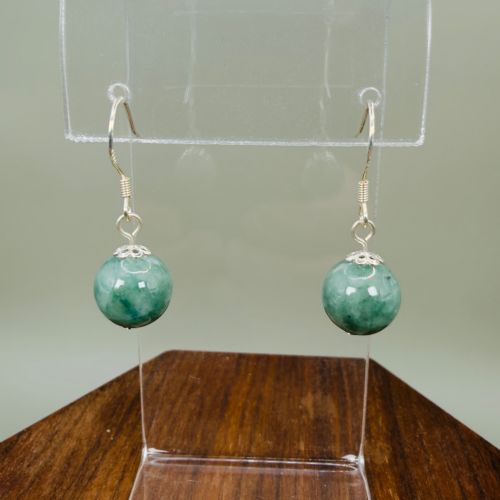
Carved jade jewellery encompasses rings, earrings, pendants, necklaces, bangles, and belt buckles fashioned from natural mineral stones across multiple historical periods. Pieces range from Victorian and Edwardian examples to Art Deco designs, Mid-Century Modern creations, and Chinese Republic Period objects.
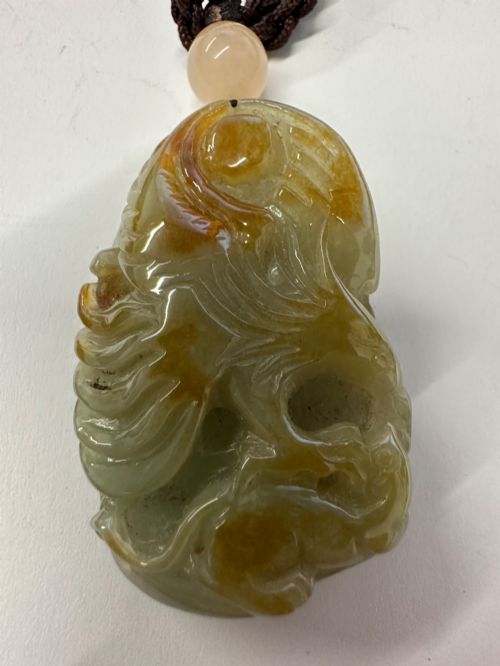
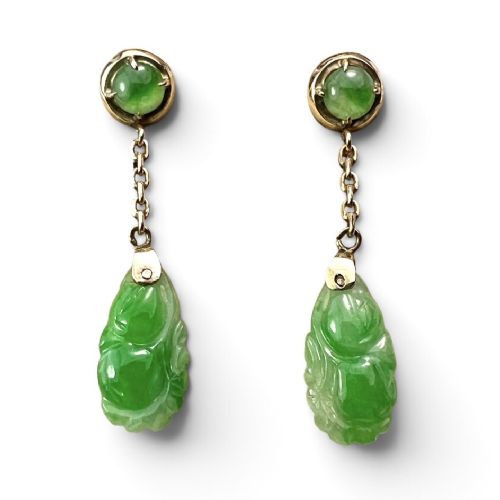
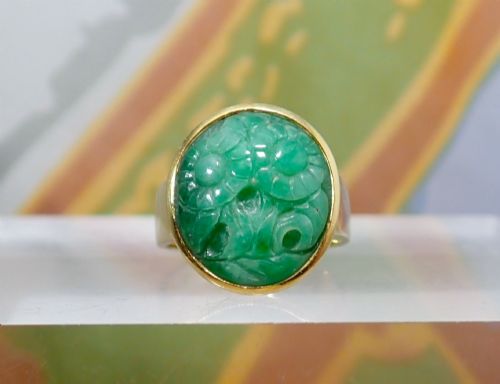
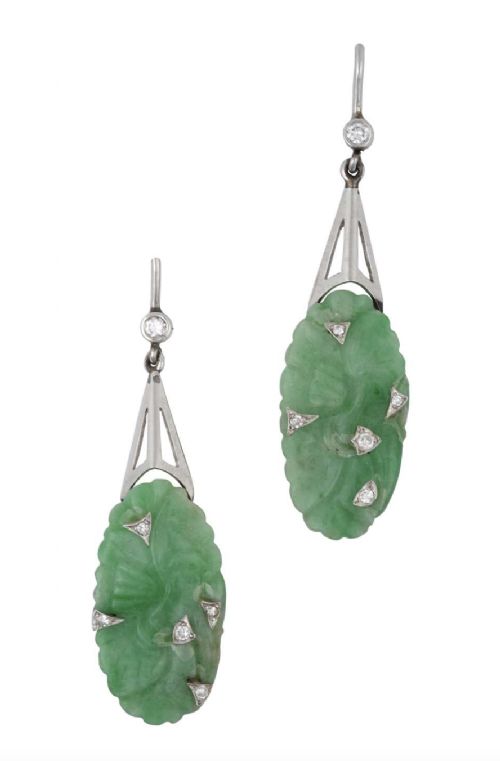
On this page, buyers are most likely to encounter twentieth-century creations, particularly Art Deco rings and drop earrings set in gold or platinum alongside Republic Period pendants. These items often feature traditional motifs such as double dragons or auspicious symbols carved directly into the stone.
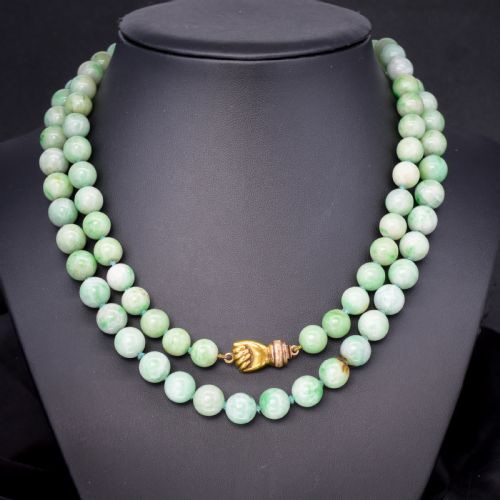
Earlier examples span the nineteenth century and eighteenth century, including white jade belt buckles and beaded strand necklaces. These varied forms reflect both Western decorative tastes and traditional Chinese craftsmanship across diverse eras.
What varies in quality
Quality rests upon the natural translucency, colour saturation, and structural integrity of the jadeite or nephrite material itself. Finer stones display a desirable depth of green or pure white tones without dull opacity.
The precision and crispness of the carving distinguish superior pieces, as master carvers achieved sharp relief work and balanced proportions. Settings also reveal craftsmanship standards, with secure metalwork and harmonious integration of diamonds or pearls enhancing the overall execution.
Listings feature items from the 18th century, 19th century, Edwardian era, 1920, 1930, 1940, and 1950, using jadeite, nephrite, white jade, gold, platinum, and diamonds.
The Carved Jade Jewellery Glossary
- Jadeite
- A pyroxene mineral and one of the primary materials used in carved jewellery. It is known for its vivid green varieties and vitreous lustre.
- Nephrite
- An amphibole mineral representing the traditional jade material of earlier Chinese artefacts. It possesses a tougher, more interlocking fibrous structure than jadeite.
- Art Deco
- A design style prevalent during the 1920s and 1930s characterised by geometric symmetry and clean lines. Many jade earrings and rings from this era pair carved panels with diamonds and platinum.
- Republic Period
- The era in Chinese history spanning from 1912 to 1949, noted here for pendants and decorative items featuring traditional motifs like double dragons and auspicious symbols.
- Pixiu
- A mythical hybrid creature often depicted in Chinese jade carvings. It is traditionally associated with wealth attraction and protection.
Carved Jade Jewellery: Frequently Asked Questions
How do I care for antique jade jewellery?
Clean these pieces gently using warm soapy water and a soft cloth, avoiding harsh ultrasonic cleaners that might damage mounted stones or pearls. Store them separately in padded boxes to prevent scratching from harder gemstones.
Regularly check the security of gold or platinum settings, particularly on drop earrings and rings, to ensure the carved jade remains firmly held.
What periods do these pieces come from?
The selection spans from the eighteenth century up through the mid-twentieth century, encompassing Victorian, Edwardian, and Art Deco eras. You will also find Chinese Republic Period works alongside mid-century modern designs.
Each period brings distinct mounting styles, ranging from heavy yellow gold wirework to geometric platinum and diamond frames.
How can I tell jadeite from nephrite?
Jadeite and nephrite are two distinct mineral species that both fall under the term jade, though they differ slightly in their crystalline structure and density. Visual inspection often reveals brighter translucent greens in jadeite, while nephrite tends to present a more subdued, oily lustre.
Expert gemological testing provides definitive identification when surface characteristics alone remain inconclusive.
What motifs are common in Chinese carved jade?
Common motifs include mythical creatures such as the Pixiu, along with double dragons and general auspicious symbols intended to bring good fortune. Deity figures and traditional blessing symbols also appear frequently on pendants and plaques.
These subjects draw on centuries of cultural symbolism, translated into miniature wearable art by skilled lapidaries.