


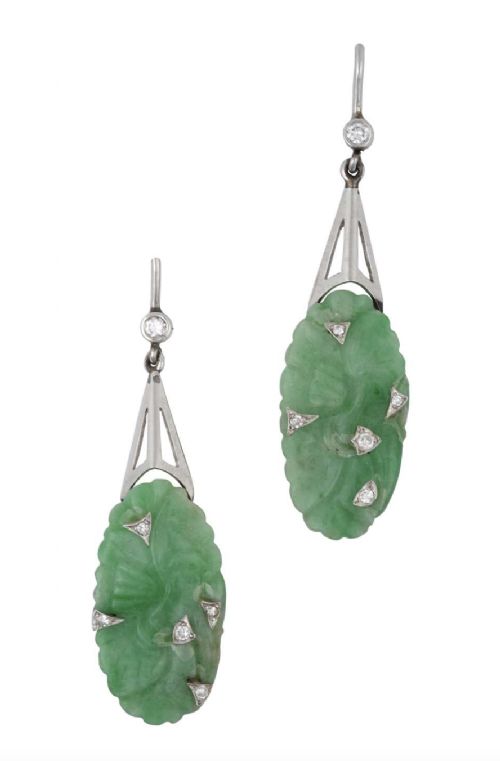


Antique Jade Earrings
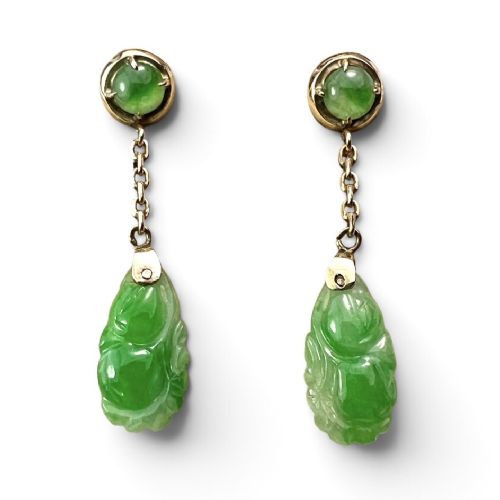
These antique jade earrings span styles from Edwardian chinoiserie to Art Deco, offering carved drops and beads set in gold, platinum, and silver.
Antique Jade Earrings
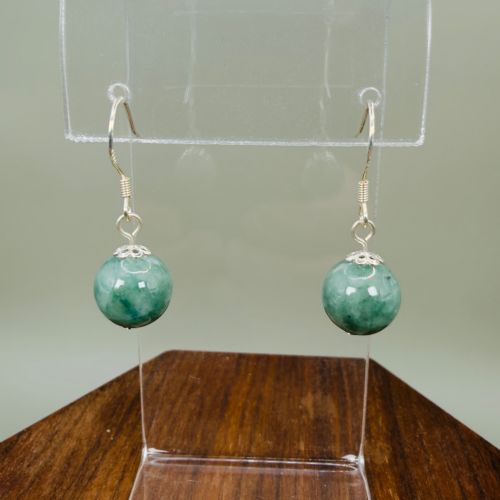
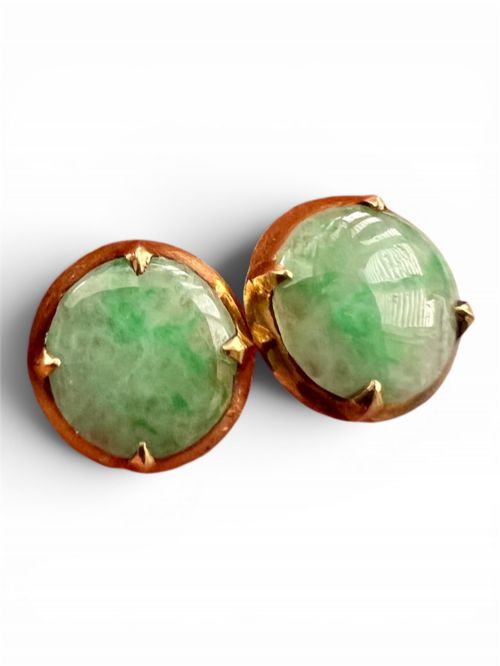
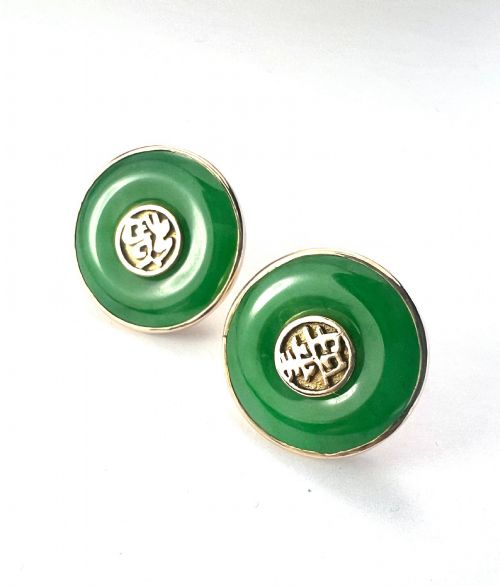
When you search for antique jade earrings, you encounter a selection of drop, dangle, hook, and stud designs created across several decades. The pieces utilise carved jade, jadeite, and nephrite alongside materials like diamond, pearl, and coral.
You are most likely to meet Art Deco iterations featuring platinum, 14ct gold, or 18ct gold settings paired with carved jadeite drops. Edwardian and Victorian examples also appear, offering alternative gold purities and hoop or dangle configurations.
How they were made
Makers shaped jade and jadeite into carved plaques, beads, and teardrop forms, occasionally utilising glass alternatives in silver or gold settings. Metalwork techniques involved mounting these green stones into platinum, sterling silver, and various gold purities including 9ct, 14ct, 15ct, and 18ct.
Jewellers incorporated diamonds, pearls, and coral as accent stones within screw back, stud, and drop configurations. Settings display period-specific craftsmanship, particularly the geometric lines characteristic of Art Deco design and the intricate detailing of Edwardian chinoiserie.
Listings feature four gold purities: 9ct, 14ct, 15ct, and 18ct gold, alongside platinum and sterling silver.
What varies in quality
Quality rests in the material composition of the stones, distinguishing natural jadeite and nephrite from glass alternatives, alongside the purity of the surrounding precious metals. Platinum and higher gold purities indicate superior manufacturing standards.
The refinement of the carving and the integration of supporting gemstones like diamonds elevate specific pieces. Hand-carved motifs and secure, period-appropriate mechanisms such as screw backs or platinum settings demonstrate greater workshop proficiency.
The Antique Jade Earrings Glossary
- Jadeite
- A pyroxene mineral and one of the primary mineral species recognised as jade. It appears in various shades of green within these pieces.
- Nephrite
- An amphibole mineral representing the second primary form of jade. This material frequently appears in Victorian examples.
- Art Deco
- A design style dominant during the 1920s and 1930s characterised by geometric symmetry and clean lines. Many pieces in this selection reflect this aesthetic.
- Chinoiserie
- A European stylistic tradition reflecting Chinese artistic influences. Edwardian instances of this style occur within the archive.
- Screw back
- A mechanical fastener utilising a threaded post and nut to secure a stud earring without requiring a pierced earlobe. These are common in older pairs.
Antique Jade Earrings: Frequently Asked Questions
How do I clean antique jade earrings?
Clean these pieces gently using a soft, damp cloth without harsh chemical solvents. Avoid submerging older settings or treated stones in ultrasonic cleaners.
Dry the metal and stone thoroughly after wiping to protect delicate platinum, gold, silver, and gemstone mounts.
Are all these earrings for pierced ears?
No, the selection includes screw back stud designs intended for non-pierced lobes. Other pairs utilise hooks, dangles, and posts for pierced ears.
Check the individual listing details to confirm the specific fastening type used on each pair.
What periods do these earrings cover?
The available listings and archive span Victorian, Edwardian, Art Deco, and Mid-Century periods. Dates range from the late nineteenth century through to the 1950s.
Design characteristics and metal purities typically align with these specific decades of production.
What metals are used in these settings?
Makers utilised platinum, sterling silver, and gold ranging across 9ct, 14ct, 15ct, and 18ct purities. Platinum frequently appears alongside diamonds in Art Deco pieces.
Gold serves as the primary mount for many Victorian, Edwardian, and 1930s drop designs.