




Green Jadeite Earrings
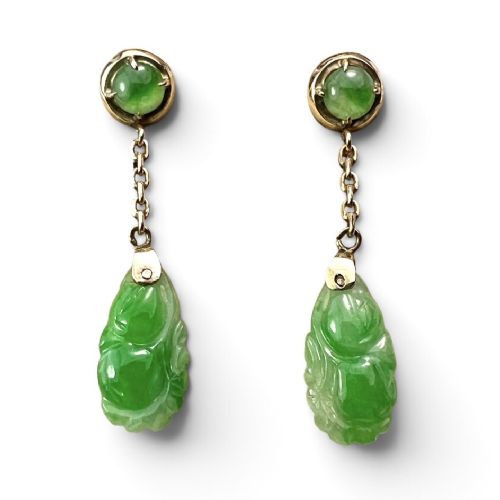
Green jadeite earrings bring together vibrant mineral stones and precious settings, offering collectors distinct pieces spanning the Edwardian period to the mid-century.
Green Jadeite Earrings
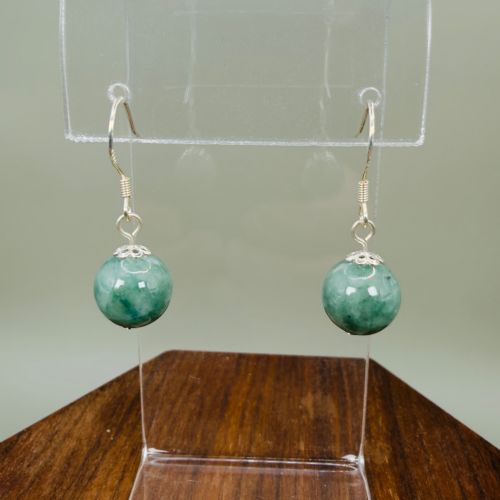
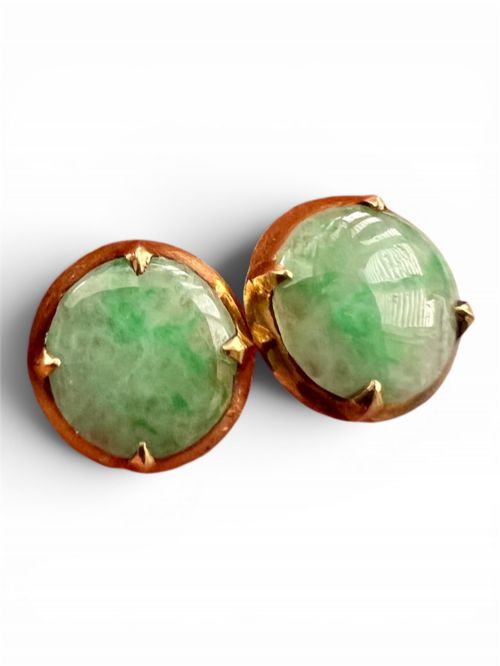
Green jadeite earrings are decorative ornaments for the ears featuring carved stones, beads, or polished cabochons set in precious metals. When you search for green jadeite earrings, you encounter items shaped by several distinct twentieth-century design movements.
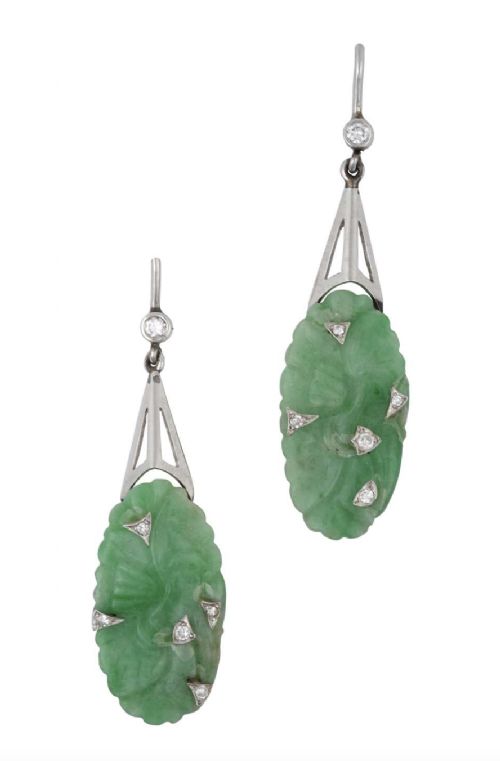
The selections on this page draw predominantly from the Art Deco period, alongside mid-century and Chinese Export examples. You will find drop designs, screw-back studs, and hook dangly pieces created across multiple decades.
How they were made
Maker workshops utilised natural mineral stones shaped into smooth cabochons, carved motifs, or spherical beads. These green stones are mounted securely into settings of platinum, sterling silver, or yellow gold ranging from nine to eighteen carats.
Many period examples incorporate diamond accents alongside the central jadeite, mounted meticulously within structured metal frameworks. Fastening methods vary from traditional post-and-screw backs to simple hooks and dangles designed for pierced or non-pierced ears.
Screw-back fasteners allowed elegant wearers to pinch their lobes securely through decades of changing fashions without committing to a needle.
What varies in quality
The overall quality rests significantly on the depth and saturation of the green colour within the stone itself. Stones exhibiting vibrant, even coloration command greater attention from collectors than paler or mottled variants.
Metalwork execution also differentiates the pieces, particularly where delicate platinum or gold settings integrate diamonds around the primary jadeite stone. Heavier gold carats and intricate carving work elevate certain items above simpler sterling silver and bead designs.
The Green Jadeite Earrings Glossary
- Jadeite
- A dense mineral silicate valued for its translucent quality and intense green hues. It is one of the two distinct mineral species recognised as jade.
- Art Deco
- A design style spanning the 1920s and 1930s characterised by geometric symmetry, clean lines, and stylised motifs. This period produced many of the diamond-accented drop earrings seen here.
- Cabochon
- A gemstone shaped and polished with a smooth, rounded top rather than faceted edges. This cut highlights the natural lustre of green jadeite.
- Screw back
- A mechanical earring finding utilising a threaded post and a small nut to secure the piece without requiring a pierced earlobe. Common in vintage and antique jewellery.
Green Jadeite Earrings: Frequently Asked Questions
How do I date these earrings?
Dating relies on examining the metal settings, fastening mechanisms, and stylistic markers such as geometric Art Deco lines or mid-century minimalism.
Matching the materials, like platinum or specific gold carats, with documented periods from the 1920s through the 1950s helps establish a reliable timeline.
Are all green stones jadeite?
Not every green stone in vintage jewellery is jadeite, as nephrite and imitation glass also appear in historic pieces.
Examining the internal structure, translucency, and density helps distinguish true jadeite from glass or alternative green minerals.
How should I clean them?
Cleaning requires a soft cloth dampened with warm water to wipe away surface dust without harming delicate metal settings.
Harsh chemical cleaners and ultrasonic baths should be avoided to protect both the natural jadeite stone and any adjacent diamond or pearl elements.
Did they require pierced ears?
Many vintage pairs utilise screw-back mechanisms to accommodate wearers without pierced earlobes.
Standard hook dangly pieces and post studs require traditional piercings, reflecting the changing preferences in personal adornment across the decades.